
Everything You Need to Know About Moving to Varanasi
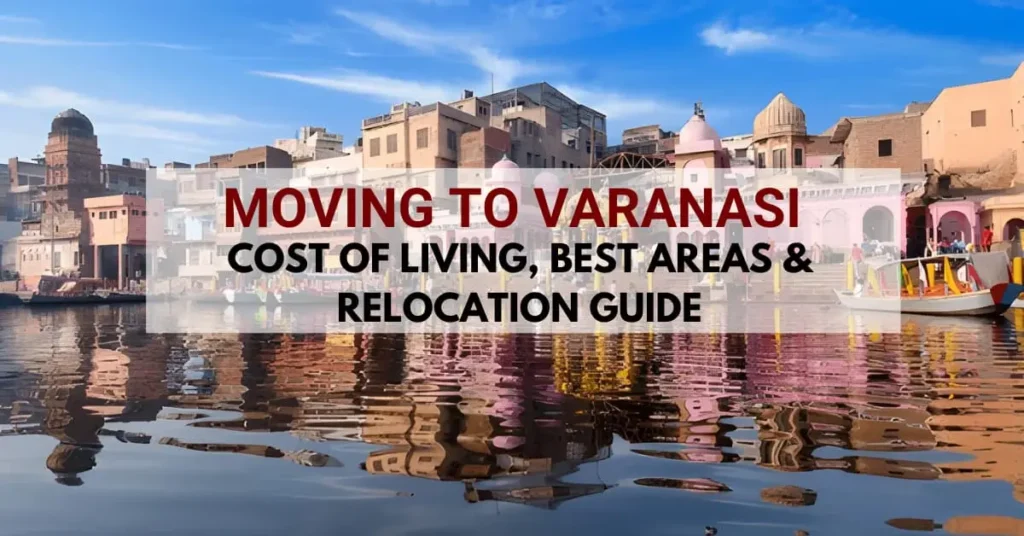
Varanasi Overview
Introduction to the City of Light
Varanasi (also called Kashi or Benares) is one of India’s oldest continuously inhabited cities and holds deep cultural and religious significance.
It sits on the western bank of the Ganges River in the state of Uttar Pradesh and is a major pilgrimage centre for Hinduism.
Location and Geography
Varanasi’s geography is defined by the riverfront ghats, steep steps to the water, a dense old‐city core with narrow lanes and temples, and newer outlying areas expanding into suburbs. Because of this terrain, housing, traffic and utilities differ markedly neighbourhood to neighbourhood.
Demographics and Culture
Some key demographic points: the 2011 census listed a population of about 3.68 million for the district; more recently the municipal corporation area is estimated at ~1.75 million for 2025.
Religiously, the population is around 70.11 % Hindu, 28.82 % Muslim, and small proportions of other religions.
Culturally, the city is known for its daily rituals on the ghats, temple festivals, classical music, silk weaving and pilgrim tourism.
The Spiritual and Historical Significance
Varanasi is among the seven sacred cities in Hindu tradition and is often called the spiritual capital of India. Its history spans thousands of years, having been a centre of learning, pilgrimage, and culture.
In modern times the city is also undergoing urban development and infrastructure transformation.
A Brief History of Varanasi
Ancient Roots and Mythological Significance
Varanasi’s origins trace back over 3,000 years, deeply embedded in Hindu mythology and early Indian civilisation.
It has been a centre for learning, philosophy, music, culture.
Medieval and Colonial Influence
During medieval and Mughal eras the city saw different rulers, and in the British era (colonial) it continued as a centre for education and pilgrimage. Its architecture and city fabric reflect these layers.
Modern-Day Varanasi Development
In recent years Varanasi has featured in national “smart city” and infrastructure initiatives. For example, over 52 development projects worth ~₹2,200 crore were launched in 2025 to boost roads, education, tourism and urban development.
Thinking of Moving to Varanasi
Why People Choose Varanasi
People consider relocating here for a number of reasons:
- The spiritual and cultural richness of living in a city with deep roots
- Relatively lower cost of living compared to major metros
- Opportunity to be in a developing city where one can influence / participate in growth
- A slower pace of life combined with unique local flavour
Who Should Consider Moving Here
Varanasi may be suitable for:
- Families looking for a more affordable lifestyle and cultural environment
- Professionals open to working in tourism, education, arts, crafts or remote roles
- Entrepreneurs or small business owners tapping into religious tourism, crafts, heritage
- Remote workers who don’t require huge metropolitan infrastructure but still want decent connectivity
First Impressions and Expectations
When you first arrive you’ll likely notice: the constant flow of pilgrims and tourists, rituals at dawn on the ghats, older infrastructure in many parts, narrow lanes in the old city, and a mix of tradition + modernity.
Expect trade-offs: may not have the same level of urban amenities as very large metro cities, but you gain authenticity and often affordability.
Planning Your Move – Key Considerations
Before relocating, consider:
- Your preferred neighbourhood (old city vs newer suburb)
- Housing (purchase or rent) and utilities (water, power backup)
- Schooling options if you have children
- Healthcare access
- Transportation and connectivity (road, rail, air)
- Internet and digital infrastructure if working remotely
- Cultural fit — adapting to local norms, languages, rituals
What Is It Like to Live in Varanasi?
Lifestyle and Pace of Life
Compared to India’s major metros (Mumbai, Delhi, Bengaluru), Varanasi offers a different rhythm: daily life is anchored around ritual and culture just as much as commerce and infrastructure. The pace may feel both slower (in some respects) and more intense (in terms of sensory input, crowds, pilgrimage activity).
Community and Local Etiquette
Understanding local etiquette is important: temple visits, ghats usage, respect for traditions, and neighbourhood norms. For example, in pilgrimage areas you’ll encounter large flows of people/visitors.
Language wise Hindi is dominant, along with local dialects; English may be found in schools/offices but less in daily market life.
Festivals and Traditions
Festivals like Dev Deepawali, Ganga Aarti, and others draw large crowds. Living in Varanasi means you’ll experience these up-close — beautiful, but also meaning extra traffic, noise, and hustle.
The craft culture (silk weaving, carpets) and the old city’s artisan communities are also part of the living fabric.
Expat and Migrant Experiences
While Varanasi may have fewer international expats than metro cities, it has a mix of inter-state migrants, students and professionals from other parts of India. Remote workers also increasingly choose it for affordability + unique environment. For remote work, one source lists about 324,490 potential remote workers in the city context.
However infrastructure (internet speed, coworking spaces) while improving, may still lag behind major metro hubs.
The Cost of Living in Varanasi
Average Monthly Expenses
Here are some indicative numbers:
Expense Category | Approximate Cost* |
Furnished 85 m² flat monthly rent | ~ ₹12,666/month |
Utilities (2 persons, 85 m²) | ~ ₹3,699/month |
Cost of living index | ~14% less than Indian national average |
*Note: Actual costs vary widely by neighbourhood, furnishings, and whether you’re in old-city core or a suburban area.
Housing and Utility Costs
Rental and housing purchase costs have been rising. For example, reported property prices in prime localities have gone from ~₹7,000/sq ft to ~₹13,000/sq ft over a short period.
A table of property trends:
Year | Avg rate/sq ft in some prime areas |
~2 years ago | ~₹7,000/sq ft |
Recent | ~₹13,000/sq ft |
Food, Groceries, and Eating Out
Dining out and groceries tend to cost less than in major metros. Many local eateries, markets and produce from the region keep costs moderate. However imported/ luxury items or Western style amenities will cost more.
For example, a meal at a budget restaurant may cost ₹200-350 in certain areas.
Transportation and Daily Commute Costs
Public transport, cycle-rickshaws, auto-rickshaws are common and relatively inexpensive. If you own a car, costs include fuel, maintenance, parking and potentially longer commute times if living away from central zones.
The Job Market in Varanasi
Major Industries and Employment Sectors
Key sectors in Varanasi include:
- Tourism & hospitality (given the pilgrimage and heritage economy)
- Crafts, silk weaving, hand-loom industries
- Education & research (thanks to institutes like Banaras Hindu University)
- Emerging technology / remote work / start-ups (though still modest)
One recent report: in the region of Varanasi, 48 industrial projects (worth ~₹1,180.95 crore) have become operational creating ~3,472 jobs; another 48 projects (worth ~₹5,702.18 crore) are expected to generate ~12,110 additional jobs.
Job Opportunities for Professionals
For example:
- Data Analyst positions (2025 figures) show salary range ₹1.1 Lakh to ₹12.5 Lakhs for less than 1-5 years experience in Varanasi.
- Sectors like technology and data science show growth: digital adoption is increasing and demand for analytics skills is growing.
- While opportunities exist, they may be fewer or pay lower than major metros; remote work may become a compensating factor.
Entrepreneurship and Small Business Scene
Given the heritage & tourism nature of Varanasi, small business in crafts, hospitality, guest houses, guided tours, hand-loom export hold promise. New industrial & infrastructure projects may also open ancillary service opportunities.
Remote Work and Freelancing Options
As previously mentioned, remote work is increasingly feasible: one source estimates ~324,490 potential remote workers locally, with average internet speeds ~70 Mbps.
If you relocate here with a remote job, you might benefit from lower cost of living, while still keeping a decent salary.
Buying a Home in Varanasi
Real Estate Trends and Prices
Recent data shows demand is rising: year-on-year residential demand surged ~18% in Varanasi.
Average rate quoted around ~₹6,128 per sq ft in one analysis.
Another source: prime localities have rates ~₹13,000/sq ft.
Legal Requirements for Property Purchase
If you’re moving in and purchasing property: ensure you check title, registration, stamp duty, municipal approvals, building permissions, non-agricultural land classification (if relevant). Consult a local qualified real-estate lawyer.
Financing and Home Loans
Local banks and NBFCs serve Varanasi as elsewhere in India. Typical down-payment would be ~20%+ of cost, mortgages at prevailing rates, loan tenure, eligibility etc similar to Tier-2 city norms.
Be mindful: appreciation may vary, so buy for long term.
Popular Residential Areas for Buyers
Areas cited for investment or residence: Mahmoorganj, Birdopur, Sigra, Shivpur, Paharia.
Older city zones may have heritage flavour but also narrow lanes, heavier foot traffic; newer outskirts may offer better modern amenities.
Top 10 Best Areas to Stay in Varanasi
To be more precise:
Luxurious neighbourhoods – Cantonment area (Cantt), newer developments in Shivpur/Babatpur, Mahmoorganj
Budget-friendly localities – Outskirts like Paharia, plots in Ramnagar side, parts of Lanka
Family-friendly areas – Cantt, newer suburban layouts with green spaces, good schools
Areas near the ghats / central city – Assi Ghat, Bhelupur, Lanka — for culture lovers though possibly more crowded
Renting a Home in Varanasi
Average Rental Rates
As earlier: 1-bedroom furnished in city centre ~₹11-12 K/month. Rates rise with size, location, furnishings.
One resident comment:
“Many people are saying that it will cost 12-15K for 2BHK.”
Lease Agreements and Tenant Rights
Typical lease term ~11-12 months. Deposit may be 2-3 months’ rent. Clarify maintenance, power-backup, water supply, parking inclusion. Because many buildings are older, verify condition.
How to Find a Rental Property
Use real estate agents familiar with local neighbourhoods, check online listings, ask for referrals. Visit multiple properties to compare amenities (internet, backup, laundry, neighbourhood noise/traffic).
Tips for Negotiating Rent
Negotiate especially in off-peak times or less premium areas. If you commit to longer lease (2-3 years) you might secure better terms. Check for hidden costs (parking, club charges, maintenance). Consider older but well-maintained properties for better deals.
Key Localities in Varanasi
Assi Ghat
Close to riverfront, spiritual vibe, heavy tourist traffic, lively nights. Good if you want heritage experience.
Bhelupur
Residential mix, near BHU, moderate cost, good access to amenities.
Lanka
Near central city and schools; good middle-income area.
Sigra and Mahmoorganj
Emerging residential zones with somewhat newer amenities; good for buyers/renters looking for modern apartments.
Pandeypur and Cantt Area
Cantt especially: cleaner roads, green spaces, quieter environment — good for families. Pandeypur is showing high land prices but promising connectivity.
Schools Available in Varanasi
Top CBSE and ICSE Schools
According to one listing, there are 115 schools in Varanasi (2026-27) with details such as fees, reviews, board affiliation.
Selected schools:
School | Board | Fee (per annum) | Notes |
Rajghat Besant School | CBSE | ~₹2,18,000 | Day-cum-boarding, co-ed, Grades 3-12. |
Sunbeam English School | CBSE | ~₹1,01,640 | Nursery to XII, modern amenities. |
The Aryan International | CBSE | ~₹1,00,800 | Pre-Nursery to XII. |
International and Private Schools
While fewer in number than in metros, there are day-boarding or boarding schools with strong curriculums and global exposure (e.g., Rajghat Besant). They may have higher fees but attract families relocating for lifestyle + education.
Colleges and Universities
The city hosts the well-known Banaras Hindu University (BHU) and its affiliated schools (e.g., Central Hindu School/Boys/Girls).
For higher education, the placement success is strong: for example, at Indian Institute of Technology (BHU) (IIT-BHU) in the 2024-25 placement season: over 1,373 job offers, 15 students got > Rs 1 crore annual packages.
Educational Opportunities for Expats and Migrants
If you’re moving with a family from outside India or another state, check: school transport provision, language medium (English/Hindi), boarding options, international certificate recognition, extracurricular provision. Visiting the schools in person is recommended.
Varanasi Connectivity
Road Connectivity and Highways
Varanasi is connected by major national highways, ring roads, and state roads. Urban traffic may be slower especially in old city lanes; planning neighbourhood near major roads or bypass is wise.
Rail Network and Major Stations
The city has a major railway junction (Varanasi Junction) connecting to most parts of India. Good for travel, commuting, and logistics.
Lal Bahadur Shastri International Airport
Lal Bahadur Shastri International Airport (near Varanasi) offers domestic flights and selected international connectivity which is beneficial for frequent travellers.
Local Public Transport Options
Intra-city transport includes cycle/auto rickshaws, buses, taxi apps, and emerging ride-share services. River-based transport (via ghats) is also being developed. Infrastructure improvements are underway.
The Weather in Varanasi
Summer, Monsoon, and Winter Seasons
- Summer (April-June): Very hot; day temperatures can soar.
- Monsoon (July-Sept): Heavy rainfall, humid conditions; potential for localized flooding or waterlogging.
- Winter (December-February): Generally mild, comfortable; nights can be cool.
Best Time to Move to Varanasi
From a comfort standpoint, moving in late autumn to early winter (October-December) is ideal: cooler climate, fewer disruptions, easier settling in.
Tips for Weather Adaptation
- Ensure your accommodation has good ventilation / AC for summer.
- During monsoon, check for drainage, water ingress, building maintenance.
- In winter, especially in older houses, ensure sufficient bedding/heating if needed.
Things to Do in and Around Varanasi
Visiting the Ghats and Temples
Experiencing the morning and evening rituals on the ghats (e.g., Dashashwamedh Ghat) is quintessential. The myriad temples, riverfront life, boat rides on the Ganges are part of everyday local life and a major draw for residents.
Cultural and Spiritual Experiences
The city is rich in classical music, yoga, meditation, art weaving, pilgrimage routes. Living here opens up a lifestyle with cultural immersion not easily found in purely commercial cities.
Day Trips and Nearby Attractions
Nearby attractions include Sarnath (Buddhist site), rural villages, river-banks and nature escapes. These provide balance to city life.
Shopping and Local Cuisine
Varanasi is famed for its silk sarees, hand-loom textiles, incense, brassware and street‐food (chaats, kachoris, paan). As a resident, you’ll discover both local markets and the heritage artisan economy.
Tips for Moving to Varanasi
Preparing Before the Move
- Visit the city for a few days and stay in different neighborhoods.
- Choose your preferred area based on schools, commute, amenities.
- Prepare a budget that reflects local costs plus buffer for adaptation.
- Arrange logistics: bank account, Internet provider, local contacts.
Packing and Transportation Tips
- Pack adaptable items: houses here may require AC/heating depending on area.
- If you’re shipping furniture/appliances, confirm local voltage, plugs, transport logistics (narrow lanes).
- For initial stay, book a furnished rental to ease in.
Settling in Smoothly
- On arrival: open local bank account, register address if needed, purchase local SIM/Internet package.
- Explore neighbourhood on foot: find grocery shops, pharmacy, clinic, transport nodes.
- Introduce yourself to neighbours and local services (electrician, plumber etc) early.
Local Resources for Newcomers
Join local resident social media groups (e.g., for expatriates/migrants in Varanasi), find local real‐estate forums, ask for recommendations (schools, movers, carpenters).
Forums such as Reddit’s r/varanasi contain firsthand local experiences.
Reasons to Relocate to Varanasi
Spiritual and Cultural Appeal
Living in Varanasi gives you daily access to heritage, tradition, temples, rituals — a lifestyle different than typical urban commuting.
Affordable Cost of Living
As shown above, many cost metrics are lower than large metros, making it possible to live well on moderate budgets.
Educational and Career Opportunities
With institutions like BHU and IIT-BHU, and growing industry/industrial projects in the region, there are opportunities especially if you are flexible.
Growth and Connectivity Improvements
The city is undergoing infrastructure development, industrial growth, better connectivity (road/rail/air) — potential good for future appreciation both in lifestyle and real estate.
Pros and Cons of Living in Varanasi
Advantages of Living in the Holy City
- Rich, unique culture and heritage
- Lower cost of living relative to many large cities
- Possibility to reside near riverfront or historic fabric
- Emerging job/industrial/hospitality growth
Challenges and Limitations
- Some areas have older infrastructure (roads, water supply, power backup)
- Crowd/traffic/tourism load especially near ghats and temples
- If expecting ultra-modern amenities everywhere you may need to go to newer suburbs (which cost more)
- Seasonal extremes: hot summers, heavy monsoon
How to Balance the Two
Selecting the right neighbourhood is key. For example, living in a newer residential area may give better infrastructure with lower cost than a metropolitan suburb elsewhere.
Be realistic about trade-offs: you may not get the same “corporate city” feel as Mumbai but you gain authenticity, culture and affordability.
Why Varanasi Works for Families
Family-Oriented Neighborhoods
Areas like Cantt, Sigra, Mahmoorganj, parts of Lanka offer residential comfort, schools nearby, quieter environment.
Schools and Childcare Options
With 115 schools listed for 2026-27, there is choice. See school table above.
Safety and Community Support
Smaller community feel in many localities; children can interact more closely with neighbours. However check traffic and narrow lanes especially if you have young kids.
What Advice Would You Give to Someone Who Is Moving to Varanasi, India?
Cultural Sensitivity and Adaptation
Respect local customs: for example at river-ghats, temple visits, dress codes, pilgrimage tourists.
Learn a few basic Hindi phrases; even though many speak English in school/college contexts, daily life may need some local language comfort.
Understanding Local Customs
Festivals can mean sudden influx of visitors, altered traffic or services. Markets may close during major religious days.
Essential Contacts and Services
Before you move, research: real-estate agent, internet provider, local hospital/clinic, bank branch, emergency services in your area.
Join local WhatsApp/Telegram groups for your neighbourhood – they tend to provide real-time updates about power cuts, water supply, social events.
Why Did You Move to Varanasi? Are You Happy with Your Decision?
Real Stories from Residents
Include quotes like those found in local forums:
“Since this is for parents,… Duplexes (2-4 BHK) on an 800-1,000 sq ft plot … cost around ₹80 lakh–₹1.4 crore.” (Reddit)
Another resident:
“Prices are inflated.” (Reddit)
These reflect the real estate reality and local sentiment.
Lifestyle Adjustments
Adjusting to narrower roads, local traffic rules, scheduling around rituals/temple crowds; balancing modern amenities with older city charm.
What They Love Most About the City
Residents often cite: morning rituals at ghats, rich festivals, lower cost of living, sense of history and community, proximity to nature/spirituality.
Ready to Move to Varanasi?
Make your relocation smooth and stress-free with Packers And Movers Varanasi — India’s trusted name for safe, on-time, and affordable moving services. Whether you’re shifting your home, office, or vehicle, our experienced team ensures a hassle-free move with complete packing, loading, transport, and unpacking support.
Get your free moving quote today and experience a worry-free move to Varanasi with 6 Packers And Movers.
FAQs About Moving to Varanasi
Yes, Varanasi is a great place to live if you appreciate culture, spirituality, and slower-paced city life. It offers affordable living costs, good connectivity to major cities like Lucknow and Delhi, and a peaceful environment with access to the Ganges River and historical landmarks.
The average cost of living in Varanasi for a single person ranges between ₹20,000 to ₹35,000 per month, depending on lifestyle and location. Rent outside the city centre starts around ₹5,000/month, while central apartments cost ₹10,000–₹15,000/month.
Popular neighbourhoods include Sigra, Lanka, Bhelupur, Pandeypur, and Mahmoorganj — known for good infrastructure, proximity to schools, and connectivity. For a quieter lifestyle, suburbs like Shivpur and Sarnath are ideal.
Varanasi experiences hot summers (up to 45°C), humid monsoons (June–September), and pleasant winters (10–20°C). The best time to move is between October and February, when temperatures are comfortable.
Varanasi is considered relatively safe, especially in residential and temple areas. Like any Indian city, basic precautions should be followed. Local police presence and CCTV in key public zones have improved safety standards.