
Why Professional Packers Outperform DIY Packing
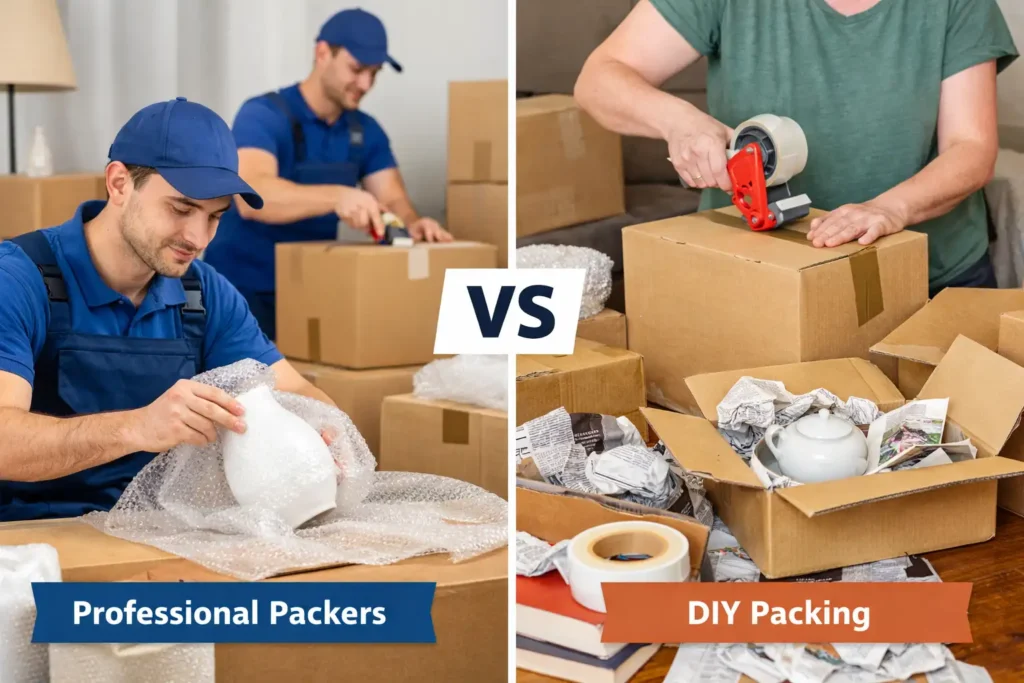
Moving homes often looks deceptively simple—until packing begins. Many homeowners initially consider packing on their own to save money, but real-world moving outcomes show a different picture. In my experience working closely with Packers And Movers operations, the gap between professional packing and DIY packing becomes clear once skill, material quality, and time efficiency are factored into the move.
Professional packing is not just about placing items into boxes; it is a structured process designed to reduce damage, save time, and control overall moving risk—areas where DIY packing frequently falls short.
Understanding the Core Difference Between Professional Packing and DIY Packing
The fundamental difference between professional packing and DIY packing lies in process, preparation, and predictability.
Professional packers follow a systematic, room-wise packing approach that includes sorting, cushioning, labeling, and sequencing items based on how they will be loaded and unloaded. This structured workflow allows them to complete packing in significantly less time while maintaining consistency and protection throughout the move.
DIY packing, on the other hand, is usually done in phases—often after work hours—using trial-and-error methods. This fragmented approach increases the chances of improper cushioning, uneven weight distribution, and last-minute packing errors, especially for fragile and high-value household goods.
Another key distinction is risk ownership. With professional packing, accountability for packing quality and transit handling rests with the service provider. In DIY packing, the entire responsibility for breakage, loss, or damage lies with the individual, with no formal protection or liability coverage.
Understanding how professional packing fits into a complete relocation process is essential when hiring packers and movers for home shifting.
From an expert perspective, this difference in accountability alone often determines whether a move remains cost-controlled or becomes unexpectedly expensive.
Skill & Expertise – The Biggest Advantage of Professional Packers
The most decisive factor separating professional packers from DIY packing is hands-on skill developed through experience. Packing is not a generic task; different household items demand different techniques, pressure tolerance, and protection levels. Professional packers are trained to recognise these variations and apply the correct packing method accordingly, which significantly reduces damage during handling and transit.
Trained Packing Techniques for Different Item Types
Professional packers do not pack all items the same way. Fragile goods such as crockery, glassware, and electronics are individually wrapped, cushioned, and boxed to prevent internal movement. Furniture is either dismantled or reinforced at stress points to avoid cracks, scratches, and joint damage during loading and unloading.
DIY packing often lacks this item-specific approach. Household items are commonly grouped together to save time or materials, increasing friction, impact damage, and breakage risk during transport.
Experience in Handling Heavy and Complex Household Items
Heavy and bulky items—such as wardrobes, beds, refrigerators, and washing machines—pose a high risk during DIY packing. Professional packers are experienced in handling these items using coordinated lifting techniques and proper positioning, reducing the chance of both item damage and personal injury.
In contrast, DIY movers frequently underestimate the complexity of handling heavy items in staircases, narrow corridors, and elevators. This often leads to scratches, dents, and alignment damage that may not be immediately visible but become apparent after installation.
How Expertise Reduces Damage and Moving Errors
Experience allows professional packers to anticipate common moving risks before they occur. They understand how items shift during transit and pack boxes to maintain balance and shock absorption. This proactive approach significantly lowers breakage rates compared to DIY packing, where errors are usually identified only after damage has already occurred. When handled by experienced teams, professional packing significantly reduces damage risks during loading, transport, and unloading—especially in long-distance moves.
From an expert standpoint, packing mistakes are rarely random—they are usually the result of inexperience. Professional skill turns packing into a controlled process rather than a trial-and-error exercise.
Packing Materials – Why Professionals Use What DIY Movers Don’t
Packing materials play a critical role in determining whether household goods arrive safely or suffer damage during transit. One of the biggest advantages professional packers have over DIY movers is access to—and correct use of—purpose-built packing materials designed specifically for relocation.
Professional packers rely on materials that are selected based on item weight, fragility, and movement sensitivity, rather than convenience or availability. This material-driven approach directly improves protection levels during loading, transportation, and unloading.
Industrial-Grade Packing Materials Used by Professionals
Professionals use strong, multi-layered corrugated boxes, bubble wrap, foam sheets, stretch film, and protective covers to safeguard items from vibration, impact, and pressure. These materials are designed to absorb shocks and prevent internal movement inside boxes, which is a common cause of breakage during long-distance or uneven road travel. Using the right packing materials is also closely linked to insurance eligibility during transit.
For furniture and appliances, professional packers apply surface protection and edge reinforcement to reduce scratches, dents, and corner damage. Mattresses, sofas, and upholstery are covered using protective wraps that shield them from dust, moisture, and tearing during transit.
Why Household Alternatives Fail During Transit
DIY packing usually depends on readily available household materials such as newspapers, old clothes, reused cartons, and thin plastic sheets. While these may work for short-term storage, they provide limited impact resistance during transportation, especially when boxes are stacked or exposed to continuous vibration on the road.
Reused boxes also tend to have weakened corners and reduced load-bearing capacity, increasing the risk of collapse during loading or unloading. Once a box fails, damage often spreads to multiple items at once, compounding the loss.
Cost vs Protection – The Hidden Risk of Cheap Materials
DIY movers often choose cheaper or reused materials to cut costs, but this approach frequently backfires. Poor-quality packing materials increase the likelihood of damage, leading to replacement or repair expenses that far exceed the initial savings on supplies. Many DIY movers underestimate these hidden expenses, which is why reviewing a detailed packers and movers cost breakdown is important before deciding.
Professional packers factor material quality into the overall packing strategy, ensuring consistent protection across all items. From an expert viewpoint, packing materials are not an expense to minimize—they are a risk-control tool that directly influences the final cost of a move.
Time Efficiency – How Professionals Save Days of Effort
Time is one of the most underestimated costs in a home move. While DIY packing appears flexible, it often stretches over several days or even weeks, increasing stress and disrupting daily routines. Professional packers operate with a time-optimised workflow, allowing them to complete packing tasks quickly without compromising safety or organisation.
Packing Speed Through Systematic Processes
Professional packing teams follow a structured, room-by-room process that includes sorting, packing, labeling, and preparing items for loading in a predefined sequence. This systematic approach enables them to pack an entire household in a fraction of the time it would take an individual or family packing on their own.
Labeling and inventory creation are completed simultaneously during packing, reducing confusion during unloading and unpacking. This coordination ensures that boxes are placed in the correct rooms at the destination, eliminating the need for repeated handling and rearrangement.
DIY Packing Time Reality Check
DIY packing is frequently delayed due to inexperience, fatigue, and underestimation of the workload. Sorting belongings, finding suitable materials, and repacking improperly packed items consume far more time than initially expected. Many DIY movers also face last-minute packing on moving day, increasing the risk of mistakes and damage.
What starts as a cost-saving effort often turns into extended packing timelines that interfere with work schedules and personal commitments, adding indirect costs that are rarely planned for.
Why Faster Packing Reduces Moving-Day Chaos
Faster, well-organised packing directly improves the efficiency of loading and unloading. When items are packed correctly and labeled clearly, loading teams spend less time rearranging boxes or redistributing weight inside the truck. This reduces vehicle waiting time and lowers the chances of handling-related damage.
From an expert standpoint, time efficiency is not just about speed—it is about control. Professional packing compresses timelines while maintaining order, something DIY packing consistently struggles to achieve.
Safety & Risk Management – A Factor DIY Movers Often Ignore
Safety is often overlooked during DIY packing, even though it directly affects both personal well-being and the condition of household goods. Professional packers approach packing and handling as a risk-managed activity, while DIY packing typically relies on assumption and improvisation, increasing the likelihood of injuries and damage.
Personal Injury Risks in DIY Packing
DIY movers frequently lift heavy or awkward items without proper technique or assistance, leading to common injuries such as back strain, muscle pulls, and falls. Without training in load distribution and lifting posture, even moderately heavy furniture can become a safety hazard during packing and movement.
Professional packers are accustomed to coordinated lifting and controlled handling, which significantly reduces physical strain and the chance of injury during packing and loading activities.
Damage Risks During Loading and Unloading
Improper packing and stacking increase the risk of damage during loading and unloading. DIY-packed boxes often lack internal cushioning or structural strength, making them vulnerable to crushing when stacked inside the vehicle. This results in broken items even when transit distances are short.
Professionals reduce these risks by reinforcing boxes, balancing weight distribution, and positioning fragile items strategically within the load. This planning minimises movement and pressure shifts during transportation.
How Professionals Minimise Transit and Handling Risks
Professional packers anticipate how items behave during transit. They pack with vibration, braking, and uneven road conditions in mind, ensuring adequate shock absorption and spacing between items. This forward-planning approach significantly lowers the chances of scratches, dents, and breakage compared to DIY packing, where protection is often applied inconsistently.
From an expert perspective, most moving-related damage is preventable. The difference lies in whether risks are identified before packing begins—or discovered only after damage occurs.
Cost Comparison – Why DIY Packing Is Not Always Cheaper
DIY packing is often chosen with the assumption that avoiding professional fees automatically reduces moving costs. However, when the full cost picture is examined, DIY packing frequently turns out to be more expensive than expected. The difference lies between visible costs and actual costs incurred during and after the move.
Direct DIY Costs People Often Forget to Calculate
DIY packing still involves material expenses such as boxes, tape, wrapping materials, and protective covers. These costs increase when initial materials prove insufficient or inadequate, forcing last-minute purchases. In many cases, DIY movers end up buying more supplies than planned due to damaged boxes or poor packing attempts that require repacking.
Additionally, extended packing timelines can lead to higher vehicle rental charges and additional labour costs on moving day if loading takes longer than expected.
Indirect Costs of DIY Packing
The most significant DIY costs are often indirect. Damaged household items may need repair or replacement, turning small packing mistakes into major financial losses. Time spent packing over multiple days can also result in lost work hours or reduced productivity, adding an opportunity cost that is rarely considered during budgeting.
Professional packing helps control these indirect costs by reducing damage risk and compressing packing timelines into a predictable window.
Professional Packing as a Cost-Control Strategy
Professional packers typically offer fixed pricing that includes labour and packing materials. This transparency allows movers to budget accurately without worrying about unexpected material purchases or extended packing delays. More importantly, professional packing lowers the likelihood of damage-related expenses, which are often the most expensive part of a move when DIY packing goes wrong.
From an expert standpoint, professional packing is less about spending more upfront and more about preventing uncontrolled costs later.
Accountability, Insurance & Peace of Mind
One of the most critical differences between professional packing and DIY packing is accountability. When professionals handle packing, responsibility for packing quality and item safety does not rest solely with the homeowner. This shared responsibility significantly reduces financial and emotional stress during a move.
Liability Coverage With Professional Packers
Professional packers generally offer liability coverage or transit insurance options when they handle the packing themselves. Because items are packed according to professional standards, they are eligible for coverage in case of loss or damage during transit. This creates a clear line of accountability if something goes wrong.
This accountability encourages careful handling at every stage—packing, loading, transport, and unloading—because the service provider is responsible for the outcome.
Why DIY Packing Offers No Real Protection
With DIY packing, insurance protection is either limited or completely unavailable. Since items are packed by the owner, any damage during transit is typically excluded from liability coverage. This means the financial burden of repair or replacement falls entirely on the mover, regardless of how minor or major the damage may be.
DIY movers often discover this limitation only after damage has occurred, turning what seemed like a cost-saving decision into a costly lesson. This lack of protection is one of the most common reasons insurance claims get rejected when packing is done without professional assistance.
Peace of Mind During the Move
Professional packing provides peace of mind by reducing uncertainty. Knowing that items are packed using tested methods and covered by liability protection allows homeowners to focus on other aspects of relocation, such as timelines, documentation, and settling into the new home.
From an expert perspective, peace of mind is not intangible—it is the result of clearly defined responsibility and reduced risk exposure.
When DIY Packing Might Make Sense (Expert Perspective)
While professional packing consistently delivers better outcomes for most relocations, DIY packing can still be suitable in limited and specific scenarios. Understanding when DIY packing is appropriate helps movers make informed decisions rather than relying on assumptions.
DIY packing may work for small moves with minimal belongings, especially when items are non-fragile and easy to handle. Studio apartments or partial relocations involving clothing, books, and everyday household items often present lower risk when packed carefully by the owner.
Short-distance moves can also reduce exposure to transit-related risks such as prolonged vibration and load shifting. When travel time is minimal and road conditions are predictable, the likelihood of damage decreases compared to long-distance relocations.
However, even in these situations, DIY packing demands realistic time planning and acceptance of full responsibility for any damage. Once the move involves fragile goods, heavy furniture, appliances, or multi-floor buildings, the risk profile changes significantly—making professional packing the safer and more controlled option.
From an expert standpoint, DIY packing is not wrong—it is conditional. The key is aligning the packing method with the size, complexity, and risk level of the move rather than choosing based on cost alone.
Expert Conclusion – Why Professional Packers Consistently Outperform DIY Packing
From an expert standpoint, the difference between professional packing and DIY packing is not a matter of convenience—it is a matter of control, risk management, and outcome predictability. Across skill application, material quality, time efficiency, safety, and accountability, professional packers operate with systems that DIY packing simply cannot replicate consistently.
Professional packers rely on trained techniques, purpose-built materials, and structured workflows to reduce damage, shorten timelines, and manage transit risks effectively. These advantages translate into fewer breakagese, lower indirect costs, and smoother moving-day execution. DIY packing, while seemingly economical, often exposes movers to hidden expenses, extended packing timelines, injury risks, and complete liability in case of damage.
The evidence shows that packing errors rarely happen by chance—they stem from inexperience, inadequate materials, and rushed decisions. Professional packing addresses these weaknesses at the source by standardizing how items are prepared, protected, and handled throughout the move.
DIY packing may work for small, low-risk relocations where time flexibility and full responsibility are acceptable. However, once a move involves fragile items, heavy furniture, multiple rooms, or longer distances, professional packing becomes a cost-control and risk-reduction strategy, not a luxury.
In conclusion, professional packers outperform DIY packing because they replace uncertainty with structure. For movers who value safety, efficiency, and peace of mind, professional packing is not just the better option—it is the smarter one.
Move Smarter With 6 Packers and Movers
If you want your move handled with professional skill, quality packing materials, and clear accountability, choosing the right packing partner matters. 6 Packers and Movers connects you with verified professionals who follow structured packing processes designed to reduce damage, save time, and eliminate last-minute moving stress.
Whether you’re planning a local shift or a long-distance relocation, professional packing ensures your belongings are protected from the moment packing begins until final delivery.
If you’re planning a move and want professional support, connect with verified packers and movers in Bangalore for safe and reliable packing and relocation services.