
What Transit Insurance Covers During House Shifting
Transit insurance during house shifting covers loss or damage to household goods caused by accidents, fire, theft, or natural calamities while items are in transit. Coverage applies only during transportation and depends on policy terms, packing quality, and declared value of goods.
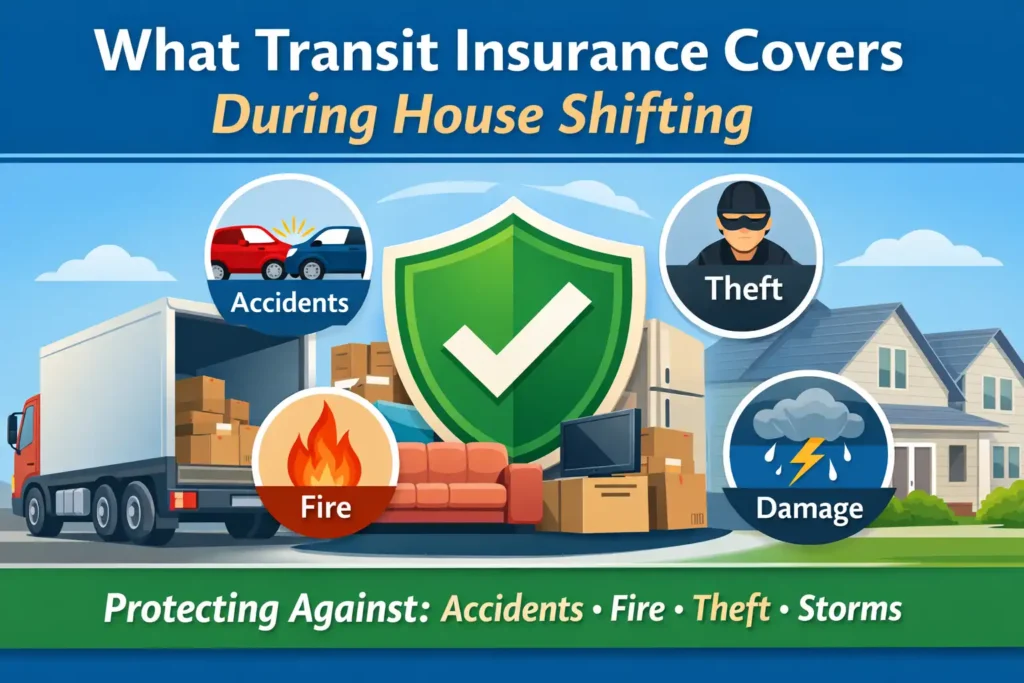
House shifting involves transporting your entire household—furniture, appliances, electronics, kitchenware, and personal belongings—over long distances and unpredictable road conditions. Even with professional packing and careful handling, goods remain exposed to risks such as accidents, theft, fire, and weather-related damage while in transit. This is where transit insurance becomes a critical safety net during relocation.
When you book Professional Packers and Movers services, transit insurance protects you financially against unexpected loss or damage to your household items while they are being transported from your old home to your new one. Instead of bearing repair or replacement costs yourself, the insurance policy provides compensation based on predefined terms and conditions. Understanding what transit insurance covers—and what it does not—helps you avoid disputes, rejected claims, and costly surprises during house shifting.
What Is Transit Insurance in House Shifting?
Transit insurance is a specialized insurance policy designed to cover loss or physical damage to household goods while they are in transit from the pickup location to the delivery destination. In house shifting, it applies only during the transportation phase, including loading, movement, and unloading, as defined in the policy.
Transit insurance for household goods is typically issued under inland or marine transit insurance policies. These policies are meant to insure movable goods against unforeseen risks that may occur while they are being transported by road, rail, air, or sea.
Transit insurance is commonly offered during professional house shifting services provided by verified packers and movers.
Key factual points:
- Coverage starts when goods are loaded for transit and ends once delivery is completed, as per policy terms
- The policy covers physical loss or damage, not service delays
- Insurance is issued in the customer’s name, even if arranged through movers
Why Transit Insurance Is Important During Relocation
During house shifting, household items pass through multiple handling stages—packing, loading, transport, and unloading. Each stage increases exposure to risk. Transit insurance plays a crucial role by transferring this financial risk from the homeowner to the insurer.
Why transit insurance matters:
- Road accidents can cause breakage or total loss of goods
- Fire, flooding, or natural events can damage packed household items
- Theft or vehicle-related incidents may result in partial or complete loss
- Transporter liability alone is usually limited and may not cover actual value
Without transit insurance, compensation—if any—is often insufficient to replace damaged items.
Understanding these risks is also part of knowing how to choose reliable packers and movers for your relocation.
Who Provides Transit Insurance – Movers vs Insurance Companies
A common misconception during house shifting is that packers and movers themselves provide insurance coverage. In reality, transit insurance is always underwritten by licensed insurance companies.
Important clarifications:
- Packers and movers only facilitate or arrange transit insurance
- The insurance policy is issued by an insurer, not the moving company (This is why verifying the service provider before booking becomes critical.)
- Claims are settled by the insurance company based on policy terms
- Movers are responsible only for safe handling, not claim payouts
This distinction is critical, especially when raising claims or resolving disputes after delivery.
Types of Transit Insurance Available for House Shifting
When shifting a house, transit insurance is not a single, standard product. Different types of coverage exist, and choosing the right one directly impacts how much compensation you receive in case of damage or loss. Understanding these options helps you avoid underinsurance and unrealistic expectations during claim settlement.
Basic Liability Coverage (Carrier’s Risk)
Basic liability coverage—often misunderstood as “insurance”—refers to the limited legal responsibility of the transporter for goods carried during transit. This is not a full insurance policy and does not compensate for the actual value of household items.
Key facts about carrier’s liability:
- Compensation is limited and calculated as per transport laws or contract terms
- Coverage is not based on the replacement or market value of goods
- Many types of damage may not be compensated at all
- Claim amounts are usually significantly lower than actual losses
Because of these limitations, relying only on transporter liability exposes homeowners to financial risk during house shifting.
Comprehensive Transit Insurance (All-Risk Policy)
Comprehensive transit insurance—commonly referred to as an all-risk transit policy—offers broader protection for household goods during relocation. It covers most external causes of loss or damage unless specifically excluded in the policy.
What comprehensive transit insurance typically covers:
- Damage due to road accidents or vehicle overturning
- Fire, explosion, and specified natural calamities
- Theft or complete loss of goods during transit
- Damage occurring during loading and unloading (subject to conditions)
This type of insurance is generally recommended for intercity and interstate house shifting, where transit risks are higher.
Declared Value vs Depreciated Value Coverage
One of the most important aspects of transit insurance is how the claim value is calculated. Most policies settle claims based on depreciated value rather than original purchase price.
Understanding the difference:
- Declared Value Coverage
- You declare the estimated current value of household goods
- Claim settlement is aligned with declared value
- Premium may be higher
- Depreciated Value Coverage
- Claim amount is reduced based on item age and condition
- Common for electronics, appliances, and furniture
- Lower premium compared to declared value coverage
These valuation methods also directly affect the overall packers and movers cost for a house shift.
Failing to understand this difference often leads to dissatisfaction during claim settlement, even when damage is covered.
What Transit Insurance Covers During House Shifting
Transit insurance is designed to protect household goods from unforeseen physical risks during transportation. Coverage applies only when loss or damage occurs due to insured events during the transit period defined in the policy. Understanding these inclusions helps set clear expectations at the time of claim settlement.
Damage Due to Road Accidents
One of the primary risks during house shifting is damage caused by road accidents. Transit insurance covers physical loss or damage to household goods if the transport vehicle meets with an accident during transit.
Covered scenarios include:
- Collision with another vehicle
- Vehicle overturning or skidding
- Damage caused by sudden impact during transit
Coverage is applicable only when the accident occurs after loading and before final delivery, as defined in the policy terms.
Fire, Explosion, or Natural Calamities
Transit insurance typically covers damage caused by fire and certain natural events while goods are in transit. These events are treated as external and uncontrollable risks.
Usually covered events include:
- Fire or explosion affecting the transport vehicle
- Flooding due to heavy rain
- Storms, cyclones, or earthquakes (if listed in policy)
Coverage depends on whether the specific peril is mentioned in the policy schedule.
Theft or Complete Loss During Transit
Transit insurance covers loss resulting from theft or complete disappearance of goods during transit, subject to policy conditions.
Key coverage conditions:
- Theft occurring while goods are in the insured vehicle
- Loss of entire consignment due to vehicle theft
- FIR and supporting documentation are required
Partial theft claims are assessed based on inventory and surveyor findings.
Damage During Loading and Unloading
Household goods may suffer damage during loading or unloading due to handling errors. Transit insurance may cover such damage if these activities are carried out as part of the insured transit process.
Important considerations:
- Loading and unloading must be performed by authorized personnel
- Improper or unsafe handling may affect claim admissibility
- Coverage is subject to policy-specific conditions
This inclusion highlights the importance of professional handling during house shifting.
Breakage of Fragile Household Items
Fragile items such as glassware, crockery, and electronics are covered under transit insurance only when specific conditions are met.
Coverage usually applies when:
- Fragile items are professionally packed
- Proper cushioning and packing materials are used
- Damage occurs due to an insured transit event
Self-packed fragile items are commonly excluded from coverage.
What Transit Insurance Covers
- Physical damage due to accidents
- Loss caused by fire or listed natural calamities
- Theft or complete loss during transit
- Handling-related damage during loading and unloading
- Breakage of fragile items (subject to packing conditions)
What Is NOT Covered Under Transit Insurance
While transit insurance offers important protection during house shifting, it does not cover every type of loss or damage. Insurance policies clearly define exclusions, and understanding them is essential to avoid claim rejection or disputes after delivery.
Damage Due to Poor Packing or Owner-Packed Items
Transit insurance generally excludes damage caused by inadequate, unsafe, or improper packing. This exclusion becomes especially important when household goods are packed by the owner instead of professionals.
Common exclusion scenarios:
- Items packed by the customer without professional packing standards
- Insufficient cushioning for fragile goods
- Damage caused due to loose or unstable packing
Insurance providers expect packing to meet minimum safety requirements for coverage to apply.
Mechanical or Electrical Failures Without External Damage
Transit insurance does not cover internal defects or breakdowns that are not caused by an insured external event.
Typically excluded cases include:
- Electrical appliances not working after delivery without visible damage
- Mechanical failure due to internal wear or aging
- Malfunction without signs of accident, impact, or external force
Insurance applies only when failure is directly linked to an insured transit-related incident.
Cash, Jewellery, Documents, and Valuables
Certain high-value or sensitive items are excluded from standard transit insurance policies due to their nature and risk profile.
Commonly excluded items:
- Cash and currency notes
- Jewellery, precious stones, and bullion
- Important documents, certificates, and manuscripts
- Antiques and collectibles (unless separately insured)
Such items require specialized insurance and are not covered under general household transit policies.
Pre-Existing Damage or Normal Wear and Tear
Transit insurance does not cover damage that existed before the move or deterioration due to normal usage over time.
Not covered under insurance:
- Scratches, dents, or cracks present before packing
- Fading, rusting, or aging-related damage
- Cosmetic wear that does not result from a transit incident
Documenting item condition before packing helps avoid claim disputes.
Delays Without Physical Damage
Transit insurance is designed to compensate for physical loss or damage only. It does not provide compensation for delays in delivery.
Excluded situations include:
- Late delivery due to traffic or route changes
- Storage delays without damage
- Missed possession dates without item damage
Service-related complaints must be addressed separately with the service provider.
How the Claim Process Works for Transit Insurance
The effectiveness of transit insurance during house shifting largely depends on how correctly and promptly the claim is raised. Even when damage is covered under the policy, missing documentation or delayed reporting can affect claim approval. Knowing the claim process in advance helps you act quickly and correctly if something goes wrong during transit.
Documents Required to Raise a Transit Insurance Claim
To initiate a claim, insurers require specific documents to verify the loss or damage and assess compensation.
Commonly required documents include:
- Copy of the transit insurance policy
- Packing list or inventory prepared before transit
- Claim form duly filled and signed
- Photographs of damaged goods and packaging
- Repair estimates or invoices (if applicable)
- FIR or police complaint in case of theft or major loss
Submitting complete documentation helps speed up the claim assessment process.
Timeframe for Reporting Transit Damage
Transit insurance policies specify a strict time window for reporting damage or loss. Delayed reporting may result in claim rejection.
Important reporting guidelines:
- Visible damage should be reported immediately upon delivery
- Concealed damage must be reported within the time limit mentioned in the policy
- Theft or total loss must be reported as soon as discovered
It is advisable to notify the insurer even if the extent of damage is unclear.
Inspection and Survey Process
After a claim is reported, the insurer appoints a licensed surveyor to assess the extent and cause of damage.
What happens during inspection:
- Physical inspection of damaged goods
- Verification of packing quality and handling
- Matching damage with policy coverage
- Preparation of a survey report
The surveyor’s findings play a key role in determining claim admissibility and settlement amount.
Claim Settlement – Repair vs Reimbursement
Once the survey is completed, the insurer processes the claim based on policy terms and assessment findings.
Settlement methods may include:
- Reimbursement of repair costs
- Cash settlement after applying depreciation
- Replacement cost settlement (if policy allows)
The final payout depends on declared value, depreciation rules, deductibles, and exclusions stated in the policy.
Transit Insurance Costs During House Shifting
Transit insurance cost is calculated based on risk exposure during transportation and the value of household goods being insured. While the premium may appear like an additional expense during relocation, it is generally a small percentage compared to the potential financial loss caused by damage or theft.
Factors Affecting Transit Insurance Premium
Transit insurance premiums are not fixed. They vary depending on several measurable factors related to the move and the goods being transported.
Key factors influencing insurance cost include:
- Declared value of household goods
- Distance between origin and destination
- Mode of transportation (road, rail, air, or sea)
- Nature of goods (fragile, electronic, bulky items)
- Type of coverage selected (basic vs comprehensive)
Higher declared value and longer transit routes generally result in higher premiums.
Percentage-Based Insurance Cost Explained
Transit insurance premiums are usually calculated as a percentage of the declared value of goods. This percentage varies based on insurer risk assessment and policy terms.
How percentage-based pricing works:
- You declare the approximate value of your household goods
- The insurer applies a percentage rate to this value
- The resulting amount becomes the insurance premium
Choosing a lower declared value reduces premium cost but may also reduce claim compensation in case of damage.
Is Transit Insurance Worth the Cost?
From a risk-management perspective, transit insurance is generally considered worthwhile, especially for intercity and interstate house shifting.
Why many homeowners opt for transit insurance:
- Premium cost is relatively small compared to total relocation expense
- Replacement or repair costs can be significantly higher
- Provides financial security against unpredictable transit risks
- Reduces disputes and out-of-pocket expenses after delivery
For long-distance moves or households with valuable items, transit insurance acts as a financial safeguard rather than an optional add-on.
Quick Cost Overview
Cost Element | Impact on Premium |
Declared goods value | High |
Distance of move | Medium |
Fragile items | Medium to High |
Coverage type | High |
FAQs About Transit Insurance for Household Goods
Transit insurance is not legally mandatory, but it is strongly recommended for house shifting—especially for intercity or interstate moves. Without insurance, any loss or damage during transit may result in limited or no compensation, depending on transporter liability terms.
Yes. Transit insurance can be purchased directly from an insurance company or arranged through packers and movers. Even when movers facilitate the policy, the insurance is issued in the customer’s name and governed by insurer terms.
Yes. Transit insurance covers both intercity and interstate house shifting, provided the route and destination are mentioned in the policy. Coverage applies only for the transit period defined in the policy schedule.
If you do not opt for transit insurance:
- Compensation may be limited to transporter liability
- Repair or replacement costs may have to be paid out of pocket
- Claims for theft, fire, or natural damage may not be recoverable
This increases financial risk during house shifting.
Transit insurance is valid only for the duration of the move, starting from loading and ending at delivery, as defined in the policy. It does not provide ongoing protection after goods are unpacked unless specifically extended.
Damage noticed after delivery may be covered only if reported within the policy-defined timeframe. Late reporting or failure to document damage properly can affect claim acceptance.
Protect Your Household Goods with Insured, Professional Movers
House shifting comes with real risks—but you don’t have to face them alone. When you choose 6 Packers And Movers, your belongings are handled by experienced professionals with proper packing, safe transportation, and transit-insurance assistance to protect you from unexpected losses.
If you are planning a move in Bangalore, choosing insured and verified packers and movers in Vijayawada helps ensure safer relocation.
Why Choose 6 Packers And Movers?
- ✔ Professional packing that meets insurance requirements
- ✔ Assistance in arranging transit insurance for house shifting
- ✔ Careful loading, secure transport, and safe unloading
- ✔ Transparent process with documented inventory support
Get reliable relocation support with protection you can trust.
Get Free Quotes from Verified Packers And Movers