
Packing Artwork: A Complete Guide to Safely Packing Paintings, Sculptures & Frames for Moving
To safely pack artwork for moving, cover the surface with acid-free paper, add cushioning without touching painted areas, secure frames and glass, place the artwork upright in a snug box, and prevent movement during transportation.
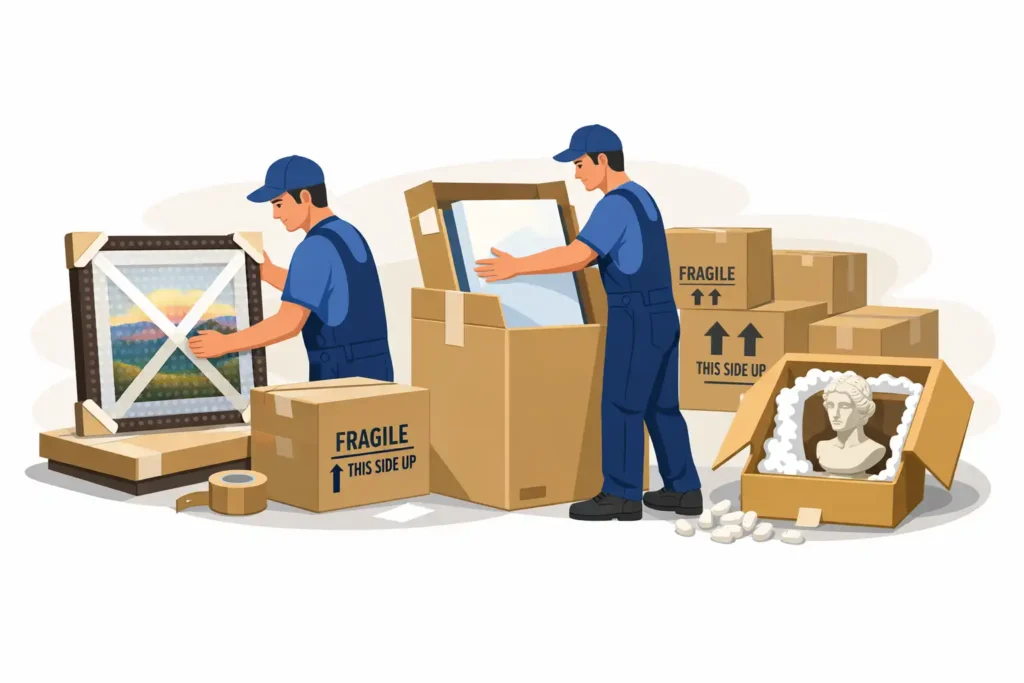
Relocating valuable or sentimental artwork requires far more care than packing regular household items. Paintings, framed art, and sculptures are highly vulnerable to scratches, cracks, moisture damage, and breakage if they are not packed correctly. This is why many homeowners rely on professional Packers And Movers who are trained to handle fragile and high-value items during relocation.
Artwork packing is not just about wrapping items—it involves choosing the right materials, protecting delicate surfaces, preventing movement inside boxes, and ensuring safe placement during transportation. Whether you are moving a single canvas painting or an entire art collection, following proper packing methods significantly reduces the risk of damage.
Essential Packing Materials for Artwork Protection
Using the correct packing materials is one of the most important steps in protecting artwork during relocation. Regular household packing supplies may not provide adequate surface protection or shock absorption, which increases the risk of scratches, cracks, and moisture damage. Artwork-specific packing focuses on creating multiple protective layers while preventing direct contact with harmful materials.
High-quality packing materials help absorb vibrations during transit, keep artwork stable inside boxes, and protect delicate surfaces from environmental exposure.
Packing Supplies for Paintings & Canvas Art
Paintings and canvas artwork require soft, non-abrasive materials that protect the surface without sticking or transferring residue.
Commonly used materials include:
- Acid-free tissue paper or glassine paper for surface protection
- Plastic wrap or poly sheets to block moisture
- Bubble wrap for cushioning (never in direct contact with painted surfaces)
- Sturdy cardboard sheets for added rigidity
- Painter’s tape to secure layers without leaving marks
The first protective layer should always prevent friction and surface contact, followed by cushioning to absorb impact.
Materials Needed for Framed Artwork & Glass Frames
Framed artwork is especially vulnerable due to the presence of glass and rigid edges. Proper materials help minimize shattering risks and frame damage.
Recommended materials include:
- Painter’s or masking tape to secure glass surfaces
- Corner protectors to shield frame edges
- Bubble wrap or foam sheets for impact resistance
- Corrugated cardboard or frame protectors
- Strong, snug-fitting boxes to prevent movement
Taping glass in a crisscross pattern helps hold fragments together if breakage occurs, reducing damage to the artwork beneath.
Packing Supplies for Sculptures, Statues & 3D Art Pieces
Sculptures and three-dimensional artwork often have uneven shapes and delicate extensions, making them more prone to chipping and breakage.
Effective packing materials include:
- Soft foam padding or foam sheets
- Bubble wrap for layered cushioning
- Thick cardboard or wooden crates for stability
- Packing peanuts or foam inserts to fill empty spaces
- Heavy-duty boxes designed for weight support
These materials help distribute pressure evenly and prevent direct impact on fragile areas.
Why Acid-Free & Archival Materials Matter
Certain packing materials can cause long-term damage to artwork if they react with paint, canvas, or frame finishes. Acidic materials may lead to discoloration, surface sticking, or deterioration over time.
Key reasons to use acid-free materials:
- Prevent chemical reactions with artwork surfaces
- Reduce yellowing or staining on paper and canvas
- Protect older or high-value artwork during extended storage
- Maintain original texture and finish
Using archival-quality materials is especially important for artwork that will be stored for extended periods or transported over long distances.
How to Pack Paintings & Canvas Artwork Safely (Step-by-Step)
Paintings and canvas artwork are highly sensitive to pressure, surface contact, and environmental changes. Incorrect wrapping or tight packing can cause cracks, paint transfer, or permanent surface damage. Following a structured packing process helps protect the artwork from friction, moisture, and impact during relocation.
This step-by-step method focuses on protecting the painted surface first and then adding cushioning layers to absorb shocks during handling and transportation.
Preparing the Painting Before Packing
Before wrapping the artwork, it’s important to ensure the surface is clean and ready for packing. Dust or debris trapped inside packing layers can scratch or stick to the artwork during transit.
Preparation steps include:
- Placing the painting on a clean, flat surface
- Removing dust using a soft, dry cloth
- Ensuring the paint surface is completely dry
- Checking for loose frames, hanging wires, or damaged edges
Proper preparation reduces the risk of friction-related damage once the artwork is wrapped.
Protecting the Surface from Scratches & Moisture
The first protective layer is critical because it comes in direct contact with the artwork. Using incorrect materials can cause paint sticking or surface marks.
Best practices include:
- Covering the surface with acid-free tissue or glassine paper
- Avoiding newspaper or printed paper due to ink transfer
- Adding a moisture barrier using plastic wrap or poly sheets
- Ensuring the surface layer is smooth and wrinkle-free
This layer protects the artwork from abrasion, humidity, and dust during transport.
Wrapping Techniques for Canvas vs Oil & Acrylic Paintings
Different painting types require slightly different handling due to surface texture and paint composition.
Recommended wrapping methods:
- Wrap canvas paintings loosely to avoid stretching
- Avoid direct contact between bubble wrap and painted surfaces
- Add cardboard sheets on both sides for rigidity
- Use multiple layers of bubble wrap for cushioning
- Secure layers gently with painter’s tape
Oil and acrylic paintings are especially sensitive to temperature changes and pressure, making layered cushioning essential.
Boxing & Labeling Paintings for Moving Trucks
Once wrapped, paintings should be placed inside sturdy boxes that prevent movement during transit. Loose packing inside boxes increases the chance of impact damage.
Key boxing and labeling tips:
- Use snug-fitting picture boxes or custom boxes
- Place paintings vertically inside boxes, not flat
- Fill empty spaces with foam or cardboard inserts
- Label boxes as “Fragile” and “This Side Up”
- Avoid stacking heavy items against artwork boxes
Correct orientation and clear labeling help ensure safe handling throughout the move.
How to Pack Framed Artwork & Glass Frames Without Damage
Framed artwork requires extra caution because the glass, frame edges, and artwork inside can be damaged by even minor impact. Glass breakage, frame warping, and surface scratches are common when framed pieces are packed without proper reinforcement. Using the right techniques helps minimize pressure on the glass and keeps the frame stable during transportation.
Removing Glass or Leaving It Intact – What’s Safer?
In most household moves, glass is left intact and reinforced rather than removed, as removing it improperly can cause more harm than protection. The key is to stabilize the glass so it does not shift or shatter during movement.
Best practices include:
- Leaving glass intact for standard framed artwork
- Applying painter’s or masking tape in an “X” or grid pattern on the glass
- Avoiding duct tape or adhesive tapes that leave residue
- Ensuring the frame is structurally sound before packing
The taped pattern helps contain fragments if the glass cracks, reducing damage to the artwork beneath.
Using Corner Protectors & Cardboard Shields
Frame edges and corners absorb the most impact during handling and transit. Without reinforcement, these areas are highly prone to chipping and bending.
Effective protection methods:
- Placing cardboard corner protectors on all four edges
- Adding rigid cardboard sheets on the front and back
- Wrapping the entire frame with bubble wrap or foam
- Securing layers with painter’s tape without overtightening
These layers create a protective shell that absorbs shocks and prevents direct pressure on the glass.
Preventing Glass Cracks & Frame Warping
Glass cracking and frame warping often occur due to uneven pressure or stacking during transport. Proper cushioning and correct orientation are essential to prevent these issues.
Key precautions:
- Never place framed artwork flat under heavy items
- Transport frames vertically inside boxes or trucks
- Ensure even padding on all sides
- Avoid tight wrapping that puts stress on the glass
Balanced packing helps distribute pressure evenly and protects both glass and frame materials.
Packing Multiple Frames Together Safely
When moving several framed pieces, packing them together can save space—but only if done correctly. Incorrect stacking increases the risk of glass-to-glass contact.
Safe packing methods include:
- Placing cardboard or foam sheets between each frame
- Wrapping each frame individually before grouping
- Using picture boxes designed for multiple frames
- Filling gaps to prevent movement during transit
Separating and cushioning each frame minimizes friction and impact damage.
How to Pack Sculptures, Statues & 3D Art Pieces
Sculptures and three-dimensional artwork are especially vulnerable during relocation because of their irregular shapes, protruding elements, and material sensitivity. Unlike flat artwork, these pieces require all-around protection to prevent chipping, cracks, or structural stress. Proper packing focuses on cushioning, immobilization, and even weight distribution.
This process ensures that fragile extensions and detailed surfaces remain protected from impact and vibration during handling and transportation.
Packing Small Decorative Sculptures
Smaller sculptures made of ceramic, resin, clay, or mixed materials can still break easily if they shift inside boxes. Individual wrapping and internal cushioning are essential.
Recommended steps:
- Wrap the sculpture with soft foam or acid-free paper
- Add multiple layers of bubble wrap for shock absorption
- Secure wrapping gently with painter’s tape
- Place the item in a sturdy box with padding on all sides
- Fill empty spaces with foam inserts or packing peanuts
The goal is to prevent any internal movement once the box is sealed.
Handling Heavy, Stone, Metal or Wooden Art Pieces
Heavier sculptures require stronger packaging due to their weight and rigidity. Improper support can lead to cracking or pressure damage during lifting and transport.
Key precautions include:
- Using heavy-duty boxes or reinforced crates
- Padding the base and weak points extensively
- Distributing weight evenly inside the container
- Avoiding stacking heavy sculptures with other items
- Using proper lifting techniques to reduce stress on the piece
Heavy artwork should always be secured to prevent tipping or rolling during transit.
Custom Crating for High-Value or Irregular-Shaped Artwork
Artwork with unique shapes, sharp edges, or high value often requires custom crating to ensure maximum protection. Standard boxes may not provide sufficient stability for such pieces.
Custom crating benefits include:
- Tailored support for irregular shapes
- Reduced movement during transportation
- Strong outer protection against impact
- Added safety during long-distance moves or storage
Crates allow artwork to remain suspended and cushioned, minimizing stress on fragile sections.
Securing Sculptures Inside Boxes & Trucks
Even well-packed sculptures can be damaged if not positioned correctly during transportation. Proper placement inside moving vehicles is essential.
Best practices include:
- Placing sculptures in upright, stable positions
- Securing boxes to prevent sliding during transit
- Keeping sculptures away from heavy or shifting items
- Avoiding areas exposed to excessive vibration
Stabilization inside the moving truck significantly reduces the risk of impact-related damage.
Transportation, Storage & Insurance Tips for Artwork Moving
Even perfectly packed artwork can be damaged if it is mishandled during transportation or stored in unsuitable conditions. Proper placement inside moving vehicles, protection from environmental factors, and basic insurance awareness play a key role in keeping artwork safe throughout the relocation process.
Ideal Placement of Artwork in Moving Trucks
Where artwork is placed inside the moving truck directly affects its safety. Incorrect positioning can expose it to pressure, vibration, or shifting loads.
Best placement practices include:
- Transporting paintings and frames in an upright position
- Placing artwork between mattresses or padded surfaces for cushioning
- Securing boxes to prevent sliding during transit
- Keeping artwork away from heavy furniture or appliances
Vertical placement reduces pressure on glass and frames while minimizing surface contact.
Climate Control & Moisture Protection During Transit
Artwork materials are sensitive to temperature fluctuations and humidity. Exposure to moisture or heat can cause warping, mold growth, or paint damage.
Important precautions include:
- Using plastic wrap as a moisture barrier
- Avoiding direct exposure to rain during loading and unloading
- Ensuring ventilation inside storage or transport containers
- Avoiding prolonged exposure to extreme heat or cold
Maintaining stable conditions helps preserve the structural and surface integrity of artwork.
Short-Term vs Long-Term Artwork Storage Tips
If artwork needs to be stored before or after the move, storage conditions become critical. Poor storage can cause slow, irreversible damage.
Storage guidelines include:
- Choosing dry, clean, and well-ventilated spaces
- Keeping artwork elevated off the floor
- Storing framed artwork upright with padding
- Avoiding stacking items directly against artwork
Proper storage ensures artwork remains protected until it is safely displayed again.
Insurance Coverage for Artwork During Relocation
While packing reduces risks, damage can still occur during transit. Understanding basic coverage options helps reduce financial loss.
Important considerations:
- Documenting artwork condition before packing
- Keeping photos and inventory records
- Checking whether transit coverage applies to high-value items
- Declaring valuable artwork separately when required
Having documentation in place supports smoother claim processes if damage occurs.
Understanding what transit insurance covers during house shifting helps you protect valuable artwork against unexpected damage.
Move Your Artwork Safely Without Unnecessary Risks
Packing artwork for moving requires more than basic wrapping—it demands careful planning, the right materials, and proper handling at every stage of the relocation. Paintings, framed artwork, and sculptures are vulnerable to pressure, vibration, moisture, and improper stacking, which is why following structured packing methods is essential.
By using surface protection, layered cushioning, secure boxing, and correct placement during transportation, you can significantly reduce the risk of scratches, cracks, and breakage. Whether you’re handling artwork yourself or preparing it for movers, these practices help ensure your valuable pieces arrive in the same condition they left.
Get Professional Help for Safe Artwork Moving
If you’re relocating valuable or fragile artwork and want to avoid damage during packing and transportation, working with experienced professionals can make a major difference. Trained movers use proper materials, correct handling techniques, and safe loading methods to protect artwork throughout the move.
Find trusted Packers and Movers in Vizag who specialize in handling fragile items and ensure your artwork is packed and transported with the care it deserves.
A safe move starts with the right packing—and the right professionals.