
How To Lift Heavy Boxes Correctly: The Complete Guide
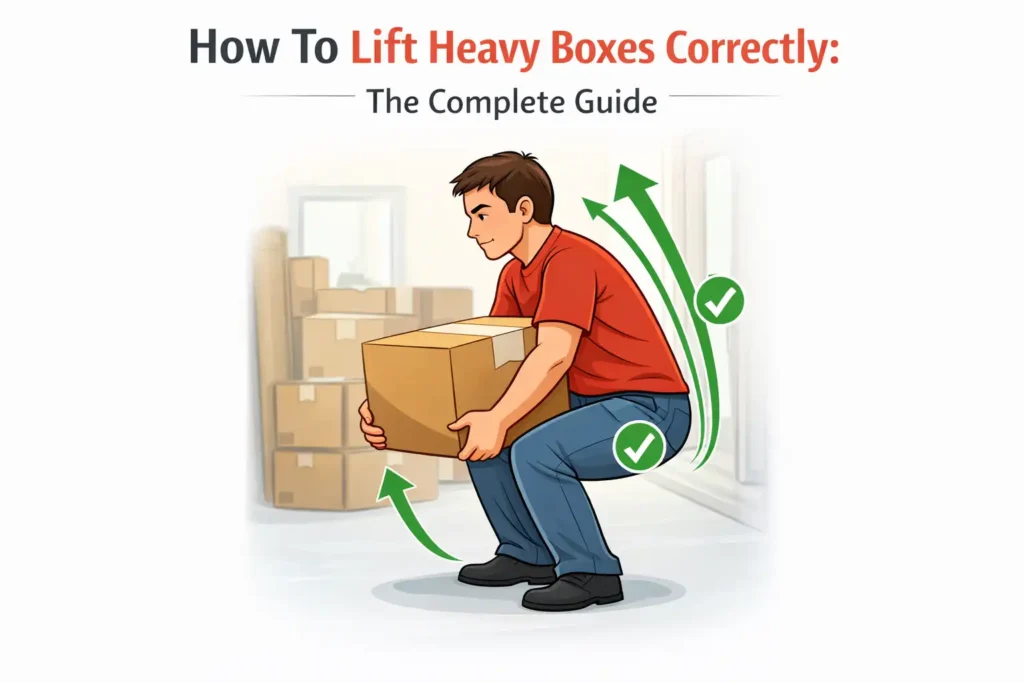
Lifting heavy boxes is one of the most injury-prone tasks during home shifting, office relocation, or storage moves. Back strains, knee injuries, and muscle fatigue often occur when boxes are lifted incorrectly or without proper planning. Whether you are moving on your own or preparing for a relocation with professional help, understanding correct lifting techniques can significantly reduce injury risks and make the moving process safer and more efficient. For large or high-risk moves, working with experienced packers and movers services—such as packers and movers in Ahmedabad—also helps minimize physical strain and handling errors.
Why Correct Lifting Technique Is Important During Moving
Correct lifting techniques are essential because manual handling of heavy boxes places direct stress on the spine, muscles, joints, and connective tissues. Improper posture or rushed lifting increases the likelihood of both short-term injuries and long-term musculoskeletal problems.
Common Injuries Caused by Improper Lifting
Improper lifting is strongly associated with musculoskeletal injuries such as lower back strains, muscle sprains, and joint stress. These injuries commonly occur when heavy boxes are lifted without bending the knees, when loads are held away from the body, or when sudden movements are involved. Repeated incorrect lifting can also contribute to chronic back pain and reduced mobility.
How Incorrect Lifting Affects Your Back, Knees, and Spine
When a person bends at the waist instead of the knees, excessive pressure is placed on the lower spine. Twisting the torso while lifting further increases stress on spinal discs and surrounding muscles. Knees are also affected when lifting loads without proper alignment, leading to joint strain and instability. Maintaining a neutral spine and balanced posture helps distribute weight across stronger muscle groups.
Why Moving-Related Injuries Are So Common
Moving involves repetitive lifting, carrying, lowering, and awkward postures, often in confined spaces like staircases and doorways. Poor load assessment, unstable boxes, and fatigue increase the risk of injury during relocation. Many injuries occur not because the load is extremely heavy, but because it is lifted or carried incorrectly.
How Proper Lifting Reduces Long-Term Health Risks
Using correct lifting techniques reduces cumulative stress on the spine and joints, lowering the risk of long-term musculoskeletal disorders. Proper posture, controlled movements, and planned lifting help protect the back and knees over repeated lifting tasks, which is especially important during full-house relocations.
Professional movers are trained in correct lifting posture and load handling, which is why hiring reliable packers and movers is safer for full-house or office relocations.
How to Assess a Box Before Lifting It
Assessing a box before lifting is a critical safety step during moving. Many lifting injuries happen not because of poor technique, but because the load was heavier, unstable, or awkwardly shaped than expected. Taking a few seconds to evaluate a box helps prevent sudden strain, loss of balance, and improper posture during lifting.
Check the Weight of the Box Before Attempting to Lift
Before lifting, gently test the weight of the box by pushing it slightly with your foot or lifting one corner. This helps you understand whether the load is manageable or requires assistance. Attempting to lift a box without knowing its weight can lead to sudden muscle strain and loss of control. If the box feels heavier than expected, avoid lifting it alone and consider using moving equipment or professional help such as experienced packers and movers.
Inspect Box Stability and Packing Quality
Boxes that are poorly packed or unevenly balanced increase the risk of slipping and awkward lifting posture. Shifting contents inside the box can cause sudden movement during lifting, which places extra stress on the back and shoulders. Ensuring that boxes are tightly packed and properly sealed helps maintain control while lifting and carrying.
Identify Fragile, Bulky, or Awkwardly Shaped Boxes
Large or bulky boxes are harder to grip and may block your line of sight while carrying. Awkwardly shaped loads increase ergonomic risk because they force the body into unnatural positions. Fragile items also require controlled lifting and slow movement to avoid sudden jerks that can strain muscles. Identifying these risks in advance allows you to plan the lift safely.
Decide Whether Team Lifting or Tools Are Needed
If a box is heavy, oversized, or difficult to grasp, using team lifting or mechanical aids is safer than lifting alone. Equipment such as dollies, hand trucks, and sliders reduces physical effort and lowers stress on the spine and joints. Planning to use tools or assistance helps prevent overexertion during moving.
If the box feels heavier than expected, avoid lifting it alone and consider using moving equipment or professional help such as experienced packers and movers.
Step-by-Step Guide to Lifting Heavy Boxes Safely
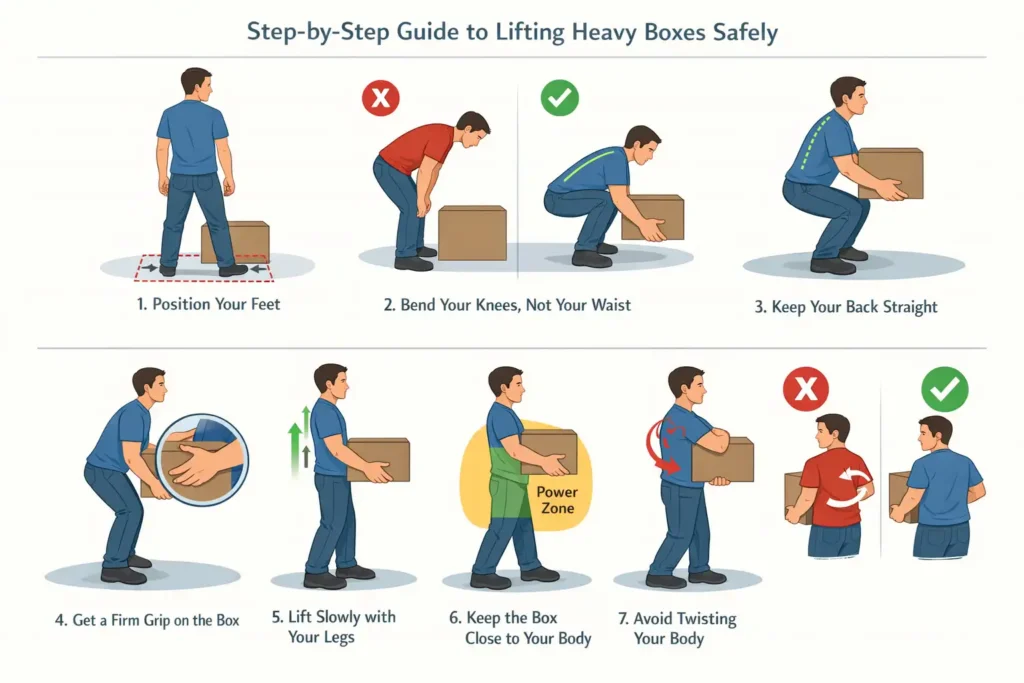
Lifting heavy boxes safely requires proper body positioning, controlled movement, and correct use of muscle groups. Following a step-by-step approach helps reduce strain on the back and joints while improving balance and control throughout the lift.
Position Your Feet for Maximum Balance
Before lifting, stand close to the box with your feet placed shoulder-width apart. One foot can be slightly ahead of the other to improve stability. This stance creates a strong base of support and helps maintain balance when lifting and carrying heavy loads.
Bend Your Knees, Not Your Waist
Bending at the knees instead of the waist helps keep the spine in a neutral position. Squatting down allows the stronger leg muscles to take on most of the lifting effort, reducing stress on the lower back. This technique is one of the most important factors in preventing lifting-related injuries.
Keep Your Back Straight and Core Engaged
Maintaining a straight back while lifting helps evenly distribute weight across the body. Engaging the core muscles provides additional support to the spine and improves overall control during the lift. Avoid rounding or arching the back, as both positions increase the risk of strain.
Get a Firm Grip on the Box
A secure grip reduces the chances of the box slipping during lifting. Hands should be positioned firmly on opposite sides of the box to maintain balance and control. Poor grip can cause sudden movements that place excessive strain on muscles and joints.
Lift Slowly Using Your Leg Muscles
Lift the box in a smooth, controlled motion by straightening your legs. Avoid sudden jerks or rapid movements, as these increase the risk of muscle strain. Using leg strength instead of the back allows for safer handling of heavy loads.
Keep the Box Close to Your Body
Holding the box close to your body reduces the leverage force on the lower back. Loads carried away from the body place additional stress on the spine and shoulders, increasing injury risk. Keeping the box within the body’s natural lifting zone improves stability and control.
Avoid Twisting Your Body While Lifting
Twisting the torso while lifting places uneven pressure on the spine and can lead to disc injuries. If you need to change direction, turn your feet instead of twisting your upper body. Controlled movements help protect the spine during lifting.
Safe Carrying and Lowering Techniques for Heavy Boxes
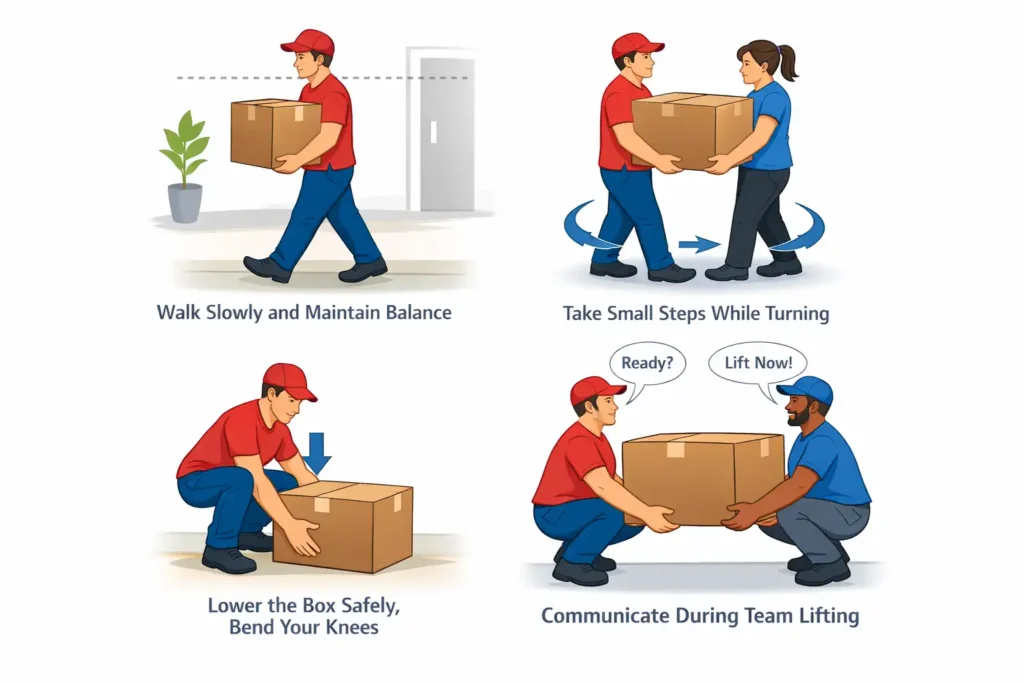
Lifting a box correctly is only part of the process. Carrying and lowering heavy boxes also require proper technique to prevent sudden strain, loss of balance, and injury. Controlled movement and correct posture throughout this phase help protect the spine and joints during relocation.
Walk Slowly and Maintain Proper Balance
While carrying a heavy box, slow and steady movement helps maintain balance and posture. Sudden steps or rushing can cause uneven weight distribution, increasing strain on the back and legs. Maintaining a stable walking pace reduces the risk of slips and awkward movements.
Keep Your Line of Sight Clear While Carrying
Carrying boxes that block your vision increases the risk of tripping or colliding with obstacles. Obstructed visibility often leads to awkward postures as the body compensates, increasing injury risk. Keeping the load at a manageable height allows better awareness of surroundings.
Take Small Steps While Turning
Turning the upper body while carrying a heavy box places excessive strain on the spine. Instead, turning should be done by moving the feet in small steps while keeping the torso aligned. This technique helps prevent twisting injuries and maintains proper load control.
Communicate Clearly During Team Lifting
When lifting and carrying boxes with another person, clear communication is essential. Coordinating movements, turns, and stops helps prevent sudden shifts in weight. Poor coordination during team lifting can lead to uneven loading and loss of balance.
Lower the Box Safely Using Controlled Movements
Lowering a box should follow the same principles as lifting. Bending at the knees, keeping the back straight, and lowering the load slowly helps reduce stress on muscles and joints. Dropping or quickly lowering a box increases the risk of injury and damage.
Tools and Equipment That Help Lift Heavy Boxes Easily
Using the right tools and equipment can significantly reduce physical strain during moving. Mechanical aids and supportive equipment help distribute weight more evenly, minimize manual effort, and lower the risk of musculoskeletal injuries—especially when handling heavy or oversized boxes.
Moving Straps and Shoulder Lifting Systems
Moving straps and shoulder lifting systems help redistribute the weight of heavy boxes across stronger muscle groups such as the shoulders and legs. These tools reduce stress on the lower back by allowing better control and balance during lifting and carrying. They are particularly useful for bulky or awkward loads.
Lifting Belts and Back Support
Lifting belts are often used to provide additional support to the lower back and encourage proper posture. While they may help remind users to maintain correct form, lifting belts should not replace safe lifting techniques such as bending the knees and keeping the load close to the body.
Hand Trucks and Dollies for Heavy Loads
Hand trucks and dollies are effective tools for transporting heavy boxes over short and long distances. By reducing the need for manual carrying, these devices significantly lower physical effort and help prevent back and shoulder strain during moving.
Furniture Sliders for Large or Flat Items
Furniture sliders reduce friction between heavy items and the floor, making it easier to move loads without lifting them completely. They are especially useful for shifting heavy boxes or appliances across smooth surfaces, helping minimize strain and effort.
Ramps and Stair Rollers for Multi-Floor Moves
Ramps and stair rollers help eliminate the need for vertical lifting when moving boxes between levels. By allowing loads to be pushed or rolled instead of carried, these tools reduce stress on the spine, knees, and shoulders during multi-floor relocations.
When heavy lifting is unavoidable, movers also use insurance-backed handling practices to reduce financial risk in case of accidental damage.
Common Lifting Mistakes to Avoid While Moving
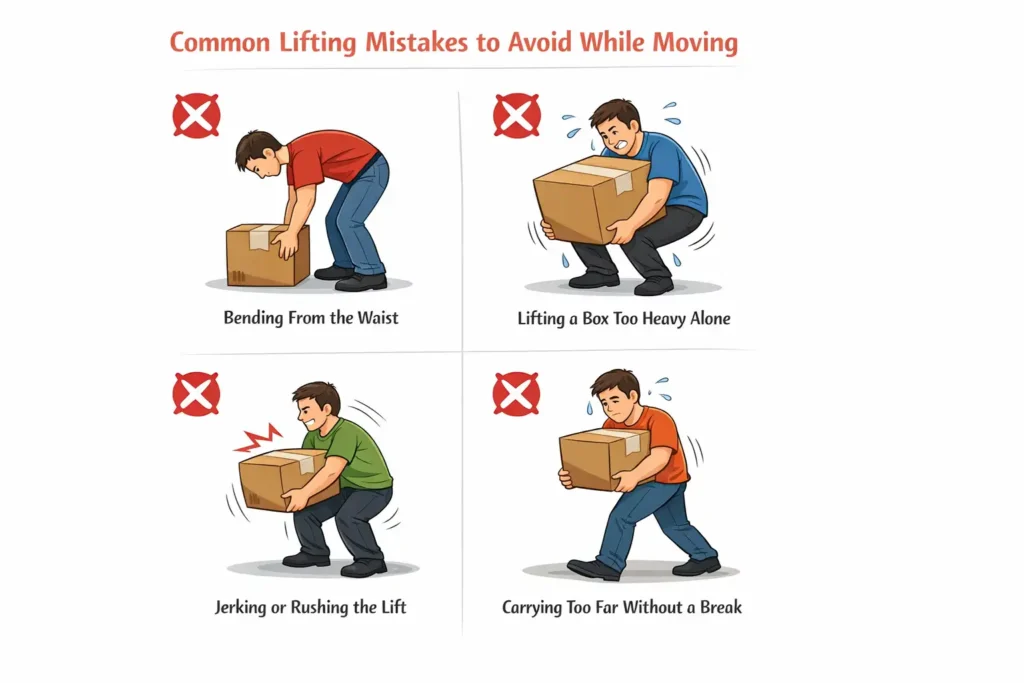
Avoiding common lifting mistakes is just as important as following correct techniques. Many moving-related injuries occur due to poor posture, overconfidence, or fatigue rather than lack of strength. Recognizing and avoiding these errors helps reduce injury risk during relocation.
Bending From the Waist Instead of the Knees
Bending at the waist places excessive pressure on the lower back and spinal discs. This posture significantly increases the risk of strains and long-term back problems. Bending the knees while keeping the spine neutral allows stronger leg muscles to handle the load safely.
Lifting Boxes That Are Too Heavy to Handle Alone
Attempting to lift heavy boxes without assistance can lead to sudden muscle strain and loss of balance. Loads that are too heavy or bulky should be handled using team lifting or mechanical aids. Planning assistance in advance helps prevent overexertion injuries during moving.
Jerking or Rushing the Lifting Motion
Sudden jerking movements while lifting increase stress on muscles and joints. Rushing the lift often leads to poor posture and reduced control over the load. Smooth, controlled movements help maintain balance and reduce the risk of injury.
Carrying Heavy Boxes for Long Distances Without Breaks
Prolonged carrying without rest leads to muscle fatigue, which increases the likelihood of improper posture and strain. Fatigue reduces grip strength and balance, making injuries more likely. Taking regular breaks helps maintain proper lifting form throughout the move.
Ignoring Early Signs of Muscle Strain or Fatigue
Pain, discomfort, or stiffness are early indicators of muscle strain. Continuing to lift despite these warning signs can worsen injuries and lead to long-term issues. Stopping, resting, or seeking help when discomfort appears is essential for safe moving practices.
Final Safety Tip: Know When to Get Professional Help
Even when you follow correct lifting techniques, moving heavy boxes repeatedly can put significant strain on your body—especially during full house shifting, stair moves, or long-distance relocations. Fatigue, tight spaces, and uneven loads increase the risk of injury, even for people who understand proper lifting methods.
If you are dealing with:
- Extremely heavy or bulky boxes
- Multi-floor buildings without lifts
- Long carrying distances
- Time-sensitive or large-scale moves
it is safer and more practical to rely on trained professionals. Experienced movers are equipped with proper lifting tools, handling techniques, and team coordination methods that reduce physical stress and prevent damage to your belongings.
For a safer and hassle-free relocation, consider booking trusted packers and movers in Bangalore who follow proper lifting techniques, use professional equipment, and provide transparent moving cost estimates.
Need Help Lifting Heavy Boxes Safely?
Lifting heavy boxes incorrectly can lead to serious back and joint injuries during moving. Instead of risking strain or damage, let trained professionals handle the heavy work. 6 Packers And Movers connect you with verified, experienced movers who use proper lifting techniques, equipment, and team coordination to ensure a safe and stress-free relocation. Get reliable packing, loading, and moving support—so you can move without pain or risk.