
Moving During Monsoon Checklist: Waterproof Packing & Safety Tips
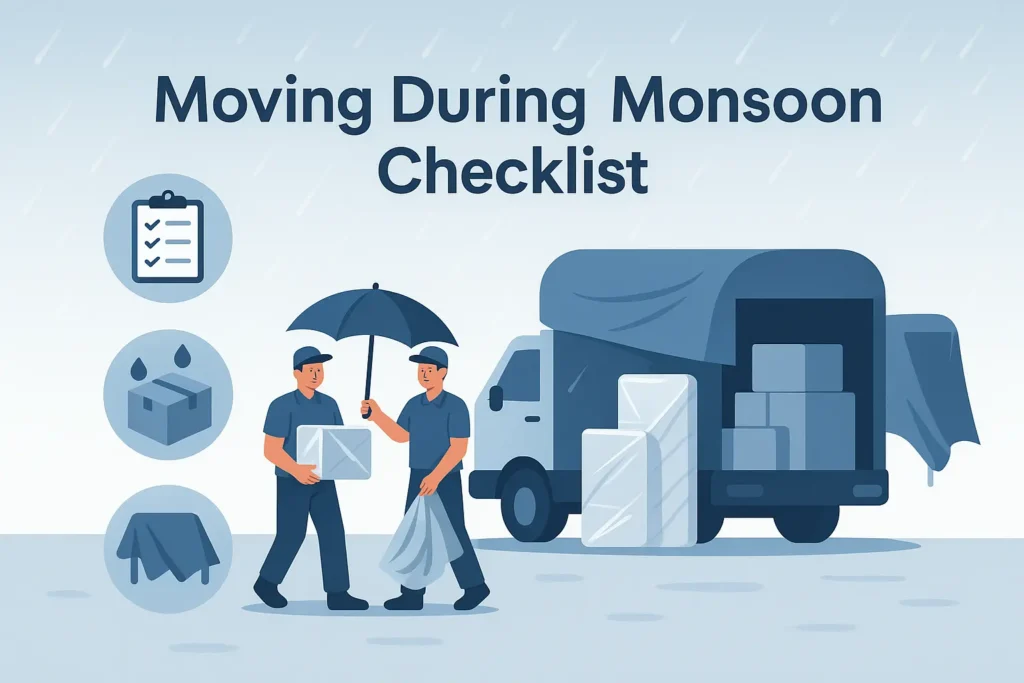
Moving during the monsoon season requires extra planning, careful packing, and awareness of weather-related risks. Rain, humidity, slippery floors, waterlogged roads, and delays can all affect the safety of your belongings and the efficiency of your relocation. Whether you are relocating locally or long-distance, preparing a structured checklist ensures minimum damage and maximum safety. If you are looking for trusted professionals who specialize in monsoon-safe relocations, you can explore Packers and Movers for expert assistance. This guide provides a complete, fact-verified checklist covering waterproof packing, weather considerations, and safe loading practices to help you manage your move confidently during the rainy season.
Pre-Monsoon Planning and Preparation
Weather delays can also affect pricing, so it’s useful to check the packers and movers cost guide to understand how charges may vary during the monsoon season.
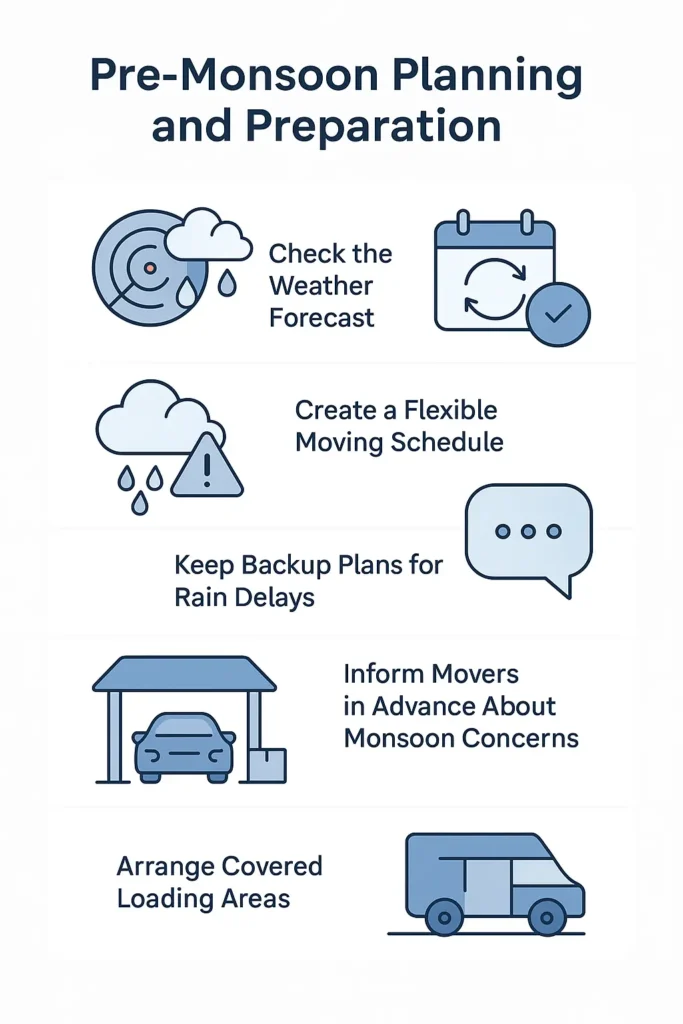
1. Create a Flexible Moving Schedule
A rigid timeline can cause problems during the monsoon because delays are common due to waterlogged roads, slow traffic, or sudden downpours. Keeping a buffer of extra hours—or even a backup moving day—helps avoid last-minute stress.
2. Keep Backup Plans for Rain Delays
Have alternate options ready, such as a covered parking area for temporary storage, additional waterproof sheets, or an alternate vehicle route if your primary road gets flooded. Flexibility ensures your belongings remain safe even if weather conditions worsen.
3. Inform Your Movers in Advance About Monsoon-Specific Concerns
Professional movers who are prepared for monsoon conditions often come with waterproof packing materials, tarpaulin sheets, and enclosed vehicles. Informing them early helps them plan better and bring appropriate supplies.
4. Arrange Covered Parking or Shade for Loading/Unloading
Try to secure a sheltered area at both your old and new homes so loading and unloading can happen under cover. This reduces the direct exposure of boxes and furniture to rain and prevents slippery surfaces.
If you’re relocating in Panchkula during the rainy season, choosing experienced packers and movers in Panchkula ensures proper waterproof packing and covered transportation.
Waterproof Packing Essentials
1. Use Plastic Containers Instead of Cardboard Boxes
During monsoon moves, cardboard boxes tend to absorb moisture, lose structural strength, and may collapse if exposed to rain or damp surfaces. Using plastic crates or laminated, moisture-resistant cartons provides far better protection because they don’t soak water and keep the contents dry even if placed on wet ground. This reduces the risk of damage to clothes, books, and fragile items.
2. Wrap Items with Plastic Sheets and Waterproof Covers
A strong outer waterproof layer is essential for monsoon packing. Plastic wraps, shrink film, and waterproof covers help block rainwater, humidity, and drips during loading or transit. Electronics, clothes, decor items, and important household objects benefit significantly from this additional waterproof barrier.
3. Double-Tape the Edges and Bottom of Every Box
Even when using moisture-resistant materials, water can seep through openings or unsealed corners. Reinforcing the bottom and sides of each box with high-quality packing tape prevents leakage and strengthens the box, ensuring it stays intact during handling. This is particularly important when boxes are placed temporarily on damp surfaces while loading.
4. Protect Documents, Electronics & Valuables Separately
Documents, certificates, files, and fragile electronics such as laptops, cameras, or hard drives should never be packed like regular items. Use waterproof zipper pouches, layered wrapping, or sealed plastic bags, and keep these items in a separate box clearly marked as “Water-Sensitive.” Many experts recommend keeping vital documents with you instead of sending them in the moving truck.
5. Add Silica Gel Packs to Prevent Moisture Build-Up
Humidity is extremely high during the monsoon, and even sealed boxes can trap moisture. Placing silica gel packets or moisture absorbers inside boxes—especially those containing clothes, books, leather goods, and electronics—helps prevent mold, mildew, and condensation from forming during transit.
6. Label Boxes as “Water-Sensitive” or “Electronics”
Clearly labeling the boxes helps movers identify which ones need extra care during rain. Items like electronics, photo frames, artwork, and documents should be loaded first into the covered part of the truck or handled only when rainfall is minimal. This reduces the risk of accidental splashes or prolonged exposure.
Protecting Furniture and Household Items
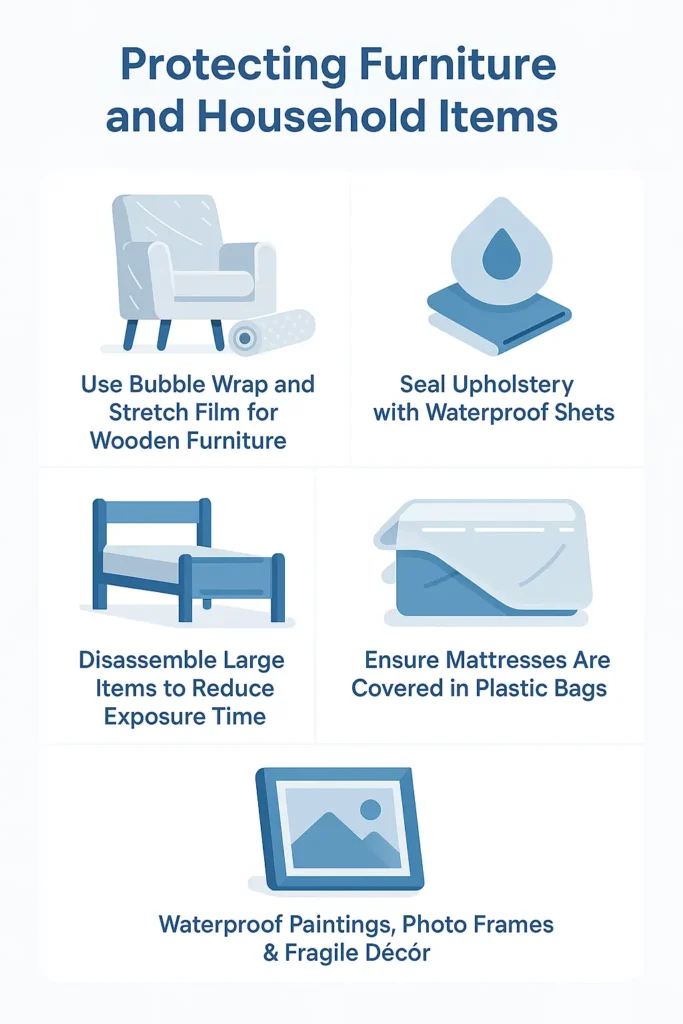
1. Use Bubble Wrap and Stretch Film for Wooden Furniture
Wooden furniture is highly vulnerable to moisture during the monsoon. Even brief exposure can cause swelling, warping, or fungal growth. Wrapping wooden tables, chairs, cabinets, or bed frames with bubble wrap first provides cushioning, while an outer layer of stretch film or plastic sheeting adds waterproof protection. This layering prevents direct contact with rain or humidity during loading and transit.
2. Seal Upholstery with Waterproof Sheets
Sofas, cushioned chairs, mattresses, and fabric-based items absorb moisture quickly, leading to stains, odors, or mold. Covering them in airtight waterproof sheets prevents rainwater or damp air from penetrating the material. Plastic mattress bags or thick polyethylene sheets ensure protection even if loading/unloading happens during a downpour.
3. Disassemble Large Items to Reduce Exposure Time
Disassembling beds, wardrobes, dining tables, and modular furniture allows packers to wrap individual parts more effectively and move them faster. Smaller components mean fewer bulky items exposed to open air during rain, reducing water contact. It also makes loading and covering items inside the truck more efficient.
4. Ensure Mattresses Are Covered in Plastic Bags
Mattresses are extremely difficult to dry once wet, and moisture can lead to hygiene issues or fungal growth. Packing them inside thick plastic mattress bags is the recommended practice during monsoon shifting. It creates a sealed barrier that prevents water penetration and keeps the mattress clean throughout the move.
5. Waterproof Paintings, Photo Frames & Fragile Decor
Artwork, framed photos, and delicate showpieces must be wrapped in bubble wrap for shock protection, followed by a waterproof plastic layer that keeps humidity and rain away. This dual-layer method minimizes the risk of smudging, moisture stains, or damage to frames. Ensuring these items are placed upright and handled minimally further reduces their exposure.
Weather and Road Safety Considerations
1. Avoid Peak Rain Hours and Waterlogged Routes
Heavy showers often occur during specific hours of the day in the monsoon, and these peak rain periods can make loading, transit, and unloading unsafe. Waterlogged routes slow down movement, increase the risk of vehicle breakdowns, and can lead to delays or damage to belongings. Planning your move during lighter rain windows and using alternate non-flooded routes helps ensure a smoother relocation.
2. Confirm Movers Are Using Covered or Enclosed Trucks
A fully covered, leak-proof moving truck is essential during monsoon shifting. Enclosed trucks protect boxes and furniture from rain, splashes, and humidity. Many professional movers also use raised flooring or proper sealing inside the truck to prevent water intrusion from below, which is especially useful when navigating wet roads.
3. Ensure the Moving Truck Has Non-Slip Ramps
Wet metal ramps can become slippery, making loading and unloading risky for both movers and your belongings. Non-slip ramps or textured surfaces reduce the chance of slipping while carrying heavy items. This precaution is especially important when moving large furniture or appliances that require stable footing.
4. Track Real-Time Traffic & Rain Alerts
Monsoon showers can cause sudden road closures, overflowing drains, and unexpected traffic jams. Monitoring real-time weather and traffic alerts helps identify safe routes and avoid time-consuming detours. Staying updated also allows movers to adjust the loading sequence or timing based on rainfall intensity.
5. Prepare for Slower Transit Time Due to Poor Road Conditions
Rain reduces visibility, creates slippery surfaces, and leads to uneven or damaged roads. These factors naturally slow down vehicles. Having realistic transit expectations during monsoon prevents unnecessary stress and ensures movers maintain safe driving speeds instead of rushing through dangerous conditions.
Safe Loading and Unloading in Rainy Conditions
1. Create a Non-Slip Pathway for Movers
Wet floors, mud, and slippery surfaces increase the risk of accidents during loading and unloading. Placing doormats, plastic sheets, old rugs, or anti-slip coverings at entry points ensures movers have secure footing. This prevents slips while carrying heavy furniture or fragile items and keeps your indoor space cleaner during the move.
2. Use Tarpaulin Sheets to Cover Boxes During Loading
Even brief exposure to rain can damage cardboard boxes or sensitive items. Keeping tarpaulin sheets handy allows you to quickly cover boxes while transporting them from the house to the truck. This is especially useful when rain intensifies unexpectedly, ensuring belongings do not get wet during these short but critical moments.
3. Keep Buckets, Mops & Towels Handy
Water often gets tracked indoors during a monsoon move. Having basic cleaning tools such as mops, buckets, old towels, and cloths ready helps you immediately clean spills or dry wet patches. This not only keeps your items safe from moisture but also reduces the risk of slipping inside the home.
4. Minimize Exposure by Loading Sensitive Items First
Items like electronics, artwork, documents, and fragile décor should be loaded into the truck before other household goods. This reduces their time spent outdoors and ensures they are placed deeper inside the vehicle, away from any possible rainwater entry. Proper sequencing prevents unnecessary risk during unpredictable showers.
5. Assign One Person to Coordinate Movement During Rain Showers
Having one person monitor weather changes and coordinate loading or unloading ensures the process pauses or resumes at the right time. This prevents workers from rushing during heavy rain and helps prioritize which items should be moved when rainfall is light. Clear coordination
Post-Move Safety & Unpacking Checks
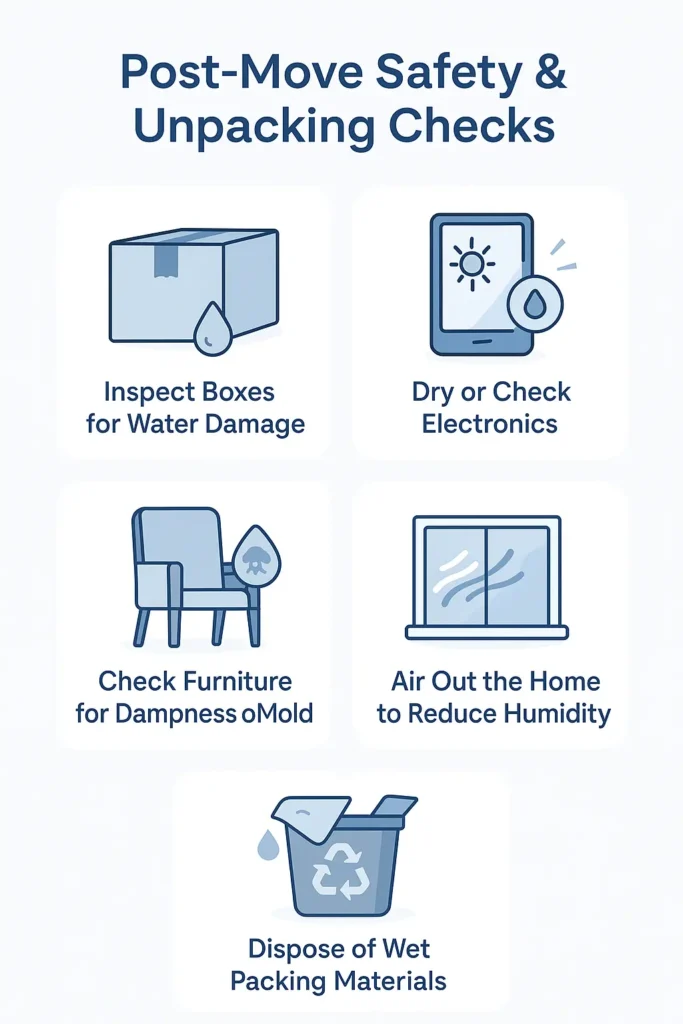
1. Inspect Boxes for Water Damage Before Opening
Once you reach your new home, examine all boxes for dampness, soggy corners, or signs of water exposure. Wet cardboard can tear easily, and moisture may have reached the contents inside. Checking boxes before opening prevents accidental damage while unboxing and helps you separate items that need urgent drying.
2. Immediately Unpack Electronics & Dry Them If Needed
Electronics such as laptops, cameras, chargers, and kitchen appliances are especially vulnerable during monsoon moves. If any item feels cold, damp, or has moisture droplets, wipe and air-dry it before connecting to power. Keeping electronics in a dry, ventilated area for a few hours ensures safety and protects internal components.
3. Check Furniture for Dampness or Fungus Formation
Wooden or fabric-based furniture may absorb moisture during transit. Inspect corners, joints, and backside areas for damp spots or early signs of mold. Drying these areas immediately—using cloth, fans, or natural ventilation—prevents long-term damage, odor, and fungal growth.
4. Air Out the Home to Reduce Humidity
Humidity levels rise significantly during monsoon season, and a closed home can trap moisture. Opening windows, switching on fans, and increasing airflow helps dry wet items, reduce musty smells, and prevent mold formation inside cupboards or on walls. Proper ventilation speeds up the settling-in process after a rainy-season move.
5. Safely Dispose of Wet Packaging Materials
Damp cardboard, wet plastic sheets, or soaked newspapers should not be stored indoors because they can develop mold quickly. Dispose of wet materials immediately after unpacking. If some packing items can be reused, ensure they are completely dry before storing them.
Additional Tips for a Smooth Monsoon Move
1. Wear Anti-Slip Footwear During the Move
Monsoon conditions often create slippery surfaces, both outdoors and indoors. Wearing footwear with a strong grip reduces the risk of slipping while carrying boxes, furniture, or appliances. This small precaution improves safety for everyone involved in the move.
2. Keep an Emergency Kit with Medicines & Flashlights
Heavy rainfall can lead to power cuts, difficulty accessing nearby shops, or delays in unpacking. Keeping a small emergency kit with essentials like flashlights, basic medicines, umbrellas, and towels helps you manage unexpected situations until the move is complete.
3. Carry Essentials (clothes, toiletries, documents) in Waterproof Bags
Your first-day essentials and critical belongings should not be packed inside the moving truck. Carry a separate waterproof bag containing clothes, toiletries, chargers, important documents, and valuables to ensure they stay dry and accessible despite rain or delays.
4. Keep Important Contacts Ready (Movers, Plumber, Electrician)
During monsoon moves, delays or minor issues like water seepage, wiring problems, or plumbing leaks are common in newly occupied homes. Having the contact details of your movers, an electrician, and a plumber ensures quick assistance if anything unexpected arises.
5. Take Insurance for High-Value Items During Monsoon
Because monsoon-related issues such as waterlogging, slippery handling conditions, and unpredictable rain can increase the risk of damage, opting for transit or moving insurance provides peace of mind. It ensures coverage for valuable items in case of unforeseen damage during the move.
Before finalizing your move, understand exactly what transit insurance covers during house shifting so you know how your belongings are protected against rain-related damage.
Ready to move during the monsoon but worried about rain, delays, or damage? Let the experts handle it for you. Our trusted packers and movers in Bangalore ensure waterproof packing, safe handling, and smooth relocation even in unpredictable weather.