
Moving With Kids Checklist (School Transfer Papers, Comfort Items, Packing Routine)
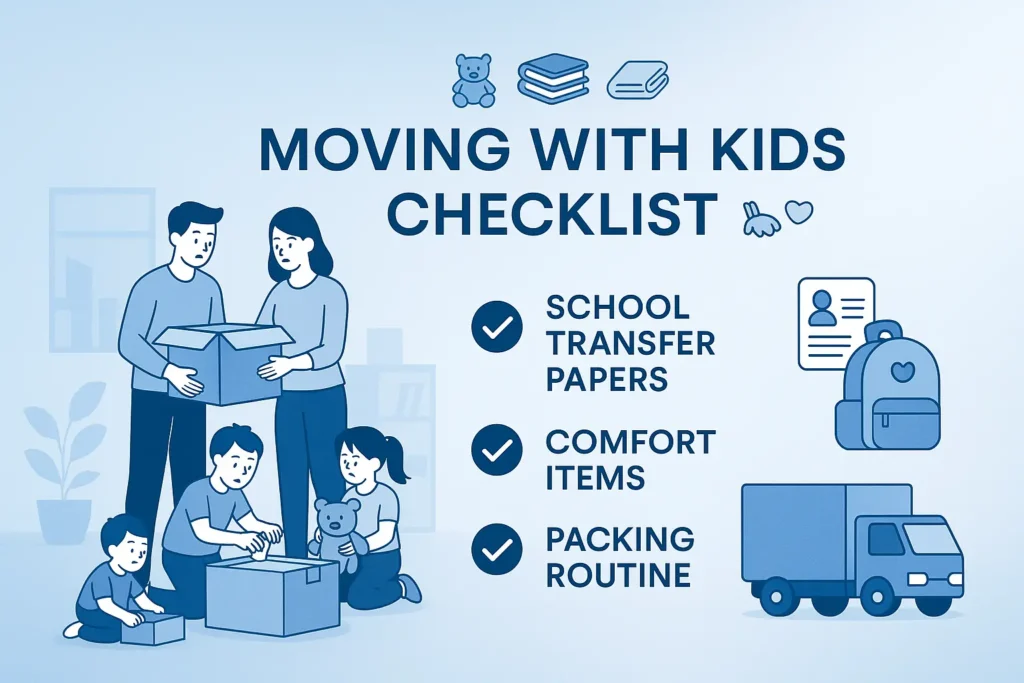
Moving with kids is easier with a clear plan. Prepare school transfer papers, organize health records, follow a kid-friendly packing routine, and pack comfort items for travel. Keep an essentials bag ready, ensure safe travel arrangements, and set up your child’s room first to help them quickly adjust after the move.
Moving with kids requires more planning, emotional preparation, and structured organization than a regular household move. Whether you’re shifting within the same city or relocating long-distance, children need comfort, routine, and clear communication to feel secure. The right preparation ensures a smoother transition for both parents and kids. If you’re in an early relocation stage and looking for verified, trusted support, you can explore top-rated professional Packers and Movers. This checklist is designed to help you prepare school transfer documents, organize medical files, set a kid-friendly packing routine, and pack comfort essentials that keep children calm during the entire moving journey. If you’re planning a family relocation and need verified support, working with experienced packers and movers in Mohali can help ensure a safe, organized, and child-friendly move.
1. Prepare School Transfer Documents and Education Essentials
A smooth school transition starts with collecting the right paperwork early. Schools often require transfer certificates, academic reports, and ID documents to complete new admissions. Keeping digital backups will help prevent delays during verification and admission formalities.
Collect All Required School Transfer Certificates
Most schools require school leaving certificates or transfer certificates before confirming a child’s enrollment. Check your current school’s notice period and process for issuing these documents.
Gather Report Cards, ID Cards & Academic Records
Report cards, assessment sheets, and student ID cards are needed during school orientation and section allocation. Keep them in a separate waterproof folder.
Download/Collect New School Admission Forms
Many schools allow downloading admission forms online. Keep a checklist of required supporting documents for the new school to avoid last-minute stress.
Request Recommendation or Conduct Certificates if Needed
Some private schools ask for a conduct certificate or a brief performance note from teachers. Request these in advance, especially if shifting mid-academic year.
Keep Digital Backups of All School Documents
Scan and store copies on Google Drive or Dropbox. Digital copies help in case of lost luggage or emergency school requests.
2. Organize Medical Records, Immunization Cards & Child-Specific Health Needs
Managing children’s medical paperwork is essential during a move, especially if your family is relocating to a new city with a different pediatrician or healthcare facility. Keeping prescriptions, allergies, immunization schedules, and health reports in a single, easy-to-carry folder ensures quick access in case of emergencies. A well-prepared medical kit also keeps your child safe and comfortable during travel.
Compile Pediatrician Records and Health Files
Collect all medical documents related to routine check-ups, growth charts, previous treatments, and specialist consultations. Having these on hand helps new doctors understand your child’s medical history quickly.
Carry Immunization Cards and Allergy Information
Vaccination cards and allergy notes are crucial for school admissions and emergency care. If your child has food allergies, respiratory issues, or skin sensitivities, keep clear instructions easily accessible during travel.
Transfer Prescriptions and Medication Plans
If your child takes regular medication—like antihistamines, asthma inhalers, or supplements—ask the current doctor for 1–2 months of prescriptions in advance to avoid any disruption during the move.
Inform Doctor About the Upcoming Move (If Long Distance)
Notify your pediatrician about the relocation. They may provide referrals, travel precautions, or updated medical summaries. This is especially helpful for kids with chronic conditions or frequent check-ups.
Prepare a Medical Essentials Kit for Travel Day
Your medical kit should include basic first-aid items, fever medication, adhesive bandages, sanitizers, motion sickness tablets, and any emergency medication prescribed for your child. Keep it in your carry-on luggage for quick access.
To protect medical equipment, medicines, and sensitive household items during transit, it’s important to understand what transit insurance covers during house shifting.
3. Create a Kid-Friendly Packing Routine That Reduces Stress
Packing with kids becomes easier when you follow a daily routine that keeps them involved, reduces overwhelm, and gives them a sense of control. A structured packing plan also prevents last-minute clutter and helps kids feel emotionally prepared for the move. Breaking tasks into small, age-appropriate steps ensures that children participate without feeling stressed.
Set Daily Packing Milestones for Kids
Create simple, achievable tasks for each day — for example, packing books one day, toys the next, and clothes another day. This reduces chaos and helps maintain a steady pace.
Involve Kids in Sorting Toys, Books, and Clothes
Children feel more confident and secure when they get to decide what to keep and what to donate. Encourage them to sort through old toys and clothes to reduce clutter before packing.
Use Color-Coded Labels for Children’s Boxes
Color-coding helps kids recognize their belongings quickly and makes unpacking more interactive. Assign a specific color for each child or category of items like toys, books, or clothes.
Declutter Items Together Before Packing
Decluttering with your kids helps them understand what items are important and gives them emotional closure. Donate or recycle unused toys, broken items, or clothes they have outgrown.
Pack Fragile Child Items With Extra Protection
Delicate items like craft materials, models, musical instruments, or keepsakes should be wrapped with bubble wrap, padded paper, or soft cloth to prevent damage.
Families who prefer stress-free packing often rely on trained movers who follow safe, systematic packing methods designed for household relocations.
4. Pack Comfort Items to Reduce Anxiety During the Move
Children feel emotionally secure when familiar items accompany them during a relocation. Comfort objects help reduce anxiety, maintain routine, and provide a sense of safety in new environments. Whether you’re moving by car, train, or flight, keep these items accessible in a dedicated “comfort bag” to help children stay calm throughout the journey.
Select Kids’ Favorite Toys and Soft Items
Pack a few favorite toys, stuffed animals, or soft comfort objects that help your child feel relaxed. These become extremely helpful during long travel hours or while adjusting to a new home.
Prepare a Sleep-Comfort Kit (Pillow, Blanket, Night Lamp)
Children sleep better when surrounded by familiar bedtime items. Include a favorite pillow, lightweight blanket, night lamp, or white-noise device to maintain their usual sleep routine.
Include Snacks, Drinks & Familiar Treats
Hunger and dehydration can lead to irritability during travel. Keep easy-to-carry snacks, fruit pouches, and water bottles in your child’s essentials bag.
Carry a Few Books or Activity Items
Activity books, coloring sets, storybooks, or handheld games help keep your child occupied during waiting periods or long journeys. Bring items that don’t create too much mess or noise.
Pack Sensory or Soothing Items for Sensitive Kids
For children with sensory needs, include weighted blankets, fidget toys, chewable sensory tools, or soothing music to help regulate emotions and stay grounded.
5. Prepare an Essentials Bag for Moving Day (Kid-Specific)
A kid-specific essentials bag ensures your child has everything they need for the first 24–48 hours—without searching through packed cartons. This bag should stay with parents at all times, especially during long-distance moves, because it contains clothing, hygiene supplies, entertainment, and medications your child may need during travel and on the first night in the new home.
Pack 2–3 Clothing Changes and Footwear
Include a couple of fresh outfits, nightwear, undergarments, socks, and a comfortable pair of shoes or slippers. This prevents clothing-related stress on moving day and ensures hygiene.
Include Daily Medication & First-Aid Items
Keep basic first-aid items, prescribed medicines, fever reducers, motion-sickness tablets, and adhesive bandages. Always pack medication in original containers with labels for easy identification.
Add Water Bottles, Dry Snacks & Ready-to-Eat Items
Kids become irritable quickly when hungry or thirsty. Carry water, fruit juices, biscuits, energy bars, and other quick snacks that children are familiar with.
Carry Chargers, Headphones & Entertainment Gadgets
If your child uses a tablet or portable device for entertainment or studying, pack chargers, headphones, and screen-protection covers. This ensures uninterrupted comfort and distraction during long journeys.
Include Wet Wipes, Tissues & Small Hygiene Products
Hygiene items like wipes, sanitizer, tissues, toothbrushes, and mini toiletries ensure preparedness for spills, sticky hands, or freshening up after travel.
6. Plan Safe Travel Arrangements for Kids on Moving Day
Traveling with children requires extra preparation to ensure their comfort, safety, and emotional stability throughout the journey. Whether you’re moving within the city or relocating long-distance, organizing child-specific travel essentials and planning ahead helps prevent exhaustion, discomfort, and travel anxiety. From safety gear to entertainment, every detail matters during a moving-day trip.
Check Car Seat Installation & Safety Gear
If traveling by car, ensure car seats or booster seats are installed correctly according to age and weight guidelines. A secure seat helps prevent injuries and keeps children stable during unexpected stops or long journeys.
Plan Meals and Hydration for the Journey
Prepare simple, non-messy snacks and keep water bottles accessible. Balanced snack choices like fruits, crackers, and mini sandwiches help maintain energy levels and avoid crankiness.
Arrange Travel Entertainment for Kids
Long journeys can lead to boredom or restlessness. Pack books, coloring sheets, handheld games, or downloaded shows on a tablet to keep kids engaged throughout the trip.
Keep Emergency Contacts Handy
Carry a small card or digital note with essential contacts—new pediatrician’s number, emergency helpline, family members, and your new address. This helps in case your phone dies or during unexpected situations.
Prepare for Motion Sickness or Travel Anxiety
If your child experiences motion sickness or travel-related stress, consult your doctor for preventive remedies and pack necessary medication. Familiar music, soothing toys, or a weighted blanket can help anxious kids stay calm during transit.
When relocating within or outside the city, choosing dependable packers and movers in Bangalore ensures safer logistics and smoother coordination on moving day.
7. Help Kids Adjust After the Move (Routine, School Setup, Room Arrangement)
Settling into a new home is just as important as the packing and moving process—especially for kids. Children can feel overwhelmed by unfamiliar surroundings, new schools, and sudden changes in routine. Establishing stability from day one helps ease emotional stress and gives them a sense of belonging. Setting up their room, reintroducing routines, and gently guiding them through the transition helps them feel secure and confident in their new environment.
Set Up Kids’ Rooms First for Comfort
Children feel more at home when their rooms are arranged early. Unpack their bedding, familiar toys, bookshelves, and night lamps first to recreate a familiar atmosphere. A comfortable room helps kids sleep better on the first night in your new home.
Re-Establish Daily Routines Quickly
Kids rely on predictable routines—meal times, naps, bedtime rituals, and study schedules. Restart these routines as soon as possible to reduce emotional disruption. Maintaining familiarity helps children feel grounded.
Visit the New School and Meet Teachers
Once you’ve settled, visit your child’s new school, meet teachers, and understand the curriculum, transportation, and orientation routines. This helps children adapt faster and reduces first-day anxiety.
Explore the Local Area With Children
Take your kids for walks around the neighbourhood—visit parks, bookstores, playgrounds, and nearby stores. Familiarizing them with the area gives them confidence and helps them adapt socially.
Support Kids Emotionally During the First Few Weeks
Be patient and encourage open conversations. Kids may take time to express feelings about the move, especially if they miss their old friends or school. Offer reassurance, maintain positive communication, and encourage them to stay connected with old friends while making new ones.
Conclusion: A Smooth Move Starts With Preparing Kids Emotionally & Practically
Moving with kids becomes significantly easier when every step is planned with their comfort, routine, and emotional well-being in mind. From collecting school and medical documents to packing comfort items, essentials, and arranging safe travel—each action helps children feel secure during the transition. Once you arrive at your new home, setting up their room first, restoring familiar routines, and helping them explore their new surroundings ensures they settle in confidently. Remember, kids don’t just move houses—they move lives, memories, friendships, and daily rhythms. With the right preparation and professional support, your relocation can be organized, stress-free, and child-friendly.
“If you need trusted assistance for a smooth, child-friendly shifting experience, explore verified packers and movers services with nationwide coverage.