
Plastic Crates vs Cardboard Boxes: Best Packing Choice for Monsoon Moves
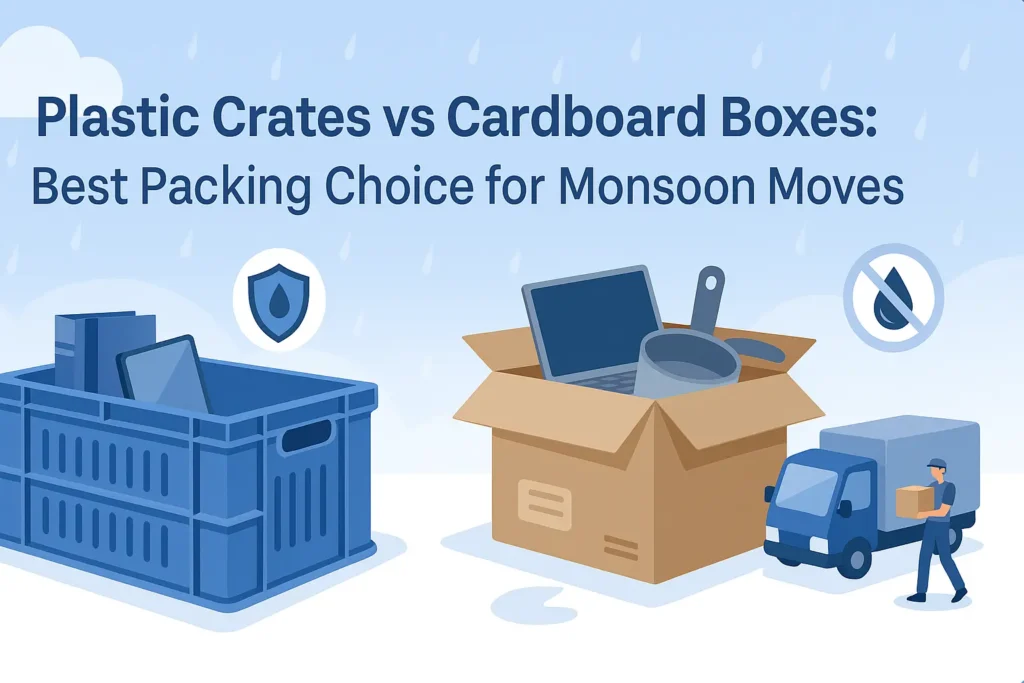
Choosing between plastic crates and cardboard boxes is crucial for a smooth monsoon move. While plastic crates offer unmatched water resistance and durability, cardboard boxes can still work in low-risk situations with proper waterproofing. By understanding the strengths of each packing material, you can protect your belongings and ensure a safer, more efficient relocation during the rainy season. For expert support and reliable packing solutions, always consider Hiring Professional Packers and Movers who specialize in monsoon shifting.
Moving during the monsoon season brings a unique set of challenges—unexpected rain, prolonged humidity exposure, and a significantly higher risk of water damage to household goods. Choosing the right packing material becomes critical in such conditions. Whether you are planning a local, intercity, or long-distance relocation, understanding the performance of plastic crates vs cardboard boxes in wet weather can save you from severe losses and stress.
Industry reports consistently show that plastic crates offer better moisture resistance and strength, making them more suitable for high-risk rainy weather, while cardboard boxes—though cost-efficient—require careful waterproofing and still remain prone to weakening when exposed to moisture. Similarly, multiple packing guides highlight that plastic moving boxes maintain structural integrity even when stacked under heavy load or when exposed to damp environments, which makes them a safer choice for electronics, books, and fragile items during monsoon moves.
On the other hand, cardboard boxes remain a practical option for budget moves, easy handling, and packing less-sensitive items, but they are significantly susceptible to water absorption—leading to tearing, sagging, or collapse when humidity levels spike. This comparison guide dives deep into both materials using verified information, helping you decide the best packing solution for your monsoon relocation.
Overview of Plastic Crates and Cardboard Boxes
What Are Plastic Crates? (Types, Materials, Durability)
Plastic crates used for household shifting are typically made from high-density polyethylene (HDPE) or polypropylene—materials known for their strength and moisture resistance. These crates are designed to withstand stacking pressure and rough handling without losing shape, which makes them highly reliable during rainy-season relocations. Many moving guides point out that plastic bins remain structurally strong even when exposed to damp or wet environments, unlike cardboard which easily absorbs moisture.
Plastic crates come in variants such as ventilated crates, solid-wall crates, and interlocking lidded crates commonly used by professional movers. Their durability also extends to impact resistance, with some packaging resources noting that plastic containers maintain integrity even in fluctuating weather or when subjected to repeated movement. Because they can be reused many times, plastic crates also offer long-term value, especially in conditions where moisture exposure is likely.
What Are Cardboard Boxes? (Single Wall vs Double Wall)
Cardboard boxes are the most widely used packing material for shifting due to their affordability and flexible sizing. Single-wall boxes are suitable for lightweight items such as clothes, toys, and linens, whereas double-wall corrugated boxes offer greater strength for medium-weight household goods.
However, cardboard is naturally porous and absorbs moisture quickly, which weakens its structural integrity. Studies from moving and packing guides consistently show that cardboard becomes soft, saggy, or collapses when exposed to rain or high humidity—conditions that are common during monsoon moves. Even stronger double-wall cartons are vulnerable unless they are fully laminated or wrapped with waterproof film.
Typical Use-Cases for Each Packaging Material
Plastic crates are best suited for items that require superior protection, including electronics, kitchenware, books, documents, and fragile valuables. Their waterproof and rigid build makes them especially dependable in moisture-heavy seasons, where even a brief exposure to rain can damage sensitive belongings.
Cardboard boxes, meanwhile, remain popular for packing lightweight, non-fragile, or inexpensive items. They are also suitable for short-distance moves and situations where the risk of moisture exposure is low. But during monsoon relocations, cardboard boxes typically require extra waterproofing—such as shrink wrap, plastic liners, or lamination—to minimize moisture-related damage.
Pros and Cons of Plastic Crates for Monsoon Shifting
Advantages of Plastic Crates
Plastic crates offer several key advantages that make them especially suitable for monsoon moves:
- Waterproof and moisture-resistant
Plastic crates do not absorb water, which prevents moisture-related damage to the packed goods. Moving guides highlight that plastic bins remain unaffected by rain or damp conditions, unlike cardboard which weakens quickly when wet. - High load-bearing strength
These crates are built from materials like HDPE or polypropylene, giving them the strength to withstand stacking pressure and rough handling during transportation. Packaging references note that plastic containers maintain their structure even when exposed to fluctuating weather or repeated movement. - Reusable and eco-friendly over multiple uses
Plastic crates are designed for repeated use over many relocation cycles. Because they do not degrade quickly, they reduce the need for frequent replacements, making them environmentally advantageous when used long-term. - Better protection for electronics, books, kitchenware
Their rigid structure and tight-closing lids make plastic crates the preferred choice for protecting sensitive or fragile items. Many moving recommendations emphasize that plastic bins offer superior protection for electronics, documents, books, and delicate kitchen items—especially where moisture exposure is likely.
Disadvantages of Plastic Crates
Despite their advantages, plastic crates also come with limitations:
- Higher cost
Plastic crates cost more than cardboard boxes, and rental fees may apply if sourced from professional movers. This makes them less budget-friendly for short or simple moves. - Require return after use (in rentals)
Many moving companies provide plastic crates on a rental basis. After the move, customers must return the crates, which may not be convenient for those who want to keep packing materials for storage. - Bulkier; occupy more space in transit
Unlike cardboard boxes that can be folded when empty, plastic crates retain their shape. Some packing resources note that their rigid design can make storage and transport less space-efficient.
Best Items to Pack in Plastic Crates During Monsoon
Plastic crates are ideal for items that require enhanced weather and impact protection, especially during the rainy season. These include:
- Laptops, tablets, cables, and other electronics
- Books, files, certificates, and important documents
- Glassware, ceramics, and fragile kitchenware
- Photos, albums, and moisture-sensitive keepsakes
- Cosmetics, toiletries, and items that must remain dry
Their tight-sealing lids and water-resistant construction ensure that even in humid conditions or unexpected rain exposure, the items stay safe and protected.
Pros and Cons of Cardboard Boxes for Monsoon Shifting
Advantages of Cardboard Boxes
- Low cost and widely available
Cardboard boxes are one of the most economical packing materials and are easily available in multiple sizes. Their affordability makes them a popular option for budget-conscious moves. - Lightweight and easy to carry
Cardboard boxes are significantly lighter than plastic crates, which makes handling, stacking, and loading easier during packing and transport. This reduces fatigue during manual shifting processes. - Available in more sizes
Cardboard packaging manufacturers typically produce a larger variety of box dimensions than plastic crate suppliers. This helps movers pack different types of household items more efficiently.
Disadvantages of Cardboard Boxes
- High risk of water absorption and collapse
Cardboard naturally absorbs moisture. During monsoon moves, exposure to rain or high humidity can quickly weaken the box, causing sagging, tearing, or complete collapse. Moving references highlight that cardboard becomes structurally unstable when wet. - Weakens when exposed to humidity
Even without direct contact with water, prolonged humidity softens cardboard fibers. This increases the risk of damage to packed items, especially during long-distance moves in rainy weather. - Not ideal for long-distance monsoon moves
Due to moisture vulnerability, cardboard boxes require multiple layers of waterproofing—plastic liners, lamination, or shrink wrap—when used in monsoon conditions. Even then, the risk of dampness penetrating the material remains higher than with plastic crates.
Best Items to Pack in Cardboard Boxes During Monsoon
While cardboard is not the safest option during rainy weather, it can still be used for:
- Clothes, linens, soft toys
- Lightweight household goods
- Non-fragile and moisture-insensitive items
- Items that will be quickly loaded and unloaded with minimal rain exposure
However, movers strongly recommend using waterproofing materials like stretch film or poly liners when packing in cardboard during monsoon seasons to reduce moisture risks.
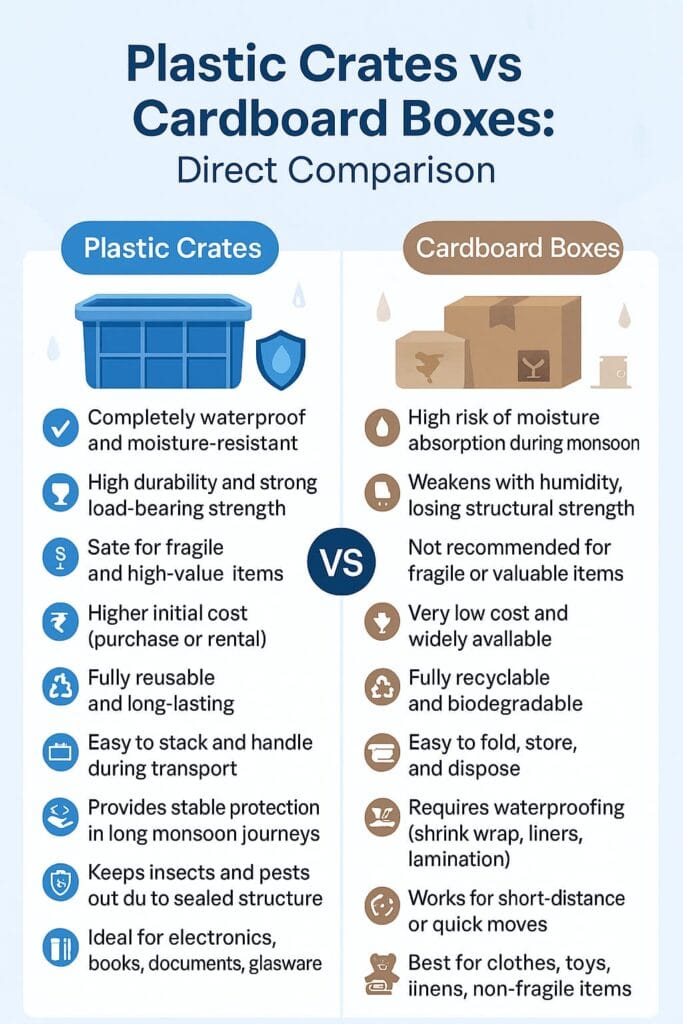
Plastic Crates vs Cardboard Boxes: Direct Comparison
Water Resistance
Plastic crates offer complete resistance to water and moisture, maintaining their shape and strength even when exposed to rain or damp environments. Packing and moving references clearly state that plastic bins do not absorb water and remain stable during wet-weather relocations.
Cardboard boxes, on the other hand, quickly absorb moisture, causing them to weaken, sag, or collapse. This makes cardboard significantly riskier for monsoon moves unless heavily waterproofed.
Even with strong packing materials, understanding what transit insurance covers during house shifting is essential for complete protection during monsoon moves.”
Durability and Strength
Plastic crates are constructed from materials like HDPE or polypropylene, which provide excellent durability and resistance to impact, stacking pressure, and rough handling. Packaging guides confirm that plastic containers maintain structural integrity even under heavy load and various weather conditions.
Cardboard boxes—especially single-wall variants—have limited durability. They lose strength when exposed to humidity or physical stress. Even double-wall boxes are vulnerable when moisture penetrates the layers, causing fibers to weaken.
Safety for Fragile Items
Plastic crates provide superior protection for fragile or moisture-sensitive items. Their rigid walls, strong frames, and ability to keep contents dry make them ideal for electronics, documents, books, and kitchenware during monsoon moves. Several moving recommendations highlight plastic crates as a preferred choice for valuable items requiring higher safety.
Cardboard boxes offer limited protection for fragile goods, especially when humidity compromises strength. Fragile items packed in wet or weakened cardboard are at a much greater risk of breakage.
Cost Comparison (Purchase vs Rental)
Cardboard boxes are cheaper to purchase upfront and widely preferred for budget-friendly moves. Their low cost and easy availability make them suitable for short-distance shifting or non-monsoon seasons.
Plastic crates are more expensive to buy, but many movers offer rental options. While rental crates involve additional return logistics, they provide long-term value through durability and reusability, making them cost-effective over multiple moves.
Environmental Impact
Plastic crates are reusable across many years, significantly reducing waste. When used repeatedly, they offer a sustainable alternative to frequently purchasing new cardboard boxes.
Cardboard is recyclable and biodegradable, which is an environmental advantage. However, wet or damaged cardboard often becomes non-recyclable. For monsoon moves, where boxes frequently get damp, this can increase waste output.
Handling and Storage Convenience
Plastic crates can be stacked securely, thanks to their uniform structure and rigid frames. They provide efficient handling during transport. However, they cannot be folded, which means they occupy more space when empty.
Cardboard boxes are lightweight and collapsible, making them easy to store when not in use. Their flexibility in size options also helps in packing diverse household items efficiently.
Situations When Plastic Crates Are the Better Choice
Plastic crates are the superior choice in several monsoon and moisture-prone scenarios due to their water resistance, durability, and reliable structural strength. They perform exceptionally well in the following situations:
- When moving during heavy rain or unpredictable monsoon weather
Because plastic crates do not absorb moisture and maintain their integrity even in wet conditions, they are far safer for protecting belongings during rainy-season relocations. - When transporting electronics, documents, and moisture-sensitive items
Plastic bins offer sealed protection, keeping out humidity and preventing water damage to gadgets, important papers, books, and personal valuables. - During long-distance or multi-day moves in monsoon season
Cardboard weakens over time in humid environments, while plastic crates stay strong even when exposed to fluctuating conditions throughout extended travel. - When packing fragile, heavy, or high-value items that require stable, rigid protection
The durability and impact resistance of plastic crates reduce the risk of breakage compared to cardboard boxes. - If you want a reusable, long-term packing solution
Plastic crates are ideal for customers who relocate frequently or want a sustainable packing option.
Situations When Cardboard Boxes Still Work Well in Monsoon
While cardboard is not the safest choice during monsoon conditions, there are still certain situations where cardboard boxes can be used effectively—provided proper precautions are taken. Cardboard remains viable in the following cases:
- For short-distance or same-day local moves
When loading and unloading happen quickly and there’s minimal exposure to rain, cardboard boxes can work efficiently. However, additional waterproofing such as stretch film or liners is recommended to reduce moisture risks. - When packing lightweight, non-fragile, or moisture-insensitive items
Items such as clothes, linens, cushions, and soft toys can be safely packed in cardboard even during monsoon, as they are not easily damaged by mild humidity. This makes cardboard a budget-friendly option for less-sensitive belongings. - When boxes are wrapped or laminated for water protection
Packing guides advise using plastic wrap, poly liners, or laminated outer layers to provide temporary moisture resistance to cardboard during rainy moves. These methods slow down water absorption but do not make cardboard fully waterproof. - When cost is a priority and the risk of rain exposure is low
Cardboard remains the most economical packing material. In partially covered or well-planned moves where weather exposure is controlled, cardboard can still be practical.
Although cardboard boxes can function under controlled conditions, they are still significantly less reliable than plastic crates when there is any chance of rain or high humidity.
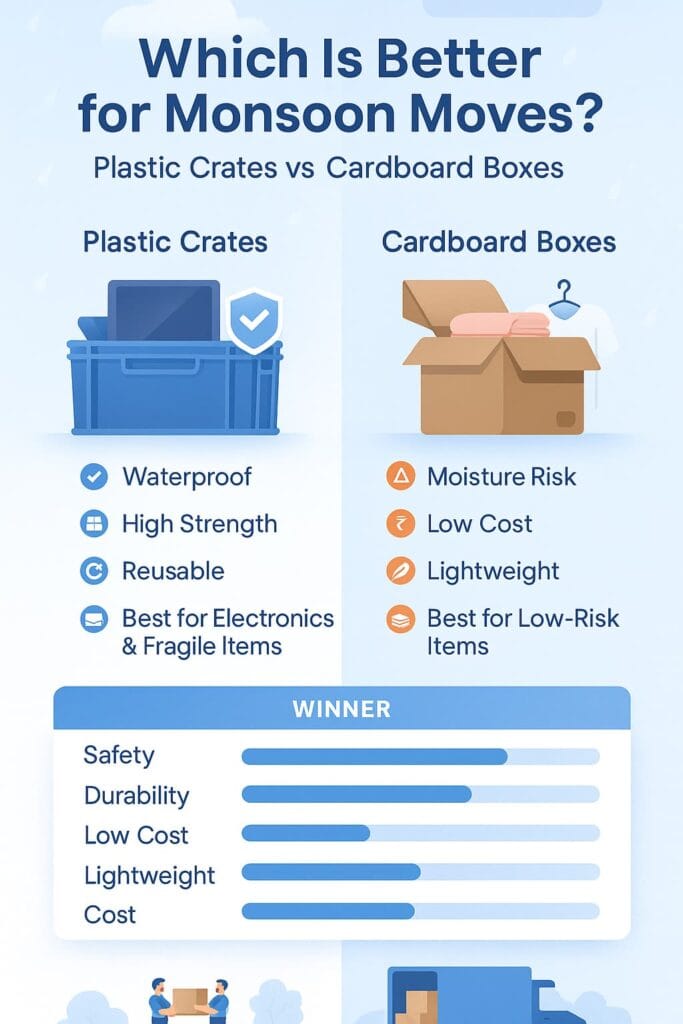
Final Verdict — Which Is Better for Monsoon Moves?
Best Choice for Safety and Protection
Plastic crates are the clear winner when it comes to protecting your belongings during monsoon moves. They are fully water-resistant, maintain structural strength in wet or humid environments, and provide superior safety for electronics, documents, books, and fragile items. Moving and packing references consistently confirm that plastic bins remain stable even when exposed to moisture, unlike cardboard which weakens or collapses when wet.
If your priority is zero moisture damage, maximum durability, and reliable protection, plastic crates are the best choice.
If you’re planning a monsoon relocation in Bangalore, choosing experienced packers and movers in Vadodara ensures safer packing, proper waterproofing, and reliable handling.
Best Choice for Budget Movers
Cardboard boxes remain a practical option for movers who are focused on reducing costs and are relocating under controlled conditions. They are inexpensive, widely available, and easy to handle. However, they require waterproofing measures such as shrink wrap or liners during monsoon moves.
Budget movers can still safely use cardboard for non-fragile, moisture-insensitive items—especially if the move is short-distance and weather exposure is minimal.
Best Choice for Professional Packers and Movers Use
Professional moving companies often rely on plastic crates for monsoon moves because they offer:
- Stronger protection
- Higher load-bearing capability
- Better stacking efficiency
- Protection against humidity and unexpected rainfall
Plastic crates also reduce the risk of damage claims because they keep items safer throughout the transit. This aligns with industry recommendations that emphasize sturdy, moisture-proof materials for rainy-season relocations.
Overall Conclusion
For monsoon moves, plastic crates are the superior and safest packing option, especially for high-value, fragile, or moisture-sensitive belongings.
Cardboard boxes still have a place—mainly for budget, short-distance, or low-risk moves—but require additional protective measures to perform adequately in wet weather.
If you want maximum protection, peace of mind, and reduced risk during the rainy season, plastic crates are the recommended choice.
Ready for a Safe and Hassle-Free Monsoon Move?
Moving during the rainy season doesn’t have to be stressful—especially when you choose the right packing materials and the right professionals. Whether you prefer plastic crates for maximum protection or carefully waterproofed cardboard boxes, having experienced packers and movers by your side ensures everything reaches your new home safely.