
Self-Storage vs. Warehouse Storage — Which Is Ideal During Relocation?
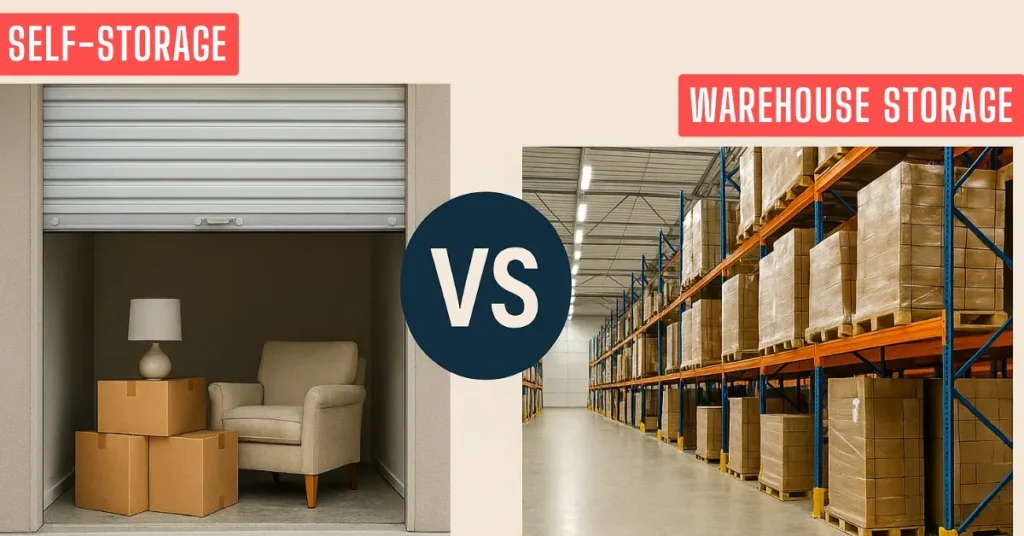
Looking for the safest way to store your belongings during relocation? Whether you are shifting locally or planning an intercity move, choosing between self-storage and warehouse storage can significantly impact the safety, cost, and convenience of your move. Many homeowners and businesses prefer using temporary storage facilities to make relocation smoother, especially when timelines don’t align or when there’s a waiting period before moving into a new property. Both storage options offer unique benefits in terms of security, accessibility, cost-efficiency, and space flexibility, and understanding these differences helps you make the right decision. If you’re hiring professional packers and movers, their guidance can further simplify how your items are packed, stored, and delivered without damage.
1. Understanding the Basics: What Is Self-Storage vs. Warehouse Storage?
What Is Self-Storage?
Self-storage refers to renting individual units or compartments where customers can store personal or business belongings for short or long durations. These units range from small locker-sized spaces to garage-like rooms, allowing users to pick a size that suits their needs. Self-storage is generally self-managed, offering flexibility and privacy for people relocating who may want to access their goods frequently.
What Is Warehouse Storage?
Warehouse storage involves storing goods inside large commercial spaces managed by storage companies. Items are stored collectively in open or racked areas instead of individual, locked rooms. Warehouses are ideal for bulk items, heavy goods, and long-term storage requirements, especially when professional handling or inventory management is needed.
Many relocation companies also offer professionally managed storage and warehouse services as part of end-to-end moving solutions, especially during delayed possession or phased relocations.
Comparison Self-Storage vs. Warehouse Storage
Feature | Self-Storage | Warehouse Storage |
Structure | Individual locked units | Shared or open storage space |
Management | Self-managed | Staff-managed |
Ideal For | Short-term relocation, frequent access | Long-term, bulk storage |
Privacy | High | Moderate |
Access | Usually 24/7 | Mostly restricted |
2. Security Comparison: Which Storage Option Offers Better Protection?
Security is one of the biggest concerns during relocation because your household items, furniture, electronics, and valuables stay unattended for days or even months. Both self-storage and warehouse storage offer security features, but the level of protection, monitoring, and access control varies significantly.
Security Features in Self-Storage Units
Self-storage facilities typically provide basic to advanced security, depending on the provider. Most units allow customers to use their own locks, giving complete control over who accesses the items. Modern facilities also maintain 24/7 CCTV surveillance, perimeter fencing, and keypad entry systems. However, because access is often direct and self-managed, overall security can vary based on how responsible the customer is with locking, sealing, and inventory management.
Common security features in self-storage:
- Individual unit locks (customer-controlled)
- CCTV surveillance
- Gated or coded entry
- On-site guards (in selected facilities)
- Perimeter fencing
Security in Warehouse Storage Facilities
Warehouse storage generally provides centralized, professionally managed security. As goods are stored under the supervision of warehouse staff, access is controlled and monitored. These facilities often have robust industrial-grade security systems such as alarm systems, restricted access areas, and staff-managed entry, making them more suitable for long-term or high-value storage.
Typical warehouse security features:
- Staff-controlled access
- 24/7 surveillance and alarm systems
- Tagged and inventoried storage
- Industrial-level fire protection and emergency systems
- Dedicated security personnel
Access Control Differences
One of the biggest differences in security is who controls access.
- Self-storage gives access directly to the renter.
- Warehouse storage restricts access to authorized staff.
This means self-storage is flexible but depends on personal security practices, while warehouses offer stronger institutional control.
Here’s a detailed guide on what transit insurance covers during house shifting and how it protects stored items.
3. Accessibility: How Easily Can You Access Your Belongings?
Accessibility is one of the most important factors when choosing between self-storage and warehouse storage during relocation. Some people need frequent access to retrieve essentials, while others prefer controlled access for safety. Understanding how each option handles access helps you decide based on your moving timeline, convenience, and control.
Accessibility in Self-Storage Units
Self-storage is built for convenience. Most facilities allow 24/7 access, letting customers visit their units anytime without staff assistance. This is especially helpful when moving into a new home and needing certain items temporarily—such as clothes, documents, or small appliances.
Why self-storage is accessible:
- Round-the-clock access
- You can unlock and access the unit independently
- Drive-up access for easy loading/unloading
- Flexible timings during relocation
This level of access is ideal for people who want control over their belongings without depending on facility staff.
Accessibility in Warehouse Storage
Warehouse storage generally has restricted access, as the facility is professionally managed. Access usually requires prior scheduling, and staff members retrieve items on your behalf. Warehouses follow fixed operational hours, which may not suit someone who needs frequent or last-minute retrieval.
Warehouse access characteristics:
- Access only during working hours
- Requires staff coordination
- Items retrieved by warehouse personnel
- Enhanced security through controlled entry
This makes warehouse storage more suitable for long-term storage or large, rarely accessed items.
Accessibility Comparison
Accessibility Factor | Self-Storage | Warehouse Storage |
Access Hours | 24/7 typically | Fixed business hours |
Who Accesses Items? | Customer | Warehouse staff |
Retrieval Flexibility | High | Moderate to low |
Best For | Frequent access | Long-term/controlled access |
4. Cost Factors: Which Option Is More Budget-Friendly During a Move?
Cost is one of the biggest deciding factors when choosing between self-storage and warehouse storage during a relocation. Depending on your storage duration, volume of goods, and access needs, the price difference between the two can be significant. Below is a clear, fact-based comparison to help you understand which option fits your relocation budget.
Cost Structure of Self-Storage
Self-storage is typically the more affordable option, especially for short-term storage during relocation. You only pay for the exact unit size you rent, and most facilities offer month-to-month plans, which means no long-term commitments.
Cost advantages of self-storage:
- Pay only for the unit size you choose
- Short-term monthly plans
- No warehouse handling charges
- Minimal utility and maintenance costs
Self-storage works well for individuals or families who need temporary storage while shifting houses or waiting for possession of a new property.
Cost Structure of Warehouse Storage
Warehouse storage tends to be more expensive because it includes professional handling, managed security, larger spaces, and sometimes added logistics support. These facilities are better suited for long-term storage or when storing a large volume of goods.
You can review a detailed breakdown in our packers and movers cost guide.
Reasons warehouse storage costs more:
- Staff-managed handling and retrieval
- Larger storage spaces designed for bulk goods
- Possible long-term contracts
- Utilities, manpower, security systems add to cost
Though the initial monthly cost may be higher than self-storage, warehouse storage becomes cost-effective when you need to store very heavy or bulk household items for longer durations.
5. Space Flexibility & Customisation: Adjustable Storage Options for Every Move
When relocating, the amount of space you need for storage can vary widely—some people store only boxes and clothes, while others need space for full household furniture. Understanding the flexibility each storage option offers helps you choose the most practical and cost-effective solution.
Space Flexibility in Self-Storage
Self-storage facilities offer a wide range of unit sizes, allowing you to choose exactly how much space you need. From compact lockers to large garage-sized rooms, you only pay for the space you use. This flexibility makes self-storage ideal for people who are unsure about the volume of goods they will store during a move.
Common self-storage unit sizes:
- 5×5 ft – for boxes, books, clothing
- 5×10 ft – for small furniture, appliances
- 10×10 ft – for 1BHK equivalent
- 10×20 ft – for full home storage
Additional benefits include:
- Easy upgrade or downgrade of unit size
- Climate-controlled units in select facilities
- Drive-up access for bulky items
Self-storage suits relocations where space requirements might change unexpectedly.
Space Availability in Warehouse Storage
Warehouse storage offers large, open storage areas capable of holding heavy, oversized, or oddly shaped items—something typical self-storage units may not accommodate. Items are stored on pallets, open floor sections, or industrial racks, making warehouse storage excellent for long-term or large-volume needs.
Advantages of warehouse storage space:
- High ceilings allow vertical stacking
- Can handle heavy furniture, equipment, and bulk materials
- Pallet racking and shelving options
- No strict unit size limits—space can be expanded as needed
Warehouses offer flexibility for large relocations, business moves, or storage of bulky household goods.
Space Flexibility Comparison
Space Feature | Self-Storage | Warehouse Storage |
Unit Sizes | Fixed, multiple options | Flexible, expandable |
Suitable for Bulky Items | Limited | Excellent |
Climate Control | Available in select units | Common in many warehouses |
Scalability | Easy to upgrade | Highly scalable |
6. Which Storage Works Best for Home vs. Office Relocation?
Different relocations have different storage needs. A family shifting locally may require short-term storage for furniture and personal items, while a business relocating offices may need long-term, secure storage for equipment, documents, and inventory. Understanding the practical use cases helps you choose the most efficient option based on your situation.
For full home or office relocations, many people prefer opting for home shifting services that include packing, transport, and temporary storage.
When Self-Storage Is the Ideal Choice
Self-storage is best suited for individuals, families, and small offices who need temporary storage during a move. Its flexibility, ease of access, and month-to-month rental model make it a popular choice among people who want maximum convenience.
Best use cases for self-storage:
- Home relocation with short-term storage needs
- Temporary stay in a rental before moving to a permanent home
- Keeping extra boxes, clothes, school supplies, or seasonal items
- Storing small office equipment during a renovation
- Situations requiring frequent access to belongings
Self-storage works extremely well when you want to retrieve items anytime, especially during unpredictable moving schedules.
When Warehouse Storage Is the Better Option
Warehouse storage is ideal for large-scale relocations, long-term storage, or items that require professional handling. If you are storing heavy, bulky, or expensive items over an extended period, warehouse facilities provide a higher level of organization and security.
Best use cases for warehouse storage:
- Full-house or multi-floor office relocation
- Long-term storage during renovation or overseas travel
- Businesses needing bulk storage for machinery, inventory, or furniture
- Storing oversized goods not suitable for self-storage units
- Storage requiring climate control or specialized handling
Warehouse storage works well when you do not need frequent access and prefer professionally managed space with advanced security.
Self-Storage vs. Warehouse Storage for Home & Office Relocation
Here’s a scenario-based quick comparison to help you decide:
For Home Relocation:
- Self-Storage: Best for 1BHK–3BHK household goods, boxes, and furniture needed short-term.
- Warehouse Storage: Best for villa or full-home storage for long durations.
For Office Relocation:
- Self-Storage: Suitable for small office documents and IT equipment.
- Warehouse Storage: Suitable for full-scale office shifts with furniture, workstations, archives, and commercial equipment.
7. Safety of Fragile & High-Value Items: Handling, Climate Control & Damage Prevention
When relocating, fragile and high-value items such as glassware, electronics, artwork, documents, and antique furniture need special care. Choosing the right storage option plays a major role in preventing damage caused by physical impact, humidity, dust, or temperature variations. Here’s how both storage types compare in terms of safety and protection.
Safety Measures in Self-Storage Units
Self-storage units provide basic protection for fragile items, especially when packed properly using bubble wrap, corrugated sheets, and foam. Some facilities offer climate-controlled units, which help protect sensitive items from heat, moisture, or dust. However, since self-storage units are self-managed, the quality of packing plays a crucial role in preventing damage.
Safety advantages of self-storage:
- Option for climate-controlled units
- Personal locks for secure access
- Dust-free indoor units in select facilities
- Privacy ensures no mishandling by third parties
Self-storage can be safe for fragile belongings, provided the items are packed professionally and placed properly inside the unit.
Safety Features in Warehouse Storage
Warehouse storage is designed to handle large, heavy, and fragile items with professional care. Items are usually categorized, labeled, palletized, or racked to avoid physical damage. Warehouses often maintain temperature and humidity-controlled zones, making them ideal for storing delicate or high-value materials.
Key safety features:
- Temperature- and humidity-controlled storage
- Professional handling and systematic stacking
- Palletized or racked storage prevents crushing
- Fire safety, industrial alarms & advanced monitoring systems
- Better environment control for long-term storage
Warehouse storage prevents mishandling and reduces the risk of accidental damage during stacking or movement.
8. Convenience During Relocation: Packing, Pickup & Door-to-Door Services
Convenience plays a major role when selecting a storage solution during relocation. The level of support provided—such as packing, transportation, unloading, and inventory management—can greatly affect how smoothly your move happens. Here’s how self-storage and warehouse storage compare when it comes to convenience and operational ease.
Convenience Offered by Self-Storage
Self-storage is designed for DIY-style convenience, where customers handle most tasks independently. This model gives flexibility but also requires effort during packing and transportation. People who prefer full control over how their items are packed and arranged often choose this option.
Convenience factors in self-storage:
- You can pack and organize items your way
- Drive-up units make loading/unloading easy
- Round-the-clock access enables last-minute visits
- No dependency on facility staff
Self-storage is ideal for relocations where accessibility and control are more important than professional handling.
Convenience Provided by Warehouse Storage
Warehouse storage offers professional, managed services, which reduce your involvement in handling and organizing items. This option is especially convenient for people relocating long-distance, shifting full homes, or storing heavy furniture.
Convenience factors in warehouse storage:
- Professional packing and handling of goods
- Staff supervises loading and unloading
- Inventory tagging, labeling, and placement
- No need for self-transport within the facility
- Better suited for large, heavy, or fragile items
This setup is helpful for people who want their belongings to be handled carefully without being involved in the process.
Role of Packers and Movers in Storage Convenience
If you hire professional packers and movers, your relocation becomes even more seamless—whether you use self-storage or warehouse storage.
Packers and movers typically provide:
- Complete packing and unpacking
- Pickup from your location
- Transportation to the storage facility
- Protective packaging for fragile items
- Organized stacking inside storage
- Final delivery to your new home
Using professional movers significantly reduces the workload and ensures your belongings remain safe and well-organized during the entire moving and storage process.
9. Pros & Cons Table: Quick Comparison Between Self-Storage and Warehouse Storage
To help you quickly evaluate which storage type fits your relocation needs, here is a clear side-by-side comparison. This section summarizes everything discussed so far—covering security, cost, accessibility, space flexibility, convenience, and safety.
Pros & Cons of Self-Storage
Pros
- 24/7 access for maximum convenience
- Cost-effective for short-term storage
- Multiple unit sizes available
- Private, lockable units
- Ideal for frequent retrieval of items
- Flexible month-to-month contracts
Cons
- Limited protection for bulky or heavy items
- Security quality depends on customer’s own locking
- Not ideal for long-term, large-volume storage
- No professional handling unless hired separately
Pros & Cons of Warehouse Storage
Pros
- Professionally managed handling and security
- Highly suitable for bulk or long-term storage
- Climate-controlled zones available
- Inventory tagging and organized stacking
- Safer for fragile, oversized, or high-value items
- Staff-managed access reduces unauthorized entry
Cons
- Limited access (fixed hours)
- Higher monthly costs
- Requires coordination for retrieval
- Not ideal if you need items frequently
Self-Storage vs. Warehouse Storage — Pros & Cons
Feature | Self-Storage | Warehouse Storage |
Cost | ✔ Affordable | ✖ Higher |
Access | ✔ 24/7 | ✖ Restricted |
Security | Moderate | ✔ Strong |
Handling | Self | ✔ Professional |
Space Flexibility | ✔ Good for small–medium items | ✔ Excellent for bulk items |
Ideal For | Short-term & frequent access | Long-term & large-volume storage |
10. How to Choose the Right Storage for Your Moving Needs
Choosing between self-storage and warehouse storage during relocation depends on your priorities—whether you want frequent access, stronger security, budget savings, or professional handling. Both options serve different purposes, and the right choice will depend on how you balance convenience, safety, and cost.
When Self-Storage Is the Better Choice
Self-storage is ideal if you want:
- Frequent or 24/7 access to your items
- Short-term storage while shifting homes
- A cost-effective solution
- A private, lockable unit
- Flexible contracts with no long-term obligations
It suits individuals and families who prefer a DIY approach, and those who may need to visit their stored belongings multiple times during the moving process.
When Warehouse Storage Is the Right Option
Warehouse storage is suitable if you need:
- Professional packing, handling, and inventory management
- Storage for large, bulky, or heavy household goods
- Long-term storage with climate control
- Highly secure, staff-monitored facilities
- Consistent protection for fragile or high-value items
This option works best for full-house relocations, long-distance moves, business shifting, and long-term storage needs where safety and organization are top priorities.
Final Recommendation
Both storage options can be extremely useful during relocation—but the ideal choice depends on your needs:
- Choose Self-Storage if you want affordability, independence, and easy access.
- Choose Warehouse Storage if you want safe, professional, long-term handling for larger or more sensitive items.
If you are hiring professional Packers and Movers, they can advise the best storage type based on your belongings, distance, and timeline, helping ensure a smooth and hassle-free move. If you’re relocating in a metro city like Bangalore, choosing the right storage option along with reliable packers and movers in Panchkula can reduce delays and damage risks.