
Shipping a Car vs. Driving: Cost, Time, Safety & Convenience Compared
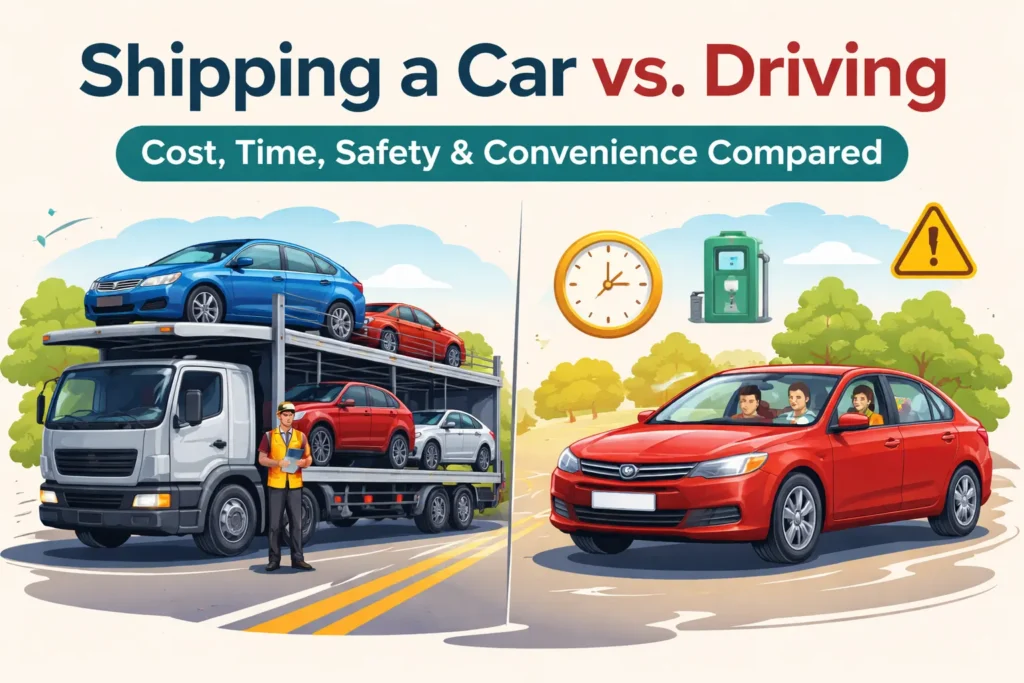
When planning a relocation, vehicle movement is a key logistical decision alongside hiring professional Packers And Movers. While driving your own car may appear economical at first glance, long-distance self-driving introduces hidden costs, safety risks, and physical strain. On the other hand, car shipping services offer structured logistics, insurance coverage, and reduced personal effort, but involve upfront service charges.
Cost Analysis — Total Expense Breakdown (Shipping vs. Driving)
Cost is often the first deciding factor when choosing between shipping a car and driving it yourself, but a fair comparison requires evaluating total ownership cost during relocation, not just visible expenses.
Cost of Shipping a Car in India
Car shipping costs in India are primarily influenced by distance, vehicle size, carrier type, and service scope. Pricing is usually quoted as a bundled service, which simplifies budgeting.
Professional car transportation services handle vehicle pickup, secure loading, transit, and delivery as part of a structured relocation process.
Key cost components
- Distance between origin and destination cities
- Carrier type:
- Open carrier (standard option)
- Enclosed carrier (higher protection, higher cost)
- Vehicle category (hatchback, sedan, SUV)
- Door-to-door vs terminal-based delivery
- Optional transit insurance coverage
Indicative pricing range
- Short distance (up to ~500 km): lower end of the pricing spectrum
- Medium distance (500–1,000 km): mid-range pricing
- Long distance (1,000+ km, inter-state): higher range, especially for enclosed carriers
The quoted price typically includes fuel, driver cost, loading/unloading, and basic transit coverage, reducing the risk of unexpected expenses.
Cost of Driving Your Car Long Distance
Driving your own car involves multiple direct and indirect costs, many of which are underestimated during planning.
Direct driving costs
- Fuel consumption (dependent on mileage and fuel price)
- Highway toll charges
- Parking fees in transit cities
Indirect and hidden costs
- Food and accommodation for multi-day trips
- Vehicle wear and tear (tyres, brakes, suspension)
- Accelerated servicing requirements
- Higher probability of minor repairs
- Opportunity cost (time off work, productivity loss)
Sample Cost Comparison
For a broader understanding of relocation expenses, reviewing a detailed packers and movers cost breakdown helps set realistic budgets.
Cost Component | Self-Driving (Approx.) | Car Shipping (Approx.) |
Fuel | Variable (distance & mileage dependent) | Included |
Tolls | Route-dependent | Included |
Food & Stay | Applicable for 1–2+ days | Not applicable |
Vehicle wear | High (long-distance usage) | Minimal |
Insurance exposure | Personal policy limits apply | Transit coverage available |
Cost predictability | Low | High |
Cost Crossover Point — When Shipping Becomes More Economical
For long-distance relocations, especially beyond a few hundred kilometres, bundled car shipping often becomes cost-competitive due to:
- Rising fuel and toll expenses
- Mandatory rest stops and accommodation
- Increased wear-related servicing costs
Shipping also offers better cost predictability, which is critical when coordinating with household relocation timelines and professional movers.
Time Efficiency — Transit Duration, Delays & Scheduling Flexibility
Time efficiency is a critical but often underestimated factor when deciding between shipping a car and driving it yourself, particularly during intercity or inter-state relocations that must align with housing possession dates, job joining timelines, and household goods movement.
Time Involved in Shipping a Car
Car shipping follows a logistics-driven schedule that balances routing efficiency and vehicle consolidation.
Typical time components
- Vehicle pickup and documentation
- Loading and route planning
- Line-haul transit
- Unloading and final delivery
Indicative transit timelines
- Short to medium distances: a few days
- Long-distance or inter-state routes: several days to over a week
- Rail-based vehicle transport: longer transit windows depending on availability and routing
Shipping timelines are largely predictable, especially when coordinated alongside professional moving services, though delivery windows may vary due to:
- Multi-vehicle carrier routing
- Weather conditions
- Regional traffic restrictions
Time Commitment When Driving Long Distance
Driving your own car requires continuous personal involvement from departure to arrival.
Time-related considerations
- Average driving hours per day are limited by fatigue and safety
- Mandatory rest breaks extend total travel time
- Overnight stays are unavoidable on longer routes
- Traffic congestion, diversions, and weather can cause delays
While driving may seem faster on paper for short distances, real-world conditions often stretch travel time beyond initial estimates.
Predictability vs Control
Aspect | Car Shipping | Self-Driving |
Schedule predictability | High (pre-planned routes) | Low to medium |
Delay risk | Shared across logistics chain | Fully personal |
Physical presence required | No | Yes |
Time flexibility | Limited changes post-dispatch | High but fatigue-bound |
Shipping offers time offloading, allowing you to travel separately (by train or flight) while your car moves in parallel. Driving offers route control but demands full-time attention.
Time Alignment with Household Relocation
When moving with packers and movers, car shipping:
- Reduces scheduling conflicts
- Prevents staggered arrivals
- Enables coordinated delivery at the new location
Driving your car separately can disrupt relocation timelines, particularly if delays occur or accommodation arrangements change.
3: Safety & Risk Factors — Vehicle Protection, Personal Safety & Legal Exposure
Safety is a decisive factor when comparing car shipping with long-distance self-driving, particularly in India where extended highway travel increases exposure to accident risk, fatigue-related errors, and environmental uncertainties.
Personal Safety Risks in Long-Distance Driving
Driving your own car over long distances places the entire safety responsibility on the driver.
Key risk factors
- Driver fatigue due to prolonged hours behind the wheel
- Reduced alertness during night driving
- Highway congestion and unpredictable driving behaviour
- Weather-related hazards such as heavy rain, fog, or poor visibility
- Increased accident probability during multi-day road travel
Extended driving also raises the likelihood of minor collisions, tyre damage, and mechanical stress, especially on unfamiliar routes.
Vehicle Safety During Car Shipping
Car shipping shifts road-risk exposure away from the vehicle owner.
Safety mechanisms involved
- Professionally trained drivers handling the carrier
- Secured vehicle placement using clamps, belts, and locks
- Reduced exposure to road debris and weather (especially in enclosed carriers)
- Structured loading and unloading procedures
While transit damage is possible, risk frequency is lower than cumulative self-driving exposure over long distances, particularly when proper inspection protocols are followed at pickup and delivery.
Insurance Coverage & Liability Comparison
Aspect | Car Shipping | Self-Driving |
Primary risk bearer | Transport operator | Vehicle owner |
Insurance type | Transit / carrier liability | Personal motor insurance |
Accident liability | Shared under contract terms | Fully personal |
Coverage limits | Declared value–based | Policy-specific |
Claim process | Post-delivery inspection based | Accident reporting required |
Understanding exactly what transit insurance covers during house shifting is essential before choosing car shipping over self-driving.
Self-driving accidents often involve third-party liability, legal formalities, and downtime, whereas shipping claims generally focus on documented transit damage, provided inspection protocols are followed.
Theft, Vandalism & Environmental Risk
- Long-distance driving exposes vehicles to theft risk during overnight parking
- Roadside stoppages increase vulnerability
- Shipping minimizes unsupervised exposure by keeping vehicles within controlled logistics chains
- Enclosed carriers add protection from dust, rain, and debris
Environmental risks such as monsoon flooding, landslides, or poor hill-road conditions significantly increase driving risk but are mitigated through professional route planning in shipping.
4: Convenience & User Experience — Physical, Mental & Logistical Load
Beyond cost and safety, the human effort involved plays a major role in deciding between shipping a car and driving it yourself, especially during a full household relocation.
Physical & Mental Effort in Self-Driving
Long-distance driving demands sustained physical endurance and mental focus.
Key challenges
- Continuous concentration for several hours daily
- Driver fatigue and reduced reaction time
- Stress from navigation, traffic, and road conditions
- Managing meals, rest stops, and overnight stays
- Increased exhaustion upon arrival, impacting relocation tasks
For families, solo drivers often face additional strain coordinating travel logistics separately from household goods movement.
Convenience Advantages of Car Shipping
Car shipping significantly reduces personal involvement.
Operational convenience
- No driving or route planning required
- Vehicle moves independently of personal travel
- Pickup and delivery coordinated with relocation schedule
- Reduced physical strain during an already demanding move
Shipping is particularly beneficial when relocating with children, elderly family members, pets, or multiple vehicles, where managing long road journeys becomes impractical.
Logistical Complexity Comparison
Factor | Car Shipping | Self-Driving |
Route planning | Handled by operator | Self-managed |
Rest & lodging | Not required | Mandatory for long routes |
Travel coordination | Parallel to relocation | Sequential |
Fatigue management | Not applicable | Critical |
Arrival readiness | High | Often reduced |
Shipping allows you to arrive fresh and operational, while driving often leads to fatigue that delays post-move activities such as unpacking, documentation, or job onboarding.
Multi-Vehicle & Corporate Relocation Scenarios
- Shipping is scalable for households with multiple cars
- Corporate relocations often prefer shipping to reduce employee downtime
- Driving multiple vehicles requires multiple drivers or repeated trips
- Shipping supports centralized coordination and predictable delivery
These factors make shipping more suitable for time-bound and professionally managed relocations.
5: Decision Framework — When Shipping Makes Sense vs When Driving Is Better
Choosing between shipping your car and driving it yourself ultimately depends on your relocation context, vehicle type, distance, and risk tolerance. The framework below provides a practical way to make an informed decision.
When Shipping a Car Makes More Sense
Car shipping is generally the better option in the following scenarios:
- Long-distance relocations, where cumulative driving fatigue and costs increase
- Inter-state or multi-day journeys requiring overnight halts
- Premium, new, or low-mileage vehicles, where wear and tear is a concern
- Family relocations involving children, elderly members, or pets
- Corporate transfers with strict joining timelines
- Monsoon or adverse weather conditions
- Multiple vehicles needing relocation
Shipping offers predictability, reduced personal risk, and logistical efficiency, making it suitable for structured and time-sensitive moves.
When Driving Your Car Is a Practical Choice
Self-driving may be reasonable in limited situations:
- Short-distance moves where the journey can be completed in a single day
- Flexible timelines with no immediate arrival pressure
- Experienced drivers comfortable with highway travel
- Remote locations with limited carrier accessibility
- Personal preference for road travel
In these cases, driving can provide route flexibility and immediate vehicle availability upon arrival.
Quick Decision Matrix
Scenario | Better Option |
300–400 km, single-day drive | Self-driving |
800+ km, multi-day route | Car shipping |
Family relocation | Car shipping |
Solo move, flexible schedule | Self-driving |
Premium vehicle | Car shipping |
Multiple cars | Car shipping |
Final Takeaway
There is no one-size-fits-all answer. However:
- Shipping prioritizes safety, convenience, and predictability
- Driving prioritizes control and flexibility but increases personal effort and risk
For comprehensive relocations, coordinating vehicle movement alongside professional packers and movers ensures smoother transitions and fewer disruptions.
Planning to Move Your Car Along With Household Shifting?
Whether you decide to ship your car professionally or are still comparing options, coordinating vehicle relocation with trusted packers and movers ensures a smoother, safer, and more time-efficient move.
Why Book Through Verified Packers & Movers?
- Door-to-door car transport options
- Transit insurance support
- Coordinated delivery with household goods
- Reduced relocation stress
- Transparent pricing and scheduling
Get connected with reliable Packers And Movers
If you’re relocating from or to Trivandrum, working with experienced packers and movers in Trivandrum ensures better coordination between car transport and household shifting.