
30+ Things To Do AFTER Moving Into A New House
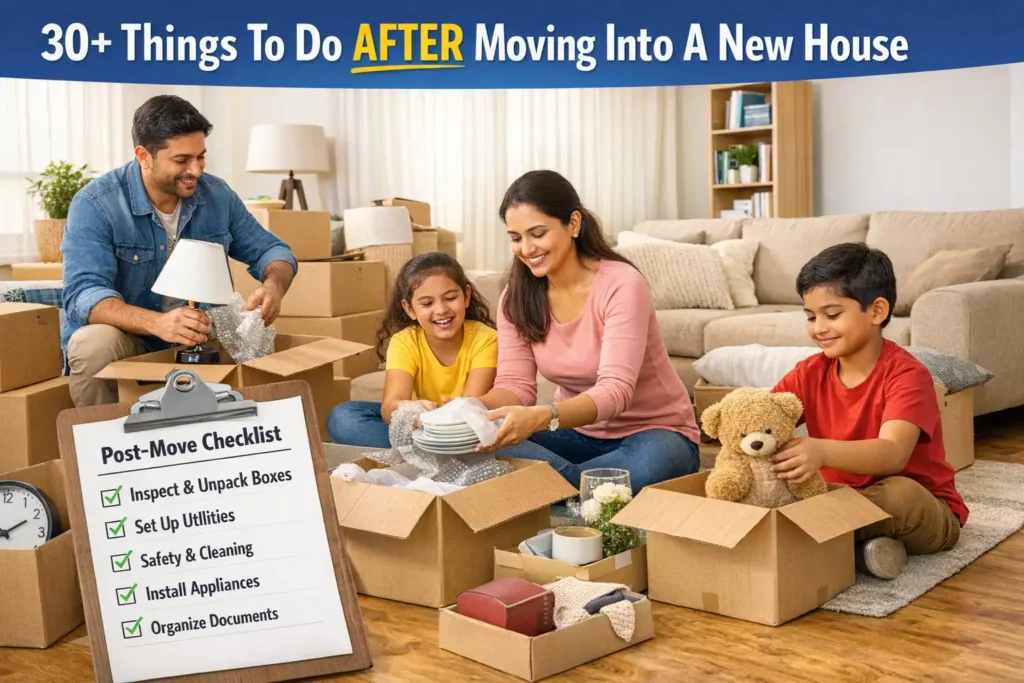
Moving into a new house is exciting, but what you do after the move matters just as much as packing and transportation. Once the truck leaves and the boxes arrive, there are several critical steps you must complete to avoid safety issues, missing items, utility problems, or long-term inconvenience. This step-by-step guide is designed to help you settle in smoothly after shifting, based on real post-move practices followed during professional relocations. If you’ve recently relocated or are planning to Hire Reliable packers and movers, this checklist will help you protect your belongings, your family, and your peace of mind.
1. Immediate Essentials to Handle on Moving Day (First 24 Hours)
The first 24 hours after moving into a new house are crucial. Actions taken during this window help you identify delivery issues early, ensure basic comfort, and avoid future disputes related to missing or damaged items.
Verify Delivered Goods With the Inventory List
As soon as unloading is completed, cross-check every carton and item with the inventory list prepared during packing. This helps confirm that all goods have arrived at the destination and nothing is left behind in transit.
- Check carton numbers and item descriptions
- Ensure all major furniture and appliances are present
- Do this before the delivery acknowledgment is signed
Inspect Items for Damage Before Signing the Receipt
A quick visual inspection of furniture, appliances, and fragile items should be done on the same day of delivery. If any damage is noticed, it should be recorded immediately to avoid disputes later.
- Look for dents, cracks, broken handles, or leakage
- Open cartons marked “fragile” first
- Mention visible damage on the delivery receipt if found
Understanding what protection you have in case of damage is important—here’s what transit insurance covers during house shifting.
Locate and Open Your Essentials Box First
Professional moving checklists recommend keeping an essentials box that contains items required for the first day and night. This avoids unnecessary stress when everything else is still packed.
Typical essentials include:
- Toiletries and personal hygiene items
- Medicines and basic first-aid
- Phone chargers and important documents
- Bedsheets, pillows, and basic kitchen items
Check Basic Utilities Are Working
Before nightfall, confirm that the house has functional electricity, water supply, and gas connection (if applicable). This ensures you can safely stay in the house from day one.
- Switch on lights and fans in multiple rooms
- Check water flow in kitchen and bathrooms
- Verify gas connection status before cooking
Secure Valuables and Important Documents
Documents and valuables should be placed in a safe, dedicated spot immediately after arrival to prevent misplacement during unpacking chaos.
- Keep IDs, property papers, and certificates together
- Avoid leaving valuables inside random cartons
- Use a locked drawer or cupboard if available
2. Safety & Security Tasks You Shouldn’t Ignore
Once your belongings are inside the house, your next priority should be safety. Many security risks in a new home are invisible at first and only surface later if ignored. Completing these tasks early helps protect your family, valuables, and long-term peace of mind.
Change Door Locks Immediately After Moving In
It is a common post-move safety practice to change or rekey the main door locks after shifting. Previous owners, tenants, domestic staff, or agents may still have duplicate keys, which can pose a security risk.
- Change the main door lock first
- Rekey internal locks if the property is old or rented
- Do not rely on verbal assurances about “unused keys”
Check All Entry Points: Doors, Windows, and Balconies
A complete security check should include all possible entry points, not just the main door. Faulty locks or loose latches can compromise safety.
- Test window locks in bedrooms and living areas
- Ensure balcony doors close and lock properly
- Check grills, sliding doors, and rear exits
Inspect Electrical Safety Before Regular Use
Before plugging in multiple appliances, it’s important to confirm that electrical points are safe and functioning correctly. Loose wiring or damaged switchboards can create hazards.
- Test switches and plug points in every room
- Avoid overloading sockets on the first day
- Watch for sparks, loose plates, or burning smells
Check Kitchen and Gas Safety
The kitchen should be inspected carefully before cooking meals. Gas connections and placement need to be secure to prevent leaks or accidents.
- Ensure the gas cylinder or pipeline is properly connected
- Keep the kitchen ventilated during first use
- Avoid using damaged rubber pipes or loose regulators
Secure Heavy Furniture and Child-Sensitive Areas
If children or elderly family members live in the house, safety adjustments should be made early. This reduces the risk of tipping accidents or injuries during daily movement.
- Place heavy cupboards against walls
- Avoid blocking walkways with unpacked furniture
- Keep balconies and sharp corners supervised during initial days
Most post-move safety issues can be avoided by choosing verified professionals—here’s how to choose reliable packers and movers.
3. Utilities, Services & Address Updates to Complete First
After ensuring safety inside your new home, the next priority is setting up essential services and updating your address across important records. Delays in these tasks often lead to missed bills, service interruptions, or communication gaps that become difficult to fix later.
Planning these updates early also helps control relocation expenses—here’s a detailed breakdown of packers and movers costs in India.
Confirm Electricity, Water, and Gas Connections
Immediately after moving in, verify that all essential utilities are active and working correctly. This ensures uninterrupted daily routines and helps identify issues early.
- Check electricity supply in all rooms
- Confirm water flow in bathrooms and kitchen
- Verify gas connection status before regular cooking
Arrange Internet, Broadband, and DTH Services
Internet and television services are often required for work, education, and daily communication. These services should be scheduled soon after moving in to avoid extended downtime.
- Book installation or relocation requests early
- Ensure modem and wiring access points are available
- Test connectivity once installation is completed
Update Address With Banks, Insurance, and Financial Institutions
Address updates help ensure you continue receiving bank statements, insurance documents, and important notices without disruption.
- Update address with banks and credit card providers
- Modify address in insurance policies
- Ensure billing addresses match your current residence
Notify Utility Providers and Subscription Services
Informing utility providers and service subscriptions about your address change prevents service lapses and billing errors.
- Electricity and water billing address updates
- Gas agency address change
- Newspaper, milk, and other local services
Update Address for Official Communication
Government records and official correspondence should reflect your current address to avoid complications later.
- Update address wherever it is required for official communication
- Ensure future notices and documents reach the correct location
4. Deep Cleaning & Hygiene Setup Before Full Unpacking
Before you fully unpack your belongings, it’s important to ensure the house is clean, hygienic, and ready for daily use. Cleaning at this stage is easier because rooms are still empty, and it helps prevent dust, germs, or leftover issues from previous occupants.
Deep Clean the House Before Unpacking Completely
Post-move checklists recommend cleaning the new house thoroughly before placing furniture and household items. This allows access to corners, floors, and surfaces that are hard to reach later.
- Clean floors, windows, and switchboards
- Wipe wardrobes, shelves, and storage units
- Remove construction dust or leftover debris
Focus on Kitchen and Bathroom Hygiene First
Kitchens and bathrooms require special attention as they directly affect health and hygiene. Cleaning these areas early makes the home safer for immediate use.
- Disinfect sinks, platforms, and cabinets
- Clean toilet seats, taps, and floor drains
- Ensure proper ventilation while cleaning
Check for Pest Issues Before Settling In
It is advisable to inspect the house for signs of pests before placing furniture and appliances. Addressing this early reduces inconvenience later.
- Look for insects in kitchen cabinets and corners
- Check bathrooms and storage areas
- Consider treatment before full setup if needed
Clean Water Storage and Drinking Water Systems
Basic hygiene checks include ensuring the cleanliness of water storage and drinking systems before regular use.
- Flush taps before use
- Clean or replace water filters if present
- Ensure drinking water is safe before consumption
Dispose of Packing Waste Responsibly
Unpacking generates a large amount of waste such as cartons, plastic wraps, and tapes. Clearing this early helps keep the house organized and safe.
- Flatten cartons after unpacking
- Separate recyclable and non-recyclable waste
- Follow local waste disposal rules
5. Room-Wise Unpacking & Home Setup Plan
Unpacking without a plan often leads to clutter, misplaced items, and unnecessary stress. A room-wise approach helps you settle faster, keeps essentials accessible, and ensures your home becomes functional step by step.
Start With Bedrooms for Immediate Comfort
Setting up bedrooms first allows family members to rest properly after a physically demanding move. This is considered a priority in post-move unpacking checklists.
- Assemble beds and place mattresses first
- Unpack bedsheets, pillows, and blankets
- Arrange basic clothing for the first few days
Unpack Bathrooms Next for Daily Convenience
Bathrooms should be usable from day one to maintain hygiene and comfort. Having these essentials ready avoids unnecessary inconvenience.
- Unpack toiletries, towels, and cleaning supplies
- Install shower curtains or accessories if required
- Ensure storage shelves are clean before placing items
Set Up the Kitchen in a Practical Order
Kitchen unpacking should be done methodically so daily cooking can begin without chaos. This reduces dependency on outside food after moving.
- Place frequently used utensils first
- Arrange basic cookware and storage containers
- Keep heavy appliances in their designated spots
Organize the Living Room and Common Areas
The living room often receives the highest foot traffic. Organizing it early helps the home feel settled and functional.
- Position sofas, tables, and TV units first
- Unpack electronics only after checking power points
- Avoid blocking entryways during setup
Unpack Storage Areas and Balconies Last
Less frequently used spaces can be unpacked once essential rooms are functional. This prevents clutter during the initial settling phase.
- Arrange storage shelves and cupboards gradually
- Keep cleaning tools and spare items organized
- Avoid overloading balconies with cartons
6. Appliance Installation & Functional Checks
After unpacking major rooms, appliances should be installed and tested carefully. Using appliances without proper checks can lead to damage, safety risks, or warranty issues, so this step should be handled methodically.
Ensure Utilities Are Ready Before Appliance Use
Before switching on any appliance, it’s important to confirm that electricity and water connections are stable. Many post-move issues occur when appliances are connected to faulty or incomplete utility setups.
- Check voltage stability before plugging in electronics
- Confirm water inlet and outlet points for washing machines
- Avoid using appliances during power fluctuation
Install Large Appliances in Their Final Positions
Large appliances should be placed in their final location before installation to avoid repeated movement and accidental damage.
- Position refrigerators, washing machines, and dishwashers correctly
- Ensure adequate ventilation space around appliances
- Level appliances to avoid vibration or noise
Test Appliances After Installation
Once appliances are installed, basic functional testing helps identify issues early.
- Switch on appliances one by one
- Check for unusual noise, leakage, or error indicators
- Confirm proper drainage and power connection
Register Warranties and Keep Purchase Documents Safe
Warranty cards and invoices are often misplaced during relocation. Organizing these documents early ensures coverage in case of future issues.
- Store invoices and warranty documents together
- Register products where applicable
- Note down service contact details
Avoid DIY Fixes for Installation Issues
If an appliance does not function properly after setup, professional assistance is recommended rather than attempting temporary fixes.
- Do not force electrical or water connections
- Avoid opening appliance panels unnecessarily
- Seek qualified service support when needed
7. Society Formalities & Local Area Familiarization
Once your home is functional, completing society-related formalities and understanding the local area helps you settle in smoothly and avoid future confusion or rule violations.
Complete Apartment Society Move-In Formalities
Most housing societies require residents to complete basic move-in procedures for security and record purposes. These formalities help regulate access and maintain community safety.
- Submit resident or tenant details as required
- Follow move-in timing rules and elevator usage guidelines
- Register vehicle details if applicable
Understand Society Rules and Common Area Usage
Every apartment complex has guidelines related to parking, waste disposal, and use of shared spaces. Understanding these early prevents misunderstandings later.
- Check parking allocation and visitor parking rules
- Learn garbage disposal timings and segregation norms
- Follow guidelines for common facilities like lifts and corridors
Introduce Yourself to Security and Maintenance Staff
Getting familiar with on-site staff helps in daily coordination and emergency situations.
- Share your flat number and contact details
- Understand entry procedures for guests and deliveries
- Know whom to contact for maintenance issues
Explore Nearby Essential Services
Familiarizing yourself with the neighborhood makes daily life easier after shifting.
- Locate nearby grocery stores and pharmacies
- Identify hospitals or clinics in the area
- Check access to public transport or parking zones
Note Emergency Contacts and Local Support
Having local emergency information ready is important, especially in a new area.
- Save emergency numbers and society helplines
- Identify nearest police station or fire service access
- Share emergency details with family members
8. Smart Home Organization Tips for Faster Settling
Organizing your home strategically after moving helps reduce clutter, saves time during daily routines, and makes the space comfortable faster. A structured approach during unpacking prevents repeated rearrangement later.
Unpack Room by Room Instead of All at Once
Unpacking one room at a time is a widely followed post-move practice because it keeps the process manageable and organized.
- Finish unpacking one room before moving to the next
- Keep unopened cartons out of walkways
- Avoid mixing items from different rooms
Keep Frequently Used Items Easily Accessible
Placing daily-use items within reach reduces frustration during the initial settling phase.
- Store daily clothing, utensils, and toiletries in front-access areas
- Avoid placing essential items in high or deep storage
- Label shelves or drawers temporarily if needed
Declutter While Unpacking
Unpacking is an ideal time to identify items you no longer need. Removing unnecessary belongings helps create more space and better organization.
- Separate items for reuse, storage, or disposal
- Avoid placing unused items back into cupboards
- Keep storage areas functional, not overcrowded
Plan Storage Based on Usage Frequency
Organizing storage based on how often items are used improves daily efficiency and reduces clutter buildup.
- Keep frequently used items at eye level
- Store seasonal or occasional items in upper or rear spaces
- Use storage units as intended, without overloading
Maintain Clear Walkways and Safe Movement Areas
Keeping pathways clear during and after unpacking helps prevent accidents, especially in the first few days.
- Avoid stacking cartons near doors and stairs
- Ensure adequate walking space in bedrooms and halls
- Rearrange furniture only after unpacking essentials
9. Post-Move Documentation & Expense Tracking
After the physical move is complete, organizing documents and tracking expenses is an important step that many people delay. Keeping records in order helps with reimbursements, future reference, and resolving any post-move issues smoothly.
Organize Important Moving and Home Documents
Documents related to your move and new home should be sorted and stored safely as soon as possible. This avoids loss during unpacking and helps with future verification.
- Keep rental agreement or ownership papers in one folder
- Store utility bills from the new address
- Secure identity and address-related documents
Preserve Bills and Receipts Related to Shifting
Moving-related bills and receipts are often required for reimbursement or record purposes. Keeping them organized saves time later.
- Preserve packers and movers invoices
- Store receipts for temporary services or installations
- Keep digital copies as backup
These documents are also essential if you need to raise a complaint or recover losses later—especially in cases of disputes or damage claims.
Track Moving Expenses for Reference
Maintaining a basic expense record helps understand overall relocation costs and supports claims or reimbursements if required.
- List transportation, packing, and service charges
- Record additional expenses incurred after moving
- Keep notes for future moves or budgeting
Keep Records for Insurance or Damage-Related Follow-Ups
If any items were damaged during the move, related documents should be retained for follow-up or claim purposes.
- Keep delivery receipts and inspection notes
- Preserve photos or notes of damaged items
- Maintain communication records if applicable
Create a Dedicated Folder for Home-Related Records
A single folder for all house-related paperwork helps manage future tasks easily.
- Include warranty cards, service records, and manuals
- Store society documents and contact details
- Update the folder whenever new documents are received
10. Things Most People Forget After Moving (But Shouldn’t)
Even after unpacking and settling in, there are several important tasks that are commonly overlooked. Ignoring these can lead to inconvenience, security risks, or service disruptions weeks after moving.
Recheck Utility Services After a Few Days
Utilities may appear functional on the first day but can develop issues later. Rechecking them ensures everything continues to work smoothly.
- Test electricity points and appliances again
- Confirm consistent water supply
- Verify internet and cable connectivity
Replace or Rekey Locks Even if They Seem New
Many people assume new or existing locks are safe, but duplicates may still exist with previous occupants or service staff.
- Change or rekey locks after settling in
- Avoid sharing spare keys unnecessarily
- Keep track of all key copies
Update Address Everywhere to Avoid Missed Communication
Partial address updates often result in missed bills or important notices later.
- Reconfirm address updates with banks and service providers
- Check delivery addresses on online shopping platforms
- Ensure official communication reaches your new home
Check for Water Seepage or Hidden Damage
Some issues only become visible after a few days of regular use. Early detection helps prevent larger problems.
- Inspect walls, ceilings, and bathrooms
- Look for damp patches or leaks
- Address issues before they worsen
Clear Remaining Packing Material Completely
Leftover cartons and packing waste can clutter the home and attract pests if not removed.
- Dispose of unused cartons and plastic wrap
- Avoid storing empty boxes in damp areas
- Keep storage areas clean and ventilated
11. When to Call Professionals After Moving In
Even after unpacking and settling in, certain tasks are better handled by trained professionals. Calling the right expert at the right time helps prevent safety risks, appliance damage, and long-term maintenance issues.
Call an Electrician for Electrical Issues or Load Checks
If you notice loose sockets, flickering lights, or power fluctuations after moving in, it’s important to get a professional inspection instead of attempting fixes yourself.
- Address loose wiring or damaged switchboards
- Check load capacity before using multiple appliances
- Fix electrical issues before regular usage begins
Hire a Plumber for Leakage or Water Flow Problems
Plumbing issues may not be visible immediately and can surface after regular use. Early professional help helps avoid water damage.
- Check taps, flush tanks, and pipelines
- Inspect under sinks for slow leaks
- Resolve drainage issues promptly
Consider Professional Pest Control if Needed
If insects or pests are noticed during cleaning or settling in, professional treatment is often required before the problem spreads.
- Inspect kitchens, storage areas, and bathrooms
- Address pest issues before placing all furniture
- Follow treatment instructions carefully
Use Professional Help for Appliance or Furniture Adjustments
If appliances don’t function properly after installation or furniture needs alignment, professional support is safer than trial-and-error fixes.
- Avoid opening appliance panels on your own
- Get proper adjustments for modular furniture
- Prevent accidental damage or warranty issues
Get Help for Deep Cleaning or Maintenance Tasks
Some tasks are time-consuming or require specialized tools. Professional services can help complete them efficiently.
- Schedule deep cleaning if required
- Address maintenance issues beyond basic cleaning
- Focus on settling in while professionals handle setup
Read More Moving Insurance Advice
How to Settle Into Your New Home Faster & Stress-Free
Moving into a new house doesn’t end when the boxes are unloaded. What you do in the days that follow determines how quickly your home becomes safe, functional, and comfortable. By handling post-move essentials in the right order—starting with inventory checks, safety measures, utilities, cleaning, unpacking, and documentation—you reduce the chances of long-term issues and unnecessary expenses.
A structured post-move checklist helps you:
Identify missing or damaged items early
Ensure home safety for family members
Avoid utility disruptions and missed communications
Set up rooms efficiently without repeated rearrangement
Keep important records organized for future reference
Whether you’ve moved locally or across cities, following these steps ensures a smoother transition into your new home. If you’re planning a future relocation in Karnataka, working with experienced packers and movers in Varanasi ensures a safer and more organized move.