
Local Move Checklist (Within the City)
A local move checklist includes planning your move early, budgeting costs, verifying packers and movers, decluttering household items, packing essentials safely, arranging parking and society permissions, supervising moving-day activities, and completing post-move cleaning and setup. These steps ensure a smooth, organized, and stress-free within-the-city shifting experience.
A local move may look simple because the distance is short, but planning, organizing, and coordinating everything still requires a proper system. Whether you’re shifting across the street or to another neighbourhood, a detailed checklist ensures nothing is missed. If you want a smooth and stress-free relocation, consider hiring experienced packers and movers services who can handle packing, loading, and transport professionally A well-planned approach reduces last-minute confusion, prevents damage, and ensures that both move-out and move-in processes happen efficiently.
1. Start Early – Planning Your Local Move Timeline
Local shifting becomes much easier when you begin early and follow a structured timeline. Planning ahead helps you prioritize tasks like sorting belongings, informing service providers, arranging transport, and booking movers. A moving timeline also ensures that you don’t overlook crucial steps like organizing documents, preparing essentials, and scheduling elevator slots.
Why Early Planning Matters
- Prevents last-minute rush
- Helps you track all moving-related tasks
- Ensures no essential item or task is left out
- Gives buffer time for unexpected delays
Suggested Local Move Timeline
Timeline | Key Actions |
2–3 Weeks Before Move | Start decluttering, take home inventory, shortlist movers |
1–2 Weeks Before Move | Arrange packing supplies, finalize transport, inform society, schedule utility updates |
3–5 Days Before Move | Begin packing rarely used items, label boxes, keep documents aside |
1 Day Before Move | Pack daily-use essentials, confirm timings with movers, prepare parking/elevator permissions |
Moving Day | Supervise loading, check inventory list, complete move-out checks |
Move Planning Checklist
- Create a detailed list of rooms and items
- Assign moving-day roles to family members
- Keep a separate folder for bills, IDs, house papers
- Check parking availability for the moving truck
- Confirm timings with packers and movers
2. Budgeting & Understanding Local Moving Costs
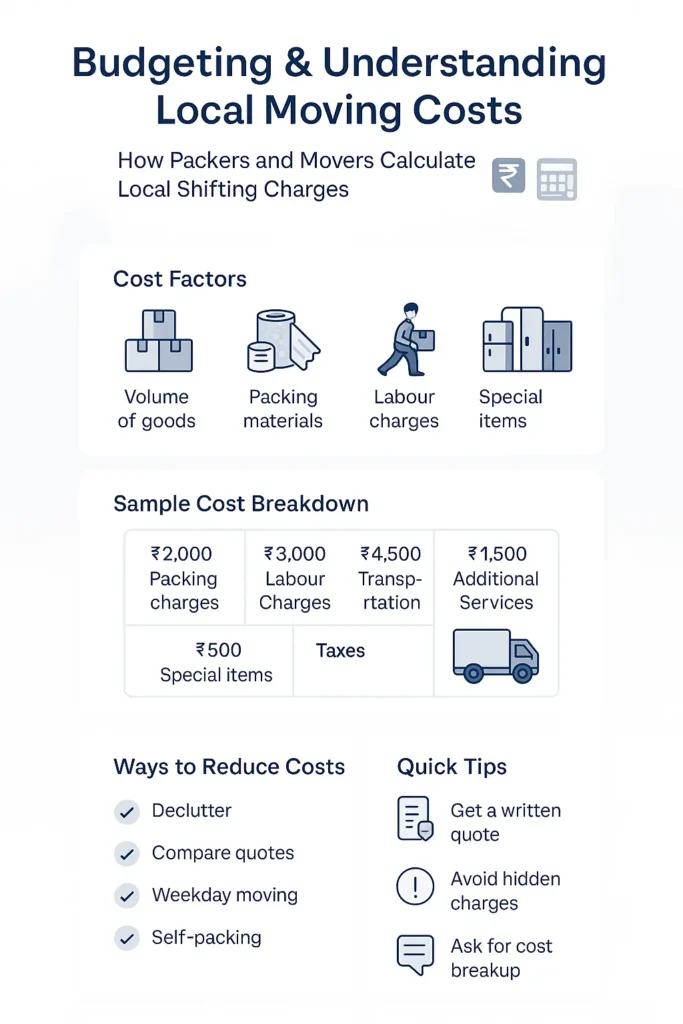
Even for a short-distance move, several cost components add up, and planning your budget in advance helps you avoid surprises. Local shifting charges vary based on the number of items, floor level, labour effort, packing materials, and distance between the old and new homes. Understanding these factors allows you to compare mover quotations effectively and choose services that fit your budget.
Key Factors That Influence Local Moving Costs
- Volume of Household Goods
More items require more labour and sometimes a larger vehicle, increasing total cost. - Packing Materials Required
Fragile items, electronics, furniture, and kitchenware may need bubble wrap, foam, and carton boxes. - Distance Between Locations
Short distances within the same city are usually charged based on labour + vehicle time. - Floor Level & Elevator Access
Moving to or from a higher floor without a lift increases labour charges. - Disassembly & Reassembly Services
Items like beds, wardrobes, dining tables may require dismantling. - Heavy or Special Items
Moving items such as a fridge, washing machine, treadmill, or aquarium adds to the effort.
Local Moving Budget Checklist
- Decide your maximum budget limit
- Take quotations in writing (WhatsApp/email)
- Ask movers for full cost breakup (packing, labour, transport)
- Confirm any extra charges for stairs, heavy items, or long carry
- Set aside a contingency amount for last-minute needs
To understand pricing in detail, you can refer to this packers and movers cost guide, which explains how local shifting charges are calculated.
3. Shortlisting & Verifying Local Packers and Movers
Choosing the right moving company is one of the most important steps in a local move. A reliable mover ensures safe handling of your belongings, transparent pricing, and timely shifting. Start by creating a shortlist of nearby packers and movers, compare their quotes, and verify their credentials before finalizing. For example, if you are planning a local relocation, choosing reliable packers and movers in Trichy ensures faster coordination and on-time shifting. This prevents issues like overcharging, delays, or mishandling of goods.
How to Shortlist Movers Effectively
- Search for movers serving your locality or city zone.
- Check their service list (packing, loading, transport, unpacking).
- Request written quotations to compare offering vs. cost.
- Avoid movers giving extremely low estimates.
Documents & Details You Should Verify
Before hiring any packers and movers, always verify the following to ensure authenticity and professionalism:
- Business registration details
- GST number and invoice format
- Office address and warehouse availability
- ID proof of the supervisor or move coordinator
- Transport vehicle type and capacity
Physical office address verification is strongly recommended because it ensures the mover is not operating temporarily or without proper setup.
Important Questions to Ask Movers
- What services are included in the quoted price?
- Are packing materials part of the package?
- Is dismantling and reassembly covered?
- Are there extra charges for stairs or heavy items?
- How is damage handled if any item breaks during shifting?
Red Flags to Avoid
- No written quotation
- No GST invoice or official communication
- Poor response or vague answers
- Unwillingness to show office or registration details
- Very low quotes compared to the market
Mover Verification Checklist
- Check reviews and recent customer feedback
- Inspect sample packing materials if possible
- Confirm date and time availability
- Ask for an inventory list format
- Verify advance payment terms (if any)
Before finalizing any mover, follow this step-by-step guide on how to choose the best packers and movers to avoid hidden charges or unreliable service providers.
4. Declutter and Sort Your Household Items
Decluttering before a local move helps reduce the volume of items, lowers moving costs, and makes packing far more manageable. When you remove items you no longer use, movers require fewer packing materials, less labour, and sometimes a smaller transport vehicle. A room-by-room decluttering strategy ensures nothing is missed and helps you create a clear inventory for your movers.
Taking inventory is also essential because it helps track your belongings during loading, unloading, and unpacking. Keeping a list of items minimizes the risk of loss or confusion during shifting.
How to Declutter Efficiently (Room-by-Room Method)
- Living Room
- Sort old magazines, décor items, and broken electronics.
- Decide whether bulky furniture is worth shifting or replacing.
- Kitchen
- Remove expired food items and unused containers.
- Reduce excessive utensils and donate duplicates.
- Bedroom
- Sort clothes into “keep, donate, discard.”
- Check bed linens, pillows, and mattresses for replacement needs.
- Bathroom
- Throw away empty or expired toiletries.
- Segregate daily-use items into an essentials bag.
- Storage Areas
- Clear out old tools, unused boxes, and seasonal items.
- Evaluate which items haven’t been used in over a year.
Useful Decluttering Categories
- Keep: Essential and frequently used items
- Donate: Clothing, utensils, or furniture in good condition
- Sell: Appliances, electronics, or furniture you no longer need
- Discard: Damaged, expired, or non-functional items
5. Packing Checklist for a Smooth Local Move
Packing is one of the most time-consuming parts of a local move. Even though the distance is short, you must pack items safely to avoid damage during loading, transit, and unloading. Proper packing also speeds up unpacking because everything stays organized and labelled clearly. Start by gathering all packing materials and begin with items you rarely use.
Clear labelling helps both the movers and your family members identify which box goes to which room. It prevents confusion and reduces handling mistakes. Keeping a separate essentials box ensures your daily-use items remain accessible on moving day.
Essential Packing Materials You Will Need
- Strong carton boxes
- Bubble wrap and foam sheets
- Packing paper
- Stretch film
- Packing tape and dispenser
- Ziplock bags
- Marker pens for labelling
- Moving blankets or thick cloth for furniture
Smart Packing Strategy (Room-by-Room)
1. Living Room
- Wrap fragile décor pieces with bubble wrap.
- Use corner protectors for TVs and frames.
- Pack cables, remotes, and accessories in labelled ziplock bags.
2. Kitchen
- Wrap plates vertically to reduce breakage.
- Use small boxes for spice jars and utensils.
- Seal oil bottles and liquid items tightly.
3. Bedrooms
- Pack clothes in suitcases or sturdy bags.
- Protect mattresses with plastic covers.
- Keep jewellery and personal items separately.
4. Electronics
- Use original boxes when possible.
- Remove batteries from devices before packing.
- Label each wire and accessory bag.
5. Furniture
- Dismantle beds, dining tables, or wardrobes when needed.
- Protect edges with foam sheets or blankets.
- Keep screws and fittings in a labelled pouch.
Packing Priority
Item Category | Packing Requirement | Special Instructions |
Fragile Items | Bubble wrap, double tape | Mark “FRAGILE – HANDLE WITH CARE” |
Electronics | Anti-static wrap | Pack cables separately |
Clothes & Linens | Suitcases, bags | Avoid overpacking |
Kitchen Items | Small boxes, padding | Wrap glass items individually |
Documents | Waterproof folder | Keep in personal custody |
6. Moving Day Coordination and House Exit Checklist
Moving day requires proper coordination to ensure everything goes smoothly—from supervising the movers to completing the final checks before leaving your old home. Even during a local move, careful supervision is necessary to avoid damage, misplaced items, or delays. Following a structured move-day checklist helps you stay organized and maintain full control of the process.
A final walkthrough of your old home ensures that no belongings are left behind and all switches, taps, and appliances are turned off safely before you hand over the keys.
Before the Movers Arrive
- Keep your essentials box and personal items separately.
- Ensure children or pets are in a safe, designated area.
- Clear hallways and staircases for easy movement.
- Check if the elevator and parking space are available at the scheduled time.
- Keep cash, ID cards, and important documents handy.
During Loading and Move-Out
Supervision is crucial when movers start handling your belongings. Make sure delicate and heavy items are moved carefully and placed properly inside the truck.
Key Supervision Points
- Cross-check boxes with your inventory list.
- Ensure fragile items are loaded on top.
- Confirm furniture is wrapped properly to avoid scratches.
- Guide movers about items that need special attention.
- Make sure nothing is dragged on the floor to avoid damage.
Mover Coordination Checklist Table
Task | What to Check | Notes |
Inventory Verification | Count boxes & match with list | Helps avoid missing items |
Fragile Items Handling | Proper padding & placement | Keep on top or separate section |
Furniture Loading | Blankets/foam protection | Prevents dents & scratches |
Appliance Handling | Upright position during loading | Especially refrigerators |
Final Walkthrough of Your Old Home
Before you leave your old house, perform a thorough inspection to ensure everything is in place and nothing is forgotten.
Walkthrough Checklist
- Open all cupboards, drawers, lofts, and cabinets.
- Check behind doors, curtains, and furniture spaces.
- Turn off lights, gas, and water taps.
- Take meter readings if required.
- Hand over keys responsibly to the landlord or society office.
Before Leaving for the New Home
- Confirm the route and estimated arrival time with the moving truck.
- Keep utilities or access instructions ready for the new home.
- Carry valuables, electronics, jewellery, and documents personally.
- Reconfirm unloading permissions and elevator slot at the new location.
7. Transportation, Parking & Society Permissions
Transportation arrangements play a major role in ensuring your local move is smooth and delay-free. Even a short-distance shift can face challenges like traffic, narrow lanes, or lack of parking space if not planned properly. Coordinating with your housing society for elevator access, parking slots, and security clearance helps prevent last-minute restrictions that could delay the entire moving process.
Proper permissions also ensure that movers can load and unload your belongings safely without disturbing neighbours or violating society rules. Many apartments require prior notification for using service lifts, reserving parking areas, and allowing commercial vehicles inside the premises.
Key Transportation Considerations
- Choose a vehicle size suitable for your household items.
- Confirm loading/unloading location for easy truck access.
- Ensure the driver has your contact number and alternate routes.
- Plan the move at a time when traffic is minimal.
Parking & Vehicle Access Checklist
- Reserve a parking spot near the entrance of your building.
- Inform society guards about the arrival of a moving truck.
- Ensure there is enough space for movers to carry large furniture.
- Check if commercial vehicles are allowed during specific hours.
Society Permissions You May Need
Most societies have certain rules regarding shifting activities. It’s important to communicate with the building management in advance to avoid delays.
Common Permissions Required
- Service elevator booking
- Permission for moving during specific hours (usually morning or daytime)
- Temporary use of parking area for the moving truck
- Entry permissions for movers and laborers
- Gate pass for items leaving or entering the building
Having these permissions in place helps movers load and unload smoothly without interruptions or objections from security staff.
8. Post-Move Unpacking & Home Setup Checklist
Once you arrive at your new home, the next important phase is unpacking and setting up essentials. Even during a local move, proper unpacking ensures items aren’t damaged, misplaced, or left unopened for weeks. Prioritizing essential areas such as the kitchen, bedrooms, and bathrooms helps the family settle in quickly. It’s also important to inspect all boxes and furniture for any damage before the movers leave.
Unpacking systematically reduces stress and makes your new home functional within a few hours. This process also includes connecting appliances, arranging furniture, checking utilities, and organizing essentials for daily use.
Immediate Unpacking Priorities
- Unpack your essentials box first (toiletries, chargers, medicines, clothes).
- Set up the bedroom so you have a comfortable place to rest.
- Unbox kitchen essentials for quick meal preparation.
- Check bathroom supplies for immediate use.
Inspecting Items and Reporting Issues
As soon as unloading is complete, check each box for visible damage or water exposure. Inspect furniture corners, glass items, and electronics before signing any completion form.
Inspection Checklist
- Count all boxes as per the inventory list.
- Check appliances for any dents or non-functioning parts.
- Inspect furniture for scratches or broken edges.
- Ensure fragile items like dishes and glassware are intact.
- Report issues to the movers immediately.
9. Update Your Address & Local Services
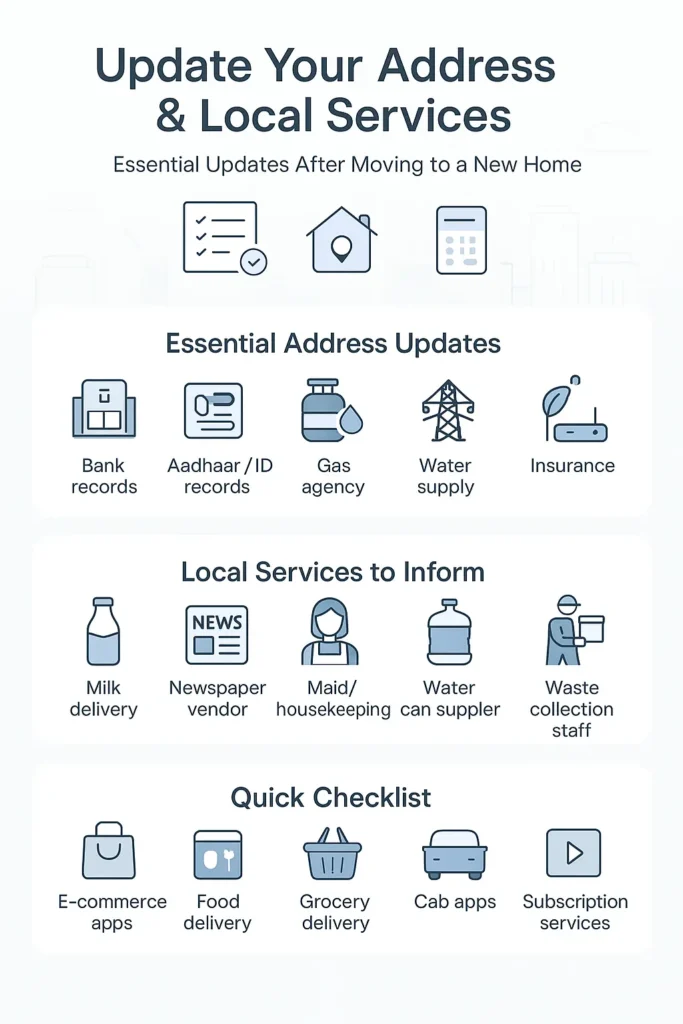
After settling into your new home, one of the most important tasks is updating your address across essential services and notifying people who rely on your previous location. A local move still requires proper updates on utilities, subscriptions, government records, and delivery services to avoid missed bills, delayed packages, or service interruptions. Making a clear post-move update list keeps your daily routine smooth and prevents administrative issues.
Updating your location also ensures that essential home services—like gas delivery, internet, and maintenance—work without disruption. Many local vendors such as milk suppliers, newspaper distributors, or cleaning staff need your new address for their routine visits.
Address Update
Category | Where to Update | Notes |
Financial | Bank accounts, credit cards | Helps receive correct statements |
Utilities | Electricity, water, gas | Prevents disruptions |
Digital Services | Online shopping, food apps | Ensures smooth deliveries |
Local Vendors | Milk, maid, newspaper | Avoids service interruption |
Official Records | Office, school | Needed for communication |
Tips for Managing Address Updates
- Keep a digital checklist to track updates.
- Save scanned copies of your new rental agreement or ownership documents.
- Update the address on your government ID only when necessary.
- Notify your employer or HR to update internal records.
Why Timely Address Updates Matter
- Ensures uninterrupted utility services
- Prevents missed deliveries and payments
- Keeps official records accurate
- Maintains smooth day-to-day functioning
- Avoids confusion or miscommunication with vendors
10. Safety, Cleaning & Final Checks After Moving
Once all your belongings are unloaded and you’ve started unpacking, it’s crucial to focus on safety, cleaning, and final inspections. These steps ensure that your new home is fully functional, hygienic, and ready for comfortable living. Proper post-move checks help identify any issues early—such as dampness, loose wiring, leakage, pests, or damaged items—so you can fix them before settling in. Conducting final safety checks also prevents future hazards and ensures your household runs smoothly.
Initial Cleaning After Move-In
Even if the house looks clean at first glance, dust and debris can accumulate during unloading and unpacking.
Cleaning Tasks to Prioritize
- Sweep and mop all floors before arranging furniture.
- Clean kitchen countertops, cabinets, and sink areas.
- Wipe bathroom surfaces, mirrors, and shelves.
- Sanitize frequently touched areas like switches and door handles.
- Remove empty boxes and packing materials to reduce clutter.
A clean environment makes unpacking quicker and more comfortable.
Safety Checks to Perform Immediately
Safety should be one of your first priorities after entering your new home.
Essential Safety Checklist
- Check electrical switchboards for loose wiring.
- Ensure gas pipes, burners, and connections are secure.
- Confirm geysers, fans, and appliances are functioning correctly.
- Test door locks, window latches, and balcony safety grills.
- Inspect for any signs of water leakage, especially in kitchens and bathrooms.
These checks help prevent accidents and ensure a safe living environment.
Furniture & Appliance Check
Once the movers finish unloading, inspect large items like furniture and appliances to ensure they’re free from damage.
Inspection Points
- Check for scratches, dents, or broken corners on furniture.
- Ensure appliances are upright and undamaged.
- Test electronics after they’ve been stationary for a while.
- Verify glass items and mirrors for cracks.
If you notice damage, inform the movers immediately before they leave.
Understanding what transit insurance covers during house shifting helps you know when and how you can claim compensation for damaged items.
Home Ventilation & Moisture Checks
Proper ventilation ensures a fresh, breathable environment.
- Open all windows to allow cross-ventilation.
- Check for damp spots or mold in less visible areas.
- Run exhaust fans in the kitchen and bathrooms.
Moisture issues should be addressed early to avoid long-term damage.
Dispose of Packing Materials Properly
- Flatten cardboard boxes for recycling.
- Collect bubble wrap and plastic sheets separately.
- Return reusable packing materials to movers if applicable.
- Avoid leaving packing waste in hallways or common areas.
Proper disposal keeps your home clutter-free and maintains society cleanliness.
Final Post-Move Checklist
- Complete house cleaning.
- Finish essential unpacking.
- Test all utilities and appliances.
- Inspect for damages and report immediately.
- Organize rooms for easy movement.
- Update emergency contacts with new address.
Make your local move faster, safer, and completely hassle-free with 6 Packers And Movers. Our trained professionals handle everything—packing, loading, transportation, and setup—so you can relax while we take care of the heavy lifting. Whether you’re shifting within your lane, neighbourhood, or across the city, we deliver reliable, affordable, and damage-free moving services. Choose 6 Packers And Movers for a smooth relocation experience you can trust.