
How to Pack for a Move: 8-Week to Moving Day Packing Timeline
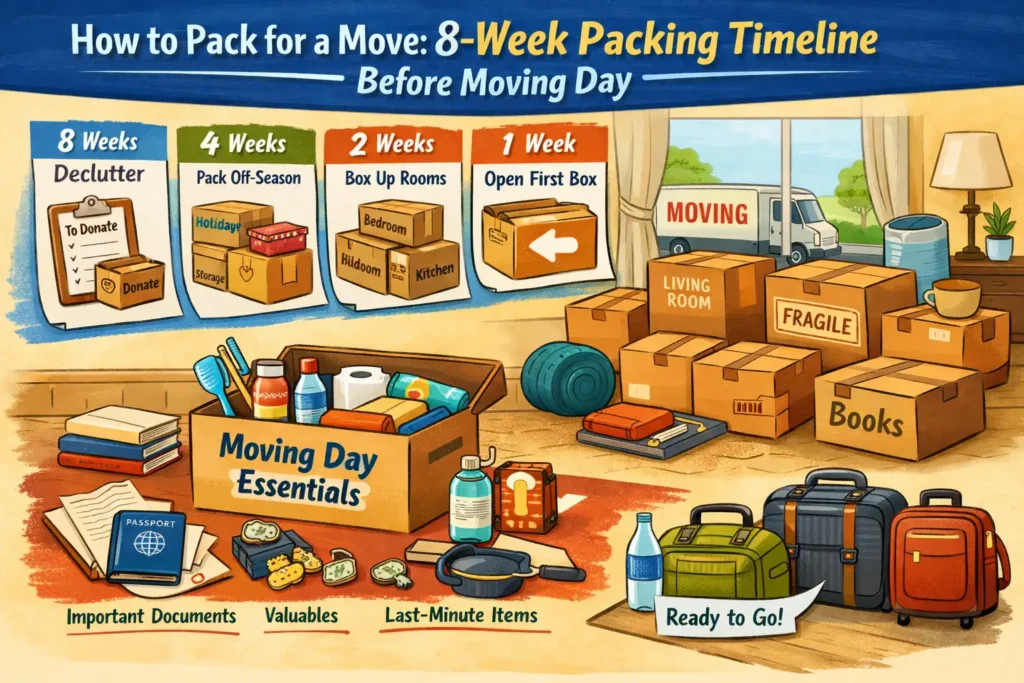
Moving without a structured packing plan often leads to last-minute stress, damaged items, and forgotten essentials. Following a week-by-week packing timeline helps you stay organized, reduce clutter, and manage packing tasks evenly instead of rushing at the end. Whether you’re packing on your own or hiring professional packers and movers, starting early allows better coordination, safer packing, and a smoother moving day.
A phased packing approach is widely used in home relocation planning because it helps households avoid living among packed boxes for weeks and reduces the chances of overlooking important belongings. Packing gradually—starting with non-essential items and ending with daily-use essentials—allows you to maintain normal routines while preparing for the move in a controlled way.
Why Following a Packing Timeline Makes Moving Stress-Free
Early Planning Reduces Last-Minute Stress
Breaking packing into weekly stages helps avoid rushed decisions close to moving day. Starting early allows items to be packed carefully instead of hurriedly, which reduces stress and lowers the chances of damage or misplacement. A structured timeline spreads packing tasks evenly, making the overall process more manageable.
A Timeline Helps Prevent Forgotten Items
Packing without a plan often leads to missed belongings, especially in storage areas and rarely used spaces. A timeline encourages room-by-room checks and systematic packing, helping ensure that all items are accounted for before moving day. This method reduces the likelihood of leaving items behind during the final move-out inspection.
Phased Packing Avoids Living Among Boxes
Packing everything at once can make daily life difficult, with boxes occupying living areas for weeks. A phased timeline allows households to pack non-essential items first while keeping daily-use items accessible until the final days. This approach helps maintain normal routines and reduces clutter throughout the moving period.
Timelines Improve Coordination With Movers
Aligning packing progress with the confirmed moving date helps ensure that items are ready in the correct order. A timeline allows movers to load efficiently and place boxes correctly during unloading, improving overall coordination on moving day.
For example, households planning a local move can benefit from experienced packers and movers in Ahmedabad who follow a structured packing and loading schedule.
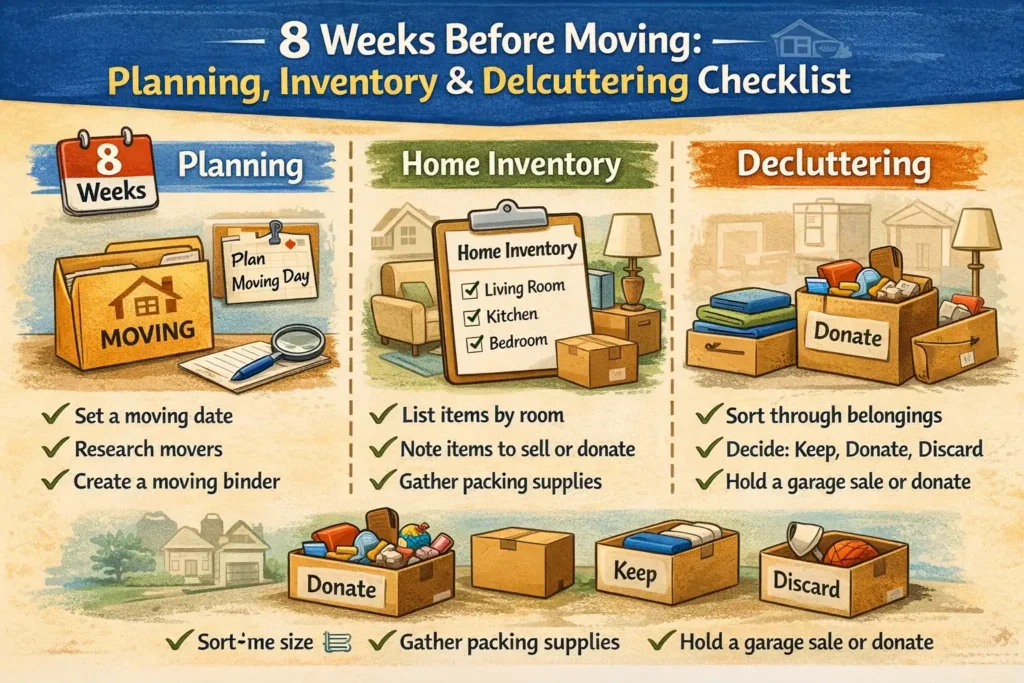
8 Weeks Before Moving – Planning, Inventory & Decluttering Stage
Create a Complete Home Inventory
Starting the packing process with a full home inventory helps you understand exactly what needs to be moved. Listing items room by room makes it easier to track belongings, plan packing materials, and avoid overlooking items stored in less-used areas such as cupboards or storage rooms. This early inventory step supports better organization throughout the move.
Declutter Before Packing Begins
Decluttering at the planning stage reduces the number of items that need to be packed and transported. Sorting belongings before packing allows you to remove unnecessary items instead of wasting time and materials packing things you no longer need. Early decluttering also makes later packing stages faster and more efficient.
Reducing items early can also help lower overall shifting expenses, as explained in our packers and movers cost guide.
Decide What to Keep, Sell, Donate, or Discard
Moving timelines commonly recommend categorizing belongings into clear groups—items to keep, sell, donate, or discard. Making these decisions weeks in advance helps prevent delays later and reduces emotional decision-making closer to moving day. This approach also helps control moving volume and space requirements.
Set Up a Dedicated Moving Folder
Organizing all moving-related documents in one place simplifies planning. Keeping estimates, checklists, receipts, and important paperwork together helps avoid confusion as packing progresses. This central folder becomes especially useful when coordinating packing tasks and confirming moving details in later weeks (Source link:
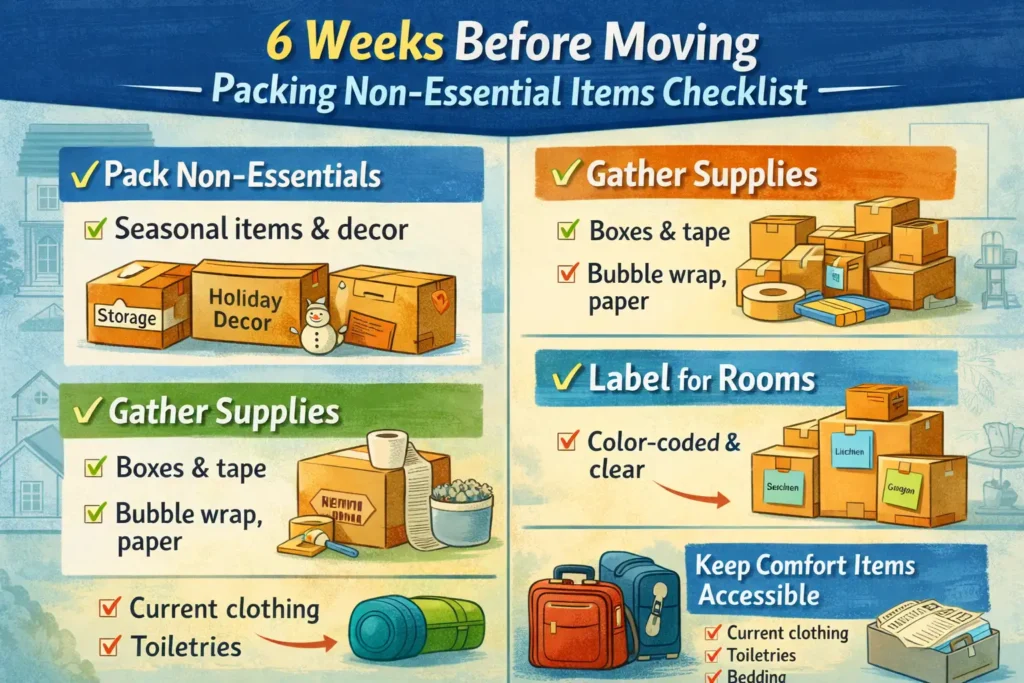
6 Weeks Before Moving – Start Packing Non-Essential Items
Pack Seasonal and Rarely Used Items First
Around six weeks before moving, packing timelines recommend starting with items that are not used daily. Seasonal clothing, holiday décor, extra bedding, and rarely accessed household items can be packed without affecting everyday routines. Packing these items early helps reduce workload during the final weeks and creates visible progress.
Gather Packing Supplies in Advance
This stage is commonly used to collect and organize packing materials such as boxes, packing paper, tape, and protective wraps. Having supplies ready before heavy packing begins prevents interruptions later and allows packing to continue smoothly as you move from one room to another.
Begin Decluttered Packing to Reduce Volume
After the initial decluttering phase, packing non-essential items helps further identify belongings that may no longer be needed. Removing excess items before they reach boxes simplifies later room-by-room packing and reduces the overall number of boxes to be moved.
Introduce a Clear Labeling System
Packing guides suggest starting a consistent labeling method at this stage. Marking boxes with room names and general contents early creates an organized system that continues through the rest of the packing timeline. This makes unloading and unpacking easier at the new location.
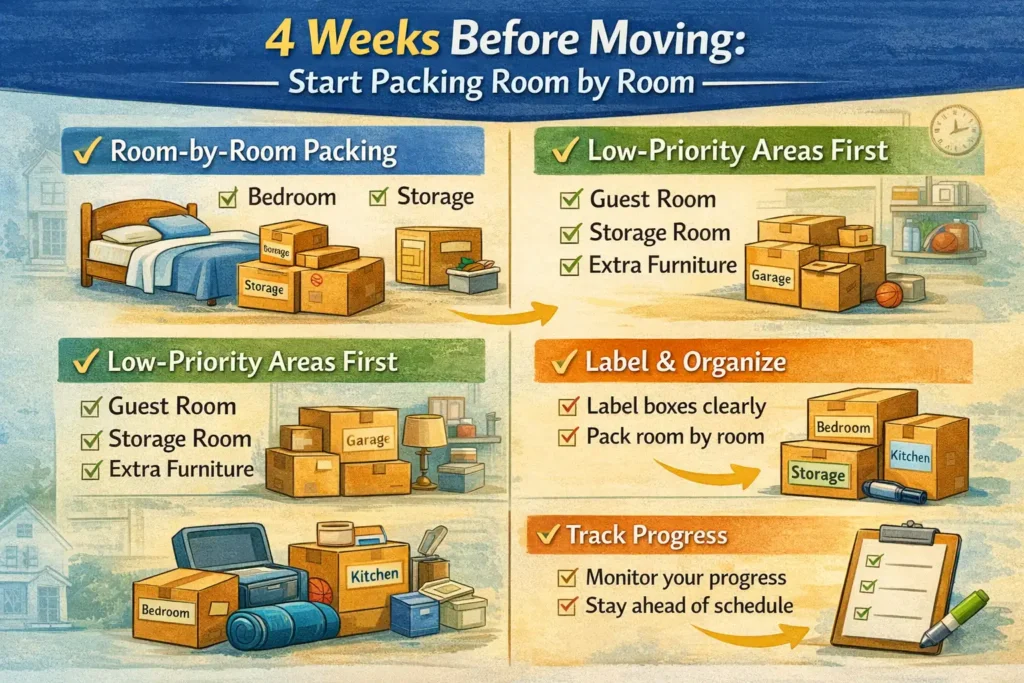
4 Weeks Before Moving – Pack Room by Room Systematically
Follow a Room-by-Room Packing Order
At the four-week mark, packing timelines recommend shifting from category-based packing to a room-by-room approach. Packing one room at a time helps maintain order, reduces confusion, and makes it easier to track progress. This method also ensures that items from different rooms are not mixed, which simplifies unpacking later.
Focus on Guest Rooms, Storage Areas, and Extras
Rooms that are used less frequently—such as guest bedrooms, storage rooms, or spare areas—are typically packed during this stage. Packing these spaces early allows you to free up space in the home while keeping daily-use areas functional until closer to moving day.
Label Boxes Clearly by Room and Contents
Clear labeling becomes increasingly important during room-by-room packing. Marking each box with the room name and a brief description of contents helps movers place boxes correctly during unloading and reduces time spent searching for items when unpacking.
Align Packing Progress With the Moving Schedule
Four weeks before moving is also the stage when packing progress should be matched with the confirmed moving date. Tracking which rooms are complete and which remain helps prevent delays and ensures that packing stays on schedule as moving day approaches.
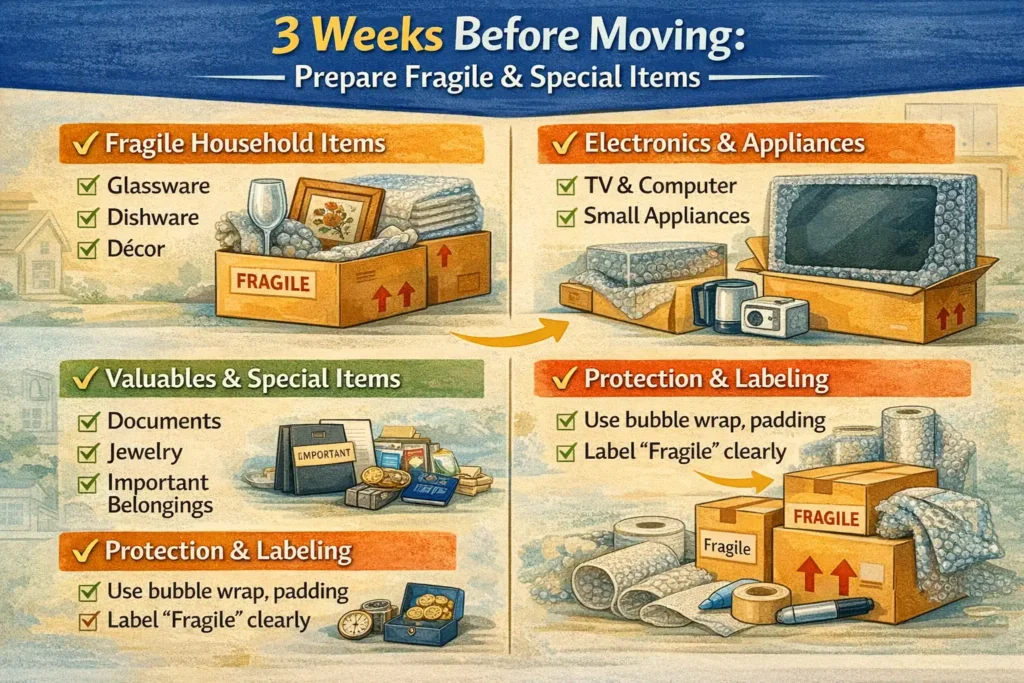
3 Weeks Before Moving – Prepare Fragile & Special Items
Pack Fragile Items Earlier Than Regular Household Goods
Around three weeks before moving, packing timelines advise focusing on fragile and delicate belongings that are not used daily. Items such as glassware, decorative pieces, and delicate household accessories are best packed earlier to reduce the risk of damage during last-minute packing. Early packing also allows more time for careful handling and cushioning.
Use Extra Cushioning and Protective Materials
Fragile items require additional protection compared to standard household goods. Packing guidance emphasizes using extra padding, protective wraps, and proper spacing inside boxes to prevent breakage during transport. Allowing enough time for careful packing at this stage helps avoid rushed, unsafe packing methods.
Along with careful packing, understanding what transit insurance covers during house shifting helps protect fragile items from unexpected damage.
Separate Valuable and Special Items From General Packing
Valuables and special items should be packed separately from everyday household goods. Keeping these items clearly identified and isolated reduces the chance of loss or damage and makes them easier to track throughout the move. This separation is commonly recommended in structured packing timelines to improve accountability and safety.
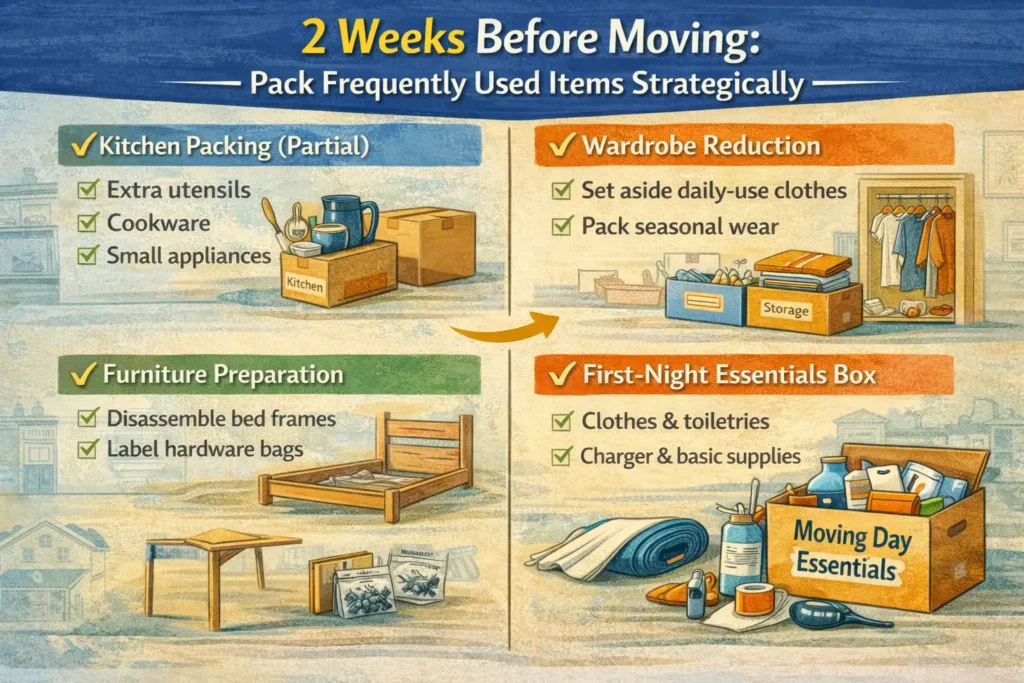
2 Weeks Before Moving – Pack Frequently Used Items Strategically
Begin Partial Kitchen Packing
Two weeks before moving, packing timelines recommend starting partial kitchen packing by boxing items that are used less frequently. This typically includes extra utensils, appliances not used daily, and bulk cookware. Packing the kitchen in stages allows continued meal preparation while steadily reducing remaining items.
Reduce Wardrobes to Limited Daily-Use Clothing
At this stage, guidance suggests narrowing clothing choices to a small rotation for daily wear. Packing off-season and less-used clothing early helps reduce packing pressure in the final week and keeps wardrobes manageable until moving day.
Disassemble Furniture in Advance
Packing timelines often advise beginning furniture disassembly about two weeks before moving. Removing detachable parts such as shelves, table legs, or bed frames ahead of time helps streamline loading and prevents delays on moving day. Small hardware should be kept together and clearly labeled to avoid misplacement.
Prepare a First-Night Essentials Box
Guides consistently recommend setting aside a first-night essentials box during this stage. This box typically contains daily necessities needed immediately after arrival, helping avoid unpacking multiple boxes on the first day in the new home.
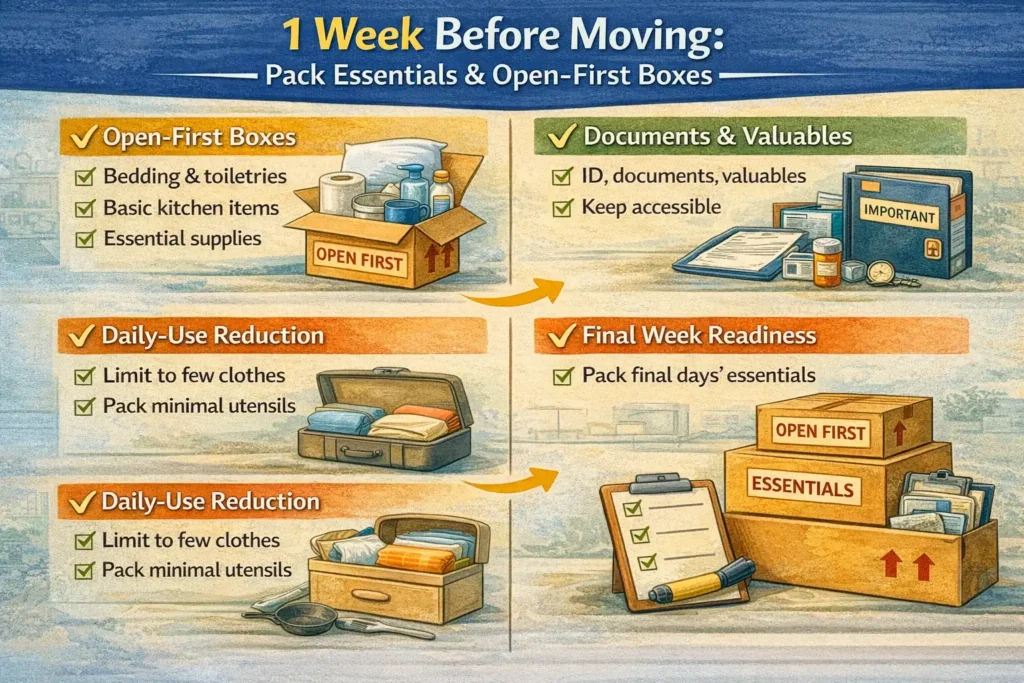
1 Week Before Moving – Essentials & Open-First Boxes
Pack and Clearly Mark Open-First Boxes
During the final week before moving, packing timelines recommend preparing clearly labeled “open-first” boxes. These boxes contain items needed immediately after reaching the new home and should be marked distinctly to ensure they are unloaded first. This approach reduces confusion and saves time during the initial unpacking phase.
Keep Important Documents and Valuables Separate
Guidelines advise keeping important documents, personal identification, medicines, and valuables separate from regular moving boxes. These items are recommended to stay with you rather than being loaded onto the moving vehicle, reducing the risk of loss or delayed access during transit.
Limit Daily-Use Items to Essentials Only
In the final week, packing advice suggests reducing daily-use household items to the bare minimum. Packing non-essential toiletries, kitchen items, and accessories ahead of time helps simplify the final days and prevents unnecessary unpacking before moving day.
Finalize Packing for Children’s and Personal Needs
Packing timelines highlight the importance of planning for personal and family-specific needs during the last week. Ensuring that frequently required personal items remain accessible helps maintain comfort and routine as the move approaches.
2–3 Days Before Moving – Final Packing & Checks
Pack Remaining Toiletries and Household Items
In the final few days before moving, packing timelines recommend boxing up the last remaining personal care items, cleaning supplies, and household essentials that were still in use. Packing these items closer to moving day ensures daily routines remain uninterrupted while preventing last-minute scrambling.
Conduct a Final Room-by-Room Inspection
A complete walkthrough of every room is advised during this stage to ensure nothing is left behind. Checking cupboards, drawers, balconies, and storage spaces helps identify overlooked items before the move, reducing the risk of forgotten belongings.
Empty Furniture Drawers and Storage Units
Moving guidance highlights the importance of emptying furniture drawers and cabinets before transport. Removing contents helps prevent damage during lifting and transit and makes furniture easier and safer to move.
Confirm Final Details With Movers
Two to three days before moving is commonly used to reconfirm logistics such as arrival time, loading order, and special handling instructions. Aligning final packing with confirmed mover coordination helps ensure a smoother moving day with fewer delays.
Moving Day Packing Checklist
Items That Should Stay With You
On moving day, packing guidance recommends keeping certain items with you instead of loading them onto the moving vehicle. Important documents, personal identification, valuables, wallets, phones, chargers, and essential medications should remain in your personal bag to ensure they are accessible at all times and not misplaced during transit.
Essentials Needed Immediately After Arrival
Moving checklists advise preparing a separate essentials box for immediate use at the new home. This box typically includes basic toiletries, a change of clothes, snacks, water, and simple household necessities. Having these items readily available helps reduce stress and avoids unpacking multiple boxes on the first day.
Items to Leave Unpacked Until the Last Moment
Certain daily-use items are recommended to remain unpacked until just before departure. These include cleaning supplies for a final sweep, basic kitchen items, and personal-use products needed up to the moment you leave. Packing them last ensures comfort and functionality on moving day.
Common Packing Mistakes to Avoid at Each Timeline Stage
Packing Essentials Too Early
One common mistake highlighted in packing timelines is packing daily-use items too soon. When essentials such as toiletries, basic kitchen items, or frequently worn clothes are packed early, it often leads to repeated unpacking and added frustration during the final weeks before the move.
Overloading Boxes With Heavy Items
Packing guides caution against overfilling boxes with heavy items. Placing too much weight in a single box increases the risk of box breakage and makes handling more difficult during loading and unloading. Heavy items are recommended to be packed in smaller boxes to reduce strain and damage.
Poor or Missing Box Labels
Failing to label boxes clearly is a frequent packing issue noted in structured moving timelines. Unlabeled or poorly labeled boxes slow down unloading and make it harder to locate important items after arrival. Clear room and content labeling helps avoid confusion and speeds up unpacking.
Mixing Items From Different Rooms
Packing items from multiple rooms into the same box can create confusion during unpacking. Packing guidance suggests keeping items from each room together to maintain organization and ensure boxes are placed correctly in the new home.
Leaving Packing Until the Last Minute
Delaying packing tasks until the final days is consistently identified as a major cause of moving stress. Without a timeline, last-minute packing often leads to rushed decisions, increased risk of damage, and forgotten items.
If you’re planning to hire professionals, this guide on how to choose the best packers and movers can help you make a safe and informed decision.
FAQs – Packing Timeline Before a Move
Packing timelines commonly recommend starting the packing process at least six to eight weeks before moving day. Beginning early allows enough time to sort, declutter, and pack items in stages without rushing, helping maintain organization throughout the move.
Guidance suggests packing items that are used the least at the beginning of the timeline. Seasonal clothing, decorative items, extra linens, and rarely used household goods are typically packed first so daily routines are not disrupted.
Items required for daily living should remain unpacked until the final week. These usually include important documents, medicines, toiletries, basic kitchen items, and frequently worn clothing. Keeping them accessible helps avoid unnecessary inconvenience before moving day.
A structured packing timeline spreads tasks over several weeks, reducing last-minute pressure. By packing gradually and following a clear order, households can stay organized, avoid clutter, and reduce the chances of damaged or forgotten items during the move.
Packing guidance indicates that while some people choose to pack on their own, others prefer professional assistance for efficiency and reduced effort. Following a timeline helps in both cases by ensuring items are ready in the correct order for packing or pickup.
Expert Conclusion: Packing Smarter With a Proven Timeline
Packing for a move becomes far more manageable when it follows a structured, time-based approach. A week-by-week packing timeline allows you to sort, pack, and protect your belongings methodically instead of rushing through critical tasks at the last moment. Spreading packing activities across eight weeks reduces clutter, minimizes damage risk, and ensures essential items remain accessible until they are truly needed to be packed.
From early inventory planning and decluttering to carefully packing fragile items and preparing open-first boxes, each stage of the timeline serves a specific purpose. This phased approach helps prevent common moving issues such as forgotten belongings, poorly labeled boxes, and unnecessary stress during the final days before relocation. Following a timeline also supports smoother coordination on moving day by ensuring items are packed in the correct order and ready for loading.
Whether you’re managing packing yourself or working with professionals, a structured packing schedule improves efficiency, protects household goods, and creates a more predictable moving experience. Sticking to a timeline is one of the most practical ways to stay organized and maintain control throughout the entire relocation process.
Packing on a timeline becomes even easier when experienced professionals handle the heavy work. 6 Packers and Movers help you pack, label, and transport household items safely while following a structured moving plan. From fragile-item packing to moving-day coordination, their services are designed to reduce stress and protect your belongings throughout the move.