
House Rental Guide: How to Find, Evaluate, and Rent a Home Without Stress
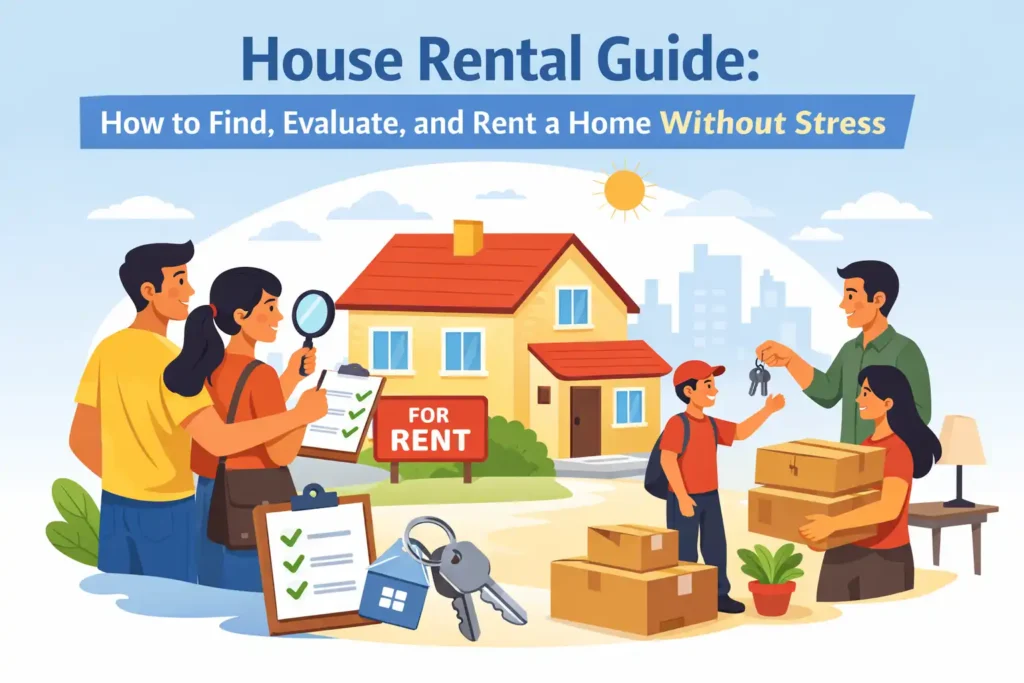
Finding a rental home in India can feel overwhelming when you’re juggling budgets, legal paperwork, inspections, and relocation planning. Following expert Moving Tips can help you avoid costly mistakes and last-minute stress— especially if you’re coordinating your move with professional Packers and Movers to ensure a smooth house shifting experience.
1. Planning Your House Rental Requirements Before You Start Searching
Planning is the most important stage of renting a house. Tenants who skip this step often end up wasting time on unsuitable properties, exceeding their budget, or facing issues after moving in.
Define a Clear Rental Budget
Before you start browsing listings, calculate a realistic rental budget. In India, renting a home typically involves:
- Monthly rent
- Refundable security deposit
- Monthly maintenance charges (if applicable)
- Utility expenses such as electricity, water, gas, and internet
Security deposits for residential properties are regulated under current tenancy rules and are generally limited to a fixed number of months’ rent. Factoring this upfront helps prevent financial strain after finalizing a property.
Understanding relocation expenses in advance is equally important, so reviewing a detailed packers and movers cost guide helps you plan your overall moving budget accurately.
Choose the Right Location Based on Daily Needs
Location directly affects rent, commute time, and quality of life. When shortlisting areas, consider:
- Distance from workplace or business hubs
- Access to public transport, roads, and metro stations
- Proximity to schools, hospitals, markets, and pharmacies
- Water availability and power reliability in the locality
These factors influence long-term convenience and reduce the chances of relocating again due to practical issues.
Decide the Type of House You Need
Clarify what kind of property fits your lifestyle:
- Apartment, independent house, or gated community
- Furnished, semi-furnished, or unfurnished
- Availability of parking, lift, power backup, and security
This clarity helps filter listings faster and avoids unnecessary site visits.
Assess Family Size, Pets, and Space Requirements
House size should match your household needs. Consider:
- Number of bedrooms and bathrooms
- Storage and balcony requirements
- Pet policies set by owners or housing societies
Many societies have rules regarding pets, parking usage, and occupancy limits, so it’s important to factor these in early.
Decide Rental Duration and Flexibility
Be clear about whether you need:
- Short-term rental (11 months or less)
- Long-term rental with renewal options
Rental duration affects agreement terms, rent escalation clauses, and notice periods. Planning this early helps during negotiations and agreement drafting.
Rental Planning Checklist
Use this checklist before you start searching:
- ☐ Maximum monthly rent decided
- ☐ Security deposit affordability checked
- ☐ Preferred locations shortlisted
- ☐ Property type selected
- ☐ Furnishing level decided
- ☐ Family size and pet needs clarified
- ☐ Rental duration finalized
2. Best Ways to Find Rental Houses in Your Preferred Location
Once your rental requirements are clear, the next step is finding properties that genuinely match your needs. In India, tenants usually rely on a mix of online platforms, local brokers, and direct owner networks. Understanding how each option works helps you save time and avoid unnecessary costs.
Use Online Rental Portals for Market Visibility
Online rental platforms are one of the most common ways to search for houses today. These platforms allow tenants to:
- Filter properties by rent, location, furnishing, and house type
- View photos, amenities, and approximate rental trends
- Compare multiple properties without physical visits
Online listings are useful for understanding the average rent range in a locality before negotiations begin. However, details such as maintenance quality or water issues may not always be visible online and should be verified during visits.
Work With Local Real Estate Brokers Carefully
Local property brokers have strong on-ground knowledge and access to listings that may not be advertised online. They are particularly helpful when:
- Searching in high-demand or gated communities
- Renting in unfamiliar cities
- Facing time constraints
However, brokerage fees are typically charged to tenants and vary by city. It’s important to clarify brokerage charges, services included, and refund policies (if any) before proceeding.
Explore Housing Society and Community Listings
Many housing societies allow owners to post rental notices on:
- Society notice boards
- Resident WhatsApp or Telegram groups
- Apartment association portals
These listings often involve direct owner interaction, which can reduce brokerage costs and allow more transparent negotiations.
Leverage Personal Networks and Workplace References
Friends, relatives, and colleagues are often reliable sources for rental leads. Employer-assisted rentals or internal employee groups may help you find:
- Verified landlords
- Shorter notice period accommodations
- Better-negotiated rent terms
Reference-based rentals can reduce the risk of disputes and miscommunication later.
Verify Listing Authenticity Before Visiting
Before scheduling site visits:
- Confirm ownership or authorization to rent
- Cross-check rent, deposit, and maintenance details
- Avoid paying any token amount without documentation
Once your rental is finalized, knowing how to choose the best packers and movers becomes crucial to avoid service issues or last-minute surprises during house shifting.
This step helps prevent rental fraud and wasted site visits.
Rental Search Checklist
Use this checklist during your house search:
- ☐ Shortlisted localities finalized
- ☐ Online listings compared
- ☐ Broker terms clarified
- ☐ Direct owner options explored
- ☐ Ownership/authorization verified
- ☐ Rent and deposit details confirmed
3. How to Evaluate a Rental House Before Finalizing
Evaluating a rental house properly helps you avoid hidden repair costs, safety risks, and post-move disputes. A physical inspection combined with document verification ensures the property is fit for occupation and legally safe to rent.
Check the Structural Condition of the House
During the site visit, inspect the overall structure carefully. Look for:
- Cracks in walls, ceilings, and beams
- Signs of seepage, damp patches, or peeling paint
- Uneven flooring or loose tiles
Structural issues may indicate long-term maintenance problems and should be clarified before finalizing the house.
Inspect Electrical Fittings and Power Supply
Electrical safety is critical in rented homes. Verify:
- Working switches, sockets, and circuit breakers
- Proper earthing and wiring condition
- Availability of power backup (in apartments)
Faulty electrical systems can lead to frequent repairs or safety hazards after moving in.
Check Plumbing, Water Supply, and Drainage
Water-related issues are among the most common tenant complaints. Ensure:
- Adequate water supply and storage facilities
- Functional taps, showers, and flush systems
- No leakage under sinks or near walls
- Proper drainage in bathrooms and kitchens
Clarify whether water is sourced from municipal supply, borewell, or tanker.
Assess Ventilation, Natural Light, and Noise Levels
Good ventilation and natural light impact comfort and electricity costs. While visiting:
- Check window placement and airflow
- Observe natural light during daytime
- Note external noise from roads, construction, or commercial areas
Poor ventilation can lead to moisture buildup and health issues over time.
Verify Amenities and Common Facilities
If renting in an apartment or gated community, inspect:
- Lift functionality and maintenance
- Parking allocation
- Security arrangements and access control
- Common area cleanliness and upkeep
These facilities affect daily convenience and monthly maintenance charges.
Confirm Property Ownership and Authorization
Before finalizing the house, confirm that the person renting it out has legal authority. Ask for:
- Proof of ownership or authorization to rent
- Matching details between owner ID and property documents
This step helps avoid future legal disputes and eviction risks.
Rental House Evaluation Checklist
Use this checklist during property visits:
- ☐ No visible structural damage
- ☐ Electrical fittings functional
- ☐ Plumbing and drainage checked
- ☐ Adequate water supply confirmed
- ☐ Good ventilation and natural light
- ☐ Amenities inspected
- ☐ Ownership verified
4. Rental Agreement, Legal Checks, and Documentation to Verify
A rental agreement is the legal foundation of your tenancy. In India, most rental disputes arise due to unclear clauses, unregistered agreements, or missing documentation. Verifying these aspects before signing protects both your finances and occupancy rights.
Understand the Importance of a Written Rental Agreement
A written rental agreement is legally enforceable and serves as proof of tenancy. It clearly defines the rights and responsibilities of both tenant and landlord. Agreements that exceed 11 months require registration with the local Sub-Registrar, making them legally valid for longer tenures.
Registered rental agreements are commonly required for:
- Address proof
- Police verification
- Utility connections and KYC processes
Key Clauses Every Tenant Must Review Carefully
Before signing, ensure the agreement clearly mentions:
- Monthly rent and due date
- Security deposit amount and refund conditions
- Rental duration and lock-in period (if any)
- Notice period for vacating
- Rent escalation terms
- Maintenance and repair responsibilities
Security deposits for residential properties are regulated and capped under current tenancy rules, preventing excessive upfront payments.
Check Maintenance and Repair Responsibilities
The agreement should clearly specify:
- Which repairs are handled by the landlord
- Which minor repairs are the tenant’s responsibility
- Who pays for plumbing, electrical, and structural repairs
Clear allocation of responsibilities helps avoid disputes during the stay and at the time of vacating.
Verify Mandatory Documents Before Signing
Tenants should verify and retain copies of:
- Government-issued ID proofs (Aadhaar, PAN, passport)
- Rental agreement copy
- Property ownership proof or authorization to rent
- Latest utility bills (electricity or water)
Document verification ensures the landlord has legal rights over the property and protects tenants from fraudulent rentals.
During relocation, documentation such as inventories and agreements also play a role in insurance claims, so it’s important to understand what transit insurance covers during house shifting.
Police Verification and Local Compliance
Tenant police verification is recommended in most Indian cities and mandatory in some local jurisdictions. It usually requires:
- Tenant and landlord ID proofs
- Photographs
- Copy of the rental agreement
Many cities provide online police verification facilities, while others require submission at the local police station.
Rental Agreement & Legal Verification Checklist
Use this checklist before signing:
- ☐ Written rental agreement prepared
- ☐ Registration requirement verified
- ☐ Rent, deposit, and notice period clearly mentioned
- ☐ Maintenance responsibilities defined
- ☐ Ownership/authorization verified
- ☐ All documents collected
- ☐ Police verification process clarified
5. Negotiating Rent, Deposit, and Move-In Terms Smartly
Negotiation plays a major role in reducing your overall rental cost and setting fair move-in conditions. In India, most rental terms are negotiable if discussed before signing the agreement and supported by market norms and legal limits.
Negotiate Rent Based on Local Market Trends
Before finalizing rent, compare similar properties in the same locality. Rent negotiations are more effective when:
- The property has been vacant for some time
- You are willing to commit to a longer rental duration
- You highlight market-aligned rent ranges
Landlords often consider stable tenants over marginal rent increases, especially in competitive rental markets.
Understand and Negotiate Security Deposit Limits
Security deposits for residential properties are regulated and cannot exceed the prescribed limits under current tenancy rules. If the deposit demanded is higher, tenants can request alignment with these limits before proceeding.
Deposits should always be documented in the rental agreement with clear refund conditions.
Discuss Maintenance, Painting, and Repairs Before Move-In
Before moving in, clarify:
- Who will handle painting charges
- Whether pending repairs will be completed before possession
- How wear and tear will be treated at the time of vacating
Getting these points documented avoids deductions from your security deposit later.
Negotiate Notice Period and Lock-In Clauses
Notice periods and lock-in clauses affect your flexibility. Typical agreements specify a notice period, but terms can be negotiated based on:
- Job transfer risks
- Family or business requirements
- Rental duration commitment
If not clearly defined, notice period terms may lead to disputes during vacating.
Clarify Move-In Date, Possession, and Handover Terms
Before final confirmation:
- Fix the possession date in writing
- Confirm key handover and access permissions
- Clarify society move-in rules and timings
This step becomes especially important when coordinating packing, transportation, and unloading schedules during house shifting.
Rent Negotiation Readiness Checklist
Use this checklist before finalizing terms:
- ☐ Market rent compared
- ☐ Security deposit aligned with rules
- ☐ Repair and painting terms documented
- ☐ Notice period and lock-in reviewed
- ☐ Move-in date confirmed
- ☐ All negotiated terms added to agreement
6. Pre-Move Checklist Before Shifting Into a Rented House
Once the rental agreement is signed and possession is confirmed, the final step is preparing for a smooth move-in. Proper pre-move checks help prevent disputes, service interruptions, and last-minute delays during house shifting.
Conduct a Final Inspection Before Taking Possession
Before accepting the keys, carry out a final walkthrough of the house to confirm:
- Repairs promised by the owner are completed
- Electrical fittings, lights, fans, and switches are working
- Plumbing fixtures and water flow are functional
- Doors, windows, and locks are secure
Any unresolved issues should be recorded and acknowledged before moving in.
Record Meter Readings and Utility Status
On the day of possession, note:
- Electricity meter reading
- Water meter reading (if applicable)
- Gas connection status
These readings help avoid disputes over previous usage and ensure accurate billing from your move-in date.
Complete Police Verification and Local Formalities
If not already completed, tenant police verification should be done soon after moving in. Many cities allow online submission, while others require visiting the local police station with:
- ID proofs
- Rental agreement copy
- Passport-size photographs
Compliance with local requirements helps avoid legal issues later.
Understand Society Rules and Move-In Permissions
In apartments and gated communities, tenants must follow society guidelines related to:
- Move-in timings and lift usage
- Entry passes for movers
- Parking allocation
- Garbage disposal and common area usage
Confirming these rules in advance prevents delays on moving day.
Plan Your House Shifting in Advance
Once the move-in date is fixed, schedule your house shifting early to avoid last-minute availability issues. Coordinating packing, transportation, and unloading timelines ensures your belongings reach the new home safely and on schedule, especially when moving within or between cities.
Pre-Move & Move-In Checklist
Use this checklist before shifting:
- ☐ Final house inspection completed
- ☐ Repairs verified
- ☐ Meter readings recorded
- ☐ Keys and access confirmed
- ☐ Police verification completed/initiated
- ☐ Society rules understood
- ☐ Move-in date coordinated with movers
Owner–Tenant Handover Checklist
At the time of possession, confirm:
- Condition of walls, flooring, and fittings
- Working status of appliances (if furnished)
- Number of keys handed over
- Parking slot details
- Meter readings documented
Both parties should retain a signed copy of this checklist.
Frequently Asked Questions (FAQs) on Renting a House in India
For residential properties, security deposits are regulated under current tenancy rules and are capped at a fixed number of months’ rent. This prevents landlords from demanding excessive upfront deposits.
Rental agreements exceeding 11 months must be registered with the local Sub-Registrar. Registration makes the agreement legally enforceable and is often required for address proof, police verification, and utility connections.
Tenants usually need government-issued ID proof, photographs, and a signed rental agreement. Landlords must provide proof of property ownership or authorization to rent.
Police verification is recommended across most Indian cities and mandatory in some local jurisdictions. Requirements vary by city and usually include ID proofs and a copy of the rental agreement.
Yes. Rent, notice period, and lock-in clauses are negotiable before signing the agreement. All negotiated terms should be clearly documented to avoid disputes later.
Tenants should inspect structural condition, electrical fittings, plumbing, water supply, ventilation, and promised repairs before taking possession.
Rent Smart, Move Confidently, and Avoid Unnecessary Stress
Renting a house in India doesn’t have to be confusing or stressful if you follow a structured, well-informed approach. From defining your budget and location to verifying documents, negotiating terms, and planning your move-in, each step plays a critical role in protecting your money, time, and peace of mind.
By carefully evaluating the property, understanding rental agreements, and completing pre-move checks, you reduce the risk of disputes, hidden costs, and last-minute surprises. A well-planned rental process also makes house shifting smoother—especially when timelines are tight and logistics need coordination.
If you’re preparing to move into a rented home, planning your relocation early and choosing reliable support can make the transition far easier and safer for your belongings.
Planning to move into a rented house soon?
Avoid last-minute stress by choosing trusted Packers and Movers who handle packing, loading, transportation, and unloading professionally—so you can settle into your new home without hassles. If you’re relocating within Karnataka, hiring experienced packers and movers in Bangalore can make the transition into your rented home much smoother.