
30+ Packing Tips for a Safe & Damage-Free Move
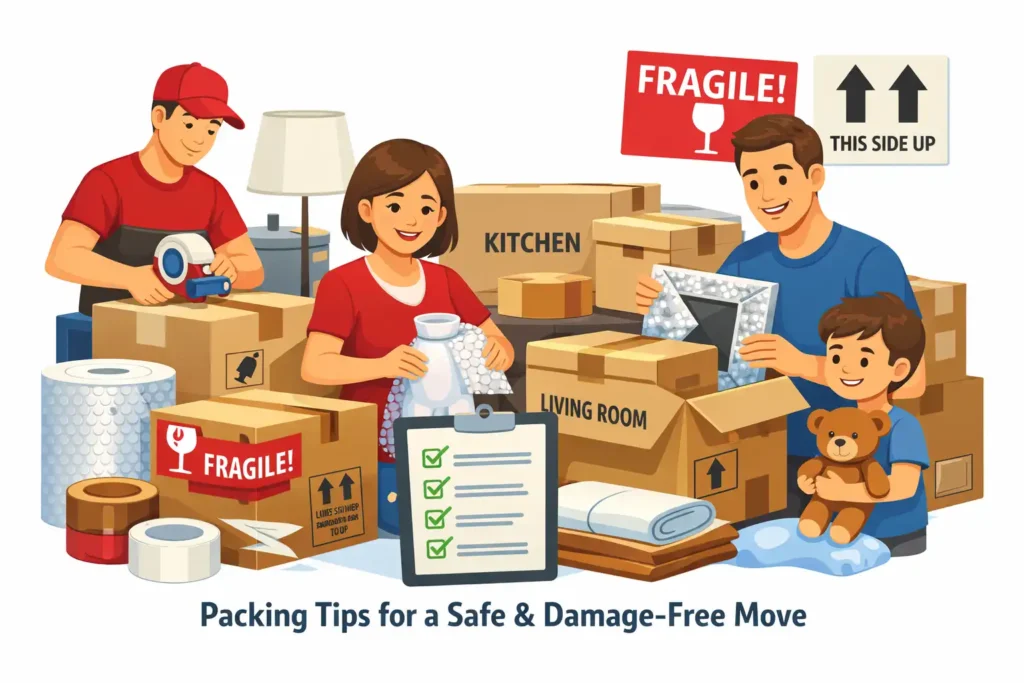
Moving to a new home can be exciting, but packing mistakes are one of the biggest reasons people face breakage, loss, and unnecessary stress during relocation. Whether you are shifting locally or across cities, following proven packing practices can significantly reduce the risk of damage. If you are planning to move with professional packers and movers, or packing on your own, this guide will walk you through practical, easy-to-follow packing tips used during real household relocations.
Pre-Packing Planning Tips to Avoid Damage
Proper packing does not start with boxes and tape—it starts with planning. A well-organized pre-packing phase reduces last-minute chaos, minimizes handling errors, and significantly lowers the risk of damage during transit.
1. Create a Room-Wise Packing Plan
Packing items randomly often leads to misplacement and breakage. Organizing packing room by room helps maintain control over what goes where and ensures similar items are packed together.
Why this matters:
- Prevents fragile items from being mixed with heavy goods
- Makes labeling and unloading easier
- Reduces chances of items getting lost during transit
2. Declutter Before You Start Packing
Packing unnecessary items increases load weight and handling, which directly increases damage risk. Sorting and decluttering before packing helps you move only what truly matters.
Best practices:
- Separate items into keep, donate, sell, or discard categories
- Avoid packing broken, expired, or unused items
- Reduce the number of cartons required
3. Prepare a Packing Timeline
Rushed packing often leads to poor wrapping, overfilled boxes, and missed labeling. Spreading packing over multiple days allows careful handling of delicate items.
Effective timeline tips:
- Start packing non-essential items first
- Leave daily-use items for the last few days
- Allocate extra time for fragile and bulky goods
These steps align closely with the standard packing process followed by professional movers during household shifting.
4. Arrange Packing Materials in Advance
Running out of packing supplies mid-process often leads to unsafe shortcuts. Having all materials ready ensures consistent protection across all items.
Essential materials to arrange early:
- Strong corrugated boxes in multiple sizes
- Bubble wrap, packing paper, and cushioning material
- High-quality packing tape and markers
5. Identify Fragile & High-Value Items Early
Not all items require the same level of protection. Identifying delicate and valuable belongings beforehand ensures they receive special attention during packing and loading.
Items to pre-identify:
- Glassware, crockery, mirrors, and décor
- Electronics and appliances
- Documents, collectibles, and valuables
For high-value items, it’s also important to understand what transit insurance covers during house shifting.
Choosing the Right Packing Materials for Maximum Protection
Using the correct packing materials is one of the most important factors in preventing damage during a move. Weak cartons, poor cushioning, or improper wrapping often lead to breakage—even if the items are handled carefully. Selecting the right materials ensures your belongings remain protected throughout loading, transit, and unloading.
6. Use Strong Corrugated Boxes of the Right Size
Not all boxes are designed to handle moving stress. Strong corrugated cartons provide better structural support and reduce the risk of box collapse during lifting or stacking.
Key points to follow:
- Use small boxes for heavy items and larger boxes for light items
- Avoid reusing damaged or weakened cartons
- Choose boxes with proper ply strength for household goods
7. Use Bubble Wrap and Foam Sheets for Fragile Items
Fragile items require shock absorption to protect them from vibrations and sudden movements during transport. Bubble wrap and foam sheets act as protective barriers.
Best usage practices:
- Wrap each fragile item individually
- Use multiple layers for glass, ceramics, and electronics
- Secure wrapping with tape to prevent loosening
8. Prefer Packing Paper Over Newspaper
Newspapers may seem convenient, but the ink can transfer onto items and cause stains, especially on crockery and décor pieces. Packing paper is cleaner and safer.
Why packing paper is better:
- Prevents ink stains
- Absorbs minor shocks
- Safer for long-term storage and transit
9. Use Stretch Film and Plastic Covers for Furniture
Furniture surfaces are vulnerable to scratches, dust, and moisture. Stretch film and plastic covers help protect items without leaving residue.
Common applications include:
- Sofas and upholstered furniture
- Mattresses and cushions
- Wooden furniture and polished surfaces
10. Reinforce Boxes with High-Quality Packing Tape
Even the strongest box can fail if not sealed properly. Reinforcing box bottoms and seams prevents accidental openings during lifting and stacking.
Recommended sealing method:
- Tape along the center seam
- Reinforce edges and corners
- Double-tape the bottom of heavy cartons
Room-by-Room Packing Tips for Safe Handling
Packing your home room by room helps maintain order, prevents cross-mixing of items, and ensures that fragile belongings receive the right level of protection. This approach also makes unloading and unpacking significantly easier at your new location.
11. Kitchen Packing Tips to Prevent Breakage
The kitchen contains some of the most fragile household items, making careful packing essential. Improper stacking or poor cushioning often leads to cracks and breakage.
Safe kitchen packing practices:
- Wrap glassware and crockery individually using packing paper or bubble wrap
- Place plates and flat items vertically instead of stacking them flat
- Use dividers or cardboard sheets between fragile items
- Avoid packing heavy utensils with delicate items
12. Safe Packing of Electronics and Appliances
Electronics are sensitive to impact, dust, and moisture. Proper cushioning and secure packing help prevent internal damage during transit.
Key precautions to follow:
- Disconnect and bundle cables separately
- Use original boxes if available, as they offer the best fit
- Add cushioning on all sides to prevent movement inside the box
- Remove loose or detachable parts before packing
Improper packing is one of the most common reasons insurance claims get rejected during relocation.
13. Packing Clothes, Shoes, and Soft Items
Soft items are easier to pack but still require protection from dust, moisture, and compression damage during transit.
Recommended methods:
- Use wardrobe boxes to keep clothes wrinkle-free
- Pack shoes separately to avoid dirt transfer
- Use vacuum bags or sealed cartons for seasonal clothing
- Line boxes with plastic sheets for moisture protection
14. Bedroom Furniture and Mattress Protection
Furniture and mattresses can get scratched, torn, or dirty if left uncovered during a move. Proper wrapping ensures they arrive in usable condition.
Best practices include:
- Disassemble beds and pack hardware separately
- Cover mattresses with waterproof plastic covers
- Wrap wooden furniture to protect edges and corners
- Secure moving parts with stretch film
15. Packing Bathroom Items and Liquids Safely
Leaking liquids are a common cause of damage to other packed items. Extra care is required when packing toiletries and cleaning supplies.
How to prevent leaks:
- Seal bottle caps with tape
- Place liquids in leak-proof plastic bags
- Pack liquid items separately from dry goods
- Avoid overfilling boxes containing toiletries
Smart Packing Techniques to Prevent Breakage
Even with good materials, incorrect packing techniques can lead to damage during loading and transit. Applying proven packing methods helps maintain box stability, prevents internal movement, and protects items from impact and pressure.
16. Follow the Bottom-Heavy Packing Rule
Incorrect weight distribution is a common cause of crushed boxes and broken items. Placing heavier items at the bottom keeps boxes stable and reduces pressure on fragile goods.
How to apply this correctly:
- Place books, utensils, and appliances at the bottom
- Keep lightweight and fragile items on top
- Ensure weight is evenly distributed across the box
17. Avoid Overloading or Underfilling Boxes
Boxes that are too heavy are difficult to lift safely, while underfilled boxes allow items to shift during movement. Both situations increase damage risk.
Packing balance tips:
- Keep box weight manageable for single-person lifting
- Fill boxes fully without forcing items inside
- Test box stability by gently shaking before sealing
18. Fill Empty Spaces to Prevent Item Shifting
Empty gaps inside boxes allow items to move and collide during transport. Filling these spaces reduces shock impact and vibration damage.
Materials you can use:
- Crumpled packing paper
- Foam sheets or cloth
- Towels or soft household fabrics
19. Seal Boxes Correctly Using the H-Taping Method
Improper sealing can cause boxes to open from the bottom or sides during lifting. The H-taping method reinforces box seams and corners.
Correct sealing steps:
- Tape along the center seam
- Seal both side edges to form an “H” shape
- Reinforce bottom seams of heavy cartons
20. Pack Items Vertically Wherever Possible
Vertical packing reduces surface pressure and distributes weight more evenly, lowering the risk of cracks and breakage.
Items best packed vertically:
- Plates and glass panels
- Mirrors and framed items
- Flat electronics and screens
Special Packing Tips for Fragile, Valuable & Odd-Shaped Items
Certain items require more than standard packing due to their fragility, value, or unusual shape. Giving these belongings extra attention helps prevent high-impact damage and reduces the risk of loss during relocation.
21. Packing Glassware, Crockery, and Mirrors
Glass items are highly susceptible to cracks and shattering if packed incorrectly. Individual wrapping and correct placement inside cartons are essential.
Safe packing techniques:
- Wrap each item separately using packing paper or bubble wrap
- Place plates and mirrors vertically rather than flat
- Add cushioning between items and along box edges
- Use smaller boxes to reduce movement
22. Safe Packing of Antiques and Artwork
Antiques and artwork are often irreplaceable and sensitive to pressure and vibration. Extra layers of protection reduce the risk of surface damage and structural cracks.
Recommended precautions:
- Wrap items with multiple layers of cushioning
- Protect corners and edges with foam or cardboard guards
- Avoid stacking heavy items on top
- Use rigid cartons or custom protection where required
23. Packing TVs, Computers, and Electronics
Electronics contain delicate internal components that can be damaged by impact or static. Proper cushioning and secure placement help minimize risk.
Best practices to follow:
- Use original boxes whenever available
- Place screens facing inward with cushioning on all sides
- Avoid packing electronics with heavy items
- Clearly mark boxes for careful handling
24. Handling Plants and Decorative Items
Plants and décor items can be easily crushed or damaged due to irregular shapes and sensitivity to temperature and airflow.
Safe handling tips:
- Use breathable wrapping for plants
- Avoid sealing plants in airtight plastic
- Secure pots to prevent soil spillage
- Transport plants separately when possible
25. Packing Important Documents and Valuables
Documents, jewelry, and small valuables are best kept under personal supervision to avoid misplacement or damage.
Recommended approach:
- Carry documents and valuables yourself
- Use waterproof folders or pouches
- Avoid packing valuables in moving cartons
Labeling, Inventory & Handling Tips to Avoid Loss or Damage
Even well-packed boxes can get damaged or misplaced if they are not labeled or handled correctly. Clear labeling, proper inventory management, and basic coordination during loading play a critical role in ensuring safe handling throughout the move.
26. Label Every Box Clearly and Accurately
Unlabeled or poorly labeled boxes often get mishandled during loading and unloading. Clear labeling helps movers understand what is inside and where the box should be placed.
Labeling best practices:
- Mention the room name and general contents
- Write handling instructions clearly on multiple sides
- Use permanent markers for visibility
27. Use “Fragile” and “This Side Up” Markings
Visual handling cues reduce the chances of cartons being stacked incorrectly or turned upside down during transit.
Why this helps:
- Alerts handlers to take extra care
- Prevents pressure on delicate items
- Reduces accidental drops and rough stacking
28. Maintain a Detailed Packing Inventory List
An inventory list allows you to track every packed item and ensures accountability during loading and unloading. It also becomes important if you need to verify missing or damaged items later.
Inventory tips:
- Number each box and note its contents
- Cross-check the list during loading and delivery
- Keep a copy of the inventory with you
Maintaining an inventory is critical, as it helps you track items and understand how inventory lists protect you from missing goods.
29. Use Color-Coding for Easy Identification
Color-coded labels simplify sorting and placement of boxes at the destination, reducing unnecessary handling and movement.
How to implement color-coding:
- Assign one color per room
- Use colored stickers or tape
- Match colors with destination room names
30. Coordinate With Movers During Loading
Clear communication during loading ensures that fragile and priority items are placed correctly inside the moving vehicle.
Key coordination points:
- Inform movers about fragile and high-value boxes
- Request top placement for delicate cartons
- Ensure heavy items are loaded first and secured
Final Packing & Pre-Move Safety Checks
The final stage of packing is often overlooked, yet it plays a crucial role in preventing last-minute damage and loss. Performing systematic checks before loading ensures that everything is secure, documented, and ready for safe transportation.
31. Recheck Box Strength Before Loading
Boxes that appear fine during packing may weaken under load. A final strength check helps prevent cartons from tearing or collapsing while being moved.
What to check:
- Ensure box bottoms are securely sealed
- Look for bulging sides or weak corners
- Reinforce heavy cartons with extra tape
32. Separate Essentials for Immediate Use
Accessing basic necessities immediately after moving helps avoid unnecessary unpacking and stress on the first day.
Items to keep in an essentials box:
- Daily-use clothes and toiletries
- Chargers and basic electronics
- Important documents and medications
33. Take Photos of Packed Fragile Items
Photographic records provide a visual reference of item condition before transit and can be useful if damage verification is required later.
Best practices:
- Capture items before sealing cartons
- Focus on fragile and high-value belongings
- Store photos digitally for easy access
34. Cross-Verify Inventory Before Vehicle Dispatch
Verifying inventory before the moving vehicle departs helps ensure that no box or item is left behind.
Checklist to follow:
- Match box count with the inventory list
- Confirm fragile and priority items are loaded
- Retain a signed copy of the inventory
35. Perform a Final Home Walkthrough
A final walkthrough helps identify overlooked items and ensures all storage areas are empty.
Areas to double-check:
- Cupboards and wardrobes
- Kitchen cabinets and drawers
- Lofts, balconies, and storage rooms
Pack Smart for a Safe, Damage-Free Move
A successful move is not just about transporting belongings from one place to another—it is about protecting what matters to you. By following these essential packing tips, you reduce the risk of breakage, loss, and last-minute complications. From planning and choosing the right packing materials to labeling cartons and performing final safety checks, every step plays a role in ensuring a smooth relocation experience.
Packing carefully also makes the loading, transportation, and unloading process more efficient, especially when working with experienced professionals. Whether you are moving a small household or a full family setup, applying these proven packing practices helps ensure your belongings reach the destination in the same condition they left your home.
If you want a stress-free, damage-free move without handling the packing yourself, If you want a stress-free, damage-free move, consider working with reliable professional packers and movers services that follow systematic packing and handling processes.
Move With Confidence
Explore trusted Packers and Movers services to get expert assistance, transparent pricing, and safe relocation support for your next move.
Planning ahead and choosing the right moving partner can make all the difference between a stressful move and a smooth transition to your new home.