
How to Pack Furniture & Heavy Items for Moving
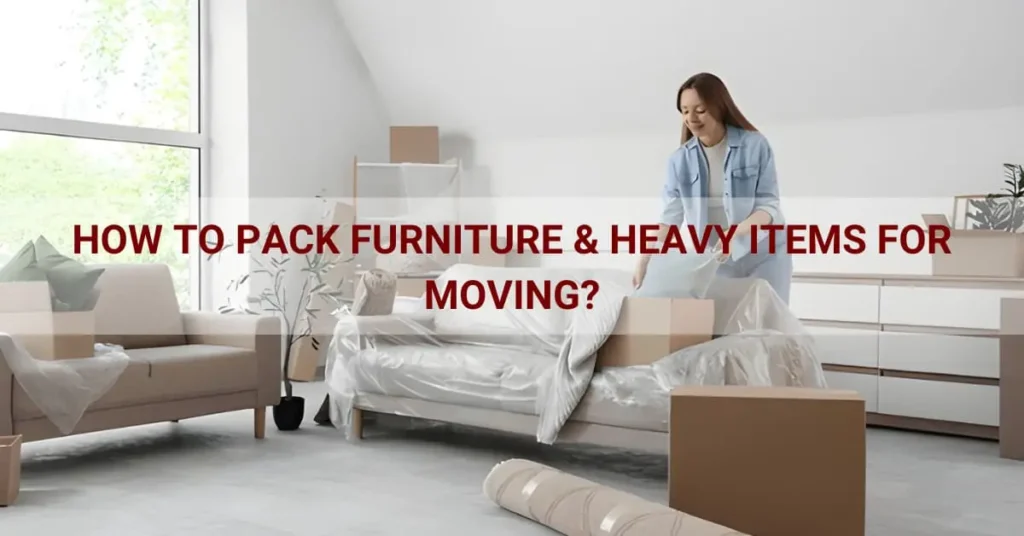
Packing furniture and heavy items is one of the most challenging parts of home shifting. Unlike boxes filled with clothes or books, large items such as sofas, beds, dining tables, wardrobes, refrigerators, washing machines, and glass furniture require planning, proper tools, and the correct packing materials. If not packed correctly, even a small error can lead to dents, scratches, broken glass, damaged upholstery, or internal appliance failures.
the majority of damage during relocation happens because people either skip proper padding or use the wrong materials. Heavy furniture doesn’t get damaged from “moving” — it gets damaged from rubbing, friction, pinching, impact, or improper loading. If you’re handling heavy furniture, working with professional packers and movers helps prevent damage during packing and loading.
Why Proper Packing Matters for Furniture and Heavy Items
Packing heavy furniture and appliances properly isn’t just about neatness — it’s about preventing damage and avoiding expensive losses. Furniture damage is one of the most common reasons relocation claims are filed with moving companies.
Cost of damaged furniture during relocation
If heavy items aren’t wrapped correctly, even a single scratch on premium furniture or a dent on appliances can turn into a costly replacement. Major moving companies report that claims are often linked to:
Furniture damage is also one of the most common reasons for disputes and rejected claims, which is why understanding why insurance claims get rejected by packers and movers is important.
- Loose furniture parts not removed before moving
- Furniture not wrapped or cushioned well
- Glass and mirrors packed flat instead of vertically
For expensive furniture, even minor scratches can reduce value dramatically. Large appliances (fridge, washer, etc.) are costly to repair or replace — and dents or internal damage often aren’t visible immediately.
Benefits of proper wrapping and reinforcement
Professional packers follow a multi-layer padding method when handling furniture:
- Bubble wrap → protects delicate surfaces.
- Moving blankets → absorb shocks and vibrations during transport.
- Stretch film → seals the item and keeps padding in place.
- Edge protectors/corner guards → reinforce vulnerable corners.
This reduces the risk of:
- Scratches
- Dents and corner damage
- Surface abrasion from rubbing against other items
- Moisture exposure during monsoon or humidity (especially in India)
Moving blankets and stretch film are recommended by professional movers because they prevent rubbing and provide cushioning during transportation.
Insurance considerations for high-value items
Movers recommend documenting each item before packing:
✔ Take photos (before and after packing)
✔ Store receipts or item valuation
✔ Label fragile or “handle with care”
For premium items (like glass tables, expensive sofas, or appliances), movers suggest crating or getting valuation/insurance coverage during transit so replacement cost is covered if damage occurs.
Before moving expensive furniture, it’s important to understand what transit insurance covers during house shifting and when additional valuation is recommended.
Essential Packing Supplies You’ll Need
Packing heavy items requires industrial-grade supplies, not normal household materials.
Here’s a complete checklist used by professional packers and movers:
Packing material | Use case |
Bubble wrap | Protect delicate areas and wood surfaces from scratches |
Moving blankets / thick quilts | Primary shock absorption for furniture |
Stretch plastic film | Secures the blankets and protects from dust/moisture |
Corrugated sheets/cardboard | For table tops, appliances, and side panels |
Thermocol / foam sheets | For glass and delicate surfaces |
Edge protectors & corner guards | Critical protection for glass, mirrors, and tables |
Heavy-duty packing tape | Keeps layers tight and secure |
Furniture sliders and dollies | For safe lifting and movement |
Types of packing materials (bubble wrap, stretch film, corrugated sheets, blankets)
Professional movers recommend using these four protective layers:
- Bubble wrap → shock + minor impact resistance
- Corrugated sheet → provides rigid protection
- Moving blanket → absorbs vibration + shock in transit
- Stretch film → seals everything tightly together
Bubble wrap is great for fragile furniture edges and decorative wood designs. Moving blankets are the best overall physical protection — they’re used universally by logistics companies.
Tools required (wrench set, screwdrivers, allen keys)
To disassemble furniture safely, keep these tools handy:
- 📌 Screwdriver set (flat + Philips)
- 📌 Allen/hex key (most bed frames and Ikea-type furniture use this)
- 📌 Wrench/spanner set (for bolts and metal frame connections)
- 📌 Utility knife (for trimming tapes and wraps)
- 📌 Permanent marker (for labeling)
Professionals always dismantle furniture for safe packing — because furniture that stays flat-packed occupies less space, is easier to protect, and reduces risk of bending/warping.
Recommended protective fillers (foam corners, edge protectors, thermocol, cardboard pads)
- Glass tops and mirrors → ALWAYS use foam corner protectors
- TVs and appliances → Use corrugated sheets + thermocol
- Table corners / sofa edges → Use edge protector strips
Foam/thermocol absorbs shock and prevents glass edges from taking impact if the truck jolts during transit.
How to Disassemble Furniture Step-by-Step
Disassembling bulky furniture before packing makes it:
- Easier to wrap
- Safer to load and unload
- Less likely to get scratched or damaged
Identify detachable parts of furniture
Check for:
- Removable legs
- Extension leaves in dining tables
- Shelves in wardrobes
- Headboard + footboard in beds
- Hardware hidden under caps or stickers
If you have the user manual (especially Ikea-type), look for disassembly diagrams. If not, take photos as you disassemble — this makes reassembly extremely easy.
How to safely remove screws, bolts, and legs
Professional movers follow this order:
- Remove removable parts (legs, glass, cushions)
- Loosen screws using matching screwdriver/Allen key
- Keep heavy bases on the floor — never disassemble at height
Never force a screw. If it resists, add a drop of machine oil or WD-40 and try again gently.
Storing hardware in labeled zip bags
This step is crucial.
- Put screws, bolts, washers, and tools in a zip-lock bag
- Write the furniture name on the bag (e.g., “Dining Table – Leg Screws”)
- Tape the bag to the wrapped furniture piece so it never gets lost
Professional hack: Put all zip-lock bags into one “hardware master box”, labeled “Open First – Assembly Tools inside”
This saves hours during reassembly.
How to Protect Upholstery and Sofa Sets During a Move
Fabric and upholstered furniture easily gathers dust, stains, and moisture. Sofas are also bulky—so incorrect packing can lead to tearing or sagging during handling.
Using plastic stretch wrap for dust protection
Professional movers always start by wrapping sofas in stretch film because:
- It prevents dust, dirt, and stains
- Keeps cushions from shifting
- Holds moving blankets in place
Rule: Never use bubble wrap directly on fabric — it traps air pockets and can imprint texture on leather or fabric.
For leather sofas:
- Use moving blankets as the first layer
- Only then wrap using stretch film
(plastic directly on leather can trap condensation and damage polish)
Avoiding moisture and mold during packing
Moisture is the biggest threat to fabric and leather.
To prevent mold:
- Ensure the upholstery is 100% dry before wrapping
- Leave silica gel packets between cushions
- If storing for weeks/months, avoid sealing with stretch wrap tightly — use breathable fabric covers
In humid climates or monsoon season, movers wrap sofas with blanket → stretch wrap → corrugated sheet as a final moisture + impact layer.
Packing detachable cushions and pillows
Cushions and pillows compress under weight, so they must be packed separately.
Correct method:
- Place cushions in large poly bags or vacuum storage bags
- Label the bags clearly (e.g., “Sofa – Back Cushions”)
- Avoid over-packing — compressed cushions lose shape
If the sofa has detachable legs or arm pieces, disassemble them and store hardware in labeled zip-lock bags taped to the frame.
Techniques for Wrapping Furniture to Prevent Scratches and Moisture
This section covers the exact wrapping process used by professional movers — the layering method protects furniture against vibration, friction, and weather exposure.
Layering method (bubble wrap → blanket → stretch film)
Industry-standard wrapping sequence:
- Bubble wrap — absorbs small shocks and protects intricate detailing or edges.
- Moving blanket / furniture pad — acts as a thick cushioning barrier.
- Stretch film — keeps the protective material tight and prevents dirt, moisture, and scratches.
This creates a 3-layer impact shield that prevents:
- Abrasion from rubbing against walls or other furniture
- Dents from stacking pressure inside the truck
- Damage from sudden braking or jerks during transit
Do not use bubble wrap as the only protective layer — it punctures easily and does not protect from compression.
Edge and corner reinforcement
Corners are the first point of impact during shifting.
Use:
- Foam corner protectors
- Thermocol corner guards (for glass/wood)
- Corrugated corner boards (for appliances and tables)
Corners of glass tops, mirrors, and decorative wooden edges must be reinforced before doing any wrapping.
Using moving blankets for premium furniture
Moving blankets are the single most important protection layer used by movers.
Advantages:
- Thick and impact absorbing
- Prevents scratches better than bubble wrap
- Covers large surfaces easily
Moving blankets are reusable, eco-friendly, and cost-effective.
If you don’t have professional blankets, thick quilts or comforters are the closest alternative.
How to Lift and Move Heavy Items Safely (Prevent Injuries)
Most injuries during moving happen because people try lifting heavy furniture incorrectly.
This section teaches safe lifting exactly the way professionals do it.
Using proper lifting posture
Rule:
Lift with your legs, not your back.
Correct lifting method:
- Keep back straight
- Bend knees
- Hold item close to your body
- Move slowly and avoid twisting your spine
Improper lifting causes muscle strain and lower back injury — one wrong move can put you out of action for days.
Using moving straps, sliders, and dollies
Tools that reduce effort and prevent injury:
Tool | What it does |
Furniture sliders | Slide heavy sofas/cabinets without scratching the floor |
Shoulder moving straps | Distribute weight to shoulders and core, reducing load on arms |
Furniture dolly (4-wheel trolley) | Ideal for appliances like fridge, washing machine, wardrobe |
Professional movers rely on these tools to avoid dragging or force lifting.
Team coordination while moving large furniture
Safe movement requires planning:
- Identify the path (hallways, staircases, door clearance)
- Decide directions in advance
- Assign one person as the leader, who calls the commands
- Keep communication short and clear:
- “Lift”
- “Turn left”
- “Set down”
Never rush. Heavy furniture + narrow passages = risk of injury + damage.
Labeling and Organizing Packed Furniture for Easy Reassembly
Furniture packing is only half the job — reassembly becomes painful if labeling is not done properly.
Imagine unpacking 40 screws and not knowing which of the furniture they belong to — chaos.
Room-based labeling system
The easiest way to avoid confusion is room-based labeling.
Example labels:
- “Bed – Master Bedroom – Headboard”
- “Dining Table – Legs – Fragile”
- “Wardrobe – Shelves – Left Side”
Use large markers and write on the stretch wrap or cardboard, not on the furniture.
Pro tip: Color-code labels.
Room | Sticker / Tape Color |
Bedroom | Blue |
Living room | Green |
Kitchen | Red |
Office/Study | Yellow |
This helps movers place each item directly into the correct room when unloading the truck.
Numbering furniture parts for reassembly
When dismantling furniture:
- Number each piece as you remove it (1, 2, 3, 4…)
- Take a photo before and after dismantling
- Attach the number to the part using masking tape
Why this works:
- You don’t have to guess the assembly order later
- Saves hours during reassembly
Example:
Bed Frame Part 1 (Top Right)
Bed Frame Part 2 (Top Left)
Keeping screws and instruction manuals organized
For each furniture item:
✔ Keep screws/bolts/hinges in a zip-lock pouch
✔ Label it clearly: “Wardrobe – Screws + Hinges”
✔ Tape the pouch to the wrapped furniture piece OR place all pouches in a single “Hardware Box” labeled OPEN FIRST
This prevents the #1 packing disaster — lost screws = unusable furniture.
If you have the original manual or assembly diagram, pack it with the same pouch.
Common Mistakes to Avoid While Packing Heavy Items
Avoiding these mistakes can save thousands in repairs or replacements.
Overpacking boxes
Many people think:
“One big box is easier than several small ones.”
Wrong.
- Heavy items should be packed in small, sturdy boxes
- Large boxes become too heavy and can tear at the bottom
Rule:
If you can’t lift the box comfortably, the movers can’t either.
Using wrong packing materials
Common mistakes:
- Using bed sheets instead of moving blankets
- Wrapping directly with plastic on leather
- Using newspaper on glass (ink transfers)
Correct material hierarchy:
Bubble wrap → Corrugated sheet → Blanket → Stretch wrap
Forgetting to secure fragile edges and hardware
Most damage happens because of:
- Loose corners
- Unprotected edges
- Hardware placed inside drawers (causes internal scratches)
Always reinforce edges with:
- Thermocol
- Foam protectors
- Corner guards
And ALWAYS store screws separately.
Never wrap hardware inside furniture — it causes dents from the inside.
Should You Hire Professional Packers and Movers for Heavy Packing?
Packing heavy furniture is doable, but not always advisable—especially if you’re dealing with premium items or narrow passages.
When professional help is the better option
Hire professionals if:
- Your home has stairs or tight hallways
- You own heavy appliances (fridge, washing machine, treadmill)
- Your furniture is large and cannot be moved without disassembly
Also recommended for:
- Glass dining tables
- Antique wooden furniture
- Expensive sectional sofas
- Marble tables
Professionals bring dollies, straps, sliders, crates, and insurance coverage.
Cost comparison (DIY vs professional)
Task | DIY Cost | Professional Cost |
Supplies (bubble wrap, blankets, stretch film) | Medium to High | Included in quote |
Physical labor | Free (self) | Included |
Risk of damage | Higher | Lower (trained handling + equipment) |
Insurance | Not included | Offered |
DIY packing seems cheaper, but one damaged appliance can cost more than the entire moving service.
Checklist for selecting the right movers
Ask these must-ask questions:
- Do you provide bubble wrap + blankets + stretch film in the quote?
- Will you dismantle and reassemble furniture?
- Do you offer insurance or value protection?
- Do you provide wooden crating for premium items?
You can also use this detailed checklist for choosing the best packers and movers to avoid unreliable service providers.
Always choose movers who:
- Give a written agreement
- Include packing materials in the pricing
- Offer insurance for expensive items
If you’re relocating bulky furniture in apartments or narrow staircases, hiring experienced packers and movers in Rajkot ensures safe dismantling, packing, and transport.
Moving Soon? Don’t Risk Damage — Hire Verified Packers & Movers Today.
- Get FREE quotes from trained professionals.
- 100% damage-free packing
- Free dismantling & reassembly
- Insurance available
Let experts handle everything — disassembly, packing, loading & setup.
FAQs About Packing Furniture And Heavy Items For Moving
Use the layer method: bubble wrap → corrugated sheet → moving blanket → stretch film. Remove shelves, wrap doors separately, and store screws in labeled zip-lock bags.
Always dismantle large furniture (beds, dining tables, wardrobes). Smaller furniture like bedside tables or chairs can be moved as-is after wrapping.
Glass is strongest when stored upright. If placed flat, pressure on the surface creates stress points, increasing the chance of cracking.
No. Plastic traps moisture and can damage leather — always place a moving blanket first, then wrap with stretch film.
Stable and growing. Average rates hover around ₹5,800/sq. ft with steady year-over-year appreciation.
Ensure furniture and upholstery are fully dry, use silica gel packets, and avoid wrapping air-tight if storing long-term.
DIY saves labor cost, but one damaged appliance can cost more than a packers-and-movers service. Professionals include materials, equipment, and insurance.
Glass tables, large appliances (fridge, washing machine), marble tops, antique wood, and expensive sofas require expert packing.