
Pet Relocation Checklist for a Stress-Free Move
A pet relocation checklist includes preparing a travel health certificate, updating vaccinations, choosing the right carrier, packing food and medications, and planning a stress-free travel routine. Add familiar comfort items, follow airline or interstate rules, and help your pet settle into the new home with consistent routines and gradual exploration.
Moving homes is stressful not just for people, but for pets too—and ensuring their comfort, safety, and legal compliance requires careful planning. Whether you’re shifting locally or relocating to a new state or country, preparing a complete pet-relocation checklist is essential. If you are planning your move with professional help, working with experienced packers and movers services can simplify household shifting while you focus on your pet’s comfort and safety. From organising food supplies and selecting the right carrier to securing veterinary travel certificates and planning your pet’s travel routine, each step plays a major role in ensuring a smooth journey. If you’re already planning your household move with professional experts, you can also explore reliable Packers and Movers to coordinate transportation, timelines, and packing while you focus on your pet’s relocation needs. This guide breaks down every important step—supported by verified online resources—to help you plan a safe, comfortable, and stress-free move for your furry companion.
1. Pre-Move Planning: Understanding Your Pet’s Needs
Relocating a pet begins with understanding their temperament, breed-specific needs, and travel limitations. Different pets react differently to long-distance travel, so it’s important to assess whether your pet is comfortable with road, rail, or air transport. Some pets—especially short-snout breeds—may require extra precautions due to breathing sensitivities during air travel.
Before finalising your plan, check relocation policies for dogs, cats, birds, or exotic pets in your destination city or country. International destinations often require microchipping, updated vaccinations, import permits, or quarantine clearance.
You should also decide whether the relocation will be handled personally or with the help of professional pet-transport specialists. Hiring experts may be helpful for long-distance, multi-step, or international moves where paperwork and airline approvals can become complicated. Starting preparations early—ideally 3–4 weeks before moving day—reduces last-minute stress and ensures your pet adapts calmly to the upcoming changes. Families relocating within metro cities like Bangalore often prefer hiring professional packers and movers in Rajkot to manage timelines efficiently while keeping pets safe from move-day chaos.
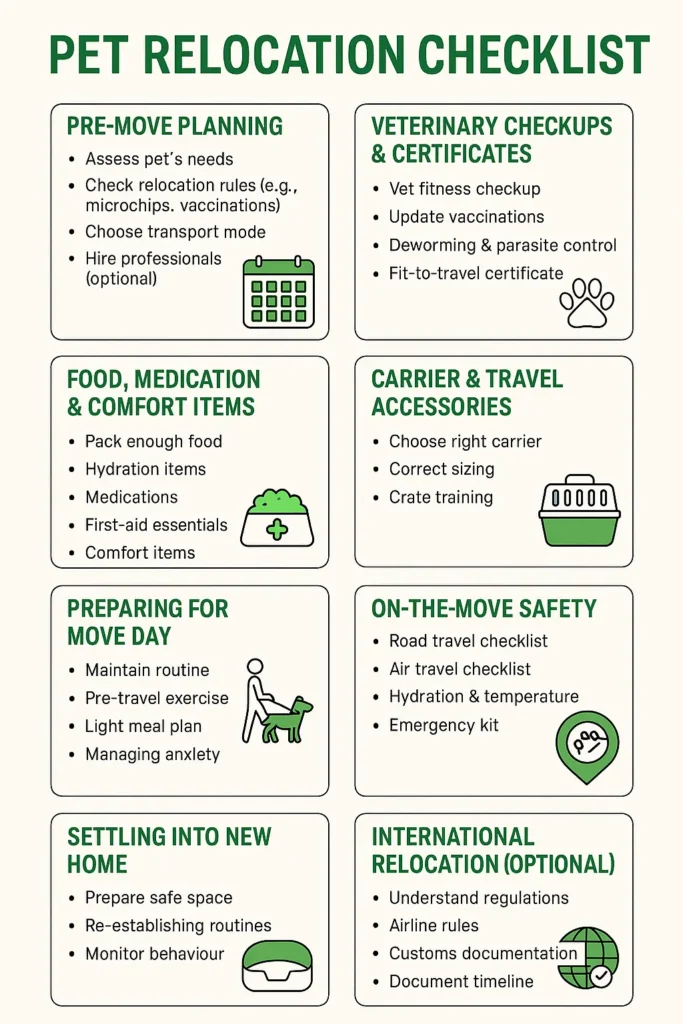
2. Veterinary Checkups & Mandatory Health Certificates
A thorough veterinary checkup is one of the most important steps in any pet relocation plan. Most airlines, state authorities, and international destinations require pets to be examined by a licensed veterinarian shortly before travel. During this visit, the vet confirms that your pet is healthy, vaccinated, and fit for transport. You will receive an official fit-to-travel certificate, which is mandatory for road, rail, or air relocation in many regions.
In addition to health clearance, understanding what transit insurance covers during house shifting helps protect your belongings against damage or loss during transportation.
Vaccinations, Deworming & Microchip Requirements
Ensure your pet’s vaccination records—especially rabies—are fully updated. Many relocation guidelines require the rabies shot to be administered within a specific window before travel. Deworming and parasite control should also be done as recommended by your vet. For international travel, microchipping is often compulsory and must meet ISO standards for global identification.
Travel Certificates & Legal Documentation
Depending on your destination, additional paperwork may be required. Some country-to-country relocations need export permits, import authorisations, or quarantine clearances. For interstate travel within India, a basic travel health certificate issued within a few days of the journey is often required. International pet travel guidelines also recommend preparing vaccination booklets, microchip details, and medical reports well in advance to avoid delays.
When to Schedule the Vet Appointment
Ideally, you should book an appointment 7–10 days before the move. This ensures there’s enough time to complete vaccinations, collect travel certificates, and verify documents required by airlines or border authorities. Pets with ongoing health issues may need an additional checkup to confirm safe travel fitness.
3. Pet Food, Medications & Comfort Items to Pack
Packing the right essentials ensures your pet stays calm, nourished, and comfortable throughout the journey. Unlike humans, pets cannot easily adjust to sudden changes in diet or environment, so maintaining familiarity during relocation is crucial. Begin by preparing a dedicated pet travel kit that includes food, water, medications, hygiene supplies, and comfort items your pet uses daily. Planning your moving budget in advance—including pet relocation expenses—becomes easier when you understand packers and movers cost factors involved in long-distance shifting. Carry enough food for the entire journey—and a little extra—because the same brand or type may not be available at your destination immediately.
Packing Sufficient Food and Hydration Supplies
Pack your pet’s regular food in airtight, labelled containers. Sudden diet changes can upset their stomach, especially during travel stress. Include collapsible bowls, water bottles, and a small portable container to refill water during road or air travel. For long-distance journeys, carrying safe drinking water is essential to prevent dehydration.
Medications, Supplements & First-Aid Essentials
If your pet has prescribed medication, keep it in a clearly marked pouch along with dosage instructions. Include flea/tick prevention, motion-sickness remedies (vet-approved), antiseptic wipes, and a small first-aid kit. For international travel, some destinations require documented proof of ongoing treatments or additional health declarations, so keep all medical papers together.
Familiar Comfort Items to Reduce Anxiety
Travel can be frightening for pets due to unfamiliar sounds, smells, and movement. Packing familiar items such as their favourite blanket, soft toy, chew item, or bedding helps reduce anxiety. These items carry your home’s scent, which reassures your pet during long hours in a car, train, or aircraft. Adding an absorbent pad or cushion inside the carrier also adds comfort and improves hygiene.
4. Choosing the Right Pet Carrier & Travel Accessories
Selecting the correct pet carrier is one of the most important steps in ensuring safe and stress-free relocation. A well-ventilated, correctly sized carrier keeps your pet secure, comfortable, and calm throughout the journey. For air travel, most airlines require carriers that meet international transport standards. Even for road and rail travel, a sturdy carrier prevents unnecessary movement and protects your pet during sudden brakes or turns. Begin by measuring your pet accurately—length, height, and shoulder width—to choose a crate that allows them to stand, turn, and lie down comfortably.
Choosing an IATA-Approved or Airline-Compliant Carrier
For flights, always select an IATA-approved carrier. These crates are designed with strong frames, ventilation openings on all sides, escape-proof locks, and leak-proof bottoms—all essential for pet safety during handling and transit. Airlines may also specify crate dimensions and material requirements, so check policies well in advance to avoid last-minute issues.
Crate Training Before the Move
Pets unfamiliar with carriers may experience anxiety if confined for the first time on travel day. Start crate training at least one to two weeks before moving. Place the carrier in a common area, add familiar bedding, offer treats inside, and allow your pet to explore freely. Gradually increase the time they spend inside the crate until they are comfortable resting there. This makes travel smoother and reduces panic during long journeys.
Essential Travel Accessories for Safety & Comfort
Along with the carrier, pack essential accessories such as a spill-proof water dispenser, absorbent pads, waste bags, a leash, a harness, cleaning wipes, and a small torch for night travel. For pets prone to anxiety, vet-approved calming sprays or chews may help maintain relaxation. These small additions make a significant difference, especially during long-distance road or air journeys.
5. Preparing Your Pet for the Move Day
The days leading up to the move play a crucial role in shaping your pet’s travel experience. Pets are sensitive to changes in their environment—packed boxes, unfamiliar noises, and new people in the house (like movers) can make them anxious. To ensure a smoother move day, maintain your pet’s regular routine as much as possible. Keep feeding times, walking schedules, and play sessions consistent so they feel secure despite the surrounding changes. If movers are arriving early, consider keeping your pet in a quiet room to prevent stress and avoid accidental escapes. Before finalising any relocation partner, it’s advisable to review a complete checklist for choosing packers and movers to ensure safety, transparency, and reliability.
Pre-Travel Exercise and Feeding Plan
Give your pet light exercise before the journey—this helps release nervous energy and keeps them calm during travel. Avoid heavy meals right before departure, as overeating can lead to motion sickness. Instead, feed them a small, balanced meal a few hours before leaving and carry snacks for controlled feeding during breaks.
Managing Anxiety, Comfort & Behaviour
Many pets show signs of stress on move day—panting, pacing, hiding, or refusing food. Keeping them close to their favourite toys or blanket provides comfort. Playing calming music, using vet-approved anxiety relief sprays, or applying pheromone diffusers may help reduce restlessness. If your pet has a history of travel anxiety, consult your vet about safe calming options.
Introducing Pets to Movers & New Sensory Changes
Pets may become startled by the noise of packing materials, large boxes, or unfamiliar faces inside the home. Allow them to observe the movers from a distance or keep them temporarily confined to a quieter space. This prevents accidental injuries and reduces stress. Ensure identification tags or microchips are updated before moving day, as pets may attempt to run or hide when overwhelmed.
6. On-the-Move Safety Tips for Pets
Once the journey begins, your pet’s comfort and safety should remain the top priority. Whether you’re travelling by road, rail, or air, maintaining ventilation, hydration, and stable temperature are essential to avoid stress or health complications. Keep your pet inside their carrier at all times during transit—this prevents sudden movements, injuries, or attempts to escape. Regularly check on your pet during stops, offering small sips of water and reassurance if they appear restless. For long journeys, plan breaks every few hours to allow controlled stretching, bathroom breaks, and calm interaction.
Road Travel Checklist
When travelling by car, secure the carrier using the seatbelt or a stable base to prevent sliding. Ensure the temperature inside the vehicle stays moderate—pets can overheat quickly. Keep windows partially open for ventilation but ensure your pet cannot stick their head out. Avoid loud music or sudden movements that may startle them. For long-distance road trips, schedule rest stops to check hydration, hygiene pads, and overall comfort.
Air Travel Checklist
Air travel requires stricter preparation. Arrive early to complete airline formalities and allow your pet to relax before boarding. Ensure the crate is airline-approved, labelled with your contact details, and contains a comfortable mat or absorbent pad. Airlines generally advise against feeding pets just before flying to prevent discomfort during takeoff or turbulence. Check the airline’s rules for cabin vs. cargo eligibility based on size, weight, and breed.
Temperature, Hydration & Emergency Preparedness
Pets are highly sensitive to extreme temperatures during transit. Avoid travelling during the hottest hours of the day and ensure the carrier is not exposed to direct sunlight. Carry enough water, wipes, and additional pads for emergencies. Keep essential documents—health certificate, vaccination records, and microchip details—within easy reach in case authorities require verification during the journey.
7. Settling Your Pet Into the New Home
Arriving at a new home can be overwhelming for pets—they are suddenly exposed to new smells, sounds, and surroundings. To ease this transition, set up a familiar, comfortable space the moment you arrive. Place their bed, toys, feeding bowls, and blankets in a quiet corner where they can rest without disturbance. Avoid introducing them to the entire house immediately; instead, let them explore one room at a time so they feel safe and in control. Maintain a calm environment and stay close to offer reassurance as they adjust.
Re-Establishing Routines Quickly
Pets rely on predictable routines to feel secure. Resume their regular feeding times, potty breaks, playtime, and walks as soon as possible. Reintroducing daily habits signals that everything is normal, helping them settle faster. Even during unpacking, make time for your pet’s usual activities to prevent anxiety or behavioural changes.
Monitoring Stress & Behavioural Signs
After relocation, some pets may exhibit signs of stress, such as reduced appetite, hiding, excessive licking, or restlessness. Keep a close watch on their behaviour during the first few days. Offer plenty of affection and comfort but avoid forcing interaction if they prefer quiet time. If unusual behaviour persists, consult a veterinarian to ensure there are no underlying issues.
Safe Exploration & Introducing New Spaces
Allow your pet to explore new areas gradually. Start with one room, then slowly open access to other parts of the home once they appear confident. Ensure balconies, windows, and open areas are secured to prevent accidental falls or escapes. Introduce new neighbours or pets carefully to avoid overwhelming them on the first day.
8. Additional Tips for International Pet Relocation
International pet relocation requires more detailed planning because each country has its own regulations regarding pet entry, vaccinations, and documentation. Start preparing weeks or even months in advance to ensure you meet all requirements without last-minute complications. Research the destination country’s import rules, quarantine policies, and approved flight routes. Many countries require pets to be microchipped using an ISO-compliant microchip, vaccinated according to their mandated timeline, and accompanied by an endorsed health certificate. Preparing early also allows time for crate training, arranging travel bookings, securing airline approvals, and completing paperwork.
Understanding Quarantine & Country-Specific Rules
Some countries require pets to undergo quarantine upon arrival, depending on vaccination history and country of origin. Knowing these rules in advance helps avoid delays or rejections at entry points. Ensure all documents—microchip certificate, rabies vaccination proof, and health certificates—meet the destination’s guidelines to avoid mandatory quarantine extensions.
Airline Requirements & Travel Approvals
Airlines enforce strict pet-travel rules regarding crate dimensions, weight limits, pet age, and whether pets can fly in the cabin or cargo. Confirm these details directly with the airline to avoid cancellations or unexpected charges. Label the carrier with your contact details, emergency numbers, and feeding instructions to help handlers manage your pet safely during long international flights.
Customs Clearance, Permits & Documentation Timeline
Depending on your destination, you may need export permits, import permissions, NOC (No Objection Certificate), or additional declarations. Keep all documents neatly organised—vaccination book, microchip data, health certificate, and travel forms—so you can present them quickly during customs inspection. Preparing a timeline for paperwork, vet appointments, and travel bookings ensures nothing is missed during this complex process.
Make your relocation smooth, safe, and stress-free with 6 Packers And Movers—your trusted partner for pet-friendly shifting. From expert handling and secure transport to complete packing and doorstep delivery, we ensure your belongings and your pets travel with maximum comfort and care. Get reliable, on-time, and professional moving support for local or long-distance moves.