
Monsoon vs. Summer vs. Winter Season Moving: Risks, Protection & Timing Compared
Choosing the right season for moving depends on cost, safety, and timing. Monsoon moves require waterproof protection, summer moves demand heat management and early booking, while winter moves offer balanced conditions. Understanding seasonal risks helps ensure a smoother, damage-free relocation.
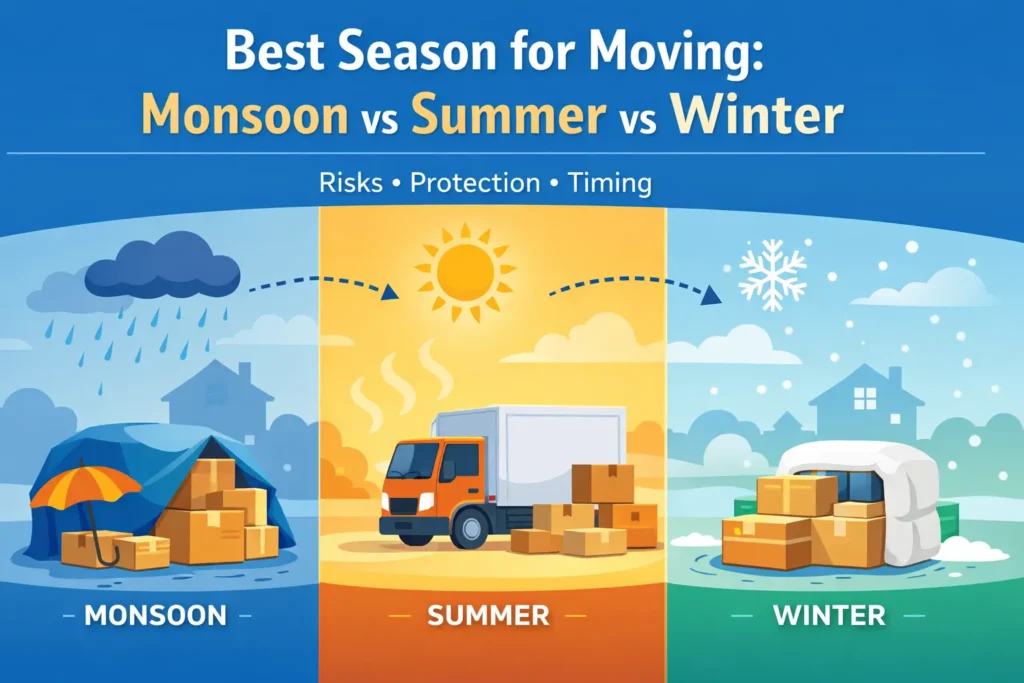
Relocating your home or office is not just about packing boxes and hiring a truck—the season you choose to move in plays a critical role in determining safety, cost, timelines, and the overall condition of your belongings. Weather conditions directly influence packing strength, handling risks, transport delays, and even mover availability. Whether you are planning a move during heavy monsoon rains, peak summer heat, or cooler winter months, each season presents distinct challenges and advantages that must be planned for in advance.
This detailed comparison explains how monsoon, summer, and winter moving differ in terms of risks, protective measures, and ideal timing, helping you make an informed, damage-free decision. If you are planning a relocation and want to connect with professional assistance suited to your move timing, you can explore verified packers and movers services.
Why Season Matters When Planning a Move
Seasonal conditions have a direct and measurable impact on how goods are packed, handled, transported, and delivered during relocation. Weather influences not only the physical safety of household items but also the efficiency, cost, and predictability of the entire moving process. Ignoring seasonal factors often leads to avoidable damages, delays, and last-minute cost escalations.
Impact of Weather on Packing, Transport, and Safety
Weather conditions affect packing materials and handling safety in multiple ways. High moisture levels weaken cardboard cartons and increase the risk of mold formation on furniture, mattresses, and upholstery. Excessive heat can stress electronic components, loosen adhesives used in furniture, and affect plastic items. Cold temperatures, on the other hand, can make materials such as wood, glass, and certain plastics more brittle, increasing breakage risk during loading and unloading.
From a safety perspective, rain and wet surfaces raise slip-and-fall hazards during lifting, while extreme heat increases the risk of dehydration and fatigue among movers. Reduced visibility due to fog or heavy rainfall also affects driving safety, especially during long-distance transportation.
Cost, Availability, and Transit Delays Across Seasons
Moving costs and service availability fluctuate significantly by season. During high-demand periods—typically summer—availability of trucks and labor becomes limited, often leading to higher pricing and tighter scheduling windows. Conversely, off-peak seasons may offer better availability but come with weather-related risks that can disrupt timelines.
Understanding how prices fluctuate seasonally is easier when you review a detailed packers and movers cost guide.
Seasonal weather events such as heavy rains, flooding, fog, or heatwaves contribute to unpredictable transit delays, rescheduling, and extended delivery times. These factors directly affect planning accuracy, especially for time-sensitive relocations such as office moves or intercity household shifting.
How Seasonal Conditions Affect Household Goods
Different household items respond differently to seasonal stress. Wooden furniture absorbs moisture and may swell or warp in humid conditions. Metal appliances are vulnerable to corrosion when exposed to moisture over long transit durations. Electronics are sensitive to both heat and humidity, which can impact internal components and display panels. In colder conditions, cushioning materials may lose flexibility, reducing shock absorption during handling.
Understanding these seasonal effects helps in choosing appropriate packing materials, timing the move strategically, and deciding whether additional protective layers or insurance coverage are necessary.
Monsoon Season Moving – Challenges, Risks & Precautions
Moving during the monsoon season requires heightened planning and protective measures due to persistent rainfall, high humidity, and unpredictable road conditions. While monsoon moves are often chosen for flexibility and lower demand, they carry specific risks that can affect both safety and the condition of household goods if not managed properly.
This is why it is essential to understand what transit insurance covers during house shifting, especially during monsoon relocations.
Key Risks of Moving During Monsoon
The primary risk during monsoon relocation is water exposure. Rainwater can seep into cartons, furniture joints, mattresses, and appliances, leading to moisture damage, swelling of wooden items, corrosion of metal parts, and the formation of mold or mildew. Cardboard boxes are particularly vulnerable, as prolonged moisture weakens their structure and increases the chance of breakage during lifting.
Wet and slippery surfaces around staircases, loading areas, and ramps significantly increase the risk of slips, falls, and handling injuries. In addition, heavy rainfall can result in road congestion, waterlogging, or temporary route diversions, causing transit delays and extended exposure of goods to moisture.
Protective Measures for Monsoon Relocation
Effective monsoon protection focuses on moisture control and safe handling. Using plastic wraps, waterproof liners, and sealed cartons helps reduce direct water contact. Furniture and mattresses are typically covered with water-resistant sheets, while electronic items benefit from additional plastic layering before being boxed.
Loading practices also change during monsoon moves. Elevating cartons above ground level, using covered loading zones, and minimizing the time goods remain outdoors during transfer reduces exposure risk. Careful route planning that avoids flood-prone areas further improves transit reliability and safety.
Best Timing Tips for Monsoon Moves
Timing plays a crucial role in monsoon relocation success. Scheduling loading and unloading during lighter rainfall windows helps limit water exposure. Shorter transit durations are preferable, as prolonged journeys increase moisture-related risks. Adding buffer days to the delivery timeline helps accommodate weather-related delays without creating last-minute pressure.
For intercity moves, selecting routes and travel days with stable weather forecasts improves predictability and reduces the likelihood of interruptions.
Summer Season Moving – Heat, Demand & Logistics
Summer is widely considered the busiest moving season, especially for residential and family relocations. While dry weather offers predictable transport conditions, high temperatures and peak demand introduce their own set of challenges that require careful planning and execution.
In high-demand cities like Chandigarh, early booking with reliable packers and movers in Chandigarh becomes especially important during summer.
Common Risks of Summer Relocation
Extreme heat is the most significant risk during summer moves. Prolonged exposure to high temperatures can affect electronic items, batteries, plastic components, and adhesive bonds used in furniture. Heat can also cause discomfort, dehydration, and physical fatigue for movers, increasing the likelihood of handling errors or accidents during lifting.
Another major challenge is high demand. Summer coincides with school vacations and lease renewal cycles, leading to limited truck availability, tighter schedules, and higher service costs. Last-minute bookings during peak summer often result in compromised timelines or rescheduling issues.
Protective Measures for Summer Moving
Summer relocation protection focuses on heat management and scheduling efficiency. Early-morning or late-evening loading helps reduce heat exposure for both goods and manpower. Sensitive items such as electronics are packed with additional insulation to minimize thermal stress during transit.
Ensuring adequate hydration, rest breaks, and shaded loading areas improves safety and handling accuracy. Efficient packing and quick loading also reduce the duration items remain exposed to direct sunlight.
Ideal Timing for Summer Moves
Timing within the summer season can significantly impact cost and convenience. Early summer periods generally offer better availability than peak months. Weekday moves tend to be less congested than weekends, allowing smoother loading, faster transit, and improved scheduling flexibility.
Planning well in advance helps secure preferred dates and avoids premium pricing during high-demand windows.
Winter Season Moving – Weather Stability vs. Regional Challenges
Winter relocation is often considered a balanced option due to relatively stable weather conditions in many regions. However, winter moving also presents specific challenges that vary by geography and require season-aware planning, especially for long-distance and northern-route relocations.
Risks Associated with Winter Moving
One of the primary risks during winter moves is reduced visibility, particularly due to fog during early mornings and late evenings. This can slow transit speeds and increase the risk of road delays. In colder regions, low temperatures may affect the flexibility of certain materials, making wooden furniture, glass items, and plastic components more prone to cracking if handled roughly.
In hilly or colder zones, winter weather can lead to road closures or restricted access, impacting delivery schedules. These region-specific challenges make winter planning especially important for intercity or interstate relocations.
Protective Measures During Winter Relocation
Winter protection strategies focus on impact prevention and visibility management. Extra padding and cushioning are used to protect fragile items that may become brittle in low temperatures. Scheduling loading and unloading during daylight hours improves visibility and reduces accident risk.
For long-distance moves, flexible delivery timelines help accommodate fog-related delays or route adjustments. Proper communication between the moving team and the customer ensures smoother coordination during weather-sensitive travel periods.
Best Timeframes for Winter Moves
Midday hours are generally safer for winter moves, as temperatures are more moderate and visibility improves. Winter also tends to be a lower-demand season, offering better availability of moving resources and more flexible scheduling options.
Regional climate conditions should always be considered, as winter severity varies significantly across locations.
Season-Wise Comparison: Monsoon vs. Summer vs. Winter
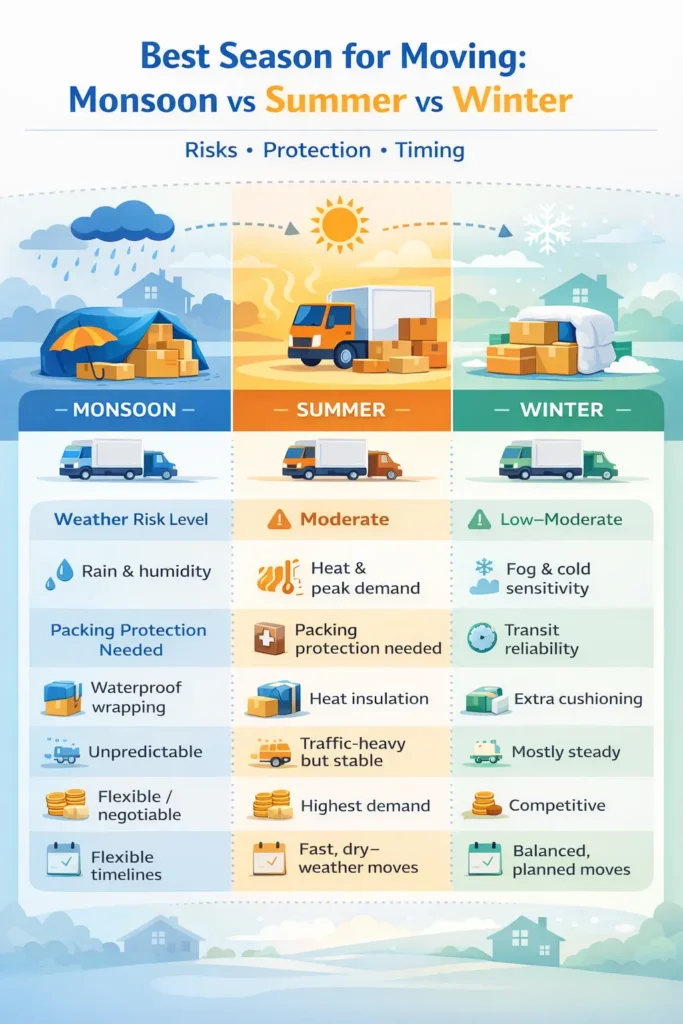
A direct season-wise comparison helps clearly understand how risks, protection needs, timing reliability, cost trends, and availability vary across monsoon, summer, and winter moves. This comparison is based on observed weather impacts, logistics behavior, and relocation planning factors rather than assumptions.
Risk Levels Across Seasons
Factor | Monsoon Season | Summer Season | Winter Season |
Weather Risk | High (rain, humidity, flooding) | Moderate (extreme heat) | Low–Moderate (fog, cold) |
Handling Safety | Slippery surfaces, injury risk | Fatigue, heat stress | Reduced visibility in fog |
Transit Reliability | Unpredictable | Predictable but congested | Mostly stable, region-dependent |
Packing & Protection Requirements
Aspect | Monsoon | Summer | Winter |
Packing Intensity | Very High (waterproofing needed) | Moderate (heat insulation) | Moderate (extra cushioning) |
Material Focus | Plastic wraps, sealed cartons | Insulated packing, ventilation | Padding, shock protection |
Item Sensitivity | Wood, mattresses, electronics | Electronics, plastics | Glass, wood, brittle items |
Cost, Availability & Transit Speed Comparison
Parameter | Monsoon | Summer | Winter |
Mover Availability | Moderate to High | Limited (peak demand) | High |
Cost Trend | Stable or negotiable | Highest | Competitive |
Transit Speed | Slower due to weather | Faster but traffic-heavy | Steady with minor delays |
Key Takeaway from the Comparison
- Monsoon moves demand maximum protection and flexible timelines
- Summer moves require advance booking and heat management
- Winter moves offer balance, with regional weather awareness
This comparison makes it easier to select the right season based on budget, urgency, and risk tolerance rather than assumptions.
Which Season Is Best for Moving? Expert Recommendations
Choosing the best season for relocation depends less on weather alone and more on move type, distance, urgency, and risk tolerance. Each season offers distinct advantages when aligned with the right moving requirements and preparation level.
Seasonal conditions also make it important to know how to choose the best packers and movers based on safety practices and service reliability.
Best Season for Local Household Shifting
For local moves, winter and early summer are often more manageable. Short transit distances reduce exposure to seasonal risks, making it easier to control timing and handling conditions. Winter offers better availability and smoother coordination, while early summer provides dry conditions with fewer weather interruptions.
Monsoon local moves can also be successful when proper waterproof packing and flexible scheduling are applied, as shorter travel times limit moisture exposure.
Best Season for Intercity Relocation
Intercity moves involve longer transit durations, making weather predictability a critical factor. Winter is generally suitable due to stable conditions and lower demand, provided routes are not affected by fog-prone zones or cold-region closures.
Summer intercity moves are common but require advance booking and heat-protection planning. Monsoon intercity relocations carry higher risk due to prolonged exposure to rain, road diversions, and potential delays, making them suitable only when timelines are flexible and protection measures are robust.
Best Season for Office & Commercial Moves
Office and commercial relocations prioritize timeline accuracy and minimal disruption. Winter and early summer are often preferred due to predictable workflows and better mover availability. Dry weather conditions reduce the risk of document or equipment damage, while off-peak demand allows better scheduling control.
Monsoon office moves are generally avoided unless relocation urgency outweighs weather-related risks and enhanced protection is in place.
Decision Summary
- Choose monsoon when flexibility and cost negotiation are priorities
- Choose summer for dry-weather reliability with advance planning
- Choose winter for balanced cost, availability, and manageable risk
Final Verdict – Choosing the Right Season Based on Your Priorities
There is no single “perfect” season for moving. The right choice depends on what you prioritize most—cost control, safety, speed, or flexibility. Understanding how each season aligns with these priorities helps you plan a smoother and more predictable relocation.
Cost-Focused Moves
If minimizing expenses is your primary concern, monsoon and winter moves generally offer better flexibility. Lower demand during these periods often allows more scheduling options and easier cost negotiations. However, cost savings should always be balanced with adequate protective measures to prevent weather-related damage, especially during monsoon relocations.
Safety-Focused Moves
For relocations where safety of household goods and manpower is the top priority, winter and early summer provide relatively stable conditions. Winter offers manageable temperatures and lower congestion, while early summer avoids extreme heat and heavy rainfall. Choosing the right time of day and applying season-appropriate packing further enhances safety outcomes.
Urgent or Time-Bound Relocations
When timelines are strict, summer and winter moves are typically more predictable due to fewer weather-related interruptions. Monsoon moves, while possible, require buffer time and flexible delivery expectations to accommodate potential delays caused by rain or road conditions.
Overall Recommendation
- Choose monsoon if flexibility and cost efficiency matter most
- Choose summer if dry weather and speed are priorities and bookings are made early
- Choose winter for a balanced combination of availability, cost control, and manageable risk
By aligning your moving season with your specific priorities and planning ahead with season-specific precautions, you can significantly reduce relocation stress and safeguard your belongings throughout the move.
Planning a move and unsure which season suits your relocation best? 6 Packers And Movers helps you connect with professional movers who plan relocations based on seasonal risks, timing, and protection needs. Whether you’re moving during monsoon rains, peak summer demand, or winter conditions, you can compare options, plan safely, and move with confidence. Share your requirements and get connected with suitable movers for a smoother, stress-free shifting experience.