
How to Pack and Move a Sofa Safely Without Damage
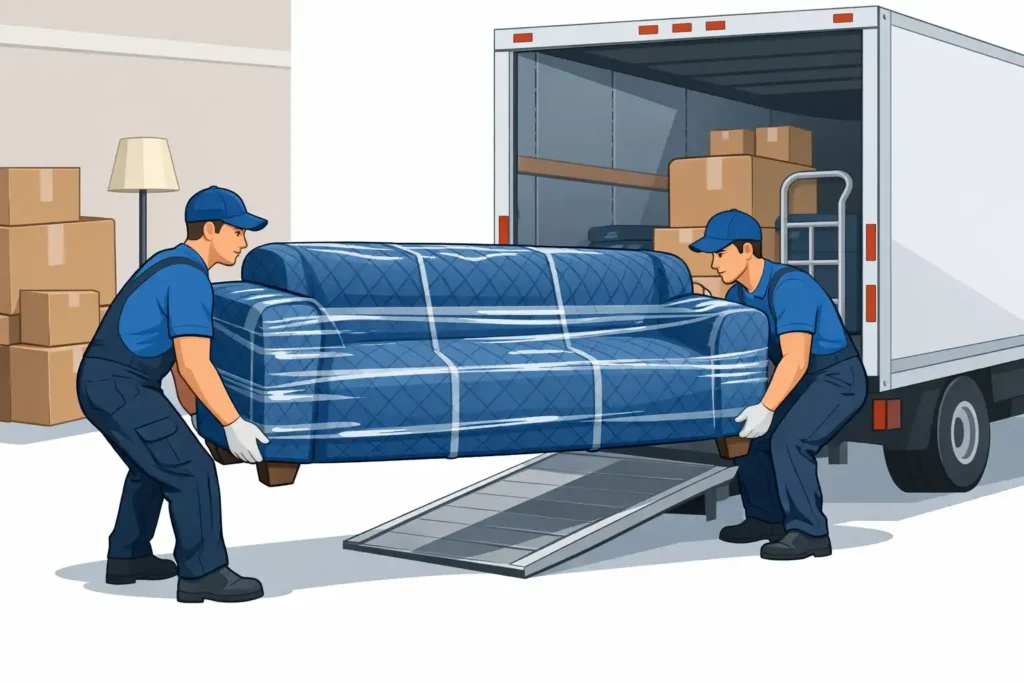
Moving a sofa is one of the most challenging parts of home relocation due to its size, weight, and delicate structure. Improper handling can lead to torn upholstery, broken frames, or personal injury. Whether you are relocating locally or long-distance, careful preparation is essential. If you are planning a professional move, choosing reliable Packers And Movers can significantly reduce the risk of damage and stress.
Understand Your Sofa Before Packing
Before you begin packing, it is critical to understand the construction, size, and vulnerabilities of your sofa. This assessment determines the packing materials required, manpower needed, and the safest way to move it through your home and into a vehicle.
Identify the Type and Structure of Your Sofa
Different sofa types require different handling approaches. Common types include:
- Fabric sofas
- Leather sofas
- Sectional or modular sofas
- Recliners and sofa-cum-beds
Some sofas have internal mechanisms, wooden frames, or metal joints that are more prone to damage during movement. Identifying these components early helps prevent structural stress during lifting and transport.
Measure Sofa Dimensions and Access Points
Accurate measurements help avoid last-minute complications.
- Measure length, width, and height of the sofa
- Measure doorways, staircases, elevators, and corridor turns
- Plan whether the sofa needs to be tilted vertically to pass through narrow spaces
This step reduces the risk of wall damage, stuck furniture, or forced handling.
Check for Detachable Parts
Many sofas have removable components such as:
- Legs
- Cushions
- Headrests
- Arm sections (in modular designs)
Removing detachable parts makes the sofa lighter, easier to wrap, and safer to move. All removed hardware should be stored together and labeled to avoid loss.
Clean the Sofa Before Packing
Dust, crumbs, and moisture trapped during packing can cause stains or odors.
- Vacuum fabric sofas thoroughly
- Wipe leather surfaces with a dry cloth
- Remove loose items such as pillows or throws
Cleaning before packing ensures the sofa remains hygienic and damage-free throughout transit.
Why This Step Matters
Understanding your sofa before packing:
- Prevents accidental structural damage
- Helps you choose correct packing materials
- Reduces labor effort and injury risk
- Ensures smooth navigation through tight spaces
This preparation phase directly impacts how safely the sofa can be packed, lifted, and transported.
Gather the Right Packing Materials for Sofa Moving
Using appropriate packing materials is essential to protect the sofa’s frame, upholstery, and edges from scratches, moisture, and impact during handling and transit. Inadequate or incorrect materials are a common cause of damage during relocation.
Essential Packing Materials for Sofa Protection
The following materials are commonly used to pack sofas safely:
- Moving blankets or furniture pads
Thick, quilted blankets provide a protective layer against scratches, dents, and pressure during lifting and loading. They are especially effective for fabric and leather upholstery. - Plastic stretch wrap
Stretch wrap helps secure blankets in place and protects the sofa from dust and moisture. It should always be applied over blankets, not directly on upholstery. - Bubble wrap or foam padding
Used for protecting vulnerable areas such as armrests, corners, legs, and exposed wooden or metal parts. - Corrugated cardboard sheets
Flat cardboard sheets are useful for reinforcing edges and corners where impact damage is most likely to occur. - Packing tape
Tape is used to secure padding and cardboard layers. It should never be applied directly to sofa fabric or leather, as it can leave residue or cause tearing.
Tools That Make Sofa Moving Safer
In addition to packing materials, certain tools help reduce physical strain and handling risks:
- Furniture sliders for moving sofas across floors
- Furniture dollies for transporting heavy sofas over longer distances
- Lifting straps to improve grip and weight distribution
These tools minimize the risk of floor damage and personal injury during the move.
Material Selection Based on Sofa Type
Sofa Type | Recommended Protection |
Fabric sofa | Moving blankets + stretch wrap |
Leather sofa | Moving blankets (no direct plastic contact) |
Sectional sofa | Individual wrapping for each section |
Recliner / sofa-bed | Extra padding around mechanical parts |
Why Using Proper Materials Is Critical
Using the right materials:
- Prevents upholstery tears and surface scratches
- Protects the internal frame and joints
- Reduces moisture-related damage
- Keeps the sofa stable during loading and transit
Proper material selection sets the foundation for safe packing, which directly affects the success of the entire moving process.
Understanding what transit insurance covers during house shifting is equally important, as it protects your sofa against accidental damage during loading, transit, or unloading.
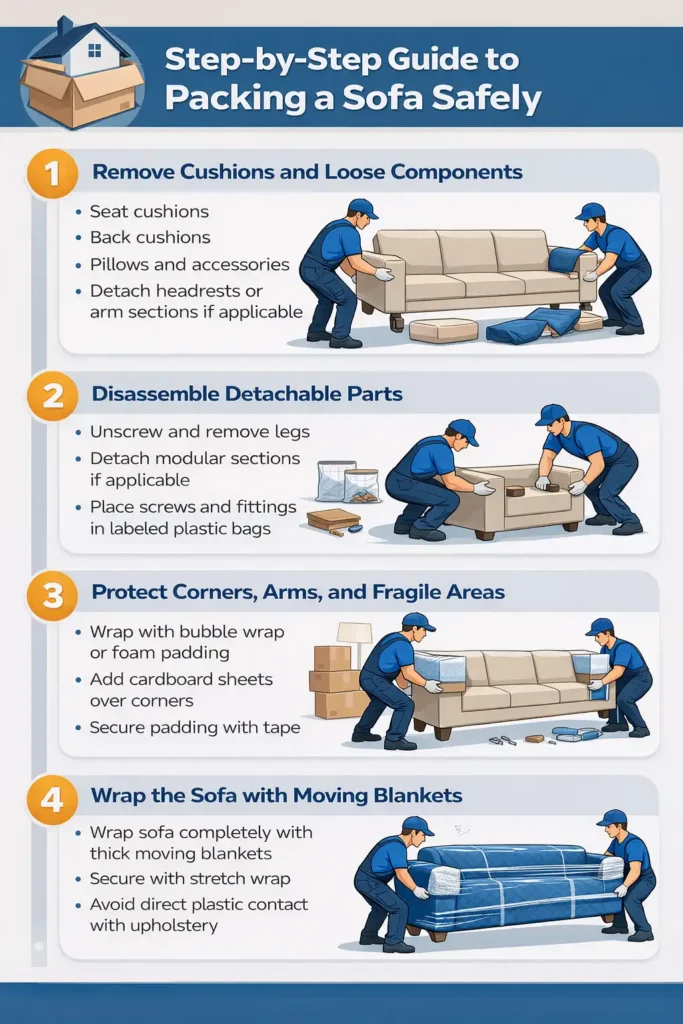
Step-by-Step Guide to Packing a Sofa Safely
Once the sofa has been assessed and the right packing materials are ready, the next step is to pack it methodically. Following a structured process reduces the risk of surface damage, structural stress, and handling errors during the move.
Step 1: Remove Cushions and Loose Components
Start by separating all removable parts:
- Seat cushions
- Back cushions
- Pillows and accessories
- Detachable headrests or arm sections
These components should be packed separately to reduce weight and ensure even protection.
Step 2: Disassemble Detachable Parts
If the sofa has removable legs or sections:
- Unscrew and remove legs
- Detach modular sections if applicable
- Place screws and fittings in labeled plastic bags
Disassembly makes the sofa easier to handle and lowers the risk of leg or joint breakage.
Step 3: Protect Corners, Arms, and Fragile Areas
Sofa arms, corners, and exposed wood or metal parts are highly vulnerable:
- Wrap these areas with bubble wrap or foam padding
- Add cardboard sheets over corners for impact resistance
- Secure padding with tape without touching upholstery
Extra protection in these areas prevents dents and fabric tearing.
Step 4: Wrap the Sofa with Moving Blankets
Cover the entire sofa with thick moving blankets:
- Ensure full coverage from top to bottom
- Overlap blankets to avoid exposed surfaces
- Keep blankets snug but not overly tight
For leather sofas, blanket protection is critical to avoid scratches and pressure marks.
Step 5: Secure with Stretch Wrap
After the blankets are in place:
- Wrap stretch film around the sofa to hold padding securely
- Ensure plastic wrap does not directly contact fabric or leather
- Avoid excessive tightening that could distort the frame
Stretch wrap helps keep all layers intact during movement.
Step 6: Pack Cushions Separately
Cushions should be packed individually:
- Wrap in plastic or place in mattress or sofa covers
- Stack upright to maintain shape
- Keep them away from sharp or heavy objects
This prevents deformation and keeps cushions clean.
Common Sofa Packing Mistakes to Avoid
- Wrapping plastic directly on upholstery
- Skipping corner and arm protection
- Leaving legs attached during transport
- Using tape on fabric or leather surfaces
Avoiding these mistakes significantly lowers the risk of transit damage.
How to Move a Sofa Without Causing Damage or Injury
After proper packing, safe handling becomes the primary risk factor. Sofas are bulky and heavy; incorrect lifting or movement techniques can result in upholstery damage, frame stress, wall damage, or personal injury.
Use Proper Lifting Techniques
Correct lifting posture reduces strain and improves control:
- Bend at the knees, not the waist
- Keep the back straight while lifting
- Hold the sofa close to the body
- Lift using leg strength rather than the lower back
These techniques are especially important when navigating stairs or uneven surfaces.
Move the Sofa With Assistance
Moving a sofa alone significantly increases risk. Best practices include:
- Using at least one helper for balance and coordination
- Assigning one person to guide movement through doors and corners
- Communicating clearly during lifts and turns
Team lifting improves stability and reduces accidental drops.
Use Furniture Sliders and Dollies
For horizontal movement across floors:
- Place furniture sliders under sofa legs or base
- Use a furniture dolly for long distances or heavy sofas
- Secure the sofa on the dolly to prevent slipping
These tools minimize floor damage and reduce physical effort.
Navigate Doorways, Hallways, and Stairs Safely
Tight spaces are common damage points:
- Tilt the sofa vertically to pass through narrow doorways
- Rotate slowly through corners and hallways
- Take stairs one step at a time, keeping the heavier end lower
Planning movement angles in advance prevents wall scuffs and frame twisting.
Avoid These Common Handling Errors
- Dragging the sofa directly on the floor
- Sudden drops or sharp turns
- Lifting without clear coordination
- Rushing through narrow spaces
Avoiding these errors protects both the sofa and the people moving it.
When Professional Help Becomes Necessary
For large, heavy, or high-value sofas:
- Multi-story buildings without elevators
- Narrow staircases or tight access points
- Recliners or sectional sofas with mechanisms
In such cases, professional handling reduces risk and ensures controlled movement.
For complex furniture handling in apartments or villas, hiring experienced packers and movers in Vijayawada ensures proper equipment, trained manpower, and safe execution.
Loading and Securing the Sofa in the Moving Vehicle
Even a well-packed sofa can suffer damage if it is loaded or secured incorrectly inside the moving vehicle. Proper placement and restraint are essential to prevent shifting, pressure damage, or frame distortion during transit.
Position the Sofa Correctly Inside the Truck
The placement of the sofa inside the vehicle directly affects its stability:
- Place the sofa against the side wall of the truck for support
- Keep the longest side aligned with the truck wall
- Avoid placing the sofa flat under heavy items
Standing the sofa upright against the wall helps distribute weight evenly and reduces pressure on cushions.
Add Padding Between the Sofa and Truck Surfaces
Direct contact with truck walls or floors can cause abrasion:
- Use moving blankets or pads between the sofa and truck wall
- Place cardboard sheets between adjacent furniture items
- Ensure no sharp edges or exposed metal touch the sofa surface
This additional buffer prevents scuffs and upholstery damage during vibration.
Secure the Sofa to Prevent Movement
Unsecured furniture can shift during braking or turns:
- Use ratchet straps or ropes to anchor the sofa to tie-down points
- Tighten straps enough to prevent movement, without crushing padding
- Recheck stability before closing the truck
Proper securing minimizes internal movement that can stress the sofa frame.
Avoid Placing Heavy Items on the Sofa
Heavy boxes or appliances placed on top can cause:
- Cushion compression
- Frame warping
- Permanent upholstery damage
Always keep heavy items separate and ensure weight is distributed evenly throughout the truck.
Checklist for Safe Sofa Loading
Loading Step | Purpose |
Place sofa against truck wall | Improves stability |
Add padding around sofa | Prevents abrasion |
Strap sofa securely | Stops shifting |
Keep heavy items separate | Prevents compression damage |
Why Proper Truck Securing Matters
Correct loading and securing:
- Prevents movement-related damage
- Protects the sofa’s internal structure
- Reduces risk during long-distance transport
- Ensures safe unloading at destination
This step is critical for maintaining sofa condition throughout the journey.
Unpacking, Reassembling, and Post-Move Sofa Care
The final stage of sofa relocation is just as important as packing and transport. Careless unpacking or incorrect reassembly can undo all prior precautions and cause avoidable damage.
Place the Sofa Before Unwrapping
Before removing any protective layers:
- Move the sofa directly to its intended location
- Ensure sufficient space for reassembly
- Avoid dragging the sofa after unwrapping
Positioning first reduces the need for repeated handling.
Unwrap the Sofa Systematically
Remove packing materials in the reverse order:
- Cut stretch wrap carefully to avoid fabric contact
- Remove moving blankets and padding slowly
- Keep cardboard and foam aside until inspection is complete
Controlled unwrapping helps identify any transit-related issues early.
Reassemble Detached Components Carefully
Once the sofa is fully unwrapped:
- Reattach legs, arms, or modular sections
- Use labeled hardware bags prepared earlier
- Tighten fittings securely, but avoid overtightening
Proper reassembly ensures structural stability and long-term comfort.
Inspect the Sofa for Damage
A thorough inspection should include:
- Upholstery for tears, stains, or abrasions
- Frame stability and joint alignment
- Cushion shape and firmness
Immediate inspection makes it easier to identify when and where damage may have occurred.
Post-Move Sofa Care Tips
After reassembly:
- Allow the sofa to air out before use
- Restore cushions to their original positions
- Avoid sitting on the sofa immediately if it feels compressed
These steps help the sofa regain its original shape and comfort.
Why Post-Move Care Matters
Proper unpacking and care:
- Prevent hidden damage from worsening
- Maintain upholstery appearance
- Preserve sofa lifespan after relocation
Completing this step carefully ensures your sofa remains in good condition long after the move.
Packing and moving a sofa safely is not just about strength—it is about planning, protection, and correct execution. From understanding the sofa’s structure and using appropriate packing materials to careful lifting, secure loading, and systematic unpacking, each step plays a critical role in preventing damage.
By following a structured approach and proven moving practices, you can protect your sofa’s upholstery, frame, and comfort during relocation. For heavy, high-value, or complex sofa designs, professional assistance further reduces risk and ensures peace of mind throughout the move.
A well-handled sofa move ultimately saves time, effort, and replacement costs—making careful preparation an essential part of any successful home relocation.
The overall cost of moving large furniture like sofas depends on factors such as distance, manpower, packing materials, and access conditions. You can review the detailed packers and movers cost guide to understand pricing better.
Packing and moving a sofa requires precision, the right materials, and safe handling techniques. If you want to avoid the risk of damage, delays, or physical strain, working with verified professionals can make the process smoother and safer.
Compare trusted Packers and Movers near you to ensure secure sofa packing, proper loading, and damage-free delivery.
Before finalizing any service provider, it is recommended to follow a proper checklist on how to choose the best packers and movers to avoid damage, delays, or hidden charges.