
How To Pack & Move Your Books Safely: A Complete Guide & Tutorial

Books are heavy, moisture-sensitive, and easily damaged if packed incorrectly. Whether you own a small home library or hundreds of academic books, using the right packing method is essential to avoid torn covers, bent spines, and mold damage during relocation. This step-by-step guide explains how to pack and move books safely, whether you’re handling the move yourself or hiring professional Packers and Movers for a local or long-distance relocation.
Why Books Need Special Care During Packing & Moving
Books are not fragile like glassware, but they are structurally vulnerable during transport. Their weight, paper composition, and binding make them prone to long-term damage if basic packing rules are ignored.
Common Mistakes People Make While Packing Books
One of the most common mistakes is packing books in large or oversized boxes. Books are extremely dense, and filling a large box can make it too heavy to lift safely, increasing the risk of box collapse and personal injur.
Another frequent error is overpacking boxes without considering weight distribution. Overfilled cartons can cause books at the bottom to compress, leading to warped covers and damaged bindings.
Risks of Improper Book Packing (Damage, Moisture, Spine Bending)
Improper packing exposes books to moisture, pressure, and incorrect orientation. High humidity or damp conditions can encourage mold growth on paper and bindings, especially during long storage or monsoon-season moves.
Incorrect placement—such as packing books with spines facing upward or pages pressed downward—can strain bindings and permanently bend spines during transit.
When DIY Book Packing Is Not Enough
DIY packing may not be suitable for rare, old, or valuable books. Such books often require individual wrapping and protective materials designed to prevent chemical reactions and surface abrasion. Without proper materials, everyday packing paper or tight stacking can cause
If you’re relocating in a metro city like Bangalore, hiring experienced packers and movers in Ahmedabad can help manage heavy book cartons safely.
Things You Need Before Packing Your Books
Having the right materials before you start packing books is critical. Using incorrect boxes or inadequate cushioning increases the risk of carton failure, spine damage, and moisture exposure during transport.
Right Type of Boxes for Books (Small vs Medium Boxes)
Books should always be packed in small, sturdy boxes rather than large cartons. Because books are heavy by nature, smaller boxes help control total weight and reduce the risk of the box tearing or becoming unsafe to lift.
Medium or large boxes filled with books can become unstable and difficult to handle, which increases the chance of dropping or stacking damage during loading and unloading.
Packing Materials Required (Bubble Wrap, Packing Paper, Tape)
Use packing paper or bubble wrap to cushion books and protect covers from rubbing against box walls or other books. These materials help absorb minor shocks during movement and prevent surface wear.
Strong packing tape should be used to reinforce the bottom seams of boxes. Since book cartons carry significant weight, extra taping reduces the risk of the box bottom splitting open during lifting.
Clear labeling materials such as permanent markers are essential to mark cartons as “Books” and indicate the destination room. Proper labeling improves handling accuracy and reduces unnecessary stacking pressure.
Optional Supplies for Rare & Old Books
For books that are old, collectible, or valuable, acid-free packing paper is recommended. This type of paper minimizes chemical reactions that can discolor pages or damage covers over time.
Additional cushioning layers may be used to keep rare books separate from standard volumes, reducing friction and pressure during transit.
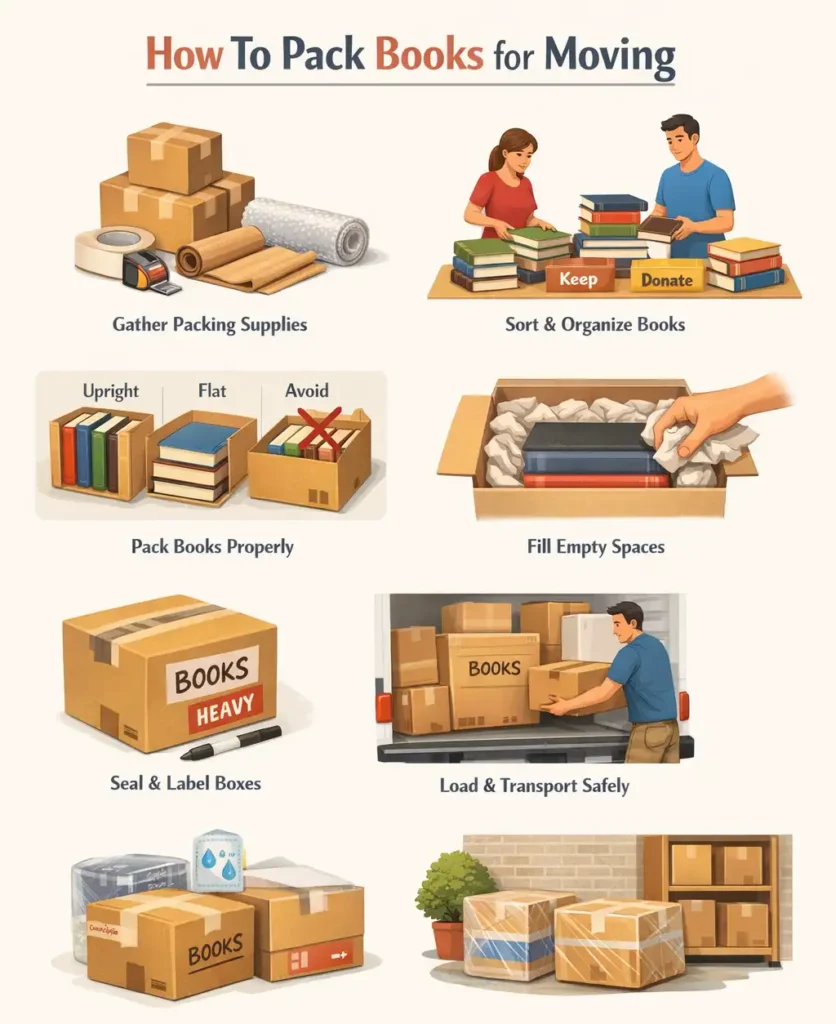
Step-by-Step Tutorial – How To Pack Books for Moving
Packing books correctly is less about speed and more about order, orientation, and weight control. Following a structured process helps prevent spine damage, cover bending, and moisture exposure during transit.
Step 1 – Sort and Declutter Your Book Collection
Before packing, sort through your book collection and separate titles you no longer need. Reducing the number of books being moved lowers total carton weight and simplifies packing and loading.
Decluttering also helps prioritize which books require extra protection, such as valuable, academic, or frequently used books.
Step 2 – Organize Books by Size, Weight, and Value
Books should be grouped based on size and binding type. Hardcovers, paperbacks, and oversized books should not be mixed randomly in the same carton, as uneven stacking can strain spines and covers.
Valuable or delicate books should be set aside for separate packing using additional protective materials.
Step 3 – Correct Way to Place Books Inside Boxes
Books can be packed in different orientations depending on their size and binding:
- Standard hardcovers can be placed upright with spines facing the box sides, similar to how they sit on a bookshelf. This reduces pressure on the binding.
- Oversized or heavy books should be packed flat, stacked in small layers to avoid stressing the spine.
- Books should not be packed with spines facing upward or pages pressed downward, as this can lead to warping during movement.
Step 4 – How to Fill Empty Spaces and Prevent Shifting
Any empty space inside the box should be filled with packing paper or bubble wrap. Gaps allow books to shift during transport, increasing the risk of bent covers and spine damage.
Books should fit snugly but not tightly enough to cause compression.
Step 5 – Sealing, Labeling, and Weight Management
Once packed, seal the box using strong tape, paying extra attention to the bottom seams. Reinforcing the base helps support the concentrated weight of books.
Each carton should be clearly labeled as “Books” and include room details. Proper labeling improves handling and prevents heavy cartons from being stacked incorrectly.
How To Pack Different Types of Books
Different books require slightly different packing approaches based on their binding strength, size, and weight. Using the correct method for each type helps prevent long-term damage during transport and storage.
Packing Hardcover Books Safely
Hardcover books are more rigid but still vulnerable to spine stress. They can be packed upright with the spines supported by the sides of the box, similar to their position on a bookshelf. This helps distribute pressure evenly along the binding.
For heavier hardcovers, packing them flat in small stacks is also acceptable, as it reduces vertical pressure on the spine.
Packing Paperbacks Without Bending Covers
Paperbacks are more flexible and prone to bent covers. These books are best packed flat in layers, which helps keep covers straight and prevents curling during movement.
Light cushioning between layers can further reduce friction and surface wear.
Packing School & Academic Books
School and academic books are often heavier and used frequently. These should be packed in small boxes only, following the same orientation rules as hardcovers or paperbacks based on size. Proper weight control reduces the risk of box failure during lifting.
Packing Coffee Table Books & Large Volumes
Oversized books, including coffee table books and large reference volumes, should always be packed flat. Packing them upright can place uneven strain on the spine due to their size and weight.
Because of their dimensions, these books should be placed at the bottom of the box with cushioning above.
How To Pack Rare, Antique, or Collector’s Books
Rare or collectible books require individual wrapping to protect surfaces and bindings. Acid-free paper is recommended to minimize chemical reactions and discoloration over time.
These books should not be packed tightly with regular volumes, as pressure and friction can cause permanent damage.
Tips to Protect Books from Moisture, Heat & Damage
Books are highly sensitive to humidity, temperature changes, and prolonged exposure to damp conditions. During relocation—especially long-distance or delayed unpacking—environmental protection becomes just as important as physical packing.
Preventing Moisture Damage During Monsoon Moves
High humidity increases the risk of mold growth on paper and bindings. Moisture can also cause pages to warp and covers to weaken, particularly when books remain packed for extended periods.
To reduce this risk, books must be packed only when completely dry and kept away from damp floors or wet loading areas during transit.
Understanding what transit insurance covers during house shifting is especially important when transporting books over long distances or during monsoon conditions.
Using Plastic Liners and Desiccants
Adding a plastic liner inside the box or wrapping books in plastic provides an extra barrier against moisture exposure during transport. This is especially useful when moving during rainy conditions or through humid regions.
Desiccants can also be placed inside boxes to help absorb excess moisture, provided they do not come into direct contact with book surfaces.
Avoiding Heat Exposure During Long-Distance Moves
Excessive heat can dry out paper and weaken adhesives used in bindings. Books should be transported and stored in environments with stable, moderate temperatures rather than enclosed spaces exposed to prolonged heat.
Avoid leaving book cartons in parked vehicles or non-ventilated storage areas for long durations.
Storage Tips If Books Are Not Unpacked Immediately
If unpacking is delayed, book boxes should be stored in a dry, well-ventilated area. Prolonged storage in damp or fluctuating environments increases the likelihood of deterioration and mold development.
Boxes should remain sealed but checked periodically for moisture buildup.
How Packers and Movers Handle Book Packing
Professional packers and movers follow weight control, material selection, and loading discipline when handling books. Their methods are designed to reduce physical strain, prevent carton failure, and minimize damage during transit.
Professional Packing Techniques Used by Movers
Books are typically packed in small, reinforced cartons to control weight and ensure safe handling. Movers line the base of boxes with cushioning material and fill empty spaces to prevent movement inside the carton during transport.
Books are arranged carefully to avoid spine stress, and cartons are sealed securely to withstand lifting and stacking.
Special Boxes and Weight Distribution Methods
Professional movers prioritize even weight distribution inside each box. By limiting the number of books per carton and avoiding mixed heavy–light stacking, movers reduce the risk of box collapse and handling injuries.
Heavy book cartons are clearly labeled so they can be placed appropriately during loading.
When Hiring Packers & Movers Is a Better Option
Hiring professionals is often more suitable when moving large personal libraries, academic collections, or heavy volumes. Managing multiple heavy boxes without proper equipment or experience increases the risk of injury and damage.
Professional handling also becomes important during long-distance moves where books remain packed for extended periods.
Before finalizing any service provider, it’s important to know how to choose reliable packers and movers to avoid damage or poor handling.
Cost vs Safety – Is Professional Book Packing Worth It?
Professional packing reduces the likelihood of spine damage, moisture exposure, and improper stacking during transit. While there is an added cost, the structured packing process helps protect books from common relocation-related risks.
Professional packing costs vary depending on volume and distance, which is explained in detail in our packers and movers cost guide.
Loading, Transporting & Unpacking Books Safely
Even well-packed books can get damaged if they are loaded incorrectly, placed poorly during transit, or unpacked carelessly. Proper handling at each stage helps preserve book condition until they are back on the shelf.
Correct Way to Load Book Boxes into the Moving Truck
Book cartons should be placed on the floor of the moving truck, not on top of lighter or fragile items. This provides stability and prevents crushing of other belongings while keeping heavy boxes from shifting during transit.
Boxes should be aligned tightly to limit movement but not forced into unstable stacks.
Placement of Book Cartons During Transit
During transport, book boxes should remain secured and immobile. Loose placement can cause cartons to slide, leading to internal shifting and spine damage. Heavy boxes should not be stacked too high, as excessive vertical pressure can strain both cartons and bindings.
Clear labeling helps ensure that book cartons are handled with appropriate care.
Safe Unpacking Tips to Avoid Spine Damage
When unpacking, boxes should be opened carefully without cutting too deep, as this can damage book covers. Books should be removed gently and placed upright or flat, following the same orientation used during packing.
Avoid forcing books back onto shelves immediately if they feel damp or cold from transit.
Post-Move Book Care & Reorganization
After unpacking, books should be arranged neatly in a dry, stable environment. Proper air circulation and careful handling help restore books to their normal condition and reduce the risk of delayed moisture damage.
FAQs on Packing and Moving Books
Books should be packed in a way that keeps the total box weight manageable for lifting. Small boxes filled only partway are recommended to prevent strain and reduce the risk of box failure during handling. Professional movers also follow documented packing standards, which you can verify by checking how packers and movers ensure safe packing.
Yes, books can be packed in rolling suitcases, especially when moving short distances. Suitcases with wheels help transport heavy books without lifting strain and are commonly used for dense items like books.
Bubble wrap can be used safely for books, particularly for delicate, valuable, or hardcover volumes. It provides cushioning and helps protect covers and corners from impact during movement.
For long-distance moves, books should be packed in strong, sealed cartons with moisture protection. Additional cushioning and careful sealing help protect books during extended transit and storage periods.
Conclusion
Packing and moving books safely requires careful planning, the right materials, and proper handling at every stage of the relocation process. By using small, sturdy boxes, following correct placement methods, and protecting books from moisture and pressure, you can significantly reduce the risk of damage during transit. Whether you’re moving a few shelves or an entire home library, applying these proven packing practices helps preserve book condition and makes unpacking easier at your new location. Taking a structured, informed approach ensures your books remain protected throughout the move and beyond.
Need Help Packing and Moving Your Books?
Packing books correctly takes time, effort, and careful handling—especially when you’re dealing with heavy cartons, long-distance moves, or valuable collections. If you want to avoid lifting strain, carton damage, or improper stacking during transit, professional assistance can make the process easier.
6 Packers and Movers helps you connect with verified moving professionals who follow proper packing and handling practices for books and other household items. You can compare options, understand service scope, and choose movers that fit your relocation needs.