
Last-Minute Moving Checklist (24–48 Hours Before Moving Day)
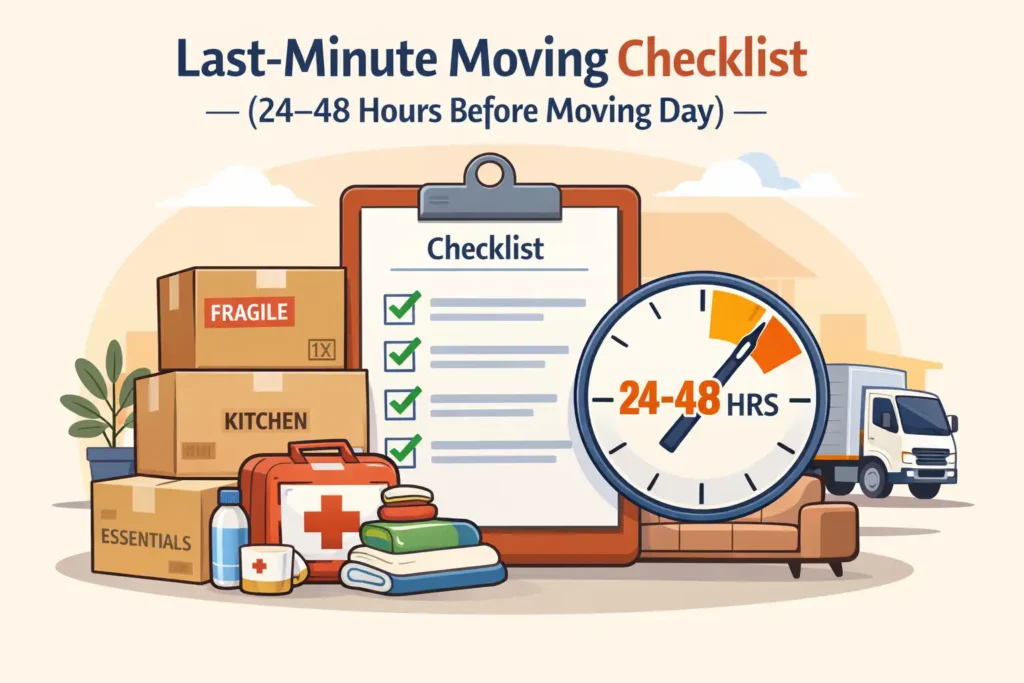
Moving in the final 24–48 hours can feel overwhelming, especially if multiple tasks are still pending. A structured last-minute checklist helps you avoid forgotten items, delays, and damage during transit. If you’re planning to hire professional Packers And Movers, following this checklist ensures smoother coordination, safer packing, and a stress-free moving day.
1. Final Packing & Sorting Checklist (Day −2 to Day −1)
During the last 48 hours before moving day, most households still rely on daily-use items. Instead of rushing on moving morning, experts recommend packing non-essential items earlier and keeping essentials separately to avoid confusion and delays. For last-minute relocations, professional packers and movers services help speed up packing without compromising safety.
What to Pack at the Last Minute
Focus only on items you’ll use until the final day:
- Clothes for the next 1–2 days
- Toiletries, towels, and grooming items
- Phone chargers, power banks, and basic electronics
- Kitchen essentials like cups, plates, and water bottles
Keeping these items unpacked until the last day reduces unnecessary box opening later.
Create a Separate “Essentials Box”
Movers advise preparing a clearly labeled essentials box that stays with you, not inside the moving truck:
- Important documents (ID proofs, agreements, insurance papers)
- Medications and basic first-aid supplies
- Snacks, drinking water, and baby/pet supplies (if applicable)
- One change of clothes per family member
This box helps you settle in comfortably on the first night without searching through multiple cartons.
Sort, Declutter & Dispose Responsibly
Last-minute sorting prevents unnecessary loading and unloading:
- Dispose of expired food, cleaning liquids, and opened consumables
- Separate items to donate, discard, or sell
- Do not pack flammable or hazardous items, as movers typically refuse to transport them
Removing unwanted items at this stage reduces moving volume and handling risks.
Label Boxes Clearly
To avoid mix-ups during unloading:
- Label boxes with room names
- Mark fragile cartons clearly
- Indicate “Open First” on priority boxes
Clear labeling helps movers place boxes directly in the correct rooms, speeding up unpacking.
2. Confirm Packers and Movers Arrangements
The last 24–48 hours before moving day are critical for coordination with your packers and movers. Reconfirming details helps avoid delays, miscommunication, and last-minute surprises on moving day. If you haven’t finalized a mover yet, review this step-by-step guide on choosing reliable packers and movers before moving day. Moving checklists consistently recommend final confirmation during this window to ensure everything goes as planned.
Reconfirm Date, Time & Contact Details
Ensure both parties are aligned on logistics:
- Confirm the exact moving date and reporting time
- Recheck pickup and drop addresses with nearby landmarks
- Save the supervisor or coordinator’s phone number
- Share an alternate contact number for emergencies
Clear communication at this stage reduces waiting time and prevents route or access issues on moving day.
Verify Manpower, Vehicle & Equipment
Before the truck arrives, confirm:
- Number of movers assigned to your move
- Type and size of the moving vehicle
- Availability of packing materials for last-minute items
- Special handling for fragile, bulky, or high-value goods
Verifying these details ensures the moving team arrives fully prepared and avoids under-allocation of resources.
Discuss Payment & Documentation
Financial clarity prevents disputes:
- Confirm total charges and balance amount
- Recheck payment mode (cash, UPI, bank transfer)
- Ask about receipt or invoice issuance
- Review inventory list process before loading
Movers typically prepare an itemized inventory before loading, which helps track goods during transit and delivery. Understanding packers and movers charges and payment structure in advance helps avoid last-minute disputes.
Share Building & Access Information
Inform movers in advance about:
- Lift availability and working hours
- Staircase access if lifts are unavailable
- Parking restrictions or entry permits
- Society rules or security procedures
Providing this information early allows movers to plan loading efficiently and avoid unnecessary delays.
3. Appliances, Furniture & Utility Prep Checklist
Large appliances and furniture require advance preparation within the last 24–48 hours to prevent water leakage, electrical damage, and handling issues. Moving checklists highlight that improper appliance prep is one of the most common causes of damage during transit.
Prepare Major Appliances in Advance
Certain appliances must be disconnected and dried before moving:
- Refrigerator & freezer: Empty contents and defrost at least 24 hours before the move
- Washing machine: Drain water from pipes and hoses
- Dishwasher: Empty and dry internal components
- Water purifiers / RO units: Drain stored water completely
Defrosting and draining appliances prevents internal damage, odor buildup, and water spillage during transportation.
Disconnect Utilities Safely
Before movers arrive:
- Switch off main power supply
- Turn off gas connection and cylinder regulator
- Close water valves connected to appliances
- Coil wires, pipes, and hoses securely
Proper disconnection reduces safety risks and speeds up the loading process.
Dismantle Furniture Where Required
To make furniture easier to handle:
- Dismantle beds, wardrobes, tables, and large units
- Remove detachable glass panels or shelves
- Keep screws, bolts, and fittings in labeled pouches
- Tape small hardware bags to the furniture frame
Dismantling bulky furniture helps prevent scratches, breakage, and space issues inside the moving truck.
Secure Loose Parts & Cables
Loose components can easily get lost:
- Bundle electrical cords and label them
- Secure moving parts with tape or stretch wrap
- Remove batteries from devices where applicable
This step ensures easier reinstallation and reduces missing-item issues after unloading.
4. Important Documents, Valuables & Essentials Kit
Moving guidelines consistently advise keeping important documents and high-value items with you, instead of loading them onto the moving truck. This reduces the risk of loss, damage, or misplacement during transit, especially in last-minute moves.
Keep Critical Documents Separately
Prepare a dedicated folder or bag for:
- Identity proofs and personal records
- Property papers, rental agreements, and insurance documents
- Bank documents and cheque books
- School or office-related certificates
These documents should travel with you and remain accessible throughout the move.
Secure Valuables & Electronics
High-value items should never be packed inside general cartons:
- Jewellery, cash, and watches
- Laptops, tablets, cameras, and external drives
- Important data backups and hard disks
Handling these items personally minimizes risk and ensures immediate access after reaching your new home. For other household goods, knowing what transit insurance covers during house shifting adds an extra layer of protection.
Prepare a Personal Essentials Kit
An essentials kit helps you manage the first day comfortably without unpacking everything:
- Prescribed medicines and basic first-aid items
- Phone chargers, power banks, and extension cords
- Toiletries, towels, and handwash
- Snacks, drinking water, and basic utensils
Experts recommend keeping this kit clearly labeled and separate from other moving boxes.
Items to Avoid Loading with Movers
Movers usually advise against transporting:
- Important documents
- Valuables and cash
- Hazardous or flammable items
- Perishable food
Keeping these items aside avoids delays and potential disputes on delivery day.
5. Home Cleaning & Handover Preparation
In the final 24–48 hours before moving, preparing your home for handover is just as important as packing. Moving checklists recommend completing cleaning, meter readings, and access formalities before movers arrive to avoid last-minute rush and disputes.
Complete Basic Cleaning Before Moving Day
Focus on essential cleaning tasks:
- Sweep and mop all rooms
- Clean kitchen counters and cabinets
- Sanitize bathrooms and balconies
- Remove leftover trash and packing debris
Completing cleaning in advance helps ensure a smooth handover and avoids return visits after the move.
Record Meter Readings & Utility Status
Before vacating the property:
- Note electricity meter readings
- Record water and gas meter details
- Take timestamped photos for reference
Documenting meter readings helps prevent billing disputes after you vacate the premises.
Remove Fixtures & Temporary Installations
Ensure the home is left in acceptable condition:
- Remove nails, hooks, and adhesive mounts
- Detach temporary shelves or decorations
- Fill minor holes if required by agreement
This step is commonly recommended during final walkthroughs to meet landlord or society expectations.
Hand Over Keys & Access Items
Prepare all access-related items in advance:
- Main door and spare keys
- Parking remotes and access cards
- Society or security passes
Keeping these items ready avoids confusion and delays during final handover.
6. Moving Day Logistics & Coordination Checklist
Effective coordination on moving day plays a major role in preventing delays, damage, and confusion. Moving checklists emphasize planning access, supervision, and on-ground coordination in the final 24–48 hours to ensure smooth execution.
Arrange Lift, Parking & Entry Access
Before moving day:
- Reserve lift access for the scheduled time
- Allocate parking space for the moving vehicle
- Inform building security about truck entry
- Obtain any required entry permissions or passes
Advance access arrangements help movers work efficiently without interruptions or waiting time.
Inform Neighbours & Society Management
To avoid inconvenience:
- Notify neighbours about moving time
- Inform society or apartment management
- Share expected duration of loading activity
Prior communication helps prevent complaints and ensures smoother coordination during loading.
Supervise Loading & Inventory Preparation
Active supervision is recommended:
- Ensure boxes are loaded room-wise
- Verify fragile items are handled carefully
- Cross-check inventory list during loading
- Confirm item count before truck departure
Inventory verification helps track belongings and reduces the risk of missing items during delivery. If you’re relocating within the city, hiring experienced packers and movers in Bangalore ensures faster coordination during last-minute moves.
Keep Cash & Essentials Handy
On moving day, keep:
- Small cash for tips or emergency expenses
- Phone fully charged with power bank backup
- Important documents and essentials kit with you
Keeping these items accessible ensures you can handle on-the-spot requirements without stress.
7. Address Updates & Last-Minute Notifications
In the final 24–48 hours before moving, completing essential address updates and service notifications helps avoid service disruptions and missed communications. Moving checklists recommend handling critical updates before moving day, as these tasks are often overlooked during last-minute packing.
Notify Key Individuals & Authorities
Ensure important contacts are informed about your move:
- Landlord or property manager
- Workplace or employer (if required)
- Close family members and emergency contacts
Timely notification helps avoid miscommunication and ensures smooth coordination after relocation.
Update Address for Essential Services
Prioritize address updates for:
- Banks and financial institutions
- Insurance providers
- Subscription-based services and deliveries
- Online shopping and courier platforms
Updating your address in advance reduces the risk of missed documents or deliveries after moving.
Internet, Cable & Utility Service Changes
Before moving:
- Schedule internet and cable disconnection or transfer
- Confirm new installation dates if relocating long-distance
- Note customer care reference numbers for follow-ups
Service scheduling ahead of time helps maintain connectivity at your new home with minimal downtime.
Keep Confirmation Records Handy
Maintain digital or printed records of:
- Service change requests
- Disconnection confirmations
- Reference or ticket numbers
These records are useful if service-related issues arise after the move.
8. Final Walk-Through Before Locking the House
A final walk-through in the last few hours before departure is one of the most important steps in the moving process. Moving checklists consistently recommend inspecting every area of the home to ensure nothing is left behind and all safety checks are completed.
Check Every Room, Storage Space & Balcony
Before locking up:
- Inspect all rooms one by one
- Check wardrobes, cabinets, and drawers
- Look inside kitchen shelves and refrigerator
- Inspect balconies, lofts, and storage areas
This step helps catch forgotten items that are commonly missed during rushed moves.
Switch Off Utilities & Secure the Property
Ensure the home is left safe:
- Turn off main electricity supply
- Close gas valve or regulator
- Shut all water taps and valves
- Switch off lights and appliances
Shutting down utilities reduces safety risks and prevents accidental damage after vacating the property.
Lock Doors & Windows Properly
Before leaving:
- Close and lock all doors and windows
- Secure balcony and terrace access
- Lock gates or external entrances
Proper locking ensures property security until handover or the next occupant arrives.
Carry Keys & Essentials With You
Do not leave critical items behind:
- Original house keys
- Essentials box and documents folder
- Phone, wallet, and ID proofs
Always carry these items personally instead of placing them in moving cartons.
Conclusion: Stay Calm, Stay Organized, Move Confidently
The final 24–48 hours before moving day are often the most stressful, but a structured last-minute moving checklist helps you stay in control. By completing essential packing, confirming mover arrangements, preparing appliances, securing documents, coordinating logistics, and performing a final walkthrough, you significantly reduce the chances of delays, damage, or forgotten items.
Following a time-bound checklist allows professional movers to work efficiently while ensuring your belongings, documents, and home handover are managed responsibly. Whether you’re relocating locally or long-distance, preparation during these final hours plays a critical role in how smoothly your move unfolds.
If you’re planning to relocate soon, working with experienced packers and movers and using a reliable checklist like this can help ensure a safer, faster, and stress-free moving experience.
Moving at the last minute doesn’t have to be stressful. With 6 Packers And Movers, you get experienced professionals, verified service partners, and end-to-end moving support you can rely on.