
Packers and Movers Loading & Transportation Process
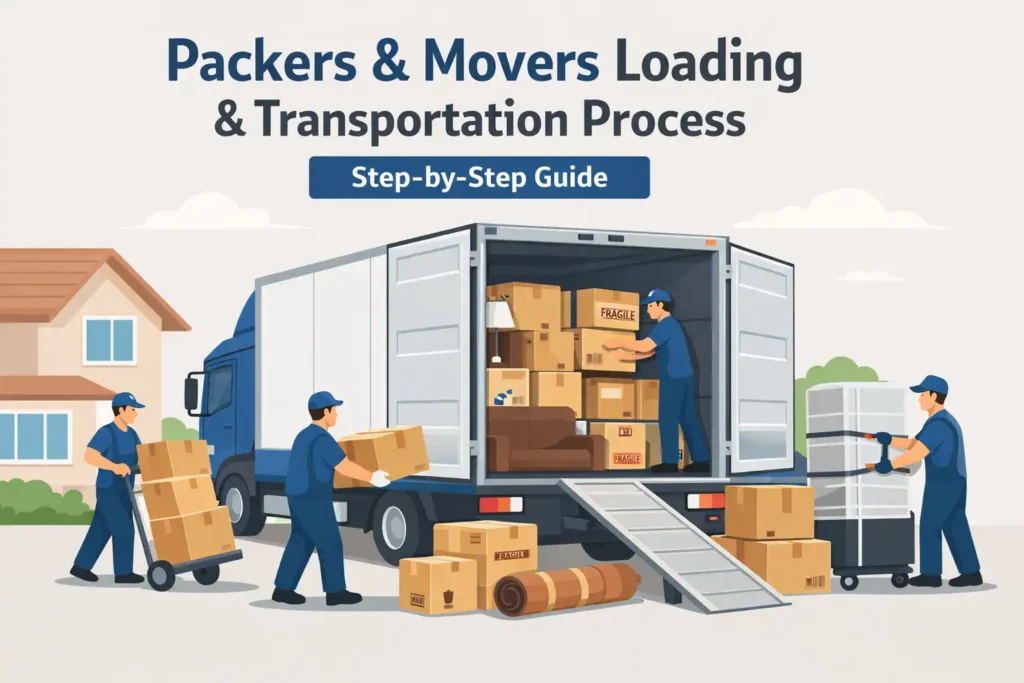
The loading and transportation process is a critical phase in any relocation, where packed household or commercial goods are systematically moved from the origin location to the destination. Professional Packers And Movers follow a structured workflow that includes pre-loading checks, careful placement of goods inside the transport vehicle, and secure transportation to minimize transit-related risks. This step ensures that items packed earlier are handled correctly, balanced properly inside the truck, and delivered safely without damage or loss during movement.
Professional relocation services treat loading and transportation as distinct but closely connected stages within the overall shifting process, ensuring accountability, inventory control, and safe handling from pickup to delivery. These stages are part of the overall packing and moving process, which follows a defined sequence from packing to delivery.
Step – 1: Pre-Loading Preparation and Site Readiness
Before the physical loading of goods begins, professional packers and movers carry out pre-loading preparation to ensure the site is safe, accessible, and ready for smooth movement of items. This stage focuses on coordination, verification, and risk prevention so that loading can be completed efficiently without delays or damage.
A structured pre-loading setup is considered a standard part of the relocation workflow, as it helps movers maintain control over inventory, vehicle placement, and manpower deployment
Inventory Verification and Label Cross-Check
Before loading starts, movers verify that all packed items match the prepared inventory list.
- Ensures only documented items are loaded into the vehicle
- Helps track goods during transportation and unloading
- Reduces the risk of missing or misplaced cartons
This inventory-based approach is commonly followed to maintain transparency and accountability throughout the move, especially when working with professional movers.
Parking and Vehicle Access Assessment
Movers assess parking availability and access points near the pickup location.
- Ensures the transport vehicle can be positioned close to the entrance
- Minimizes unnecessary carrying distance
- Helps avoid delays caused by narrow lanes or restricted access
Proper vehicle placement is an essential operational step before loading begins
Floor, Lift, and Entryway Protection
To prevent property damage during loading, protective measures are put in place.
- Floors and corridors may be covered
- Door frames and lift interiors are safeguarded
- Common areas are protected from scratches or impact
This preparation supports safe movement of goods from inside the premises to the transport vehicle
Team Coordination and Loading Plan
Before lifting begins, the loading team aligns on the loading sequence.
- Assignment of roles for handling heavy and fragile items
- Planning the order in which goods will be moved out
- Coordination between packing staff and loading crew
Such planning ensures that heavier items are managed correctly and lighter or fragile goods are not exposed to unnecessary pressure during loading
Step – 2: Systematic Loading Process at Origin Location
Once the site is prepared, professional packers and movers begin the systematic loading process, where packed goods are transferred from the premises into the transport vehicle in a planned sequence. This stage focuses on space optimization, load stability, and minimizing the risk of damage during transit. Loading is not done randomly; it follows an established order to maintain balance and safety inside the truck.
The loading stage is treated as a controlled operation within the relocation process to ensure that goods remain secure throughout transportation.
Planned Loading Sequence
Movers follow a specific order while loading items into the vehicle.
- Heavy and bulky items are loaded first
- Medium-sized cartons are placed next
- Lightweight and fragile items are loaded last
This sequence helps distribute weight evenly and prevents pressure on delicate goods.
Use of Handling Tools and Equipment
Professional movers use basic material-handling tools to reduce physical strain and improve safety.
- Trolleys and dollies for heavy cartons
- Ramps for smooth movement into the truck
- Manual lifting techniques by trained staff
The use of handling tools improves efficiency and reduces the chances of accidental drops during loading.
Strategic Placement Inside the Transport Vehicle
Goods are placed inside the truck in a structured manner.
- Heavier items are positioned against the walls of the vehicle
- Cartons are stacked to maximize available space
- Empty gaps are minimized to avoid movement during transit
Strategic placement plays a key role in maintaining load stability while the vehicle is in motion.
Initial Load Securing During Loading
As items are placed, movers begin securing the load.
- Goods are aligned to reduce shifting
- Padding between items helps absorb movement
- Placement is adjusted continuously during loading
This step ensures that the load remains compact and controlled before final securing is completed.
Step – 3: Handling of Fragile, Heavy, and Special Items
Certain household and commercial goods require special attention during loading due to their weight, structure, or vulnerability to damage. Professional packers and movers follow item-specific handling practices during the loading phase to reduce the risk of breakage, impact damage, or imbalance inside the transport vehicle. These practices are integrated into the standard relocation workflow and are executed by trained staff.
Special-item handling is considered a distinct part of the loading process in professional relocation services.
Loading of Fragile Items
Fragile goods are loaded with additional care to prevent shock and pressure.
- Fragile cartons are clearly identified before loading
- Such items are placed away from heavy goods
- Cartons are positioned on top layers inside the truck
This approach reduces the risk of damage caused by weight or movement during transportation.
Handling Heavy and Bulky Furniture
Heavy furniture items are managed separately during loading.
- Items like beds, wardrobes, and sofas are moved first
- Large pieces are positioned against the truck’s inner walls
- Weight distribution is considered to maintain vehicle balance
Placing heavy goods at the base helps stabilize the overall load during transit.
Appliances and Electronic Items
Household appliances and electronics require stable placement.
- Appliances are loaded in upright positions where required
- Adequate spacing is maintained between appliances and other goods
- Placement avoids direct pressure from heavier items
This loading method helps protect sensitive components during movement.
Special Items and High-Value Goods
Certain items are treated as special consignments.
- High-value or delicate items are handled separately
- Placement is planned to minimize vibration and movement
- Such items are usually unloaded first at the destination
Handling special goods separately improves control and accountability throughout the move.
For high-value items, understanding what transit insurance covers during house shifting is essential before transportation begins.
Step – 4: Vehicle Selection and Load Securing Methods
After goods are systematically loaded, professional packers and movers focus on selecting the appropriate transport vehicle and securing the load to ensure stability during transit. Vehicle suitability and proper load restraint are critical factors in preventing internal movement, impact damage, and imbalance while the vehicle is in motion.
Vehicle selection and load securing are treated as essential operational steps within the transportation phase of relocation.
Selection of the Right Transport Vehicle
The type and size of the vehicle are chosen based on the volume and nature of goods.
- Vehicle size is matched with the total inventory
- Enclosed trucks are used to protect goods from dust and weather
- Dedicated vehicles are commonly used for full-load movements
Choosing an appropriately sized vehicle helps avoid overloading or excessive empty space inside the truck.
Internal Load Arrangement Before Securing
Before final restraint, movers reassess the internal arrangement.
- Goods are aligned to form compact stacks
- Weight is distributed evenly across the truck floor
- Gaps between items are minimized
This step ensures that the load remains balanced before securing materials are applied.
Use of Securing Materials
Once alignment is complete, movers secure the goods to restrict movement.
- Ropes or belts are used to tie goods in place
- Padding materials act as buffers between items
- Securing is done in layers as per load height
Proper load restraint helps prevent shifting during braking, turning, or uneven road conditions.
Weather and Transit Protection Measures
Additional precautions are taken to protect goods during transit.
- Goods are covered to protect against dust and moisture
- Vehicle doors are sealed after loading
- Final checks are conducted before departure
These measures help maintain the condition of goods throughout the transportation journey.
Step – 5: Transportation and In-Transit Safety Management
Once loading and load securing are completed, the relocation process moves into the transportation phase, where goods are transferred from the origin location to the destination. During this stage, professional packers and movers focus on route planning, vehicle handling, and continuous monitoring to reduce transit-related risks. Transportation is managed as a controlled operation to maintain the safety and integrity of the loaded goods.
The transportation stage is a defined step within the standard packers and movers workflow and follows loading as a separate operational phase.
Route Planning and Transit Scheduling
Before departure, the route and travel timeline are planned.
- Routes are selected to ensure smooth vehicle movement
- Transit time is estimated based on distance and location
- Known access restrictions are considered
Planned routing helps reduce unnecessary delays and minimizes prolonged exposure of goods during transit.
Role of the Driver During Transportation
Transportation is handled by experienced drivers familiar with long-distance and local movements.
- Drivers are responsible for safe vehicle handling
- Sudden braking and sharp turns are avoided
- Speed is regulated to maintain load stability
Controlled driving practices help reduce internal movement of goods inside the truck.
In-Transit Load Stability Monitoring
Although the vehicle is sealed, load stability remains a priority.
- Properly secured goods limit internal shifting
- Vehicle checks may be conducted during long journeys
- Communication is maintained regarding transit progress
Load securing completed during loading plays a critical role in maintaining safety throughout transportation.
Coordination and Communication During Transit
Movers maintain coordination until delivery.
- Customers are informed about transit progress
- Delivery timelines are aligned with destination readiness
- Transportation updates support smoother unloading coordination
Effective communication ensures a seamless transition from transportation to unloading.
Step – 6: Unloading Process at Destination Location
After the transportation phase is completed, professional packers and movers begin the unloading process at the destination. Unloading is carried out in a planned sequence to ensure that goods are removed from the vehicle safely and placed correctly inside the new premises. This stage focuses on control, verification, and preventing damage after transit.
Unloading is recognized as a distinct step that follows transportation in the standard relocation workflow.
Pre-Unloading Inspection
Before unloading starts, movers perform a brief inspection.
- Vehicle seals are checked
- Visible carton condition is reviewed
- Access points at the destination are assessed
This inspection helps ensure that unloading begins in a controlled manner.
Planned Unloading Sequence
Goods are unloaded in a structured order.
- Lightweight and fragile items are removed first
- Medium cartons follow
- Heavy furniture and appliances are unloaded last
This reverse sequence reduces the risk of damage and allows better placement inside the premises.
Safe Placement Inside the Destination Premises
As goods are unloaded, they are placed according to convenience.
- Cartons are moved into designated rooms
- Furniture is positioned in planned areas
- Fragile items are kept aside for careful handling
Proper placement during unloading supports an efficient unpacking process.
Coordination with Unpacking or Further Services
Unloading is often coordinated with additional services.
- Inventory is cross-checked during unloading
- Unpacking teams may take over if included
- Item condition is reviewed before sign-off
This coordination ensures continuity between unloading and post-move activities.
Step – 7: Post-Transportation Verification and Handover
The final stage of the loading and transportation process is post-transportation verification and handover, where professional packers and movers complete formal checks and close the relocation cycle. This step ensures that all transported goods are accounted for and that delivery is acknowledged at the destination.
Post-transport verification is a standard part of the packers and movers workflow, providing closure and accountability after unloading.
Final Inventory Cross-Check
Once unloading is complete, the inventory list is reviewed.
- Loaded items are matched with delivered items
- Carton counts are verified
- Any discrepancies are identified immediately
Inventory reconciliation helps confirm that all goods transported have reached the destination.
Condition Review After Delivery
Movers and customers review the condition of goods.
- Visible damage, if any, is noted
- Carton seals are checked
- Item placement is reviewed before unpacking
This review allows concerns to be identified at the time of delivery.
Delivery Acknowledgement and Documentation
Formal handover is completed after verification.
- Delivery acknowledgement is obtained
- Inventory sheets are signed
- Service completion is documented
This documentation confirms that the transportation and unloading stages have been completed.
Issue Reporting and Service Closure
If any issues are observed, they are reported at this stage.
- Concerns are raised before final sign-off
- Documentation supports resolution processes
- The relocation cycle is formally closed
Structured handover helps ensure transparency and accountability in the relocation service.
For local and intercity relocations, working with experienced packers and movers in Ahmedabad helps ensure proper loading, transportation, and post-move verification.