
Professional Movers With Insurance vs Movers Without Insurance
Professional movers with insurance provide financial protection against transit damage, theft, or loss, while movers without insurance offer no guaranteed compensation. Insurance-backed relocation ensures structured claims, documented accountability, and reduced financial risk, making insured movers a safer choice for intercity and high-value moves.
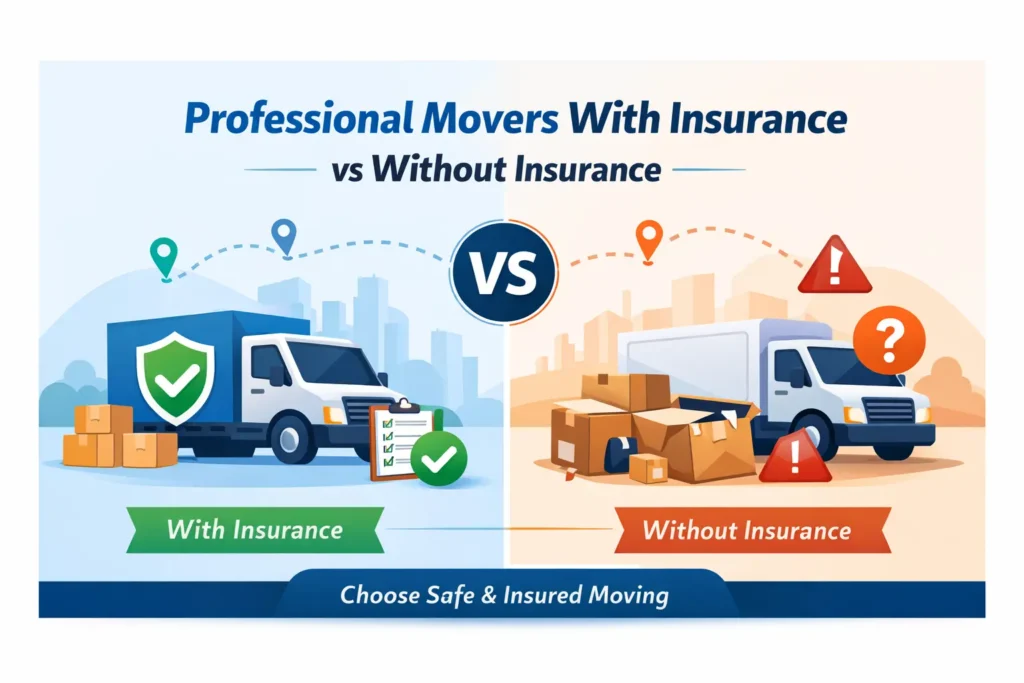
Relocation involves packing, loading, transportation, and unloading—each stage carrying a level of risk for your household or commercial goods. When planning a move, most people focus on pricing and timelines, but overlook a critical factor: insurance protection. Choosing between professional movers with insurance and movers without insurance can directly impact how losses, damages, or disputes are handled during transit. To understand how professional relocation services work in practice, it’s important to know how packers and movers services operate across different cities.
If you’re searching for reliable moving support in major cities like Bangalore, choosing verified packers and movers in Pondicherry helps ensure proper insurance documentation and accountability. This comparison clearly explains how insured and non-insured movers differ in terms of risk coverage, accountability, cost impact, and customer protection—so you can choose based on facts, not assumptions.
Understanding Insurance in Packers and Movers Services
Moving insurance refers to transit insurance, a policy that financially protects goods only while they are being transported from the origin to the destination. The insurance coverage typically begins once items are loaded onto the vehicle and ends after unloading at the final location. For a detailed explanation of inclusions and exclusions, refer to this guide on what transit insurance covers during house shifting.
Key points about moving insurance:
- It is issued per shipment or consignment
- Coverage applies only during transit, not before or after
- Insurance is provided by a licensed insurer, not by the mover directly
This means the mover facilitates insurance, but compensation responsibility lies with the insurance provider.
Why Insurance Matters During Relocation
During relocation, goods face multiple transit-related risks that cannot always be controlled by handling alone. These risks include:
- Road accidents
- Vehicle overturning
- Fire incidents
- Theft during transit
- Handling damage while loading or unloading
When movers operate without insurance, customers often have no guaranteed compensation mechanism in case of loss or damage. Insurance shifts this financial risk away from the customer and places it under a regulated claim process, reducing uncertainty and disputes.
Common Misconceptions About Movers’ Insurance
Many customers assume insurance is automatically included in moving charges, but this is not always true. Some common misconceptions include:
- Insurance is included by default in all moving packages
- Movers themselves insure the goods
- Verbal promises of safety guarantee compensation
In reality:
- Insurance is usually charged separately
- Movers arrange insurance, but insurers issue the policy
- Verbal assurances have no legal standing without policy documentation
Understanding these misconceptions helps customers avoid unexpected losses and disputes later.

Professional Movers With Insurance – Complete Overview
Professional movers with insurance operate under a structured relocation process where financial risk during transit is covered through a formal insurance policy. This approach ensures that losses or damages are handled through a documented claim mechanism rather than informal settlements.
What Services Are Typically Covered Under Insurance
Insurance provided during relocation generally covers transit-related risks that occur while goods are being transported between locations. Coverage commonly applies to:
- Damage caused by road accidents
- Loss or damage due to fire during transit
- Theft of goods while the vehicle is in transit
- Partial damage assessed after delivery
However, coverage is valid only when goods are professionally packed and documented, as insurers rely on packing lists and condition reports to assess claims.
Types of Insurance Offered by Professional Movers
Professional movers typically facilitate different types of transit insurance based on customer needs and declared value of goods:
- Transit Insurance
Covers goods against risks such as accident, fire, or theft during transportation. - Declared Value Coverage
Compensation is calculated based on the value declared by the customer before the move. - Full-Value Coverage
Offers wider financial protection by covering higher-value losses, subject to policy terms.
The type of insurance selected directly influences the premium amount and claim eligibility.
Claim Process and Documentation Requirements
In insured relocations, claims follow a defined and time-bound process. Typically:
- Claims must be reported within the insurer’s specified timeframe after delivery
- Physical inspection or survey may be conducted
- Compensation is assessed based on verified loss
Understanding common reasons for claim denial can help avoid mistakes—this breakdown explains why insurance claims are rejected in packers and movers services.
Common documents required include:
- Insurance policy copy
- Packing list
- Photographic evidence of damage
- Declared value or invoice
This process ensures transparency and structured dispute resolution.
Accountability and Legal Responsibility
With insurance in place, accountability extends beyond the mover to include the insurer. This creates:
- Documented liability
- Third-party oversight
- Reduced dependence on mover goodwill
Insurance-backed relocation offers customers a formal compensation pathway, unlike uninsured moves where responsibility may be unclear or disputed.
Movers Without Insurance – What You Need to Know
Movers without insurance provide relocation services without any formal financial protection for goods during transit. In such cases, the responsibility for loss or damage is not backed by an insurance policy, making compensation uncertain and largely dependent on the mover’s willingness or informal agreements.
How Non-Insured Movers Operate
Non-insured movers usually operate with:
- Verbal commitments instead of written insurance documents
- Basic receipts without liability clauses
- No declared value documentation for goods
Since no insurance policy is issued, customers do not receive any official proof of coverage for transit-related risks.
What Happens in Case of Damage or Loss
When damage or loss occurs during an uninsured move:
- There is no standardized compensation method
- Settlement depends on negotiation with the mover
- Full replacement cost is often borne by the customer
Without insurance, customers lack a formal claim mechanism, making dispute resolution difficult and inconsistent.
Limitations and Hidden Risks
Choosing movers without insurance involves several hidden risks:
- No legal enforcement for compensation
- Difficulty in proving negligence
- Increased probability of unresolved disputes
In the absence of insurance documentation, customers may struggle to establish liability even when damage is evident.
Why Some Customers Still Choose Non-Insured Movers
Despite the risks, some customers opt for non-insured movers due to:
- Lower upfront moving charges
- Short-distance or low-value relocations
- Limited awareness about insurance importance
While cost savings may appear attractive initially, they can result in higher financial exposure if damage occurs.
Side-by-Side Comparison – Insured vs Non-Insured Movers
This section presents a clear factual comparison between movers with insurance and movers without insurance, focusing on risk coverage, cost impact, compensation process, and service transparency.
Safety and Risk Protection Comparison
- Insured movers provide financial risk coverage during transit
- Non-insured movers offer only physical handling without financial protection
- Insurance protects customers from unforeseen transit-related incidents
Cost Comparison (Short-Term vs Long-Term Impact)
- Insurance is charged as a separate premium based on declared value
- Non-insured movers may appear cheaper initially
- Long-term financial loss from damage can exceed insurance premium costs
Claims, Compensation, and Dispute Resolution
- Insured moves follow a documented claim settlement process
- Compensation is handled through insurer assessment
- Non-insured moves rely on negotiation or consumer complaints
- Disputes are harder to resolve without policy documentation
Professionalism, Transparency, and Trust Factor
- Insured movers operate with written documentation
- Insurance creates third-party accountability
- Non-insured movers lack standardized service responsibility
Insured vs Non-Insured Movers
Aspect | Movers With Insurance | Movers Without Insurance |
Transit Risk Coverage | Covered through insurance policy | No financial protection |
Damage Compensation | Assessed and paid via insurer | Depends on mover willingness |
Claim Process | Structured and documented | No formal process |
Accountability | Shared between mover and insurer | Solely on mover |
Upfront Cost | Slightly higher due to premium | Lower initial charges |
Long-Term Risk | Reduced financial exposure | High risk of loss |
Cost vs Risk – Is Insurance Really Worth It?
When evaluating moving costs, customers often compare only the upfront charges quoted by movers. However, relocation without insurance exposes goods to financial risk that may exceed the cost of insurance itself. This section explains how insurance impacts overall expenses and why it plays a critical role in risk management.
Real Cost of Damage Without Insurance
Without insurance:
- Customers bear the entire replacement or repair cost
- There is no statutory or predefined compensation limit
- Loss settlement depends on informal agreement or legal escalation
In the absence of coverage, even minor transit damage can result in unexpected expenses that were not accounted for in the moving budget.
How Insurance Affects Overall Moving Charges
Insurance is charged separately from moving fees and is calculated based on:
- Declared value of goods
- Type of coverage selected
As the declared value increases, the insurance premium also increases. This pricing structure allows customers to balance protection and cost according to their risk tolerance.
Scenarios Where Insurance Becomes Critical
Insurance becomes especially important in situations such as:
- Intercity or interstate relocation
- Movement of fragile items
- Shifting high-value household or office goods
In these scenarios, transit duration and handling complexity increase, making insurance a practical safeguard rather than an optional add-on.
How to Verify Whether Movers Actually Provide Insurance
Before booking any relocation service, customers should verify whether the mover genuinely provides insurance or is only making verbal claims. Proper verification helps avoid fake assurances and ensures financial protection during transit.
Documents You Should Ask Before Booking
Customers should request the following documents before finalizing a mover:
- Copy of the insurance policy
- Name of the insurance provider
- Declared value document for goods
These documents confirm that insurance has been arranged and that goods are covered during transportation.
Red Flags That Indicate Fake or No Insurance
Certain warning signs may indicate that a mover does not provide genuine insurance:
- Refusal to share insurance policy documents
- Cash-only payment demands without receipts
- No mention of declared value or claim procedure
Such red flags suggest that customers may not receive compensation if damage occurs.
Questions Customers Must Ask During Pre-Move Survey
During the pre-move survey, customers should ask:
- Who issues the insurance policy?
- What risks are covered and excluded?
- What is the claim reporting timeline?
Clear answers to these questions help customers assess the reliability and transparency of the moving service.
Final Verdict – Which Is the Smarter Choice for Your Move?
Choosing between professional movers with insurance and movers without insurance depends on how much financial risk a customer is willing to accept during relocation. Insurance-backed moving provides a structured compensation mechanism that operates independently of the mover’s willingness to settle losses.
Before finalizing any relocation, customers should also review this complete guide on how to choose the best packers and movers to ensure transparency and insurance support.
Summary of Key Differences
- Insured movers offer financial protection against transit-related risks
- Compensation is handled through a documented claim process
- Non-insured movers do not provide guaranteed loss recovery
- Insurance transfers financial liability away from the customer
Risk-Based Decision Guide for Customers
Customers should consider insured movers when:
- Relocating intercity or interstate
- Transporting fragile or high-value items
- Seeking documented accountability and transparency
Non-insured movers may reduce upfront cost but expose customers to unpredictable financial outcomes in case of damage.
Why Insured Professional Movers Offer Long-Term Peace of Mind
Insurance ensures that relocation risks are managed through a regulated and standardized process. Instead of depending on verbal assurances, customers benefit from:
- Defined claim timelines
- Third-party assessment
- Clear compensation criteria
This makes insured professional movers a safer and more predictable choice for most relocation scenarios.
Relocating without insurance can expose your belongings to unnecessary financial risk. With 6 Packers And Movers, you get access to professional movers who follow documented processes and support insured relocation options for safer transit. Whether you’re planning a local move or an intercity relocation, choosing insurance-backed movers ensures peace of mind and accountability. Compare verified moving options, understand insurance coverage clearly, and make an informed decision for a stress-free move.