
Questions to Ask Before Hiring Packers and Movers

Hiring the right Packers and Movers is one of the most important decisions you make during relocation. The quality, reliability, and professionalism of the moving company can significantly impact how safely and smoothly your belongings are transported. Whether you’re shifting locally, moving to a different city, or planning a long-distance interstate relocation, asking the right questions in advance helps you avoid fraud, unexpected charges, damages, and unnecessary stress. Many consumers face problems because they rush into booking a mover without verifying documents, comparing services, or checking policies — issues that can be prevented simply by following a structured set of questions. In this guide, we cover 25 essential questions you should ask before hiring any moving company, supported by verified online information and factual references (source links added wherever applicable).
1. Are You a Licensed and Registered Packers and Movers Company?
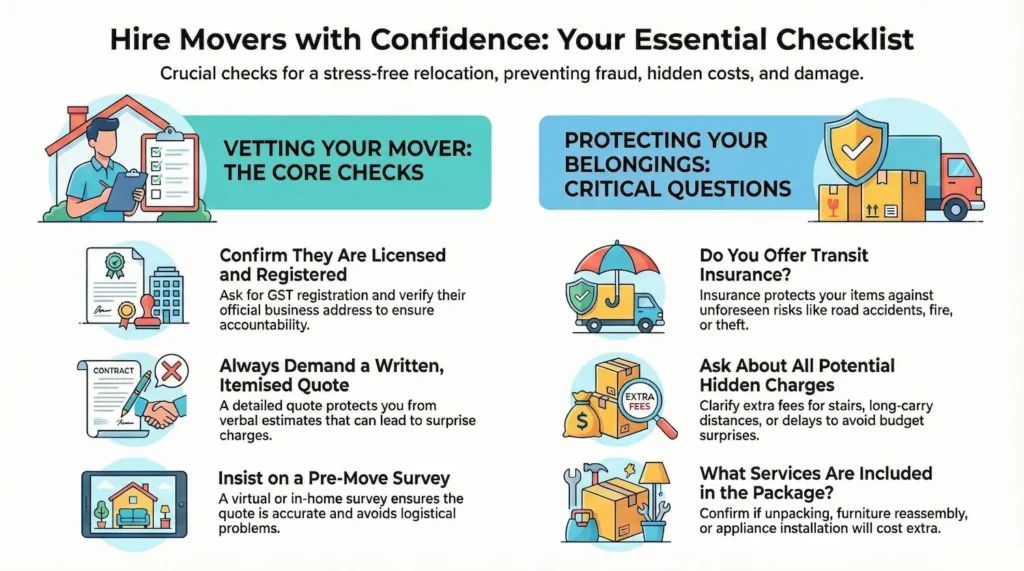
Before finalizing a mover, always verify whether the company is legally registered and authorized to operate. A genuine moving company should have valid GST registration, company registration documents, and an active office address. Proper licensing helps ensure accountability and reduces the risk of fraud. You can also cross-check their GSTIN or business registration number on official government portals for added security.
2. How Many Years of Experience Do You Have in the Moving Industry?
Experience plays a major role in determining how efficiently a moving company can handle your belongings. A well-established packers and movers company typically has trained staff, refined packing techniques, structured logistics planning, and proven processes for handling fragile, bulky, or high-value items. Asking about their experience helps you understand whether they have managed moves similar to yours — such as apartments on higher floors, office relocations, interstate transport, or moves involving delicate electronics and furniture. Experienced movers are also better at anticipating challenges like narrow staircases, parking limitations, or long-carry requirements.
3. Do You Provide a Written Quote or Only Verbal Estimates?
A written quote is essential for transparency and protection against unexpected charges. Reputable packers and movers provide a detailed, itemized estimate that includes packing material costs, labor charges, transportation fees, insurance details, and any additional service charges. Verbal estimates can lead to disputes on moving day, especially if the final amount suddenly increases due to “extra items,” “additional labor,” or “unaccounted distance.” Always insist on a written quotation that clearly outlines all inclusions and exclusions so you know exactly what you are paying for. To understand how moving charges are calculated and what a fair estimate looks like, refer to this detailed packers and movers cost guide.
4. Can You Provide an In-Home or Virtual Pre-Move Survey?
A pre-move survey — whether conducted in person or through a virtual video call — is crucial for determining the accurate volume of goods, the type of packing materials required, the labor needed, and the right size of the moving vehicle. During this survey, the moving team assesses furniture, appliances, fragile items, access points, floor levels, elevator availability, and potential challenges at both the pickup and delivery locations. Movers who skip this step often give inaccurate estimates that later result in price changes or logistical issues on moving day. A proper survey ensures fairness, transparency, and smooth execution of the move. Professional packers and movers usually conduct a proper pre-move survey to avoid last-minute cost changes.
5. What Services Are Included in Your Package?
Before confirming a mover, you should clearly understand what services are covered in their standard shifting package. Most genuine packers and movers include packing, loading, transportation, unloading, and basic placement of goods in their base package. However, services like unpacking, furniture reassembly, deep cleaning, appliance installation, or storage may come at an additional cost. Clarifying service inclusions upfront helps avoid misunderstandings on moving day and ensures you know exactly what the company will and won’t handle. Always request a written list of included and optional services to make an informed decision.
6. What Types of Packing Materials Do You Use?
The quality of packing materials directly impacts the safety of your belongings during transit. Professional packers and movers typically use high-grade materials such as bubble wrap, corrugated boxes, foam sheets, thermocol, stretch film, moving blankets, and specialized crates for fragile or high-value items. Asking about packing materials helps you assess whether the company prioritizes protection and durability. Some movers may offer eco-friendly or reusable packing materials as well. Ensure the estimate includes details about the materials used and whether any items (like glassware, electronics, or artwork) require special packing at an extra cost.
7. Do You Offer Transit Insurance?
Transit insurance is one of the most important protections you should secure before moving. Even with the most skilled packers and careful handling, unforeseen risks like road accidents, fire, theft, or extreme weather can occur during transit. A reliable packers and movers company will either provide insurance directly or help you obtain it through an authorized insurance provider. Always ask what type of insurance is available — basic transit insurance or comprehensive coverage — and confirm what damages are covered or excluded. Make sure you receive the policy document and understand the claim process beforehand to avoid complications later. Before finalizing your move, make sure you clearly understand what transit insurance covers during house shifting and the claim process involved.
8. Will My Belongings Be Transferred or Shifted to Another Vehicle?
Trans-shipment — the process of moving your goods from one vehicle to another during transit — can increase the chances of damage, mishandling, or loss. Some packers and movers use shared trucks or hub-based logistics systems, which often involve shifting goods between vehicles to optimize routes. While this might reduce cost, it also adds risk. If you prefer maximum safety and minimal handling, ask for a dedicated truck option where your goods stay in the same vehicle from pickup to delivery. Always clarify the company’s transport method to avoid surprises and ensure your goods remain secure throughout the journey.
9. What Is Your Pricing Structure?
Understanding the pricing structure helps you know exactly how your moving cost is calculated. Most packers and movers determine charges based on key factors such as the volume of goods, distance to be covered, type of packing materials used, labor requirements, floor levels, and whether elevators are available. Additional components like fuel charges, toll taxes, GST, and special handling fees may also apply. Always ask for a clear, itemized breakdown to avoid misunderstandings later. Comparing the pricing structure of multiple movers will help you identify fair and transparent pricing.
10. Are There Any Additional or Hidden Charges?
Hidden charges are one of the most common complaints customers have about unreliable packers and movers. These may include long-carry fees, staircase charges, extra labor costs, charges for dismantling items, parking fees, additional packing material costs, or fees related to delays caused by customers. Asking upfront about every possible additional charge helps you avoid surprise costs on moving day. Make sure all potential extras are clearly mentioned in the written estimate. Transparent movers will explain every cost component and ensure there are no unexpected add-ons. Understanding exclusions and extra charges beforehand helps you avoid billing disputes on moving day.
11. How Do You Handle Fragile or High-Value Items?
Fragile and high-value belongings like glassware, artwork, electronics, antiques, and musical instruments require special handling and protective packing. Professional movers use techniques such as double-layer packing, bubble wrapping, foam cushioning, wooden crating, and “fragile” labeling to ensure safe transit. Asking the mover about their method helps you understand whether they have the expertise to handle delicate goods. You should also check if additional charges apply for special packing and whether these items are covered under the company’s insurance plan. Proper documentation and itemized lists are recommended for high-value goods.
12. What Is Your Cancellation or Rescheduling Policy?
Before booking a mover, it’s important to understand their cancellation and rescheduling terms. Some companies may offer free rescheduling within a certain time window, while others charge a fee for last-minute changes. Cancellation policies vary widely — you might receive a partial refund, a full refund, or no refund at all depending on how close the cancellation is to the moving date. Knowing these terms in advance helps you avoid unexpected losses if your plans change. Always get the policy in writing to prevent disputes later.
13. Do You Provide Door-to-Door Service or Only Door-to-Loading Point Service?
Understanding whether the company offers full door-to-door service is crucial for a smooth moving experience. Door-to-door service includes packing, loading, transporting, unloading, and delivering items directly inside your new home. Some movers, however, only offer door-to-loading or loading-to-door services, which means you may need to handle part of the transportation or final delivery yourself. Clarify this in advance so you know whether the company will manage the entire relocation or just a portion of it. This ensures there are no gaps in responsibility during the move.
14. Will You Dismantle and Reassemble Furniture & Appliances?
Many household items such as beds, wardrobes, modular furniture, dining tables, and large appliances need dismantling before packing and loading. Professional packers and movers often provide dismantling and reassembly services, but not all companies include this in their standard package. Some may also charge extra for specialized work like AC removal, geyser uninstallation, or TV wall-mounting, which require trained technicians. Clarifying these details beforehand helps you avoid delays or unexpected costs on moving day. Make sure the scope of dismantling and reinstallation is clearly mentioned in your written quote.
15. What Safety Measures Do You Follow During the Move?
Safety is a top priority during relocation, especially when handling heavy furniture, fragile items, and high-value appliances. Reliable packers and movers follow structured safety protocols such as using protective packing materials, sealing boxes properly, using trolleys and lifting straps, and ensuring that the vehicle is in good condition. They also train their staff in safe lifting techniques, item handling, and damage prevention. Additionally, reputable companies secure goods inside the truck using straps and cushioning to minimize movement during transit. Asking about safety measures ensures that the moving team takes proper precautions to protect your belongings and avoid injuries.
16. What Kind of Vehicles Do You Use for Transportation?
The type and condition of the vehicle used for transportation play a major role in ensuring the safe delivery of your belongings. Professional packers and movers generally use closed-body container trucks, which protect goods from rain, dust, and road debris. For smaller moves, companies may use mini trucks or tempo vehicles depending on the volume of items. It’s important to ask whether the mover assigns a dedicated truck for your move or uses a shared truck model. You should also check if the vehicles are regularly maintained, equipped with safety straps, and suitable for long-distance travel.
17. Can I Track My Shipment in Real Time?
Real-time tracking has become an essential feature offered by many professional packers and movers. Tracking options may include GPS-enabled vehicles, online tracking portals, mobile apps, or periodic updates via WhatsApp or SMS. This transparency helps you stay informed about the movement of your goods, expected delivery timeline, and any unforeseen delays. If the company does not offer live tracking, you should at least have access to a dedicated customer support team or move coordinator who can provide timely updates. Confirm the tracking method and frequency of communication before booking.
18. How Do You Handle Delays or Unexpected Situations?
Delays during relocation can occur due to traffic, weather conditions, roadblocks, vehicle breakdowns, or unforeseen logistical issues. A professional moving company should have a clear contingency plan for handling such situations. This includes timely communication, offering revised delivery estimates, and providing alternative arrangements if needed. Some movers may also have policies regarding compensation or partial refunds for significant delays. Clarifying these procedures beforehand helps you understand how responsibly the mover manages unexpected challenges and how transparent they are during the entire process.
19. What Payment Methods Do You Accept?
Different packers and movers accept various payment options, such as UPI, bank transfer, credit/debit cards, cheques, and cash. Asking about payment methods helps ensure you choose a secure and convenient option. Many reputable companies prefer digital payments for transparency and record-keeping. You should also clarify the payment terms — for example, how much advance is required and when the remaining balance must be paid. Avoid movers who insist on full payment upfront, as this may be a red flag. Always ask for a proper invoice for every transaction. You should also know how to identify genuine reviews and avoid misleading or fake testimonials.
20. Can You Share References or Customer Testimonials?
Asking for customer testimonials or references is a reliable way to assess the professionalism and service quality of a moving company. Genuine packers and movers will readily share client feedback, ratings, or details of past successful moves. You can also cross-check reviews on third-party platforms to verify authenticity and consistency. Look for patterns in feedback, such as punctuality, care in handling items, transparency in pricing, and customer support responsiveness. Avoid companies that hesitate to share references, as this may indicate poor service history or lack of credibility.
21. How Trained Are Your Staff and Packers?
Well-trained staff play a crucial role in ensuring a smooth and damage-free relocation. Professional packers and movers invest in training their teams on safe lifting techniques, proper packing methods, handling of fragile items, dismantling and reassembling furniture, and efficient loading and unloading processes. Trained personnel reduce the risk of damage, enhance safety, and improve overall efficiency. You should ask whether the company conducts regular training sessions, background checks, and skill assessments for their staff. This helps you evaluate the competence and reliability of the team that will handle your belongings.
22. Do You Offer Storage or Warehouse Facilities?
Storage or warehouse facilities are helpful when you need temporary space to keep your belongings—whether due to delayed possession of your new home, long-distance relocation, or renovation. Reliable packers and movers offer secure, clean, and well-monitored storage units with proper ventilation, pest control, and fire safety measures. Charges are typically based on the volume of goods and the number of days stored. You should also ask whether the company provides insurance coverage for stored items and if you can access your goods during the storage period.
23. What Happens if Something Gets Damaged During the Move?
Understanding the company’s damage claim process is crucial for your protection. Professional packers and movers follow a structured procedure where you must report the damage within a specific timeframe, submit supporting documents (such as photos and item lists), and file a formal claim. If you have transit insurance, the insurer typically compensates based on the declared value and policy terms. For minor damages, some movers may offer on-the-spot compensation or repair services. Always ask about the claim timeline, documentation required, and whether the mover assists with insurance claims. Clarifying these details helps you avoid confusion or disputes later.
24. Will You Provide a Dedicated Move Manager or Coordinator?
A dedicated move manager or coordinator acts as your single point of contact throughout the relocation. This person handles planning, scheduling, tracking, issue resolution, and communication with the packing and logistics teams. Having a coordinator ensures smoother coordination, timely updates, quicker problem-solving, and a more organized moving experience overall. This is especially helpful for long-distance moves, large household relocations, or office shifting. If the company offers this service, ask about the coordinator’s role, availability, and how communication will be handled during the move.
25. Do You Offer Post-Move Support?
Post-move support can significantly reduce the stress of settling into your new home. Some packers and movers offer additional services such as unpacking boxes, arranging furniture, reinstalling appliances, and removing packing debris. These value-added services save time and help you get organized quickly. However, not all companies include post-move assistance in their standard package, and some may charge extra for it. Always clarify what level of post-move support is available, what is included, and whether additional fees apply.
If you are planning a move and want verified, transparent, and professionally managed relocation support, explore our packers and movers services in Bangalore to get expert assistance tailored to your needs.