
Tips for Moving in Summer | Expert Summer Shifting Guide
Moving in summer requires smart planning to avoid heat, delays, and damage. Book packers and movers early, choose morning time slots, stay hydrated, pack heat-sensitive items carefully, and prepare your new home in advance. These summer moving tips help ensure a safe, smooth, and stress-free relocation.

Moving during summer can be convenient due to longer daylight hours and flexible schedules, but it also comes with unique challenges such as extreme heat, peak-season demand, and higher physical strain. Without proper planning, summer relocation can quickly become exhausting and risky for both people and belongings. This is why working with experienced Packers and Movers and following season-specific moving strategies becomes essential for a smooth and stress-free transition.
Summer is widely recognized as the busiest moving season, which means availability issues, tighter schedules, and increased demand for professional movers. High temperatures can also affect packing efficiency, manpower productivity, and the safety of heat-sensitive items. Planning your move with a summer-focused approach helps reduce last-minute stress, prevents heat-related health issues, and ensures your belongings are protected throughout the shifting process.
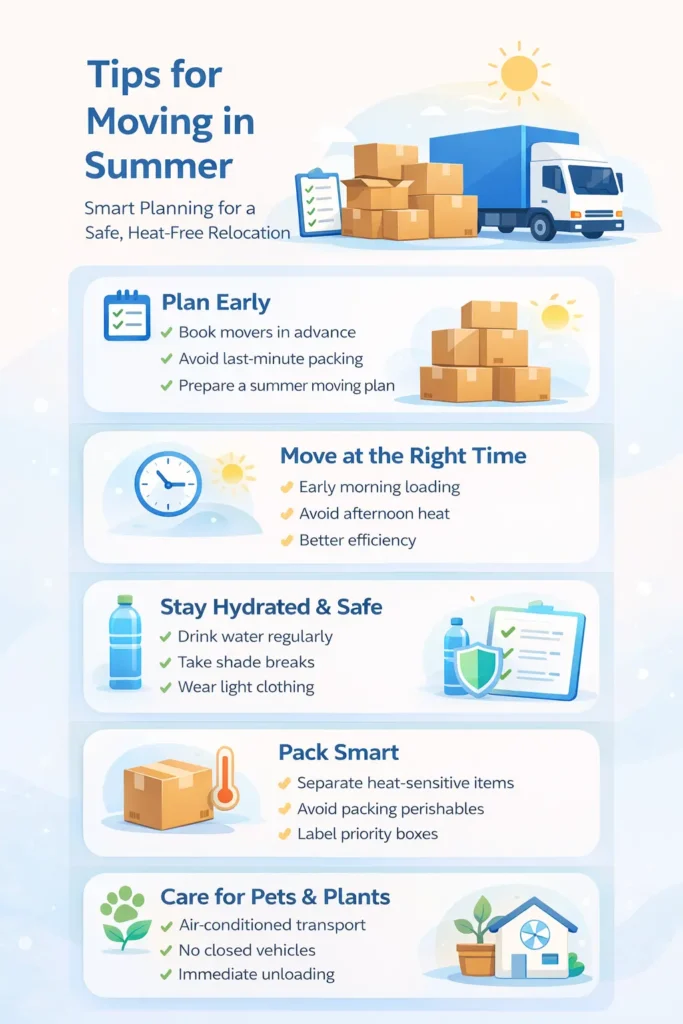
Plan Your Summer Move Well in Advance
Summer is considered the peak relocation season, making early planning one of the most important steps for a successful move. Delaying decisions during this period often results in limited mover availability, rushed packing, and higher stress levels. Booking your move well in advance allows better scheduling, smoother coordination, and adequate time to prepare for heat-related challenges. If you are relocating during peak summer months, hiring reliable packers and movers in Allahabad ensures better availability and early-morning scheduling.
Professional movers often recommend finalizing your moving date 4–6 weeks ahead during summer to secure preferred time slots and avoid last-minute compromises.
Why Early Planning Matters in Summer
- High demand for packers and movers during school holidays
- Increased workload leads to limited date availability
- Better time management helps avoid heat exposure
- More time to arrange packing materials and logistics
Ideal Summer Moving Timeline
Time Before Move | Key Actions |
6 weeks | Finalize moving date and book movers |
4 weeks | Start decluttering and sourcing packing materials |
2 weeks | Begin packing non-essential items |
1 week | Confirm schedules and prepare essentials |
Planning early also allows you to create a summer-specific moving checklist, focusing on hydration, heat protection, and item safety, which significantly reduces moving-day disruptions.
Choose the Right Time of Day to Move
Selecting the right time of day is a critical factor when moving in summer, as temperature levels directly impact physical effort, safety, and overall efficiency. High daytime heat can slow down loading work, increase fatigue, and raise the risk of dehydration. For this reason, experienced movers strongly recommend scheduling summer relocations during the cooler hours of the day, especially for loading and unloading activities.
Industry moving guidelines highlight that early morning hours (typically between 7:00 AM and 10:00 AM) are the most suitable for summer moves. During this window, temperatures are relatively lower, sunlight is less intense, and manpower productivity remains high.
Best vs Risky Moving Time Slots in Summer
Time Slot | Suitability | Reason |
Early Morning (7–10 AM) | ✅ Highly Recommended | Cooler temperatures, better stamina, faster loading |
Late Morning (10 AM–12 PM) | ⚠️ Moderate | Rising heat, requires frequent breaks |
Afternoon (12–4 PM) | ❌ Not Recommended | Peak heat hours, higher exhaustion risk |
Evening (After 5 PM) | ⚠️ Conditional | Cooler, but limited daylight for unloading |
Why Early Morning Moves Work Better
- Lower temperatures reduce physical strain
- Faster loading and unloading efficiency
- Reduced risk of heat exhaustion
- Better protection for heat-sensitive items
- Less traffic congestion in many urban areas
Summer heat generally peaks between late morning and mid-afternoon, making this period unsuitable for heavy lifting and prolonged outdoor work. Movers often adjust schedules during summer to minimize exposure during these hours, especially for long loading sessions.
If an early-morning slot is not available, it is advisable to split the move—completing loading early and scheduling unloading during cooler evening hours where feasible. Coordinating timing in advance with your packers and movers ensures smoother execution and fewer heat-related delays.
Stay Hydrated and Protect Yourself from Heat
Summer moving involves prolonged physical activity, often outdoors, which increases the risk of dehydration, heat exhaustion, and fatigue. Maintaining proper hydration and taking preventive heat-protection measures is essential for both household members and moving personnel. Ignoring these precautions can slow down the move and pose serious health risks.
Moving safety guidelines consistently emphasize regular water intake, scheduled breaks, and appropriate clothing during summer relocations to prevent heat-related illnesses.
Essential Hydration & Heat-Safety Measures
- Drink water at regular intervals, even if you do not feel thirsty
- Avoid sugary or caffeinated beverages during loading hours
- Take short breaks in shaded or ventilated areas
- Use sunscreen to reduce sun exposure during outdoor work
- Wear light-colored, breathable cotton clothing
Health and relocation advisories also suggest preparing a basic summer safety kit on moving day to ensure immediate access to essentials.
Recommended Summer Moving Safety Kit
Item | Purpose |
Drinking water bottles | Prevent dehydration |
Oral rehydration drinks | Restore electrolytes |
Sunscreen | Protect skin from sunburn |
Cooling towels | Lower body temperature |
Light snacks | Maintain energy levels |
Signs of Heat Stress to Watch For
- Dizziness or light-headedness
- Excessive sweating or dry skin
- Headache and nausea
- Muscle cramps or fatigue
If any of these symptoms appear, moving activities should be paused immediately, and the affected person should be moved to a cooler environment. Summer relocation safety guidelines recommend avoiding prolonged continuous lifting without breaks, especially during high-temperature hours.
Professional packers and movers often factor these safety measures into their summer shifting processes, helping ensure that relocation remains safe, efficient, and well-managed even in challenging weather conditions.
Pack Smart to Prevent Heat Damage
High summer temperatures can negatively affect certain household items during transit, especially when they remain packed inside closed vehicles for extended periods. Heat buildup, trapped moisture, and lack of ventilation can lead to damage, warping, melting, or malfunctioning. Packing with summer conditions in mind is therefore essential to protect your belongings.
Moving safety guidelines clearly state that heat-sensitive items should be packed separately or avoided altogether during summer relocations.
Items That Need Extra Care in Summer
- Electronics and batteries
- Candles, cosmetics, and toiletries
- Food items and perishables
- Medicines and health supplies
- Wooden and leather furniture
These items are more vulnerable to heat exposure and should ideally be transported in air-conditioned vehicles or carried personally when possible.
Smart Summer Packing Practices
- Avoid packing perishables and melt-prone items
- Use breathable packing materials where applicable
- Do not over-seal boxes containing heat-sensitive items
- Label boxes that require immediate unpacking
- Keep essential and sensitive items separate
Recommended Packing Approach for Summer
Item Category | Packing Recommendation |
Electronics | Original boxes or insulated packing |
Cosmetics | Seal in zip bags, keep upright |
Medicines | Carry separately in cool storage |
Wooden furniture | Use protective wrapping, avoid plastic trapping |
Food items | Do not pack for long-distance moves |
Improper packing during summer can also lead to moisture buildup, especially when plastic wraps are used without ventilation. Packing advisories recommend allowing airflow wherever possible to prevent condensation-related damage.
Professional movers typically follow summer-specific packing protocols to reduce heat impact and ensure item safety during transit. Coordinating these details in advance helps avoid last-minute damage and unnecessary losses.
Knowing what transit insurance covers during house shifting is especially important in summer when heat-related damage risks are higher.
Take Special Care of Pets, Plants, and Perishables
Pets, plants, and perishable items are especially vulnerable during summer moves due to high temperatures and prolonged exposure to heat. Unlike furniture or household goods, these items cannot withstand closed vehicle conditions and require special handling arrangements. Most professional movers advise keeping them under the owner’s supervision rather than loading them with regular household cargo.
Moving safety guidelines highlight that pets and plants should never be left in parked vehicles during summer, even for short durations, as internal temperatures can rise rapidly.
Pet Safety Tips for Summer Moving
- Transport pets in air-conditioned vehicles
- Keep water accessible at all times
- Avoid feeding heavy meals before travel
- Schedule rest stops during long-distance moves
- Keep pets away from loading and unloading zones
Heat exposure can cause dehydration and stress in animals, making calm handling and temperature control essential during relocation.
Plant Moving Guidelines in Hot Weather
- Water plants lightly before the move
- Avoid sealing plants in plastic
- Transport plants in ventilated containers
- Unload plants immediately upon arrival
Plants can wilt quickly in high heat, and prolonged darkness combined with temperature stress may cause irreversible damage.
Handling Perishable Items
Item Type | Recommended Action |
Frozen foods | Consume or discard before moving |
Fresh produce | Avoid packing |
Medicines | Carry personally in insulated bags |
Dairy products | Do not transport long-distance |
Perishable goods spoil faster during summer due to heat exposure, which is why relocation guidelines recommend consuming or disposing of such items before moving day.
Giving special attention to these items ensures safety, reduces loss, and prevents unnecessary stress during your summer relocation.
Prepare Your New Home Before Arrival
Preparing your new home in advance is especially important when moving during summer, as high temperatures can make unloading and settling in physically demanding. Ensuring that basic utilities and cooling arrangements are functional before the moving truck arrives helps create a comfortable and safe environment for both movers and family members.
Relocation preparation guidelines strongly recommend activating electricity, water supply, and cooling systems before moving day to reduce heat exposure and speed up unloading.
Essential Pre-Move Checks for Summer Relocation
- Electricity connection is active
- Fans or air-conditioning units are operational
- Water supply is available
- Ventilation and windows are accessible
- Basic cleaning is completed
Arriving at a well-prepared home allows movers to work more efficiently and prevents heat-related fatigue during unloading and initial arrangement.
Unpacking Priorities in Hot Weather
Certain items should be unpacked immediately to improve comfort and prevent damage caused by heat buildup.
Priority Level | Items to Unpack First |
High | Drinking water, fans/AC, medicines |
Medium | Bedding, toiletries, kitchen essentials |
Low | Decorative items, books, non-essentials |
Why Preparation Matters in Summer
- Reduces unloading time and physical strain
- Prevents heat damage to sensitive items
- Allows quick access to cooling and hydration
- Creates a safer environment for children and pets
Summer moving advisories emphasize that entering an unprepared home without cooling or water access can significantly increase discomfort and health risks during relocation.
Proper preparation of your destination ensures a smoother end to your moving day and helps you settle in comfortably despite summer conditions.
Common Summer Moving Mistakes to Avoid
Summer relocations often fail not because of logistics, but due to avoidable planning and execution errors. High temperatures, peak-season pressure, and rushed decisions can lead to safety issues, damaged belongings, and unnecessary expenses. Identifying and avoiding these common mistakes significantly improves the overall moving experience.
Moving advisories consistently point out that most summer moving issues arise from poor timing, inadequate preparation, and ignoring heat-related risks.
Most Frequent Summer Moving Mistakes
- Booking movers too late during peak season
- Scheduling loading during peak afternoon heat
- Packing heat-sensitive items with regular household goods
- Ignoring hydration and rest breaks
- Not preparing the new home with cooling arrangements
Mistake vs Impact Analysis
Common Mistake | Potential Impact |
Last-minute booking | Limited mover availability, rushed packing |
Midday loading | Heat exhaustion, slower work |
Packing perishables | Spoilage and foul odors |
No hydration plan | Dehydration and fatigue |
Utilities not activated | Uncomfortable unloading conditions |
Failing to account for summer heat can also increase the risk of damage to electronics, wooden furniture, and personal health. Relocation safety guidance advises structuring the move to minimize continuous exposure to high temperatures.
How to Avoid These Mistakes
- Finalize moving dates 4–6 weeks in advance
- Choose early morning loading slots
- Separate and clearly label heat-sensitive items
- Keep water and cooling essentials accessible
- Confirm electricity and water availability at the destination
Avoiding these mistakes not only protects belongings but also improves coordination with packers and movers, ensuring a smoother and safer summer relocation.
Cost Considerations for Summer Moving
Summer is widely recognized as the most expensive season for relocation due to high demand, limited availability, and increased operational costs. To plan your budget better, refer to our detailed packers and movers cost guide, which explains seasonal pricing factors in depth.Understanding how summer conditions influence moving charges helps you plan budgets realistically and avoid unexpected expenses.
Relocation cost guidelines indicate that peak-season demand directly impacts pricing, especially during school holidays and end-of-month moving dates.
Why Summer Moving Costs Are Higher
- Increased demand for packers and movers
- Limited availability of preferred time slots
- Higher manpower requirements due to heat management
- Longer working hours spread across cooler time windows
Key Cost Factors During Summer Moves
Cost Factor | Impact on Pricing |
Moving date | Weekends & month-end cost more |
Time of day | Early-morning slots may be premium |
Distance | Long-distance moves amplify seasonal costs |
Volume of goods | More items = longer heat-managed loading |
Additional services | Packing materials, special handling |
Professional cost breakdowns explain that summer pricing often reflects resource optimization, such as manpower rotation, hydration breaks, and early-hour scheduling, which are necessary for safety and service continuity.
How to Control Summer Moving Costs
- Book movers 4–6 weeks in advance
- Avoid peak dates like month-ends and weekends
- Declutter before packing to reduce volume
- Be flexible with moving dates and time slots
- Confirm inclusions to avoid last-minute add-ons
Hidden Costs to Watch For
- Delays due to extreme heat
- Repacking charges for heat-sensitive items
- Extended labor hours if unloading is slowed
- Temporary storage if destination readiness is delayed
Cost-planning advisories highlight that early preparation and clear communication with movers are the most effective ways to manage summer relocation expenses.
Many of these mistakes can be avoided by understanding how to choose the best packers and movers before finalizing your booking.
Read More Moving Advice
Plan a Safe & Hassle-Free Summer Move with Experts
Summer relocation demands experience, planning, and heat-safe handling. With professional Packers and Movers, you get early scheduling, trained manpower, careful packing, and smooth coordination—even during peak season.
Get a free moving estimate today and move smarter this summer.