
Tips for Moving in Winter: A Complete Guide for Safe & Stress-Free Relocation
Moving in winter requires extra planning due to cold weather, moisture, and shorter daylight hours. Proper packing, early scheduling, and safety precautions help protect belongings and avoid delays. With the right preparation and professional support, winter relocation can be smooth, safe, and cost-effective.
Moving during winter requires careful planning, smart packing, and heightened safety awareness due to cold temperatures, moisture, fog, and shorter daylight hours. Unlike peak moving seasons, winter relocations demand extra preparation to protect belongings, avoid delays, and ensure personal safety. Weather unpredictability can impact transportation timelines, access to buildings, and the condition of sensitive household items. This is why many homeowners prefer planning their relocation with experienced packers and movers who understand seasonal challenges and can manage winter-specific risks effectively.
Winter is often considered the off-season for relocation, which can offer cost advantages and flexible scheduling. However, these benefits come with responsibilities—such as monitoring weather forecasts, preparing properties for icy conditions, and using packing methods that prevent moisture and temperature damage. From protecting electronics and wooden furniture to ensuring safe loading and unloading on slippery surfaces, winter moving is less about speed and more about precision and preparedness. A well-structured winter moving plan helps minimize disruptions, protects valuables, and ensures a smoother transition despite harsh weather conditions.
Why Winter Moving Requires Special Planning
Winter relocation is very different from moving during warmer months because cold weather introduces risks that can directly affect safety, timelines, and the condition of household items. Low temperatures, moisture, fog, snow, and reduced daylight can slow down loading, transportation, and unloading, making advance planning essential rather than optional.
One of the biggest challenges of winter moving is weather unpredictability. Sudden fog, rainfall, or cold waves can delay vehicles and restrict visibility on highways. Shorter daylight hours further reduce workable time, increasing the chances of rushed handling if the move is not properly scheduled. In addition, freezing temperatures can make driveways, staircases, and building entrances slippery, raising the risk of injuries during lifting and carrying.
Another important reason winter moves need special preparation is the impact of cold and moisture on belongings. Electronics, wooden furniture, and appliances are sensitive to extreme temperatures and condensation. Without insulated packing and controlled handling, items can develop moisture damage, cracks, or internal condensation issues during transit.
Key Challenges That Make Winter Moving Complex
- Unpredictable weather conditions causing transport delays
- Slippery surfaces increasing accident risks
- Short daylight hours limiting loading time
- Cold temperatures affecting electronics, furniture, and appliances
- Higher chances of moisture exposure during loading and unloading
Why Early Planning Matters in Winter
Proper winter planning allows movers to:
- Adjust schedules based on weather forecasts
- Prepare access points like driveways and staircases
- Use protective packing materials suited for cold conditions
- Reduce last-minute disruptions and safety hazards
Without this level of preparation, winter relocations are more prone to delays, damages, and unexpected costs. This is why winter moves require a more cautious, structured approach compared to peak-season shifting.
For people relocating in metro cities like Bangalore, hiring professional packers and movers in Kanpur helps manage winter logistics, traffic conditions, and safe handling.
How to Prepare for a Winter Move in Advance
Preparing early is the most effective way to reduce risks during a winter relocation. Since weather conditions can change quickly, advance planning helps avoid last-minute disruptions, protects belongings, and ensures the moving day runs smoothly despite cold temperatures or reduced visibility.
One of the most important steps in winter moving preparation is monitoring weather forecasts in the days leading up to the move. Cold waves, fog, or sudden rainfall can affect travel conditions and loading schedules. Planning buffer days or flexible timelines allows you to adjust the move without pressure if weather conditions worsen.
Another key aspect of preparation is scheduling the move earlier in the day. Winter daylight hours are shorter, and visibility drops quickly in the evening. Starting early gives movers more natural light for safe loading and unloading, reducing the risk of accidents and rushed handling.
Pre-Move Planning Checklist for Winter Relocation
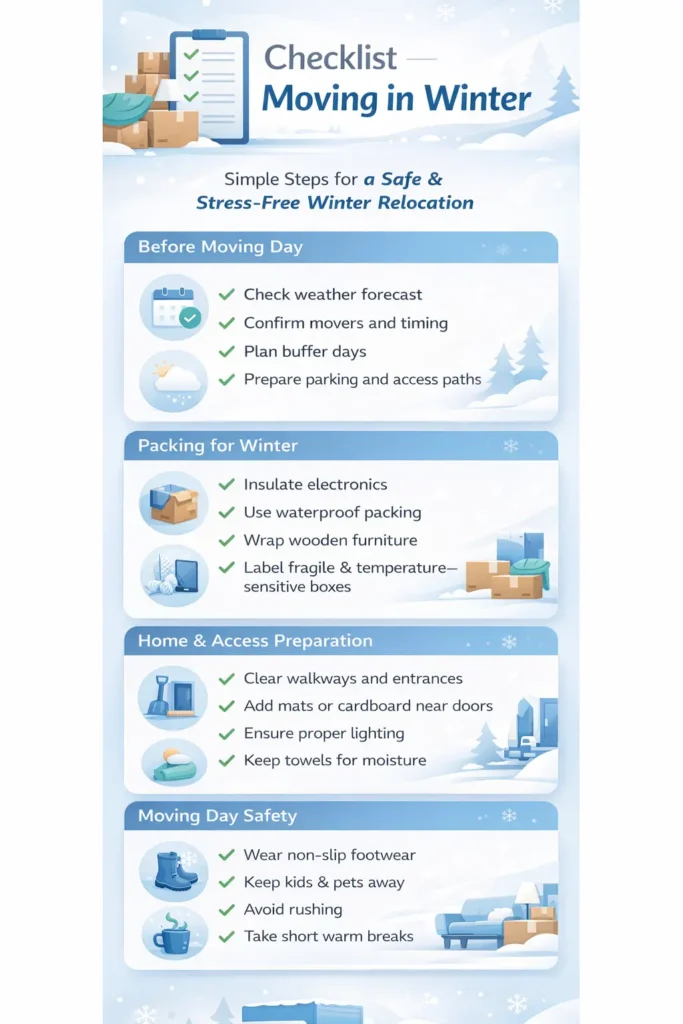
- Track weather updates at least 3–5 days before moving day
- Keep alternative dates or buffer time in case of delays
- Inform movers in advance about narrow roads, fog-prone areas, or access challenges
- Arrange parking space close to the entrance to minimize carrying distance
- Ensure electricity, heating, and water are active at the new location
Preparing Your Home Before Moving Day
Proper property preparation plays a major role in winter moving safety. Clearing pathways helps prevent slips and improves movement efficiency. Driveways, staircases, lifts, and corridors should be free of moisture or debris to allow smooth handling of heavy items.
- Clear snow, dirt, or moisture from entry points
- Keep mats or cardboard sheets at entrances to absorb moisture
- Ensure adequate lighting in hallways and parking areas
- Keep basic winter supplies ready, such as towels and dry cloths
Advance Planning Impact on Winter Moves
Advance preparation not only improves safety but also protects your belongings from cold-related damage and reduces stress on moving day. Winter moves that are planned early are far more predictable and manageable than those arranged at the last minute.
Winter Packing Tips to Protect Your Belongings
Packing for a winter move requires more than standard boxing and labeling. Cold temperatures, moisture, and condensation can damage furniture, electronics, and fragile household items if they are not packed correctly. Using winter-specific packing methods helps prevent cracks, warping, corrosion, and water exposure during loading and transportation.
One of the most important winter packing considerations is protecting items from moisture. During cold weather, items moved from warm indoor environments to cold outdoor air are exposed to condensation. Without proper sealing and insulation, moisture can seep into boxes and damage sensitive belongings.
How to Pack Electronics for Winter Moving
Electronics are highly sensitive to cold temperatures and condensation. Sudden temperature changes can cause internal moisture buildup, which may lead to corrosion or malfunction if devices are powered on too quickly after delivery.
Best practices for packing electronics in winter:
- Wrap electronics in bubble wrap or foam padding
- Place devices in sturdy, well-sealed boxes
- Use plastic wrap or moisture-resistant covers
- Allow electronics to reach room temperature before use after unpacking
Protecting Furniture from Cold and Moisture
Wooden furniture is especially vulnerable during winter moves. Cold temperatures combined with moisture can cause wood to expand, contract, or develop surface damage. Upholstered items can also absorb moisture if not properly wrapped.
Recommended furniture packing methods:
- Use moving blankets to insulate wooden furniture
- Wrap items with plastic stretch film to block moisture
- Avoid direct exposure to rain or damp surfaces
- Elevate furniture slightly during loading if the ground is wet
Winter Packing Materials Checklist
- Heavy-duty cardboard boxes
- Bubble wrap and foam sheets
- Plastic stretch wrap for moisture protection
- Moving blankets for insulation
- Waterproof labels and strong packing tape
Winter Packing Do’s and Don’ts
Do’s | Don’ts |
Use insulated packing layers | Leave items exposed to cold air |
Seal boxes tightly | Use weak or damp boxes |
Wrap wood and electronics carefully | Pack temperature-sensitive items loosely |
Label fragile and electronic items | Rush packing on moving day |
Proper winter packing significantly reduces the risk of damage caused by cold and moisture. By using insulated materials and moisture-resistant wrapping, you can ensure your belongings remain protected throughout the move, even in challenging winter conditions.
Safety Tips for Moving Day During Winter
Safety becomes a top priority during winter relocations due to slippery surfaces, cold exposure, and limited visibility. Icy pathways, damp floors, and reduced daylight can increase the risk of injuries and accidents if proper precautions are not taken. Preparing for these challenges helps ensure a smooth and incident-free moving day.
One of the most important winter safety measures is clearing and securing all access points before loading begins. Snow, water, or dirt near entrances, staircases, and parking areas can lead to slips while carrying heavy items. Ensuring clean and dry pathways reduces the likelihood of falls and improves movement efficiency.
Preparing Safe Walkways and Entry Points
Proper surface preparation helps protect both movers and belongings during winter loading and unloading.
- Clear driveways, walkways, and staircases of moisture or debris
- Use mats, cardboard sheets, or cloth near entrances to absorb water
- Apply anti-slip material where surfaces are smooth
- Ensure adequate lighting in corridors, lifts, and parking areas
Personal Safety Tips for Winter Moving
Cold weather can affect physical comfort and grip strength, increasing the risk of strain or mishandling items. Wearing the right gear and pacing the move properly helps reduce fatigue and injury.
Recommended winter moving safety practices:
- Wear closed, non-slip footwear for better traction
- Use gloves that provide warmth without reducing grip
- Dress in layers to stay warm while allowing mobility
- Take short breaks to avoid fatigue in cold conditions
Protecting Family Members and Pets
Winter moving days can be chaotic and unsafe for children, elderly family members, and pets. Keeping them away from loading zones helps reduce risk.
- Assign a separate room or temporary location for kids and pets
- Keep doors closed to prevent cold air exposure
- Ensure warm drinking water and blankets are available indoors
Winter Moving Safety Checklist
Following these safety precautions helps minimize risks during winter relocations and ensures that loading and unloading are carried out in a controlled and secure manner, even in challenging weather conditions.
How Cold Weather Affects Furniture, Electronics, and Appliances
Cold temperatures can directly impact the condition and functionality of household items during a winter move. Sudden exposure to low temperatures, combined with moisture and condensation, increases the risk of damage if belongings are not handled and acclimatized properly after transportation.
One of the most common winter-related issues is condensation buildup. When items are moved from a warm indoor environment to cold outdoor air and then back into a heated space, moisture can form on and inside them. This is especially harmful to electronics and appliances with internal components.
Understanding what protection is available is important, so it helps to know what transit insurance covers during house shifting, especially in winter conditions.
Impact of Cold on Furniture
Wooden furniture reacts to temperature changes by expanding and contracting. Prolonged exposure to cold and moisture can cause surface damage, cracking, or warping if items are not insulated properly.
Furniture risks during winter moving:
- Wood expansion and contraction due to temperature shifts
- Moisture absorption leading to warping
- Upholstery absorbing dampness during loading
Impact of Cold on Electronics
Electronics are highly sensitive to temperature changes. Cold conditions can cause internal condensation, which may result in corrosion or electrical issues if devices are turned on too soon after delivery.
Key precautions for electronics:
- Keep electronics well-insulated during transport
- Avoid powering devices immediately after unpacking
- Allow items to reach room temperature naturally
Impact of Cold on Appliances
Appliances that contain liquids or mechanical components are vulnerable to freezing temperatures. Cold exposure can affect internal parts and seals if appliances are not prepared correctly before transit.
- Water residue inside appliances may freeze
- Rubber seals can become stiff in low temperatures
- Mechanical parts may require acclimatization before use
Recommended Acclimatization Time After Winter Moving
Item Type | Suggested Waiting Time Before Use |
Electronics | 12–24 hours |
Large appliances | 12–24 hours |
Wooden furniture | 24 hours |
TVs and monitors | 24 hours |
Allowing items adequate time to adjust to indoor temperatures reduces the risk of long-term damage and ensures safe operation after a winter move.
Challenges of Winter Transportation and How Movers Handle Them
Winter transportation presents unique challenges that can directly affect relocation timelines and item safety. Reduced visibility due to fog, wet or slippery roads, and sudden weather changes can slow down transit and require careful route planning. Unlike other seasons, winter moves demand flexibility and preparedness to avoid delays and handling risks.
One of the biggest transportation challenges during winter is poor visibility and unpredictable road conditions. Fog, rain, and cold weather can reduce driving speed and increase travel time, especially on highways and narrow city roads. These conditions make route planning and schedule adjustments essential for a safe relocation.
Common Winter Transportation Challenges
- Reduced visibility due to fog or low light
- Slippery or damp road surfaces
- Delays caused by sudden weather changes
- Longer transit time compared to normal conditions
How Movers Adapt to Winter Road Conditions
Professional movers follow specific practices to manage winter transportation risks and protect household goods during transit.
Key handling and transport measures include:
- Planning routes based on current weather and traffic conditions
- Allowing buffer time to accommodate delays
- Using covered vehicles to protect goods from moisture
- Securing loads properly to prevent movement during slower driving
Importance of Flexible Scheduling in Winter Moves
Winter transportation conditions can change quickly, making rigid schedules risky. Flexible moving windows allow adjustments without rushing loading or driving, which helps reduce accidents and damage.
By accounting for transportation challenges and adjusting logistics accordingly, winter moves can be completed safely and efficiently without compromising item protection.
Cost Considerations for Moving in Winter
Moving during winter can be more budget-friendly compared to peak relocation seasons, but costs can vary depending on weather conditions, flexibility, and additional precautions required. Understanding how winter impacts pricing helps in planning a cost-effective move without compromising safety or service quality.
One of the primary cost advantages of winter relocation is lower demand for moving services. Since fewer people prefer to move during colder months, movers often have more availability, which can result in competitive pricing and flexible scheduling options.
However, winter moves may also involve additional expenses if weather-related delays or special handling requirements arise. Moisture protection, extended transit time, or temporary storage can influence the final moving cost. Planning ahead helps reduce unexpected charges.
To understand how seasonal demand, distance, and packing requirements affect pricing, refer to this detailed packers and movers cost guide.
Factors That Influence Winter Moving Costs
- Seasonal demand and availability
- Distance and transit time affected by weather
- Need for extra packing materials for insulation and moisture protection
- Possible delays due to fog or cold weather conditions
How to Manage Winter Moving Costs Effectively
- Book movers early to secure better rates
- Choose flexible moving dates to avoid weather-related surcharges
- Confirm what packing and protection materials are included
- Plan buffer days to reduce rushed or rescheduled services
While winter moves can offer cost savings, proper planning is essential to avoid expenses caused by delays or inadequate preparation. Balancing flexibility with protection ensures a smooth and budget-conscious winter relocation.
Common Winter Moving Mistakes to Avoid
Winter moving becomes stressful and risky when common mistakes are overlooked. Cold weather, moisture, and reduced daylight demand a more cautious approach, and ignoring these factors can lead to delays, damage, or safety issues. Avoiding these mistakes helps ensure a smoother and more controlled relocation experience.
One of the most frequent mistakes is ignoring weather forecasts. Winter conditions can change rapidly, and failing to track updates may result in moving during unsafe travel or loading conditions. Monitoring forecasts allows timely adjustments and prevents rushed decisions.
Another common error is starting the move too late in the day. Short daylight hours reduce visibility and increase fatigue during loading and unloading. Late starts often lead to rushed handling, increasing the risk of accidents and item damage.
Many winter moving problems can be avoided by following a proper hiring process, which is explained in this guide on how to choose the best packers and movers.
Mistakes That Can Increase Winter Moving Risks
- Packing items the same way as in summer
- Failing to protect electronics and wood furniture from cold
- Not clearing access paths before loading
- Underestimating extra time needed for winter conditions
Packing and Handling Mistakes to Avoid
Improper packing is a major contributor to winter-related damage. Without moisture-resistant materials and insulation, items are more vulnerable during transit.
- Using weak or damp boxes
- Leaving items exposed to cold air
- Not sealing boxes properly
- Powering electronics immediately after delivery
Winter Moving Mistakes vs Correct Practices
Avoiding these common mistakes helps reduce delays, protects belongings, and improves overall safety during winter relocation.
Book Trusted Winter Moving Experts Today For A Smooth
Planning a winter move? Don’t let cold weather slow you down. 6 Packers and Movers handle winter relocations with insulated packing, safe handling, and flexible scheduling to protect your belongings in challenging conditions.