
Wooden Crates vs Thermocol Boxes: Which Is Better for Safe Electronic Moves?
Wooden crates offer strong structural protection for heavy or high-value electronics, making them ideal for long-distance moves. Thermocol boxes provide lightweight shock absorption suited for small gadgets and short-distance shifting. Use wooden crates for durability and safety; choose thermocol for budget-friendly cushioning of lighter electronics.
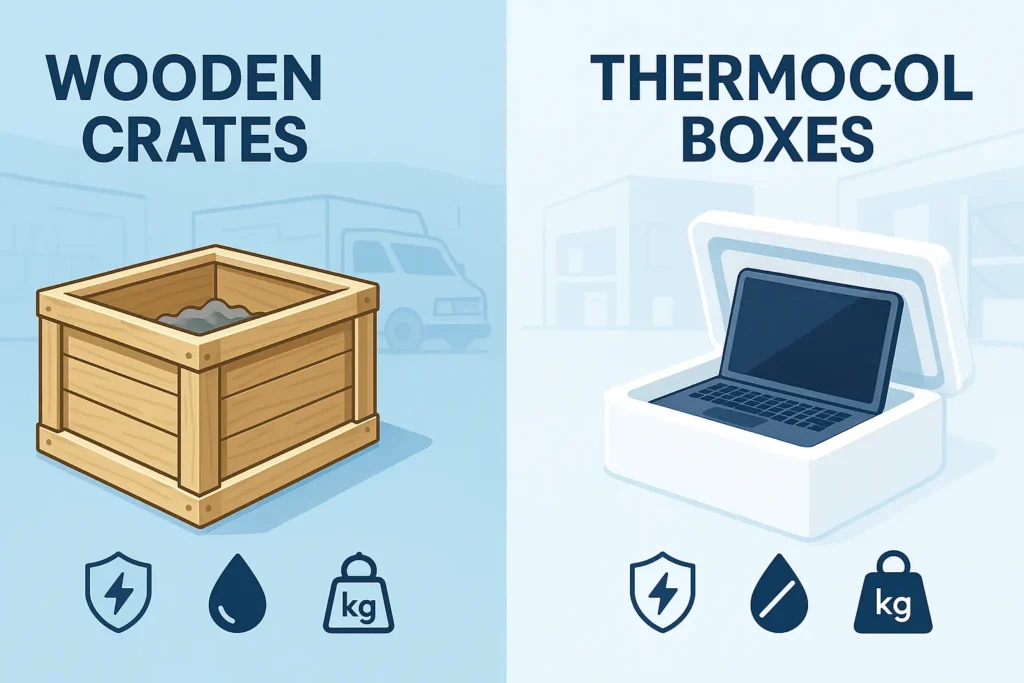
When you’re shifting sensitive electronics—LED TVs, computers, servers, printers, audio systems, or lab devices—Choosing the right packing material becomes just as important as choosing the right packers and movers services for safe electronics relocation.. Even top-rated movers like 6 Packers And Movers rely on a combination of sturdy packing materials to prevent damage from shocks, vibration, or moisture during transit.
Before deciding, it’s important to understand how wooden crates and thermocol boxes perform in terms of protection, durability, handling, and cost.
Electronics Packing Materials
Electronics are highly sensitive to shocks, vibration, static electricity, and moisture during shifting. The nature of modern electronic circuits demands materials that offer structural safety as well as internal cushioning. Both wooden crates and thermocol boxes (EPS) are widely used in India for securing fragile electronics, depending on weight, value, and distance of the move.
Why Electronics Need Specialized Packing
Electronics contain delicate components like PCBs, display panels, sensors, lenses, and connectors. These parts can break or malfunction due to:
- Sudden impacts
- Continuous vibration in trucks
- Humidity exposure
- Electrostatic discharge
- Compression or stacking pressure
Proper packing ensures shock resistance and stabilizes the device, preventing internal displacement and micro-cracks.
For high-value electronics, professional packers and movers in Coimbatore use a combination of thermocol cushioning and custom wooden crating to reduce transit damage.
Common Risks During Transit (Shocks, Vibrations, Moisture)
Electronics commonly face:
Risk Type | How It Affects Electronics |
Shock Impact | May damage fragile display panels or boards |
Vibration | Loosens screws, connectors, and internal mounts |
Moisture/Humidity | Causes rust, condensation, short circuits |
Stacking Pressure | Damages outer body or bends frames |
Overview of Wooden Crates and Thermocol Boxes
- Wooden Crates:
Heavy-duty structures made using plywood or timber, designed for maximum load-bearing and physical protection. - Thermocol Boxes (EPS Foam):
Lightweight cushioning containers that absorb shocks and protect lightweight electronics during short or medium-distance moves.
Both options are effective, but the right choice depends on the equipment type and moving conditions.
Many of these risks can be financially covered if you understand what transit insurance covers during house shifting.
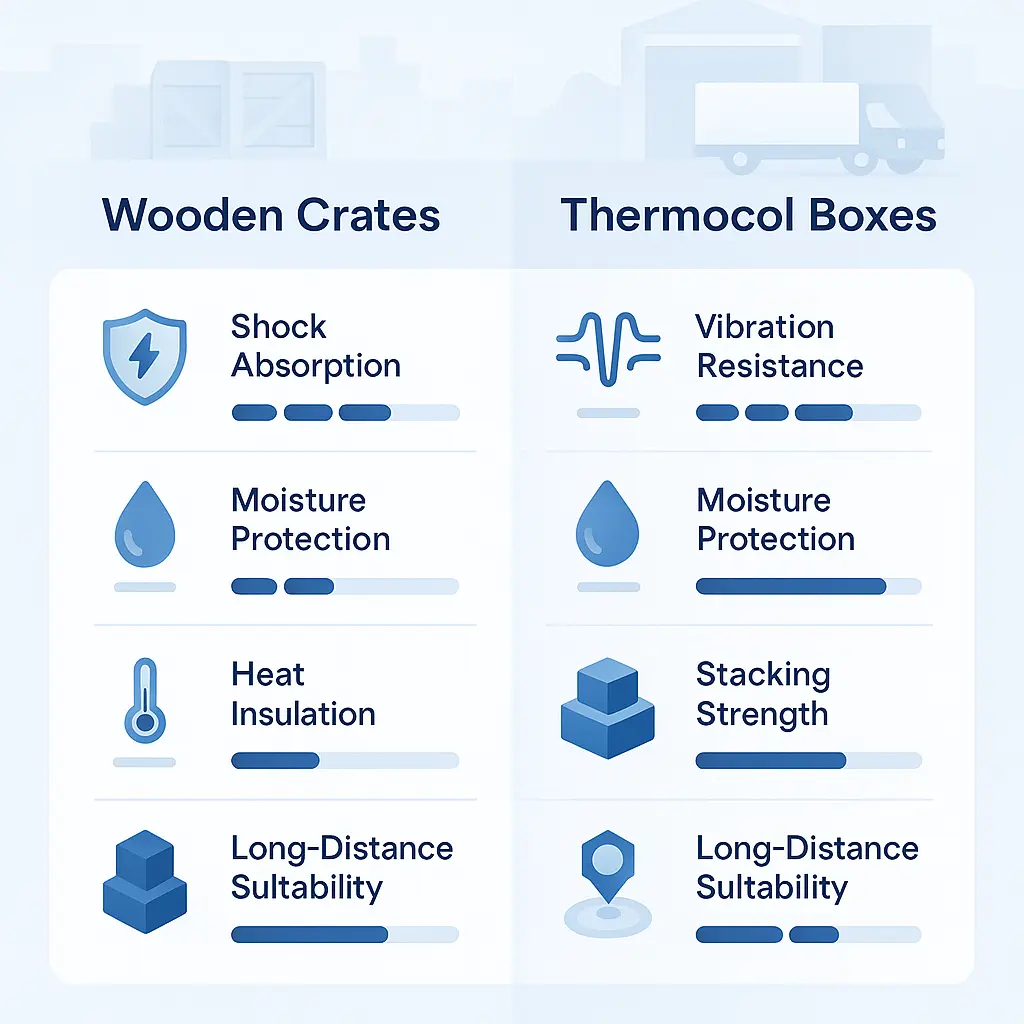
Protection Comparison – Wooden Crates vs Thermocol Boxes
Electronics require protection from sudden shocks, vibrations, moisture, and compression forces during transportation. Wooden crates and thermocol boxes provide very different levels of safety. Wooden crates offer structural strength, while thermocol provides cushioning. Understanding how each material performs helps homeowners choose the right packing method based on the weight and fragility of their devices.
Shock Absorption
- Thermocol Boxes:
EPS foam absorbs shocks effectively due to its soft cellular structure, making it ideal for lighter items. - Wooden Crates:
Crates offer structural protection, but shock absorption depends on the internal cushioning materials (foam, bubble wrap, molded thermocol).
Comparison:
Feature | Thermocol Box | Wooden Crate |
Shock Absorption | High | Medium (depends on internal padding) |
Risk During Fall | Lower for small items | Lower for heavy items |
Vibration Resistance
- Thermocol:
Good for absorbing small vibrations during short-distance local moves. - Wooden Crates:
Much better for long travel or uneven road conditions because of their rigid frame that prevents internal movement.
Best Use:
- Thermocol → Lightweight gadgets
- Wooden Crates → Heavy electronics & long-distance transport
Moisture & Weather Resistance
- Wooden Crates:
Wood can absorb moisture and may warp unless laminated or moisture-protected. - Thermocol:
EPS does not absorb water easily and offers better resistance to humidity.
Comparison:
Condition | Thermocol | Wooden Crate |
Moisture Resistance | High | Medium–Low (needs protection) |
Humidity Protection | High | Medium |
Heat Insulation
Thermocol has good natural insulation properties, reducing the impact of temperature fluctuations on electronics.
Wooden crates provide minimal insulation unless combined with foam or thermocol lining.
Protection in Long-Distance Transport
- Wooden Crates:
Best suited for long-distance and intercity moves because they can withstand stacking, road vibration, and loading stress. - Thermocol Boxes:
Suitable for local or short-distance moves but may get crushed in heavy stacking environments.
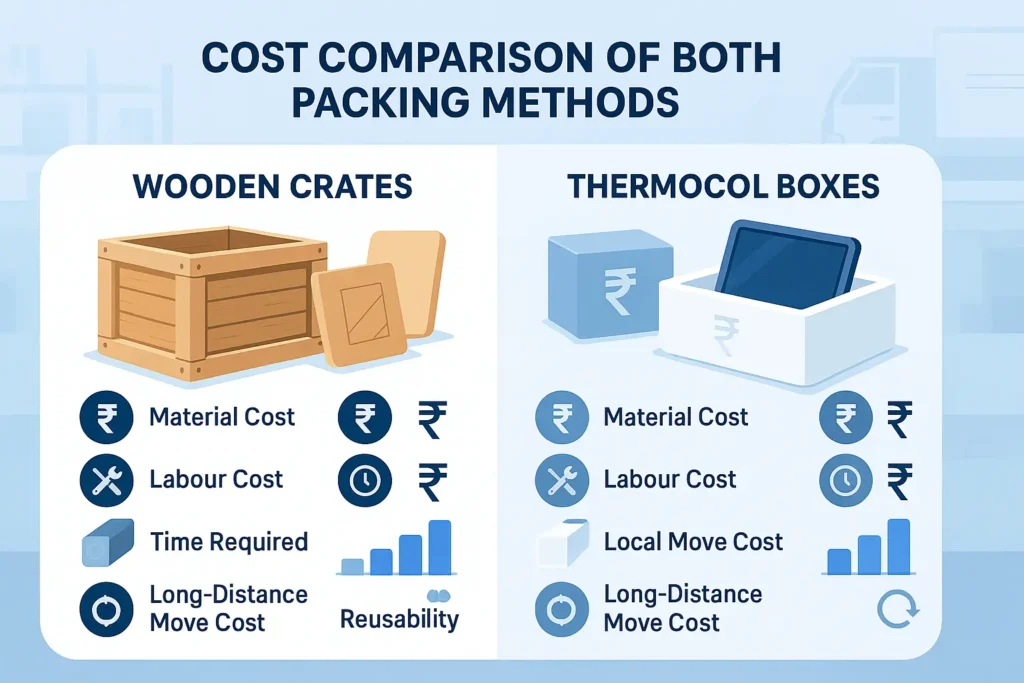
Cost Comparison of Both Packing Methods
The cost of packing electronics varies based on the material, size of the item, labor effort, and distance of the move. Thermocol boxes are generally cheaper and ideal for budget-conscious moves, while wooden crates involve higher material and fabrication costs but provide superior structural protection.
Packing costs are usually included in overall relocation charges, which vary based on distance, house size, and packing method used.
Material Cost Breakdown
Packing Material | Cost Level | Reason |
Thermocol Boxes | Low | EPS is inexpensive and easy to manufacture |
Wooden Crates | Medium–High | Requires plywood, timber, cutting, assembly, nails, and customization |
Thermocol is usually included as standard packing for small electronics, while crates are priced separately due to fabrication cost.
Labour Cost and Time Required
Thermocol Boxes:
- Quick to pack
- Minimal assembly
- Low labor effort
Wooden Crates:
- Requires measuring, cutting, and assembling
- Takes more time and skilled labor
- Increases overall shifting cost
This makes thermocol ideal for fast moves, while crates are chosen when safety is the priority.
Cost for Local vs Long-Distance Moves
Move Type | Thermocol | Wooden Crate |
Local Move | Very cost-effective | Relatively costly; may be unnecessary for small electronics |
Long-Distance Move | May not provide enough protection | Worth the higher cost due to structural safety |
Reusability and Long-Term Cost Savings
- Wooden Crates:
Highly reusable if kept in dry conditions.
Can be stored and used for future moves or shipping.
Offers better long-term value for expensive electronics. - Thermocol Boxes:
Low durability and easily damaged.
Not ideal for repeated use.
Typically disposable after one move.
Weight & Handling Differences
The weight and handling requirements of packing materials significantly affect the ease of transportation, loading, and labor costs. Thermocol boxes are extremely lightweight and convenient, while wooden crates are heavier but offer superior structural protection.
Weight of Wooden Crates vs Thermocol
Thermocol Boxes:
- Very lightweight
- Easy to lift and move
- Reduces the overall load on transport vehicles
Wooden Crates:
- Heavier due to plywood/timber construction
- Increases handling effort
- May add to transportation charges depending on size
Comparison:
Feature | Thermocol Box | Wooden Crate |
Weight | Very light | Moderate to heavy |
Impact on Transport Cost | Low | Medium–High |
Suitability | Small/medium electronics | Heavy or bulky electronics |
Manual Handling vs Mechanical Handling Requirements
- Thermocol Boxes:
Can be handled manually by 1–2 workers; ideal for household moves. - Wooden Crates:
May require trolleys, pallet jacks, or forklifts for large crates.
Better suited for heavy electronics like servers, refrigerators, and lab machines.
This difference makes thermocol convenient but restricts its use for large items.
Space Utilization in Transport Vehicles
Parameter | Thermocol Boxes | Wooden Crates |
Space Taken | Compact and easy to stack | Bulkier; may reduce available space |
Stacking Strength | Low (can get crushed) | High (can be placed at the bottom of stacks) |
Thermocol saves space but cannot bear weight, so it’s placed on top during loading.
Wooden crates, being rigid, can be placed at the bottom and support other items.
Eco-Friendliness and Disposal
Environmental impact is an important factor when selecting packing materials for electronics. Wooden crates and thermocol boxes differ significantly in recyclability, biodegradability, and disposal requirements.
Recyclability of Wood
Wooden crates are considered environmentally friendly because:
- Wood is a renewable resource
- Crates can be repaired, reused, or repurposed
- Plywood and timber can be recycled into various products
- Wooden packaging is biodegradable under natural conditions
These qualities make wood a sustainable choice, especially for high-value items or long-distance moves.
Environmental Impact of Thermocol Waste
Thermocol (EPS) is known for:
- Being non-biodegradable
- Breaking into micro-particles
- Requiring specialized recycling facilities
- Creating disposal challenges if not collected properly
While recyclable EPS options exist, many cities do not have easy access to such facilities, leading to improper disposal.
Regulations for Disposal & Sustainability Considerations
Wooden Crates:
- Accepted in most recycling and waste management systems
- Can be stored and reused for future shipments
- No harmful residue or chemical release during disposal
Thermocol Boxes:
- Must be disposed of responsibly
- Should be compacted before recycling
- Not suitable for burning due to toxic fumes
Comparison:
Factor | Wooden Crate | Thermocol Box |
Biodegradable | Yes | No |
Recyclable | High | Medium (depends on facility availability) |
Environmental Impact | Low | High |
Ease of Disposal | Easy | Difficult |
Best Use Cases for Wooden Crates
Wooden crates are the preferred packing choice when electronics require maximum structural protection, especially during long-distance transportation or when dealing with heavy and expensive items. Their durability and load-bearing capacity make them suitable for scenarios where thermocol boxes fall short.
High-Value Electronic Equipment
Wooden crates offer superior safety for:
- Servers & networking hardware
- High-end televisions (55” and above)
- Medical lab equipment
- Projectors and audiovisual systems
- Industrial-grade electronics
Why they work best:
- Strong exterior prevents dents, breaks, and external pressure
- Interior padding stabilizes internal parts
- Reduced risk of vibration-related damage
Overseas Shipping
For international transport, wooden crates are often mandatory because:
- They comply with export packing standards
- They withstand multiple handling stages
- They resist compression and stacking loads
- Offer better protection during sea or air cargo movement
Crates also reduce damage caused by temperature fluctuations and extended transit times.
Fragile, Heavy, or Bulky Electronics
Items that are heavy or oddly shaped benefit greatly from crating:
Type of Electronic | Why a Crate is Recommended |
Large LED/LCD TVs | Prevents bending or screen pressure |
Refrigerators & washing machines | Supports heavy weight |
Servers & CPUs | Prevents internal vibration |
Lab instruments | High fragility and precision |
Thermocol alone cannot support these weights, making wooden crates the safer option.
Best Use Cases for Thermocol Boxes
Thermocol (EPS) boxes are ideal when electronics require lightweight cushioning rather than heavy structural protection. Their shock-absorbing properties make them suitable for compact and delicate devices, especially during short-distance or intra-city moves.
Lightweight Electronics
Thermocol boxes work best for:
- Laptops
- Tablets
- Routers and modems
- Gaming consoles
- Speakers and soundbars
- CCTV cameras
- Small kitchen appliances
Why thermocol is ideal:
- Lightweight and easy to carry
- Provides effective cushioning
- Reduces the chance of scratches and external damage
Short-Distance Moves
For local relocation, thermocol boxes offer reliable protection at an affordable cost.
Benefits for short moves:
- Quick to pack and unpack
- Handles minor bumps and vibrations well
- Lower packing charges
- Suitable for fast-moving goods trucks in city conditions
Items Requiring Strong Shock Absorption but Not Structural Support
Certain electronics need cushioning but not a rigid outer shell. Thermocol is ideal when:
- The electronic item is not too heavy
- The risk of stacking pressure is low
- The move involves smooth roads
- The main goal is to prevent internal jarring
Examples:
Electronic Item | Why Thermocol Works |
Small audio devices | Great shock absorption |
Laptops & tablets | Impact protection during handling |
Wi-Fi routers | Light weight, low structural risk |
Mini home appliances | Fits snugly in EPS molds |
Expert Recommendations for Choosing the Right Packing Method
Choosing between wooden crates and thermocol boxes depends on several factors: weight, fragility, distance of the move, and handling conditions. Both packing materials serve different purposes, and selecting the right one ensures electronics remain safe throughout the shifting process.
Factors to Evaluate (Value, Weight, Distance, Fragility)
Before selecting packing material, evaluate:
- Value of the electronic item
High-value items require stronger outer protection like crates. - Weight of the device
Heavy items cannot rely on thermocol alone. - Distance & Road Quality
Long-distance or rough roads need rigid structural packing. - Fragility & Sensitivity
Fragile screens and precision equipment benefit from crate + cushioning layers.
Quick Decision Guide:
Factor | Best Choice |
Heavy electronics | Wooden crate |
Lightweight devices | Thermocol |
Long-distance moving | Wooden crate |
Local/city shifting | Thermocol |
High-value items | Wooden crate |
Budget-conscious moves | Thermocol |
When to Combine Both (Crate + Thermocol Inner Cushioning)
The safest packing method often uses both materials together, especially for:
- LED TVs
- Refrigerators
- Servers & CPUs
- Medical or lab instruments
- Large home appliances
How the combination works:
- Thermocol creates internal cushioning to absorb shocks.
- Wooden crate provides external structural strength to prevent compression, drops, or vibrations.
This dual-layer method ensures maximum safety during long-distance, intercity, or international transport.
Final Comparison
To help you clearly understand the strengths of each packing method, here is a complete side-by-side comparison of Wooden Crates vs Thermocol Boxes across all major factors that affect electronics safety during shifting.
Side-by-Side Feature Comparison
Feature / Parameter | Wooden Crates | Thermocol Boxes (EPS) |
Structural Strength | Very high (rigid protection) | Low (not load-bearing) |
Shock Absorption | Medium (depends on inner cushioning) | High (excellent foam cushioning) |
Vibration Control | Strong due to rigid frame | Basic vibration reduction |
Moisture Resistance | Medium (requires protection) | High (EPS doesn’t absorb water easily) |
Heat Insulation | Low | High |
Handling Weight | Heavy | Ultra lightweight |
Stacking Capability | Excellent | Poor (may get crushed) |
Reusability | High | Low |
Eco-Friendliness | Biodegradable & recyclable | Not biodegradable; limited recycling |
Cost | Medium–High | Low |
Best For | Heavy, large, expensive electronics | Lightweight gadgets & short-distance moves |
Long-Distance Suitability | Excellent | Limited |
Local Move Suitability | Good | Excellent |
Choosing between wooden crates and thermocol boxes depends on the type of electronic item, travel distance, and level of protection required. Thermocol boxes offer excellent shock absorption for lightweight gadgets during short moves, while wooden crates provide superior structural safety for heavy, fragile, or high-value electronics—especially during long-distance or interstate shifting. For maximum protection, many moves use both together: thermocol inside and a crate outside.
Planning a safe and damage-free electronics move? 6 Packers And Movers provides expert packing with high-quality thermocol molds, custom wooden crates, and multi-layer protection to keep your TVs, computers, appliances, and delicate gadgets secure during transit. Whether you’re shifting locally or across states, our trained professionals ensure reliable handling, premium materials, and complete peace of mind. Planning a safe and damage-free electronics move? Learn how to choose reliable packers and movers before booking your relocation service.