
Post-Move Unpacking & Setup Checklist
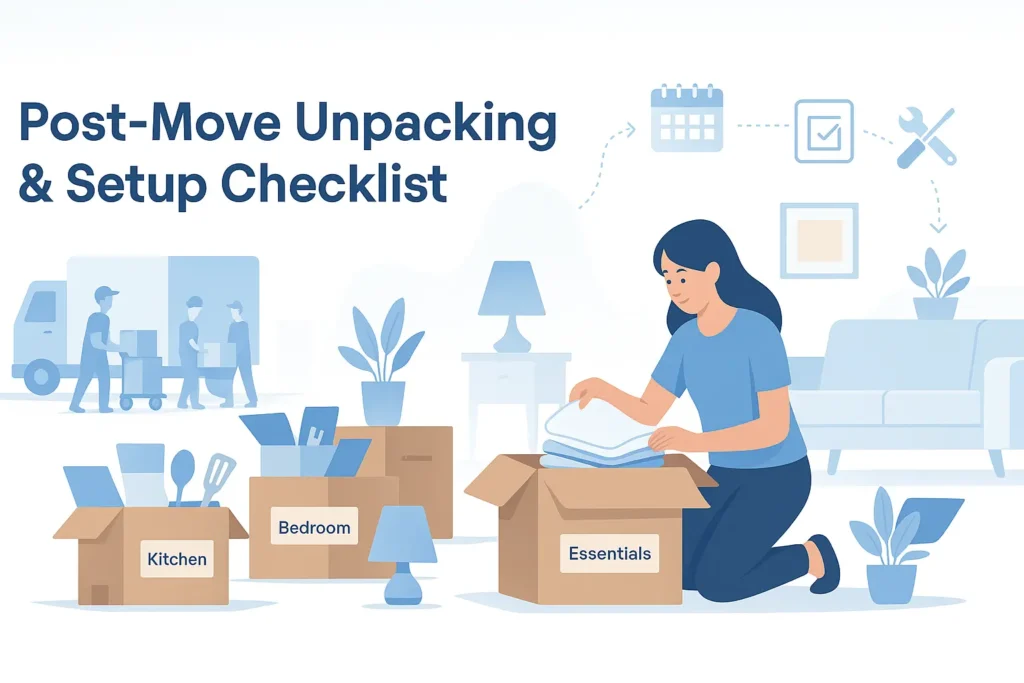
Moving is only half the journey—setting up your new home efficiently is what truly makes the relocation complete. After your goods arrive safely with the help of trusted Packers and Movers, the next step is to unpack smartly, organize each room, and ensure your home is functional from day one.
If you’ve recently relocated, professional packers and movers in Vijayawada can also assist with unpacking, reassembly, and post-move setup
Immediate Tasks to Do Right After Moving In
A smooth post-move experience begins with essential checks and quick actions. Verified relocation guides emphasize inspecting items, verifying utilities, and setting up basic essentials immediately after move-in.
What to Do First (Checklist)
- Inspect your home for visible damages or issues
- Verify utility connections: water, electricity, gas, internet
- Match delivered boxes with your moving inventory list
- Photograph damages or missing items and notify movers/landlord
- Unpack only critical essentials for the first few hours
Understanding what transit insurance covers during house shifting helps you handle damage claims correctly after delivery.
Immediate Post-Move Priorities
Task | Why It Matters |
Home inspection | Ensures issues are documented immediately |
Check utilities | Helps you settle in without disruptions |
Verify inventory | Confirms all items arrived safely |
Report damages | Enables claims or repair requests on time |
Prioritize essentials | Lets you comfortably function on day one |
Summary
- Start with safety + functionality
- Fix missing or damaged items early
- Ensure utilities are ready before full unpacking
Unpacking Room-by-Room – Start with the Essentials
Once the urgent tasks are complete, begin unpacking in a structured, priority-based order. Verified moving guides consistently recommend starting with essentials such as kitchen basics, bedroom setup, and bathroom necessities.
Where to Start (Essentials First)
- Kitchen essentials: plates, cups, cookware, basic appliances
- Bedroom setup: bed, mattress, pillows, bedsheets
- Bathroom necessities: toiletries, towels, shower items
- Daily-use items: a few clothes, medications, chargers
- Workspace basics (if required): laptop, table, power extensions
Room-by-Room Unpacking Priority
Room | Items to Unpack First | Why This Room Matters |
Kitchen | Utensils, stove, kettle, basic cookware | Allows you to prepare meals early |
Bedroom | Bed, pillows, linens | Ensures proper rest after a tiring move |
Bathroom | Toiletries, towels, cleaning supplies | Immediate personal hygiene needs |
Living Room | Basic seating, lighting | Improves comfort while unpacking |
Quick Checklist
- Unpack based on daily functionality, not room aesthetics
- Don’t open all boxes at once—stay organized
- Set up beds & bathrooms early for convenience
- Keep a trash bag handy for wrappers and packing debris
Pro Tip
Most relocation experts advise not rushing everything in one day—focus on immediate needs and spread the remaining unpacking over the next 2–3 days.
Organizing and Setting Up Your New Home
Once essentials are unpacked, the next stage is structured organization. Verified organizational and relocation guides emphasize decluttering while unpacking, assigning storage zones, and creating functional room layouts to avoid long-term clutter.
Key Organization Steps
- Declutter items during unpacking instead of storing unnecessary things
- Assign fixed storage zones for each category—kitchenware, linens, tools
- Arrange furniture based on room flow and daily routines
- Install shelves, hooks, racks, and organizers early for better space planning
- Clean each area as you unpack to maintain order
Home Organization Framework
Step | What to Do | Why It Helps |
Declutter | Remove duplicates, damaged items, unused belongings | Reduces long-term clutter |
Assign storage | Give every category a designated place | Improves daily efficiency |
Plan layout | Use floor space wisely; ensure easy movement | Enhances functionality |
Install organizers | Racks, shelves, wardrobe systems | Maximizes space utilization |
Clean as you go | Dust, mop, wipe surfaces while unpacking | Keeps home fresh & manageable |
Quick Checklist
- Unpack systematically, not randomly
- Use transparent bins for long-term storage
- Maintain one “unpack zone” to avoid spreading mess
- Start with high-use areas like kitchen, wardrobe, bathroom
- Keep donation and discard bags handy
Expert Tip
Organization experts recommend having a room layout plan before assembling large furniture, as it prevents rearranging later and speeds up setup.
Furniture Assembly, Appliance Installation & Home Setup
After basic organization, the next major step is assembling furniture and installing essential appliances. Verified relocation checklists highlight the importance of setting up heavy items first, reconnecting appliances safely, and ensuring home security measures are in place early.
If you’re unsure about safe handling, reading this complete guide on how packers and movers work can help you understand professional setup standards.
Key Setup Tasks
- Reassemble furniture such as beds, tables, wardrobes
- Install major appliances: refrigerator, washing machine, microwave, AC
- Connect electronics: TV, Wi-Fi router, computer systems
- Set up home safety systems: locks, cameras, alarms
- Position heavy items before styling the space to avoid rework
Furniture & Appliance Setup Guide
Task | What to Focus On | Why It Matters |
Furniture assembly | Beds, wardrobes, dining table, work desk | Provides structure to each room |
Install appliances | Fridge, washer, microwave, AC | Ensures daily comfort & convenience |
Connect electronics | TV, router, laptops, chargers | Sets up connectivity & entertainment |
Home security | Change locks, add cameras, check door/window safety | Enhances home security & privacy |
Heavy item placement | Move sofas, cupboards, beds before décor | Prevents repeated rearranging |
Quick Checklist
- Assemble beds and wardrobes before unpacking clothes
- Ensure appliances are connected using proper plugs and stabilizers
- Test electrical points before setting up electronics
- Confirm proper ventilation for fridge, washing machine, and cooking appliances
- Install curtains or blinds early for privacy
Expert Tip
Security experts recommend changing or re-keying locks immediately after moving, as previous occupants or service providers may still have access.
Handling Packing Materials & Post-Move Cleanup
Once your furniture and appliances are set up, the next step is managing leftover packing materials and restoring cleanliness in your home. Verified organizational guides recommend sorting reusable materials, recycling what you can, and doing a thorough cleanup after major unpacking to prevent clutter build-up.
How to Handle Packing Materials
- Sort items like cartons, bubble wrap, foam sheets, and packing paper
- Reuse or return cartons if your movers offer a take-back option
- Dispose of waste responsibly as per local municipal guidelines
- Keep reusable boxes for storage, seasonal clothes, or documents
- Remove packing debris daily to keep your home clean during setup
Packing Materials & Cleanup Plan
Task | What to Do | Why It Matters |
Sort packing materials | Separate reusable and non-reusable items | Helps reduce waste |
Return/recycle boxes | Give cartons back to movers or recycling centers | Minimizes clutter |
Proper disposal | Follow local garbage rules for cardboard & plastic | Environmental safety |
Deep clean | Vacuum, mop, dust surfaces after unpacking | Restores hygiene & freshness |
Fix minor issues | Check for scratches, loose screws, wall marks | Helps maintain condition |
Quick Checklist
- Collapse and stack cardboard boxes neatly
- Wipe down surfaces exposed during unpacking
- Clean kitchen counters before arranging groceries
- Remove packing tape residue from floors or furniture
- Keep tools (scissors, cutter, tape) handy for organized cleanup
Expert Tip
Relocation guides suggest cleaning each room immediately after unpacking it, instead of leaving cleaning for the end. This keeps the home neat and reduces effort.
Settling into Your New Neighborhood
After your home is organized and cleaned, the final step is integrating smoothly into your new surroundings. Verified relocation checklists emphasize the importance of understanding local services, updating addresses, meeting neighbors, and getting familiar with nearby amenities to establish comfort and routine quickly.
Key Neighborhood-Settlement Tasks
- Meet your neighbors and understand community rules or guidelines
- Locate essential services: grocery stores, hospitals, pharmacies, and petrol pumps
- Explore local transportation routes and your daily commute options
- Update your address across banks, delivery apps, ID records, and utility providers
- Register for local waste collection schedules and society maintenance procedures
Neighborhood Integration Checklist
Task | What to Do | Why It Helps |
Meet neighbors | Introduce yourself, understand society rules | Builds community support |
Locate essentials | Identify hospitals, markets, pharmacies | Ensures quick access in emergencies |
Learn commute routes | Bus stops, metro stations, shortcuts | Saves time for daily travel |
Update address | Banks, IDs, subscriptions, delivery apps | Prevents missed bills & parcels |
Understand waste system | Learn local garbage rules, timings | Keeps your home compliant & clean |
Quick Checklist
- Explore parks, gyms, and community areas
- Save emergency contacts like security guard, local police, and hospital
- Ensure your kids or pets understand the new environment
- Join local WhatsApp or resident groups for updates
- Note quiet hours or community-specific rules
Expert Tip
Most relocation checklists recommend updating your official address immediately to avoid delays in receiving mail, parcels, or important documents.
Post-Move Stress Management & Planning Ahead
Moving into a new home can be overwhelming, and expert relocation guides consistently highlight the importance of breaking tasks into manageable steps, involving family members, and taking scheduled breaks to avoid post-move fatigue.
How to Manage Post-Move Stress
- Break unpacking into small daily goals instead of rushing everything
- Prioritize essential spaces first, then move to decor and long-term setup
- Involve family members to share workload and speed up the process
- Take rest breaks to avoid burnout—moving is physically and mentally draining
- Celebrate progress to maintain motivation and reduce transition anxiety
Stress-Free Post-Move Planning
Task | What to Do | Why It Helps |
Set daily goals | Unpack 2–3 boxes per day per person | Prevents exhaustion & clutter |
Involve family | Delegate age-appropriate tasks | Builds teamwork & reduces workload |
Take breaks | Short rests, hydration, relaxation | Supports physical & mental well-being |
Celebrate milestones | Appreciate progress & reward efforts | Boosts motivation |
Quick Bullet Checklist
- Don’t pressure yourself to finish everything in a single day
- Keep kids and pets engaged to reduce stress
- Play music or podcasts to create a relaxing atmosphere while unpacking
- Avoid perfection early on—functional setup is more important than décor
- Plan decor changes gradually over the next 1–2 months
Expert Tip
Relocation experts suggest spreading your unpacking over a few days, allowing the household to settle in comfortably without physical or emotional burnout.
Whether you’re unpacking in your new home or preparing for an upcoming relocation, partnering with trusted professionals makes all the difference.
6 Packers And Movers ensures smooth shifting, safe packing, reliable transport, and stress-free setup from start to finish.
If you’re planning your next move, following a proper moving checklist and choosing verified professionals early can save time, cost, and stress.
FAQs – Post-Move Unpacking & Setup Checklist
The first steps include inspecting the house for damages, checking utility connections like electricity and water, and matching your delivered boxes with the inventory list. These actions help identify issues early and ensure your home is functional from day one.
Experts recommend starting with essential rooms: the kitchen, bedroom, and bathroom. These spaces support daily living and comfort, such as cooking meals, showering, and resting properly.
Use a room-by-room approach, assign storage zones for each category, declutter as you unpack, and install shelves or organizers early. This prevents disorder and helps optimize space effectively.
Large furniture like beds and wardrobes should be assembled early because they shape each room’s layout. Appliances such as the fridge, washing machine, and microwave should be installed once their proper locations and power outlets are confirme.
Sort materials into reusable and non-reusable piles. Recycle cartons whenever possible and follow local waste disposal rules for cardboard and plastic. Deep-clean each room as soon as unpacking is complete.