
Budget Planning Checklist for a Cost-Effective Move: How to Estimate, Save, and Avoid Hidden Charges
A well-planned budget is the backbone of a smooth, stress-free relocation. Whether you’re moving locally within your city or shifting long-distance, understanding the exact costs involved helps you avoid unexpected expenses, negotiate better with movers, and make smarter decisions at every step. Proper budgeting becomes even more important when working with professional moving partners like Packers and Movers, because pricing varies based on home size, volume of goods, packing materials, distance, labor, and additional services. Verified industry data shows that shifting costs depend primarily on factors such as volume/weight, distance, packing quality, type of truck (shared or dedicated), and add-on services like furniture dismantling or appliance handling. Being aware of these elements allows you to accurately estimate your expenses, plan ahead, compare quotes, and avoid hidden fees.
1. Calculate Your Moving Budget Accurately
List All Expected Moving Expenses
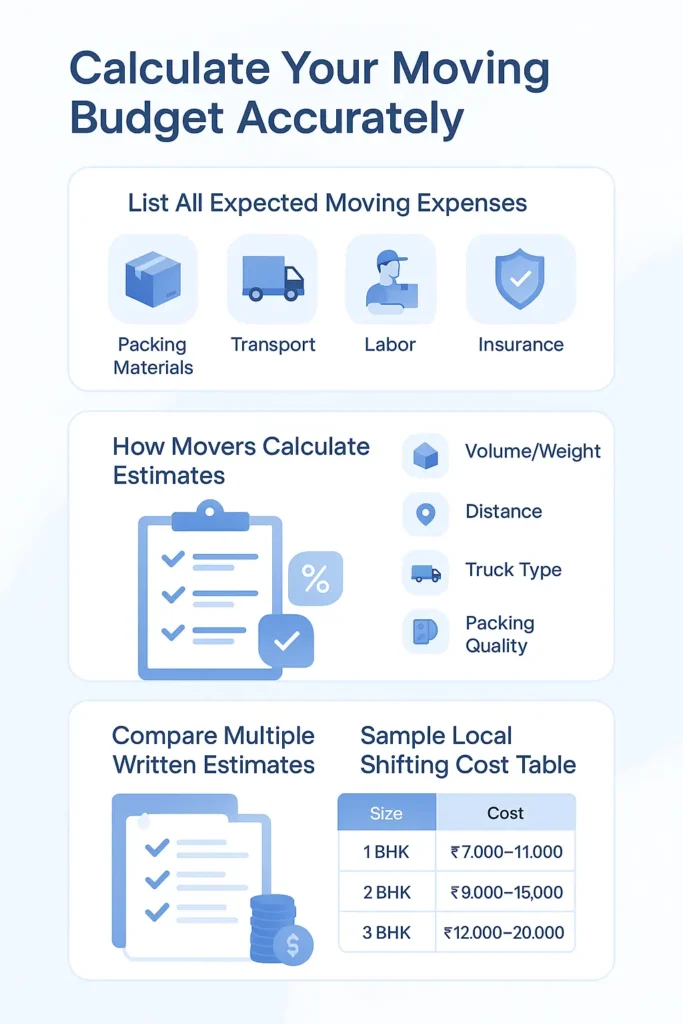
Your moving budget should cover every cost category that may arise during the relocation. Verified online cost calculators indicate that total charges are usually broken down into packing charges, loading & unloading labor, transportation, and insurance. For example, typical local shifting estimates for different home sizes are:
Estimated Local Shifting Cost Range (All-Inclusive)
Home Size | Estimated Cost Range |
1 BHK | ₹4,500 – ₹12,000 |
2 BHK | ₹7,000 – ₹17,000 |
3 BHK | ₹10,500 – ₹21,000 |
4 BHK | ₹12,500 – ₹26,000 |
These ranges vary based on packing material quality, labor count, and the distance between pickup and drop locations.
Include the following in your expense list:
- Packing materials
- Transportation charges
- Loading & unloading labor
- Insurance
- GST, tolls, parking fees (if applicable)
- Optional services (dismantling, unpacking, appliance handling)
Understand How Movers Calculate Estimates
Verified industry sources confirm that movers primarily calculate costs using the following criteria:
Key Cost Factors:
- Volume/Weight of Goods – More items = higher packing + transport cost
- Distance of Move – Local vs. intercity
- Type of Truck – Shared trucks cost less; dedicated trucks cost more
- Packing Material Quality – Premium packing increases the cost
- Labor Requirement – Additional manpower increases charges
- Home Size & Accessibility – Narrow lanes, no lift, long carry distances add cost
A pre-move survey (video or in-person) is crucial to get an accurate estimate.
For a detailed explanation of pricing components, refer to our complete packers and movers cost guide.
Compare Written Estimates from Multiple Movers
Always collect written quotations from at least 3–5 movers to understand price variations. Costs may differ depending on the services included or excluded.
What to look for in written estimates:
- Clear breakdown of all services
- Packing material details
- Truck type (shared/dedicated)
- Insurance cost
- Additional service charges
- GST inclusion
Choosing the lowest quote is not always the best choice—cheaper providers may exclude key services or add hidden costs later.
Before finalizing any quote, review our guide on how to choose the best packers and movers to avoid unreliable providers.
2. Identify and Avoid Hidden Moving Charges
Unexpected charges are one of the biggest reasons people go over budget during a move. Many movers provide a base estimate that covers transportation, basic packing, and labor—but additional conditions, services, or building-related difficulties can lead to extra fees. These hidden or situational charges often appear on the final bill if they were not clarified during the pre-move survey. Verified industry sources list common hidden charges such as long-carry fees, handling heavy items, premium packing upgrades, storage charges, and additional manpower requirements.
Understanding these potential add-ons helps you negotiate better and request a truly all-inclusive estimate before booking a mover.
It’s equally important to understand what is excluded from packers and movers charges to prevent last-minute billing surprises.
Common Hidden Charges to Watch For
Several extra costs may apply depending on your building layout, distance from parking, or the type of items being moved.
Typical Hidden Cost Categories
Hidden Charge Type | When It Applies | Why It Increases Cost |
Long Carry Charges | When truck cannot park near your building | Labor needs to carry goods a longer distance |
Staircase / Floor Charges | If lift is unavailable or too small | Additional physical effort and manpower |
Heavy Item Handling | Pianos, safes, large wardrobes, marble tables | Requires more workers + special handling |
Dismantling & Reassembly | Beds, wardrobes, modular furniture | Skilled labor and extra time required |
Premium Packing Material | Bubble wrap, foam sheets, wooden crates | Higher material and labor cost |
Storage Charges | When delivery is delayed or goods stored overnight | Storage facility + security cost |
Additional Stop Charges | If truck needs to halt at multiple locations | Fuel + extra time |
These charges are legitimate but must be disclosed before the move.
Clarify Add-On Service Costs
Some services are not included in standard moving packages offered by movers. If you require these, ask for exact pricing in writing:
- Appliance installation or uninstallation
- AC dismantling and fitting
- TV wall-mount removal
- Packing of high-value fragile items
- Extra manpower during peak hours
- Last-minute booking charges during weekends or month-end
- Storage of goods due to delayed possession
Additional services like special packing of fragile goods or handling bulky furniture can significantly increase the final bill if not discussed earlier.
How to Ask Movers the Right Cost Questions
To avoid surprise charges, ensure your mover gives you an itemized, all-inclusive estimate.
Ask the following questions during your survey (video or in-person):
Important Questions:
- “Is everything included in this estimate—packing, transport, loading, unloading, and labor?”
- “Are GST, tolls, or parking fees included?”
- “Will you charge extra if the lift is unavailable?”
- “Is there a long-carry charge if the truck cannot park near the building?”
- “Does dismantling and reassembly cost extra?”
- “What packing materials are included in the quoted price?”
- “Are there any conditions under which the price may increase?”
Getting clear answers ensures you receive a transparent estimate and helps prevent disputes later.
3. Plan Expenses in Advance to Avoid Last-Minute Costs
Advance planning is one of the most effective ways to control your moving budget. Many last-minute costs arise simply because customers book movers too late, buy supplies urgently, or forget to schedule critical pre-move tasks. Verified industry data indicates that early booking—ideally 10–15 days in advance—can help you save on shifting charges, especially during peak demand periods such as weekends and month-ends . Planning your timeline, preparing your home early, and optimizing your purchase decisions can significantly reduce unnecessary expenses.
Create a Moving Timeline for Better Budget Control
A structured timeline ensures you’re not rushed into urgent purchases or high last-minute charges. Early preparation also gives you time to compare quotes, negotiate rates, and find reliable movers like professional packers and movers in Lucknow.
Recommended Pre-Move Timeline
Time Before Move | Tasks | Why It Saves Money |
15–20 Days Before | Compare 3–5 mover quotes, book early | Early booking helps avoid peak pricing |
10–12 Days Before | Start decluttering, plan donations/selling | Reduces total volume → lowers packing & transport cost |
7–10 Days Before | Purchase packing supplies if self-packing | Avoids expensive, last-minute purchases |
5–7 Days Before | Notify utilities, arrange lift/truck permits | Prevents delays or overtime labor |
1–3 Days Before | Final packing check, label essentials | Improves efficiency on moving day |
Pre-Move Purchase Planning
When you buy items at the last minute—tools, storage boxes, extension cords, cleaning supplies—you usually pay more due to urgency or limited availability. Planning ahead helps you cut these costs significantly.
Smart Pre-Move Buying Strategy
- Buy supplies early for the best prices (tape, labels, bubble wrap alternatives).
- Reuse old boxes from electronics, supermarkets, or friends.
- Borrow tools like screwdrivers, wrenches, or trolleys instead of renting.
- Avoid buying new furniture before moving, as it increases load volume.
Industry guidance shows that decluttering before the move, combined with self-packing for non-fragile items, can reduce overall shifting charges.
Take Advantage of Off-Season Discounts
Moving costs fluctuate based on the demand cycle. Movers often charge more during:
- Month-end
- Weekends
- Festive seasons
- Peak shifting months (March–June)
You can save significantly by booking during low-demand periods. Verified relocation guides confirm that choosing mid-month weekdays often results in lower rates and better service availability.
Best Time to Shift for Cost Savings
Time Period | Demand Level | Impact on Cost |
Weekdays (Mon–Thu) | Low–Moderate | Lower rates, more slot availability |
Mid-Month (10th–20th) | Low | Movers offer better pricing |
Festive/Month-End | High | Higher labor & vehicle charges |
Off-Season Months (Aug–Feb) | Low | Best chance for discounted rates |
Scheduling early and choosing a weekday or mid-month date is one of the simplest ways to reduce your moving bill without compromising service quality.
4. Track, Monitor & Adjust Your Moving Budget
Once you have created a budget and planned your relocation timeline, the next step is tracking and updating your expenses as the move progresses. Budget monitoring helps prevent overspending and ensures you stay in control of every financial decision—from booking movers to buying supplies. Verified relocation checklists emphasize the importance of keeping a written or digital budget, storing receipts, and updating expense categories throughout the move.
A well-maintained budget sheet will reflect both planned and actual expenses, helping you identify cost overruns early and adjust where needed.
Use a Moving Budget Sheet
Creating a simple budget sheet—either in Excel, Google Sheets, or a mobile notes app—allows you to assign estimated and actual amounts for each cost category. This provides clarity when comparing multiple mover quotes and helps you manage last-minute purchases efficiently.
Recommended Budget Categories
Category | What to Track | Notes |
Packing Costs | Boxes, tape, bubble wrap alternatives | Compare with quotes to avoid double spending |
Labor Charges | Loading & unloading fees | Mention number of workers and hours |
Transportation | Truck type, distance, fuel charges | Shared vs. dedicated truck impacts cost |
Insurance | Transit or comprehensive coverage | Understand deductibles and terms |
Additional Services | AC uninstallation, furniture dismantling | Confirm pricing beforehand |
Utility & Setup Costs | Gas, electricity, wifi reconnection | Often forgotten but essential |
Contingency Fund | Minimum 5–10% of total budget | Prevents financial surprises |
Having this sheet ready also helps you communicate clearly when comparing services from professional movers listed on your Packers and Movers page.
Prepare a Contingency Fund
Even the best-planned moves can encounter unexpected issues—delayed possession, building restrictions, last-minute packing, or emergency purchases. Verified relocation planners recommend keeping 5–10% of your total estimated budget aside as a buffer.
Your contingency fund should cover:
- Sudden need for extra packing materials
- Overtime labor charges
- Parking fee or last-minute tolls
- Temporary storage if your new home isn’t ready
- Immediate cleaning or repair expenses at the new home
This fund protects you from financial stress and ensures that the move continues smoothly even when unexpected situations arise.
Evaluate Cost-Saving Opportunities
Tracking your expenses during the planning phase also helps you identify areas where you can reduce costs. Verified moving guides highlight several proven methods for lowering shifting charges, including decluttering, choosing the right truck type, and self-packing selected items.
Effective Cost-Saving Techniques:
- Downsize your belongings
Sell or donate unused items to reduce volume and cut packing + transport cost. - Choose a shared truck for intercity moves
Shared transport is significantly cheaper than booking a dedicated truck. - Self-pack non-fragile items
Books, clothes, and linens can be packed using household materials to save money. - Avoid premium packing unless necessary
Wooden crates, foam padding, and bubble wrap increase overall charges. - Stick to your pre-move shopping list
Avoid impulse buys—purchase only essentials.
These small decisions add up and can help you maintain budget discipline throughout the moving process.
5. Reduce Moving Costs with Smart Decisions
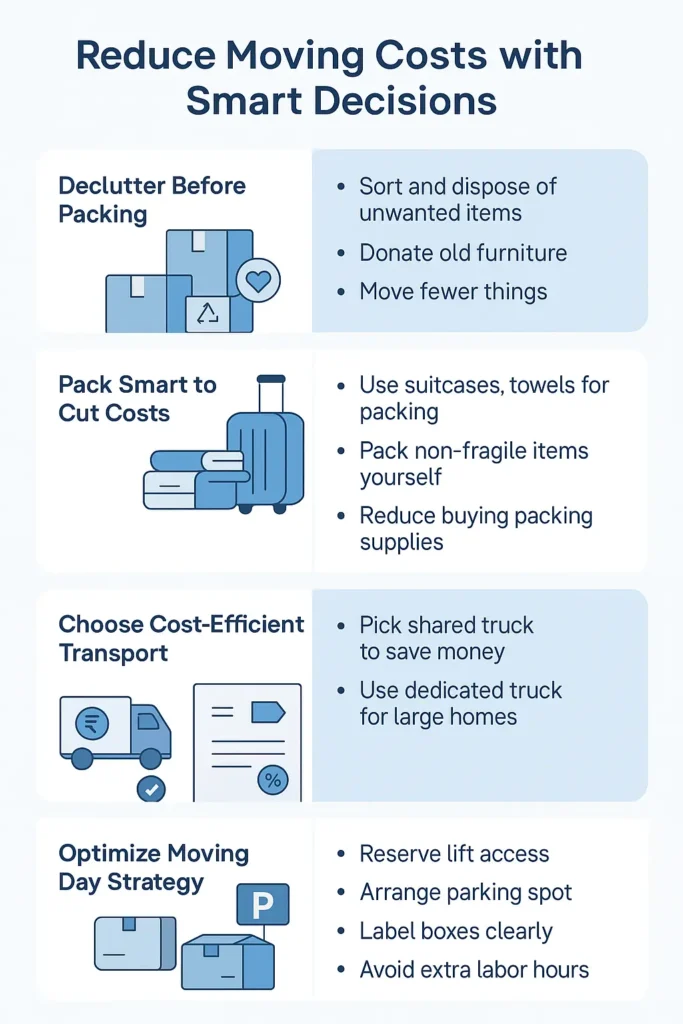
Smart planning and informed choices can significantly reduce your overall moving cost. Many budget leaks occur due to unnecessary packing, carrying unwanted items, or choosing premium services that are not essential. Verified relocation guides show that decluttering, self-packing non-fragile items, and selecting the right vehicle type (shared or dedicated) are among the most effective ways to reduce shifting expenses.
Similarly, choosing economical packing alternatives and preparing your home properly can prevent labor delays and avoid extra charges.
Here are the most impactful decisions you can make to ensure a truly cost-effective move.
Declutter Before Packing
Decluttering is one of the simplest yet most powerful cost-saving strategies. Since movers calculate charges based on the volume and weight of goods—especially for intercity moves—reducing the number of items directly reduces transport, packing material, and labor costs.
Examples of Items to Declutter
- Old clothes, shoes, and accessories
- Outdated electronics
- Broken or unused appliances
- Old books or magazines
- Worn-out or bulky furniture
- Duplicate household items
Verified moving cost guides confirm that downsizing before shifting can noticeably lower the total moving bill.
You may also list your items on OLX, Facebook Marketplace, or donate to NGOs before the move.
Pack Smart to Cut Costs
Self-packing some items reduces the need for full-service packing and lowers the total bill. You do not need professional packing for everything—non-fragile items can be packed safely using household alternatives.
Items You Can Self-Pack
- Clothes, towels, bedsheets
- Books and stationery
- Toys
- Lightweight kitchen items (plastic containers, cutlery)
Use Household Materials Instead of Buying New
- Towels & blankets → Wrap fragile items
- Suitcases & travel bags → Replace cardboard boxes
- Laundry baskets → Carry lightweight items
- Newspapers → Cushion gaps inside boxes
Avoiding premium packing materials wherever possible helps keep costs under control.
Optimize Moving Day Strategy
A well-planned moving day prevents overtime labor charges, delays, and last-minute service fees. Ensuring easy access for the truck and arranging building permissions in advance can significantly reduce operational challenges.
Checklist for a Smooth, Cost-Efficient Moving Day
- Reserve building lift access in advance to avoid staircase charges.
- Ensure truck parking space near the building to avoid long-carry fees.
- Get necessary permissions from society management for loading/unloading.
- Label boxes clearly to speed up unloading and reduce labor hours.
- Keep cash/UPI ready for small expenses like tolls or tips.
These steps reduce the chances of unexpected charges and make the work easier for the movers.
If you need trusted relocation professionals for a smooth move, your users can explore Packers and Movers for verified service providers.
6. Verify Movers to Avoid Fraud & Overcharging
Verifying the credibility of your moving company is one of the most important steps in preventing financial loss, hidden charges, or service-related disputes. Many customers overpay because they select movers solely based on the lowest quote without checking company legitimacy, service history, or terms of insurance coverage. Verified online relocation guides emphasize the importance of checking GST registration, office address, ID proof of staff, and reviewing customer feedback patterns before finalizing any packers and movers.
Doing this prevents last-minute surprises and ensures you pay for genuine, professional service. You should also learn how to verify genuine packers and movers before trusting any low quote.
Check Company Credentials
Before hiring any mover—especially for intercity or long-distance shifting—verify their business details thoroughly. Legitimate moving companies openly provide documentation.
Essential Credentials to Verify
- GST Registration Number
- Registered Business Address
- Official Website & Active Contact Number
- ID Proof of the Surveyor or Company Staff
- Written Estimate with Terms & Conditions
A genuine mover will never hesitate to share these details.
Read Customer Reviews & Complaint Patterns
Looking at ratings alone is not enough—focus on the patterns of complaints or praise in the reviews. Verified relocation guidance suggests paying special attention to complaints about hidden charges, delays, or damage because these are strong indicators of unreliable service.
Red Flags in Reviews
- Reports of last-minute price increases
- Complaints about damaged or missing goods
- Frequent mentions of rude or unprofessional staff
- Multiple reviews noting hidden or unexpected fees
- No response from company to negative reviews
Positive Indicators
- Transparent communication
- Timely delivery
- Helpful staff
- Good handling of fragile items
- Clear billing practices
Review research helps you choose a mover who fits your budget and maintains service quality.
Understand Insurance Clauses
Insurance is one of the most misunderstood parts of moving costs. While many movers offer transit insurance, customers often overlook important conditions, deductibles, and exclusions—leading to disputes during claim settlements.
According to verified industry resources, insurance charges depend on the value of goods and the type of coverage selected, such as transit-only or full (comprehensive) coverage.
To avoid claim disputes, read what transit insurance covers during house shifting before booking movers.
Types of Moving Insurance
Insurance Type | Coverage | Notes |
Transit Insurance | Covers damage during transportation only | Does NOT cover damage during loading/unloading |
Comprehensive Insurance | Covers loading, unloading, transportation, and delivery | More expensive but safer |
Key Questions to Ask Movers
- “What does the insurance cover and exclude?”
- “What is the claim process in case of damage?”
- “Is there any deductible amount?”
- “Do you provide official receipts for insurance payment?”
Understanding these clauses protects your budget from unexpected losses and ensures transparency with the mover.
7. Final Budget Review Before Moving Day
A final budget review ensures you enter moving day with full clarity on costs, services, timelines, and payment terms. Most last-minute expenses occur because customers forget to confirm small but crucial details such as labor count, truck size, GST, parking fees, or dismantling charges. Verified relocation checklists recommend reconfirming every cost component with your mover a day or two before shifting, ensuring there are no surprises during loading or unloading.
This final review helps you avoid disputes, ensures transparency, and keeps your moving budget fully under control.
Reconfirm All Charges with the Mover
Before moving day, speak with your mover and reconfirm your entire service package. Many disputes arise because customers assume certain tasks are included, when they are actually additional services.
Points to Reconfirm
- Truck type (shared or dedicated)
- Truck size (important for apartment moves)
- Number of laborers assigned
- Packing materials included
- Dismantling and reassembly charges
- GST and additional taxes
- Toll, parking, and long-carry costs (if any)
Verified guides emphasize that reconfirming your requirements prevents unexpected cost escalations on the moving day.
For reliable service providers, users can also refer to Packers and Movers.
Double-Check Your Payment Schedule
Understanding when and how much to pay helps prevent disputes and ensures a smooth transaction. Movers may have different payment structures depending on distance, service type, and contractual terms.
Typical Payment Structure
Stage | What You Pay | Notes |
Booking Confirmation | Small advance (varies by mover) | Ensures your slot is reserved |
Loading Day | Partial payment | Common for long-distance moves |
After Delivery | Remaining balance | Always pay only after receiving and inspecting goods |
For shared truck transport, many verified industry resources recommend paying a smaller portion upfront and completing payment only after delivery, as shared trucks involve multiple stops.
Final Payment Checks
- Ensure the amount matches the written estimate
- Ask for proper tax invoice
- Get receipts for insurance or additional services
Clear payment structure = zero confusion on the moving day.
Prepare a Post-Move Expense Estimate
Many overlooked expenses occur after you shift into your new home. Preparing for these costs helps you avoid overspending in the first week after relocation.
Typical Post-Move Costs
- Furniture reassembly or minor carpentry
- Utility setup fees (gas, Wi-Fi, electricity)
- Cleaning or pest control
- Purchase of missing household items
- New locks, curtains, or hardware
- Tip for movers (optional)
Verified moving guides highlight the importance of budgeting for utilities and essential purchases immediately after shifting.
Your final budget review ensures that everything is aligned—pricing, timeline, truck size, labor, routes, and post-move costs. Following expert Moving Tips can help you identify hidden charges and plan better. This step closes all gaps and prepares you for a smooth, transparent, and financially controlled moving experience.
Looking for trusted, affordable packers and movers in Bangalore for your upcoming relocation? Get free quotes from verified moving experts, compare prices, and choose the best service for your budget. Move safer, smarter, and without hidden costs. Begin your seamless shifting experience today.