
Where to Get Free Moving Boxes: A Complete Guide for Budget-Friendly Relocation
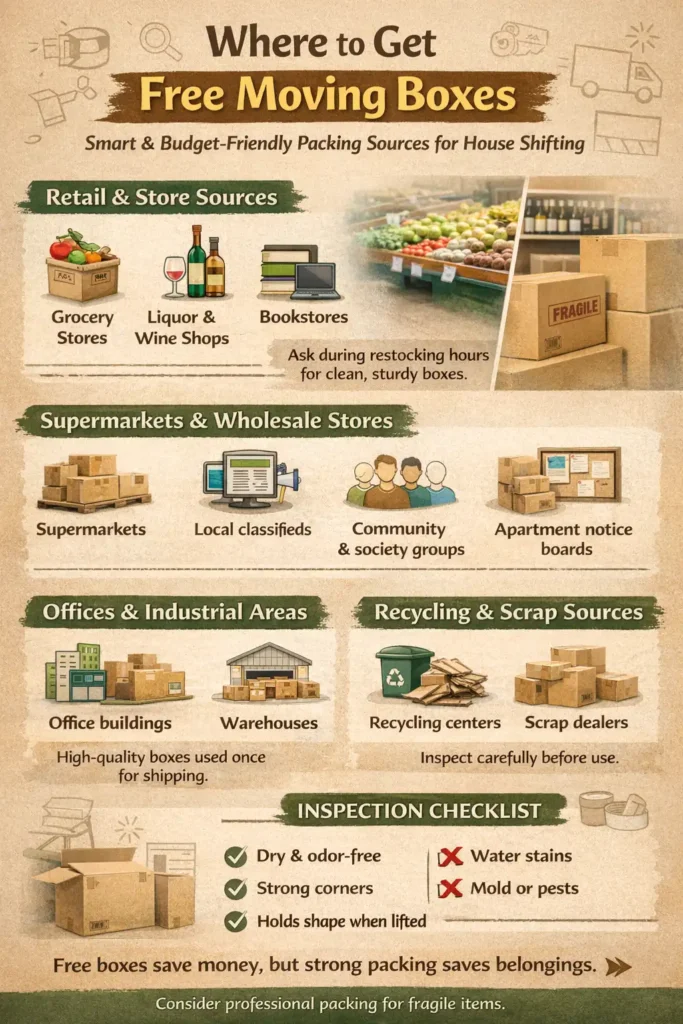
Free moving boxes can be found at grocery stores, liquor shops, supermarkets, offices, recycling centers, and through friends or local community groups. Always inspect boxes for strength, cleanliness, and moisture damage before packing to ensure safe transportation during your move.
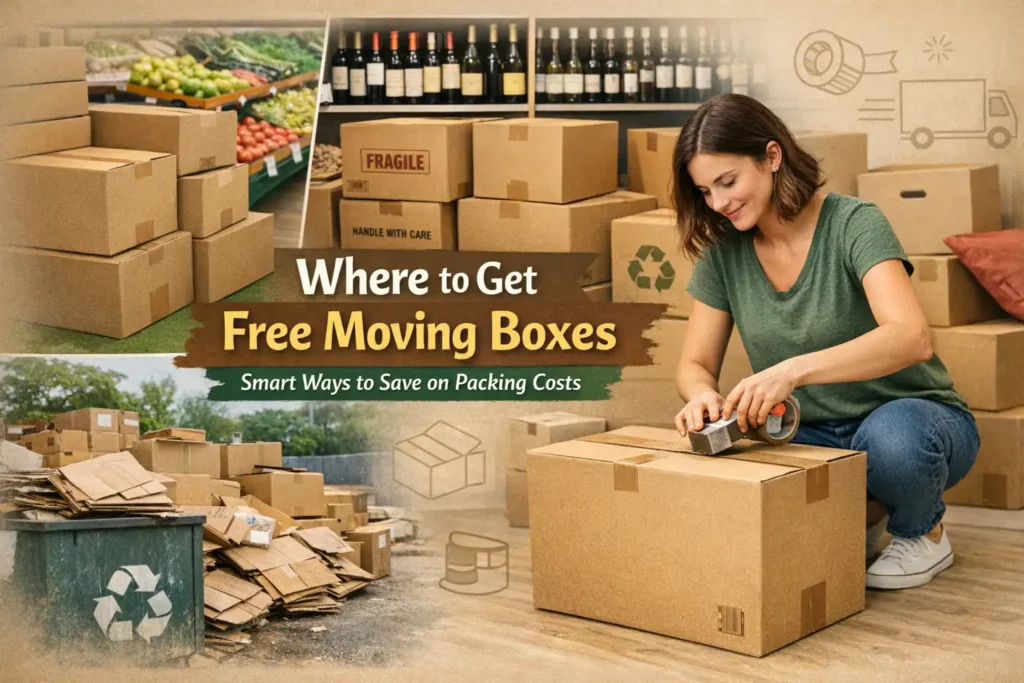
Finding sturdy moving boxes is one of the first challenges people face while planning a relocation. Buying new cartons can quickly increase moving costs, especially when shifting an entire household. Fortunately, there are several reliable ways to get free moving boxes if you know where to look and how to approach the right places. Whether you are moving locally or to another city with the help of Professional Packers and Movers, sourcing quality boxes for free can significantly reduce packing expenses without compromising safety. This guide explains where to get free moving boxes, how to identify usable cartons, and when free boxes may or may not be sufficient for a secure move—all based on verified, widely accepted relocation practices.
Local Retail Stores That Give Away Free Moving Boxes
Local retail stores are among the most dependable places to find free moving boxes because they receive frequent shipments and routinely discard cartons after restocking. With the right timing and a polite request, many store managers are willing to give away boxes that are otherwise headed for recycling. These boxes are usually clean, sturdy, and available in practical sizes for household packing.
Why retail stores are a reliable source
Retail outlets handle daily or weekly inventory deliveries, which means a steady supply of cardboard boxes. Unlike used household boxes, retail cartons are often uniform in shape, easier to stack, and strong enough to protect items during transport—especially helpful when coordinating with professional movers.
If you’re planning a local or intercity move in Lucknow, working with experienced packers and movers in Lucknow can help you decide which boxes are suitable and which items need professional packing.
Types of retail stores to approach
- Grocery stores: Often have medium to large boxes from produce, dry goods, and packaged foods.
- Liquor & wine shops: Typically provide smaller, thick-walled boxes designed to carry weight—ideal for books, kitchenware, and fragile items.
- Bookstores: Receive heavy shipments, making their boxes suitable for dense items.
- Electronics & appliance stores: May offer large boxes with reinforced cardboard, useful for bulky items.
- Office supply stores: Sometimes discard clean cartons from paper and stationery shipments.
Best time to ask for free boxes
- Visit early morning or late evening, shortly after restocking
- Ask staff when their delivery days are scheduled
- Speak directly to a store manager or supervisor
Practical tips when collecting boxes
- Inspect boxes for moisture, grease, or tears
- Avoid boxes that carried raw food or chemicals
- Flatten boxes for easy transport if collecting multiple cartons
Common retail boxes & best uses
Store Type | Box Size Usually Found | Best Used For |
Grocery Store | Medium–Large | Clothes, pantry items |
Liquor Store | Small & strong | Books, utensils, fragile items |
Bookstore | Medium & thick | Books, documents |
Electronics Store | Large | Appliances, cushions |
Office Supply Store | Medium | Files, stationery |
Supermarkets & Wholesale Stores – Best Places for Strong Boxes
Supermarkets and wholesale stores are widely considered one of the best sources for strong, free moving boxes. These stores receive bulk shipments on pallets, and the boxes used are designed to hold heavy items during long supply-chain transit. As a result, the cartons are often thicker, more durable, and suitable for safe household packing.
Why supermarket and wholesale boxes are stronger
Boxes used in supermarkets and warehouse-style stores are built to withstand stacking, loading, and long-distance transportation. This makes them especially useful when you’re packing items that need extra protection during relocation.
Where to look inside these stores
- Produce sections: Boxes used for fruits and vegetables are sturdy and often come with hand-holes for lifting.
- Dry goods aisles: Cartons from cereals, packaged foods, and bottled items are usually clean and medium-sized.
- Storage or backroom areas: Staff often keep flattened boxes ready for recycling, which can be requested.
How to get boxes successfully
- Ask staff about delivery schedules and visit shortly after restocking
- Request boxes before they’re compacted or sent for recycling
- Be flexible with sizes, as box availability depends on recent shipments
Advantages and limitations of supermarket boxes
Advantages
- Thick cardboard suitable for stacking
- Easily available in large quantities
- Often free and clean
Limitations
- Sizes may vary widely
- Some produce boxes may have ventilation holes
- Availability depends on store policies
Common supermarket box types & uses
Box Type | Strength Level | Best For |
Produce Boxes | High | Kitchen items, shoes |
Beverage Boxes | Very High | Bottles, heavy items |
Dry Goods Boxes | Medium–High | Clothes, pantry items |
Bulk Cartons | High | Mixed household goods |
Using supermarket and wholesale boxes can significantly reduce packing costs, especially when combined with professional packing support for fragile or high-value items.
Online Platforms & Community Groups Offering Free Moving Boxes
Online platforms and community groups have become one of the fastest ways to find free moving boxes, especially in urban and residential areas. Many people prefer to give away boxes after unpacking rather than storing or discarding them, making these platforms a reliable option for sourcing cartons in good condition.
Why online platforms work well
Most listings for free boxes come from recent movers, which means the boxes are already suited for relocation needs. These cartons are often clean, folded, and ready for immediate use. Since the exchanges are local, you can usually collect boxes the same day.
Common places to look online
- Local classified “free” sections
- Neighborhood-based community groups
- Apartment or housing society notice boards
- Community messaging groups used for local announcements
How to improve your chances of getting boxes
- Search using keywords like “free moving boxes” or “used cartons”
- Respond quickly, as free listings are claimed fast
- Confirm the quantity, size, and condition before pickup
- Choose pickup locations close to reduce travel effort
Safety and quality checks before collecting
- Ask if boxes were used for food, electronics, or household goods
- Avoid boxes that were stored outdoors or in damp areas
- Inspect for pests, moisture damage, or weak corners
Pros and cons of sourcing boxes online
Aspect | Benefit | Limitation |
Availability | Often easy to find locally | Supply depends on recent movers |
Cost | Usually free | May require quick pickup |
Condition | Typically used once | Quality can vary |
Convenience | Direct local pickup | Sizes may not match exactly |
Online community sourcing is especially useful when you need boxes quickly or in small batches, making it a practical option alongside retail and supermarket sources.
Office Buildings, Warehouses & Industrial Areas
Office buildings, warehouses, and industrial areas are often overlooked but highly effective sources of free moving boxes. These places receive regular shipments of equipment, supplies, and raw materials, resulting in a consistent flow of sturdy cardboard boxes that are typically discarded after unpacking.
Why commercial spaces are good for free boxes
Boxes used in offices and warehouses are designed for safe transportation of heavy or valuable goods, making them durable and reliable for household packing. Unlike retail boxes, these cartons are often larger and less worn, as they are used only once for shipping.
Best places within commercial areas to ask
- Corporate offices: Boxes from IT equipment, printers, and office supplies
- Warehouses & storage units: Bulk cartons used for inventory movement
- Printing presses & manufacturing units: Strong boxes used for paper and materials
- IT parks & business complexes: Regular inflow of packaged equipment
How to approach for boxes
- Ask for the facility manager or admin staff
- Visit during working hours, preferably mid-morning
- Request boxes before they are flattened or sent for recycling
Advantages of using office and warehouse boxes
- Thick cardboard suitable for stacking
- Larger sizes ideal for bulky items
- Usually cleaner than roadside or scrap cartons
Points to keep in mind
- Availability depends on shipment schedules
- Some offices may have strict recycling policies
- Boxes may be oversized and need reinforcement
Typical box uses from commercial spaces
Source Location | Box Quality | Best Used For |
Corporate Offices | High | Electronics, documents |
Warehouses | Very High | Mixed household goods |
Printing Units | High | Books, files |
IT Parks | High | Appliances, décor items |
Commercial sources work particularly well if you have time to plan ahead and coordinate collection before disposal.
Recycling Centers & Scrap Dealers – Hidden Sources of Free Boxes
Recycling centers and scrap dealers are often considered a last-mile solution for finding free or nearly free moving boxes, yet they can be surprisingly effective. Large volumes of cardboard cartons pass through these facilities every day, many of which are still strong enough to be reused for packing household goods.
Why recycling centers can be useful
Most cardboard boxes collected at recycling facilities are discarded shortly after minimal handling. Some centers allow individuals to take usable cartons before processing, especially when boxes are clean, dry, and intact.
How scrap dealers become a practical option
Scrap dealers frequently collect boxes from retail shops, offices, and warehouses. While their primary purpose is resale or recycling, they may allow people to take boxes at no cost or for a minimal amount, depending on availability and condition.
How to collect boxes safely
- Contact the center or dealer in advance to ask if collection is allowed
- Choose boxes that are dry, clean, and structurally sound
- Avoid cartons exposed to moisture, oil, or chemicals
Types of boxes commonly found
- Large retail cartons
- Appliance and bulk-item boxes
- Mixed-size cardboard cartons
Pros and cons of using recycled boxes
Factor | Advantage | Limitation |
Cost | Free or very low cost | Not always guaranteed |
Quantity | Available in bulk | Sizes may be inconsistent |
Sustainability | Reduces waste | Requires inspection |
Strength | Often thick cardboard | Some boxes may be worn |
Recycling centers and scrap dealers are best used when you need a large number of boxes quickly and have the time to inspect each carton carefully before packing.
Friends, Neighbors & Recent Movers in Your Area
Friends, neighbors, and people who have recently moved are often one of the most reliable and safest sources of free moving boxes. After unpacking, many households look for quick ways to get rid of cartons, making local sharing a practical and cost-effective option.
Why local networks work well
Boxes obtained from people you know or nearby residents are usually clean, lightly used, and suitable for household packing. Since these boxes were recently used for moving, they are already proven to handle relocation conditions.
Best ways to find boxes nearby
- Ask friends, relatives, or colleagues who have moved recently
- Check apartment society or community notice boards
- Post a request in housing society or neighborhood messaging groups
- Speak to security or maintenance staff in residential complexes
Timing matters
- Month-end periods often see higher moving activity
- Weekends are common moving days, increasing availability
- Early requests improve chances of securing good-quality boxes
Benefits of using locally sourced boxes
- No travel cost or minimal effort
- Boxes are usually folded and stored indoors
- Reduces waste through reuse
Limitations to consider
- Quantity may be limited
- Sizes may vary
- Collection depends on others’ availability
Common box condition from recent movers
Condition | Suitability | Recommended Use |
Like-new | Excellent | Fragile & valuable items |
Lightly used | Good | Clothes, kitchen items |
Mixed sizes | Moderate | Non-fragile goods |
Using local networks not only helps you save money but also encourages responsible reuse of packing materials within the community.
When Free Moving Boxes Are Not Enough – Smart Alternatives
While free moving boxes can significantly reduce packing costs, they may not always meet every relocation requirement. Understanding how packing materials affect pricing is important, so it helps to review a detailed packers and movers cost guide before finalizing your packing strategy. Differences in size, strength, and availability can make it difficult to pack all household items safely using only free cartons. In such cases, combining free boxes with purpose-made moving cartons becomes a practical and safer approach.
Situations where free boxes may fall short
- When packing fragile items such as crockery, glassware, or décor
- If you need uniform box sizes for better stacking in a moving truck
- During long-distance or intercity moves where boxes face more handling
- When time constraints limit your ability to collect enough free cartons
Why professional-grade boxes make a difference
Specialized moving boxes are designed to handle specific household items and reduce the risk of damage during transit. These cartons are often stronger, consistently sized, and compatible with professional packing methods used by movers.
Common alternatives to free boxes
- Wardrobe boxes: Designed for hanging clothes
- Dish-pack boxes: Extra-thick cartons for kitchenware
- Book boxes: Compact and reinforced for heavy loads
- Multi-layer cartons: Better protection for electronics and valuables
Cost-effective packing strategy
A mixed approach allows you to use free boxes for lighter or non-fragile items while reserving specialized cartons for items that need extra protection.
Packing Need | Free Boxes | Specialized Boxes |
Clothes | Suitable | Optional |
Books | Suitable (small size) | Recommended |
Kitchen items | Limited | Highly recommended |
Electronics | Risky | Recommended |
Long-distance move | Limited | Strongly recommended |
Safety and efficiency considerations
- Uniform boxes reduce shifting during loading
- Stronger cartons lower the risk of collapse
- Proper boxes help movers stack and secure items safely
Using the right mix of free and professional boxes helps maintain packing efficiency while keeping relocation costs under control—especially when working with experienced moving teams.
Tips to Inspect Free Moving Boxes Before Packing
Before using free moving boxes, it is important to inspect each carton carefully. While free boxes help reduce packing costs, their condition can directly impact the safety of your belongings during loading, transport, and unloading. A simple inspection process helps avoid box collapse, damage, or contamination during relocation.
For valuable or fragile items, it’s also important to understand what transit insurance covers during house shifting, especially if free boxes are being used.
Check the structural strength first
- Press the sides of the box gently to see if it bends easily
- Lift the box when empty to ensure it holds shape
- Avoid cartons with weakened corners or crushed edges
Boxes that feel soft or unstable may fail once weight is added.
Look for moisture or water damage
- Avoid boxes with stains, damp patches, or mold smell
- Moisture weakens cardboard and increases the risk of tearing
- Water-damaged boxes are unsafe for stacking
Inspect for cleanliness and hygiene
- Ensure the box is free from grease, oil, or food residue
- Avoid cartons previously used for raw food or chemicals
- Check inside folds for pests or insects
Clean boxes are especially important for clothes, bedding, and kitchen items.
Examine box size and load capacity
- Do not overload large boxes with heavy items
- Use small boxes for books and dense objects
- Match box size to item weight for safe lifting
Quick inspection checklist (before packing)
Inspection Area | What to Look For | Use or Reject |
Corners & edges | Cracks or crushing | Reject if damaged |
Surface | Moisture stains | Reject |
Smell | Mold or chemical odor | Reject |
Shape | Holds firm when lifted | Use |
Cleanliness | No residue or pests | Use |
When to discard a free box
- If it collapses under light pressure
- If cardboard flakes or peels easily
- If it shows signs of long-term outdoor storage
Inspecting boxes before packing reduces the risk of damage and ensures smoother coordination with movers during loading and stacking.
If you’re unsure whether free boxes are enough for your move, this guide on how to choose the best packers and movers can help you decide when professional packing is necessary.
FAQs About Free Moving Boxes
You can find free moving boxes at grocery stores, supermarkets, liquor shops, office buildings, recycling centers, and through friends, neighbors, or local community groups that offer used cartons after moving.
Free moving boxes can be strong enough if they are clean, dry, and structurally sound. Boxes from supermarkets, liquor stores, and offices are usually sturdier, but each box should be inspected before packing.
Yes, used cardboard boxes are safe if they are free from moisture, pests, and damage. Always check corners, edges, and the overall strength of the box before using it for packing household items.
The number of boxes depends on household size and belongings, but a 2 BHK home typically requires multiple small, medium, and large boxes. Free boxes can be combined with professional cartons for better protection.
Fragile items, electronics, and heavy kitchenware may require stronger, purpose-made cartons. Free boxes are best suited for clothes, books (in small boxes), and non-fragile household items.
You should avoid free moving boxes if they show signs of moisture, mold, weak structure, or contamination. For long-distance moves, uniform and reinforced boxes offer better safety.