
Packers and Movers Packing Process: Step-by-Step Guide
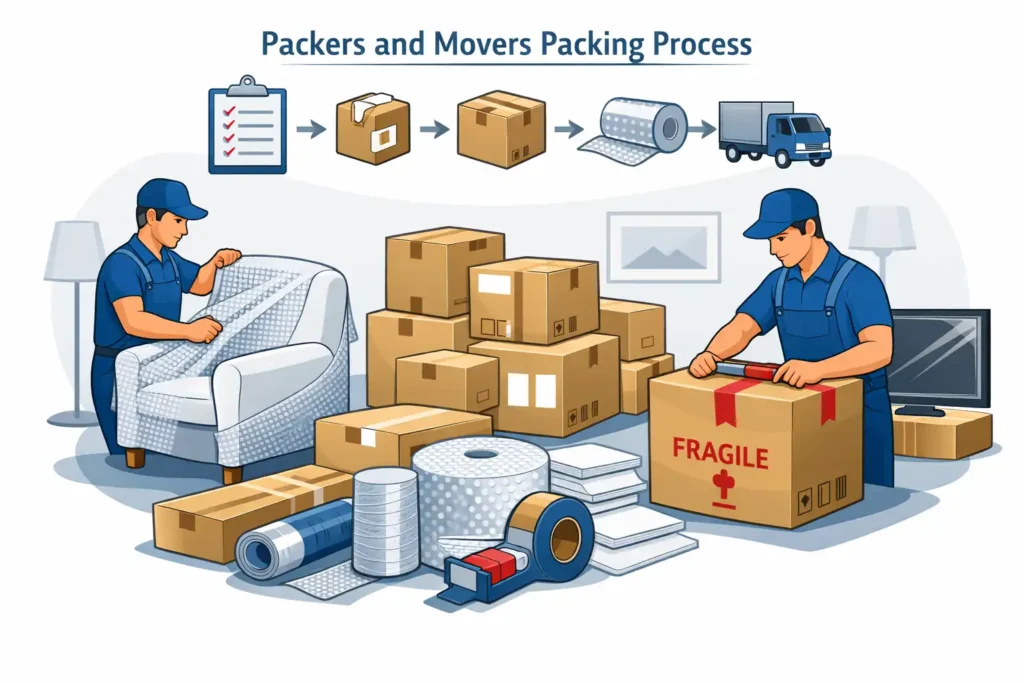
Relocating a home or office involves far more than just loading goods into a truck. Professional packing is a structured, methodical process designed to reduce damage, improve efficiency, and ensure accountability at every stage of the move. Working with experienced Packers and Movers helps ensure that each item—whether fragile, bulky, or high-value—is assessed, packed, labeled, and prepared for transport using standardized procedures followed across the moving industry.
The packing process typically begins well before moving day, with a pre-move assessment and planning phase, followed by systematic sorting, use of professional-grade packing materials, room-wise packing, special handling of fragile items, furniture dismantling, labeling, and final quality checks. Each step plays a critical role in protecting goods during loading, transit, and unloading, especially in long-distance or intercity relocations. For example, customers relocating locally or intercity can benefit from professional packers and movers in Bangalore who follow this structured packing process.
Step – 1: Pre-Move Survey and Packing Assessment
The packing process officially begins with a pre-move survey. This step allows professional packers and movers to understand the scope of the move and plan packing activities accurately. The survey may be conducted in person or virtually, depending on location and convenience, and focuses on evaluating the type, quantity, and condition of goods that need to be packed and transported. This process is part of understanding how professional packers and movers work before finalizing the relocation plan.
During this assessment, the moving team reviews all household or office items, identifies fragile and high-value belongings, and notes any special handling requirements. Access conditions such as staircases, elevators, parking availability, and distance from the loading point are also examined, as these factors directly influence packing time and manpower planning. This structured evaluation helps movers design a packing strategy that minimizes risk and avoids last-minute issues on the moving day.
Key elements covered during a pre-move survey include:
- Preparation of a detailed inventory of items to be packed
- Identification of fragile, bulky, and specialty items
- Estimation of packing materials such as cartons, bubble wrap, and protective covers
- Assessment of manpower and time required for packing
- Planning the sequence of packing and loading
By completing the pre-move survey, packers and movers ensure transparency in service scope, realistic timelines, and a well-organized packing process that aligns with the customer’s relocation requirements.
Step – 2: Categorization and Sorting of Goods Before Packing
After the pre-move survey, professional packers and movers begin the packing process by categorizing and sorting goods. This step is essential to maintain order, ensure appropriate packing methods, and reduce the risk of damage during handling and transportation. Items are not packed randomly; instead, they are grouped based on their nature, fragility, size, and handling requirements.
Sorting helps movers decide which packing materials and techniques are suitable for each category of items. Fragile goods are separated from durable ones, heavy items are identified for reinforced packing, and personal or high-value belongings are set aside for special handling. This organized approach also makes it easier to track items during loading and unloading.
Common categories used during the sorting stage include:
- Fragile items such as glassware, crockery, mirrors, and decorative pieces
- Electronics and appliances including televisions, refrigerators, and computers
- Furniture items like beds, wardrobes, tables, and sofas
- Household items such as books, clothing, linens, and kitchenware
- Important documents and personal belongings packed separately
Proper categorization ensures that each group of items receives the correct level of protection and handling. It also supports smoother unpacking at the destination, as items are already organized according to rooms and usage.
Step – 3: Selection of Packing Materials and Equipment
Once goods are categorized, professional packers and movers select appropriate packing materials and equipment to protect items during handling and transportation. The use of proper materials is a critical factor in minimizing breakage, scratches, and transit-related damage. Unlike household packing supplies, professional-grade materials are designed to handle weight, vibration, and stacking pressure during long-distance and local moves.
Different materials are chosen based on the type of items being packed. Fragile items require cushioning and shock absorption, while furniture and appliances need surface protection and secure wrapping. This careful selection ensures that each item is packed according to its specific risk level.
Common packing materials and tools used by professionals include:
- Corrugated cardboard boxes in multiple sizes for lightweight and heavy items
- Bubble wrap and foam sheets for fragile and breakable goods
- Packing paper or newspaper for cushioning and void filling
- Stretch film and shrink wrap for furniture and appliance protection
- Mattress covers, sofa covers, and protective blankets
- Specialized cartons for wardrobes, mirrors, and glass items
Choosing the right materials is crucial, and understanding the different types of moving boxes and packing supplies helps ensure appropriate protection for each item.
Using the right combination of packing materials helps maintain item integrity throughout the move and supports safer stacking and loading inside the transport vehicle.
Step – 4: Room-by-Room Packing Process Followed by Professionals
Professional packers and movers follow a room-by-room packing approach to maintain structure, reduce confusion, and improve efficiency during both packing and unpacking. Instead of mixing items from different areas, each room is packed separately, and boxes are labeled accordingly. This method ensures that goods are easier to identify, load, and place at the destination.
Room-wise packing also helps movers apply the correct packing technique based on the function of the room and the nature of the items stored there. Items that are used together are packed together, which minimizes the risk of misplacement and simplifies the unpacking process for customers.
Typical room-by-room packing practices include:
- Kitchen: Crockery, utensils, and appliances are wrapped individually with cushioning materials to protect against impact
- Bedroom: Clothes, mattresses, wardrobes, mirrors, and personal items are packed using cartons, covers, and protective wraps
- Living room: Sofas, tables, televisions, and decorative items are packed with surface protection and padding
- Bathroom: Toiletries and small fixtures are packed separately to avoid leakage or contamination
- Storage and utility areas: Tools, cleaning supplies, and rarely used items are consolidated into clearly labeled boxes
By packing each room systematically, packers and movers ensure logical loading into the moving vehicle and smoother unloading at the new location.
Step – 5: Special Packing for Fragile, Valuable, and High-Risk Items
Fragile, valuable, and high-risk items require additional care during the packing process due to their susceptibility to damage. Professional packers and movers apply specific packing techniques and protective materials to reduce the risk of breakage during handling, loading, and transportation. These items are identified during the pre-move survey and sorting stage so that appropriate packing measures can be planned in advance. Even with careful packing, understanding what transit insurance covers during house shifting is important to safeguard against unforeseen damage during transportation.
Extra layers of cushioning and reinforced packing methods are used to absorb shocks and vibrations that may occur during transit. Items such as glassware, mirrors, artwork, and electronic equipment are packed separately from regular household goods and clearly marked to indicate careful handling requirements.
Common practices for special packing include:
- Multi-layer wrapping of glass items, crockery, and decorative pieces using bubble wrap and packing paper
- Custom crating or reinforced cartons for mirrors, artwork, and delicate items
- Anti-static and protective packaging for electronics such as televisions and computers
- Securing loose components and accessories of appliances before packing
- Separate packing of important documents and personal valuables as per customer instructions
These protective measures help reduce movement inside cartons and prevent direct impact, significantly lowering the chances of damage during relocation.
Step – 6: Furniture Dismantling, Wrapping, and Protection
Large and heavy furniture items are typically dismantled before packing to ensure safe handling and efficient transportation. Professional packers and movers are trained to disassemble furniture such as beds, wardrobes, tables, and modular units without causing structural damage. Dismantling also helps reduce the space required inside the moving vehicle and lowers the risk of scratches or breakage during transit.
Once dismantled, each component is wrapped and protected individually. Special attention is given to edges, corners, and surfaces that are more prone to damage. Hardware such as screws, bolts, and fittings is packed separately and labeled to avoid loss and ensure smooth reassembly at the destination.
Furniture packing and protection steps generally include:
- Careful disassembly of furniture components using appropriate tools
- Wrapping panels, frames, and legs with foam sheets or protective covers
- Use of blankets or stretch film to prevent surface scratches
- Secure packing of nuts, bolts, and fittings in labeled pouches
- Planning for reassembly after unloading
Proper dismantling and wrapping help preserve the condition of furniture and make handling safer for both the moving crew and the items themselves.
Step – 7: Labeling, Inventory Creation, and Final Quality Check
After packing is completed, professional packers and movers focus on labeling and inventory management to ensure traceability and accountability throughout the move. Each packed carton and wrapped item is labeled clearly so that it can be identified easily during loading, unloading, and unpacking. Labels usually indicate the room name, item category, and any special handling instructions.
Along with labeling, an itemized inventory list is prepared. This inventory acts as a reference document that records all packed goods and helps confirm that nothing is misplaced or left behind. Before the cartons are sealed and moved for loading, a final quality check is conducted to verify packing integrity and completeness.
Key steps involved in labeling and quality checks include:
- Marking cartons with room identification and handling instructions such as “Fragile”
- Assigning unique identifiers or numbers to boxes for tracking
- Preparing and sharing a detailed inventory list with the customer
- Cross-checking packed items against the inventory before sealing
- Ensuring cartons are securely packed and ready for transportation
Effective labeling and inventory control simplify unloading and unpacking at the destination and reduce disputes related to missing or damaged items.
Step – 8: Sealing, Staging, and Readiness for Loading
The final stage of the packing process involves sealing all cartons and preparing packed goods for loading. Professional packers and movers ensure that every box, wrapped item, and furniture component is securely sealed using strong packing tapes and protective materials. Proper sealing helps prevent cartons from opening during handling and protects items from dust, moisture, and movement during transit.
Once sealed, the packed items are staged near the loading area in an organized manner. Staging allows movers to plan the loading sequence efficiently, ensuring heavier items are placed first and fragile items are positioned safely to avoid pressure damage. A final verification is usually carried out with the customer before loading begins.
Key activities during sealing and staging include:
- Reinforcing cartons with industrial-grade packing tape
- Securing wrapped furniture and appliances for movement
- Arranging packed goods in loading order to improve efficiency
- Conducting a final check against the inventory list
- Confirming readiness for loading with the customer
Proper sealing and systematic staging ensure a smooth transition from packing to transportation and reduce the risk of damage during the loading process.
Customers who want a professionally managed packing and relocation experience can consult verified packers and movers services for end-to-end support.