
How Packers and Movers Handle Damage & Claims: Step-by-Step Guide
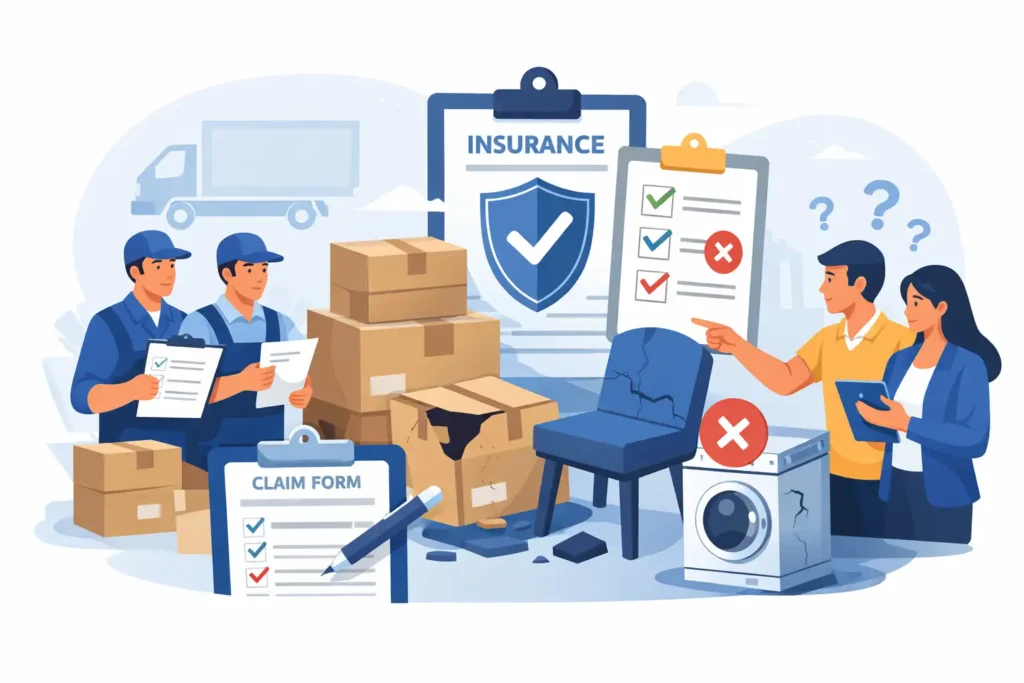
Relocation involves multiple handling stages, and despite professional precautions, damage to household goods can sometimes occur. Understanding how Packers and Movers manage damage reporting, insurance coverage, and claim settlement is critical for customers planning a move. Choosing experienced and accountable Packers And Movers significantly reduces risks and ensures that, if damage does occur, the claim process is structured, documented, and legally compliant.
In India, damage and claims handling is governed by a combination of packers’ contractual terms, carrier liability norms, and transit insurance procedures. How damage is identified, reported, verified, and settled during a move—helping customers set realistic expectations and protect their financial interests.
- What constitutes damage during relocation
- How claims are officially reported and assessed
- The role of insurance and carrier liability
- Common reasons claims fail and how to avoid them
Understanding Damage During Relocation
Damage during relocation refers to physical loss, breakage, deformation, or missing items that occur while household or office goods are under the custody of packers and movers. This responsibility framework is clearly defined in the standard packing and moving process followed by professional movers. In the Indian relocation ecosystem, damage classification and responsibility are primarily determined through inventory records, delivery condition reports, and contractual terms agreed upon before the move.
Common Types of Relocation Damage
During domestic and intercity moves, packers and movers commonly encounter the following damage categories:
- Breakage: Fragile items such as glassware, crockery, mirrors, and decorative pieces
- Surface damage: Scratches, dents, chipped edges on furniture, appliances, and wooden items
- Water or moisture damage: Often linked to monsoon transit or inadequate wrapping
- Missing or misplaced items: Cartons or loose items not accounted for at delivery
These categories form the baseline for claim evaluation during insurance or carrier-risk assessments.
Stages Where Damage Typically Occurs
Professional movers recognize that damage can happen at any stage of the relocation cycle, including:
- Packing stage: Incorrect material selection or insufficient cushioning
- Loading stage: Improper stacking or handling while moving items into the vehicle
- Transportation stage: Road conditions, sudden braking, or long-distance vibrations
- Unloading stage: Mishandling during offloading or floor-level movement
For this reason, packers maintain stage-wise responsibility records, which are later referenced during claim verification.
Visible Damage vs Concealed Damage
Damage is further classified based on when it is discovered:
- Visible damage:
Damage noticed at the time of delivery or unloading and recorded immediately on the delivery receipt or inventory sheet. - Concealed damage:
Damage discovered after unpacking, despite intact external packaging at the time of delivery.
Most packers and movers require immediate or prompt reporting for both categories, though concealed damage claims are subject to stricter documentation and verification norms.
Responsibility: Packers vs Customer
Responsibility for damage is not automatic and depends on:
- Whether goods were professionally packed or self-packed
- Whether the item was listed in the inventory
- Whether the item was declared for value or insurance
- Terms agreed under the transport contract or insurance policy
This distinction becomes critical during claim settlement, as liability may shift based on documentation and declared conditions.
Pre-Move Documentation & Risk Assessment
Pre-move documentation forms the foundation of any damage or insurance claim in the Indian packers and movers industry. Before packing begins, professional movers rely on documented records to assess risk, assign responsibility, and establish a baseline condition of goods. Without this documentation, claim eligibility and settlement value can be significantly reduced.
Pre-Move Survey and Inventory Creation
A pre-move survey is conducted to evaluate the volume, nature, and handling requirements of goods. Based on this survey, packers prepare a detailed inventory list, which typically includes:
- Item descriptions and carton counts
- Condition notes for furniture, appliances, and fragile goods
- Special handling remarks for high-risk items
This inventory is signed or acknowledged by the customer and later used as a primary reference during damage verification. Inventory documentation plays a key role in claim acceptance, as explained in detail in our guide on how inventory lists protect customers from missing or damaged items.
Condition Reporting Before Packing
Professional movers record the pre-existing condition of goods before packing, especially for:
- Wooden furniture with scratches or dents
- Electronic appliances with cosmetic wear
- Items showing visible ageing or usage marks
Condition reporting ensures that pre-existing damage is not misclassified as transit damage, protecting both the mover and the customer during claims evaluation.
Declared Value vs Actual Value of Goods
In India, packers and movers differentiate between:
- Actual value: Market or purchase value of the item
- Declared value: Value stated by the customer for liability or insurance purposes
Declared value directly impacts:
- Insurance premium calculation
- Maximum claim eligibility
- Carrier liability limits
Items not declared or undervalued may receive partial or no compensation during settlement. Customers often misunderstand valuation, which is why it’s important to know the difference between declared value and insured value in movers insurance.
Identification of High-Risk and Fragile Items
During the survey phase, movers identify risk-prone items such as:
- Glass, marble, and ceramic goods
- Antiques and artwork
- Electronics and mechanical appliances
These items are marked for special packing, separate handling, or additional coverage, reducing the probability of disputes if damage occurs.
Why Pre-Move Documentation Matters for Claims
Pre-move documentation helps in:
- Establishing proof of custody
- Validating damage timelines
- Differentiating transit damage from wear and tear
- Supporting insurance surveyor assessments
Claims lacking inventory alignment or condition records face higher rejection risks.
Insurance Coverage & Liability Explained
In India, damage compensation during relocation is governed by two parallel mechanisms: carrier liability under transport contracts and transit insurance issued by insurers. Understanding the distinction between these two is essential, as claim responsibility, coverage scope, and settlement outcomes vary significantly.
Carrier Liability and Transport Contracts
Most professional packers and movers operate under a transport contract and issue a Goods Consignment Note (GCN) or Lorry Receipt (LR). This document establishes that goods are being transported under carrier risk, subject to contractual terms.
Key characteristics of carrier liability include:
- Liability is limited and governed by contract conditions
- Compensation is influenced by declared value and documentation
- Certain losses may be excluded based on contractual clauses
Carrier liability alone does not automatically provide comprehensive damage coverage, especially for high-value or fragile items.
Transit Insurance vs Carrier Risk
Transit insurance (also referred to as inland or marine transit insurance) is a separate insurance policy that covers goods against specified risks during transportation.
Differences between the two mechanisms:
- Carrier risk:
- Based on transport contract
- Subject to liability limitations
- Claims handled through mover coordination
- Transit insurance:
- Issued by an insurer
- Covers defined transit-related risks
- Claims assessed by an appointed surveyor
Customers opting only for carrier risk may face restricted compensation, whereas transit insurance provides a structured claims process. For a detailed breakdown of coverage limits and exclusions, refer to our guide on what transit insurance covers during house shifting.
What Is Typically Covered Under Transit Insurance
Transit insurance policies commonly provide coverage for:
- Accidental damage during loading, transit, or unloading
- Fire, collision, or overturning of the transport vehicle
- Loss of goods during transit
Coverage is strictly limited to perils mentioned in the policy wording, and claims are assessed accordingly.
Common Exclusions and Limitations
Both packers’ contracts and insurance policies list exclusions that may restrict or deny claims, such as:
- Wear and tear or ageing of goods
- Damage due to inherent nature of items
- Improper packing when done by the customer
- Undeclared or undervalued items
- Consequential or delay-related losses
Understanding these exclusions before the move helps set realistic claim expectations.
Role of Third-Party Insurers in Claims
When transit insurance is taken, packers and movers typically coordinate with the insurer, but they do not control the settlement decision. The insurer:
- Appoints an independent surveyor
- Validates damage against policy terms
- Determines repair, replacement, or cash settlement
Final compensation is based on policy conditions, survey findings, and submitted documentation.
Step-by-Step Damage Reporting Process
Once damage is identified, the claim process depends on timely reporting, accurate documentation, and proper communication with the packers and movers and, where applicable, the insurer. In India, both carrier-risk claims and transit insurance claims follow a structured reporting workflow.
Step 1: Identify and Record Damage at Delivery
At the time of unloading or delivery, customers are expected to:
- Inspect cartons, furniture, and appliances
- Match delivered items against the inventory list
- Note visible damage or missing items on the delivery receipt
Recording damage at delivery establishes initial proof of loss and supports later claim validation.
Step 2: Report Damage Immediately to the Mover
Damage must be reported to the packers and movers without delay. This typically involves:
- Informing the move coordinator or branch office
- Submitting written intimation via email or claim form
- Sharing photographs or videos of damaged goods
Delayed reporting can weaken claim eligibility, especially for visible damage.
Step 3: Intimate the Insurer (If Transit Insurance Is Taken)
If transit insurance has been purchased, the customer must:
- Inform the insurer as per policy instructions
- Provide policy details and transport documents
- Follow insurer-defined timelines for claim intimation
Once intimated, the insurer initiates the formal claim process.
Step 4: Arrange for Damage Inspection
After claim intimation:
- A surveyor may be appointed to inspect the damaged goods
- Physical inspection or photographic verification is conducted
- Customers are advised not to dispose of damaged items before inspection
Inspection findings play a critical role in determining claim acceptance and value.
Step 5: Submit Required Claim Documents
Claim processing requires submission of supporting documents, which commonly include:
- Inventory list and delivery receipt
- LR or GCN copy
- Original bills or purchase invoices (where available)
- Photographs of damaged items
- Repair estimates or replacement quotations
Incomplete documentation may lead to delays or partial settlements.
Step 6: Follow Up During Claim Processing
Once documents are submitted:
- Packers and movers coordinate with the insurer or internal claim team
- Additional clarifications or documents may be requested
- Customers are advised to retain all communication records
Claim processing timelines vary depending on policy terms, damage complexity, and verification outcomes.
Claim Verification & Assessment by Packers and Movers
After a damage claim is formally reported, the next phase involves verification and assessment. This stage determines whether the claim is admissible and how much compensation is payable. In India, verification is conducted through documented checks, physical inspection, and coordination between the packers and movers and the insurer, where applicable.
Physical Inspection and Damage Validation
Once a claim is registered:
- A physical inspection of damaged goods may be conducted
- Inspection may be carried out by the mover’s representative or an appointed surveyor
- Condition of packaging, cartons, and seals is examined
- Damage is cross-verified against the inventory and delivery records
Customers are advised to retain damaged items in their delivered condition until inspection is completed.
Assessment of Repair vs Replacement
Based on inspection findings, the assessor determines whether the item:
- Can be repaired to restore functional use, or
- Requires replacement due to irreparable damage
This decision affects the final claim value, as repair costs and replacement values are treated differently under claim norms.
Depreciation and Valuation Calculations
Claim valuation considers depreciation, which reflects:
- Age of the item
- Usage and condition prior to transit
- Policy or contractual depreciation clauses
Depreciation reduces the payable amount even when replacement is approved, unless otherwise specified under declared value or policy terms.
Verification of Claim Eligibility
During assessment, claims may be evaluated against eligibility criteria such as:
- Whether the item was listed in the inventory
- Whether the value was declared or insured
- Whether packing was performed by the mover
- Whether reporting timelines were followed
Claims failing to meet these conditions may be partially approved or rejected.
Coordination Between Mover, Insurer, and Customer
In insured moves:
- Packers and movers facilitate coordination but do not decide settlement amounts
- Insurers rely on surveyor reports and policy terms
- Customers may be asked to provide clarifications or additional proof
Clear communication during this stage helps prevent unnecessary delays.
Claim Settlement & Compensation Process
Once claim verification and assessment are completed, the process moves to settlement and compensation. In India, settlement outcomes depend on the inspection report, policy or contract terms, depreciation rules, and submitted documentation. Compensation is not automatic and is issued only after claim approval.
Modes of Claim Settlement
Approved claims may be settled through one of the following methods:
- Repair reimbursement:
Compensation based on approved repair costs supported by bills or estimates. - Replacement settlement:
Payout calculated against the replacement value, subject to depreciation and policy limits. - Cash settlement:
Lump-sum payment reflecting assessed loss after deductions.
The chosen mode depends on damage severity, item type, and policy provisions.
Settlement Timelines
There is no fixed statutory timeline applicable to all claims. Settlement duration varies based on:
- Complexity of damage
- Completeness of documentation
- Time taken for inspection and surveyor reporting
- Internal processing by mover or insurer
Claims involving extensive damage or high-value goods generally require longer verification cycles.
Full vs Partial Claim Approval
Claims may be settled as:
- Full approval:
When all claimed items meet eligibility and documentation criteria. - Partial approval:
When only some items qualify or when deductions apply due to depreciation or exclusions.
Partial approvals are common when inventory mismatches or valuation gaps are identified.
Reasons for Deductions in Settlement
Even approved claims may include deductions due to:
- Depreciation based on item age
- Under-declared item value
- Policy sub-limits
- Repair-versus-replacement adjustments
Understanding these factors helps manage expectations during claim closure.
Claim Closure and Documentation
After settlement:
- Payment confirmation is shared with the customer
- Claim file is officially closed
- Supporting records are archived by the mover or insurer
Customers are advised to retain settlement documents for future reference or dispute resolution.
Common Reasons Why Damage Claims Get Rejected
Not all damage claims result in compensation. In India, claim rejections are typically based on documentation gaps, contractual exclusions, or procedural lapses rather than the occurrence of damage itself. Understanding these rejection triggers helps customers reduce claim risk during relocation. Many rejected claims are linked to poor mover selection, which is why customers should review common red flags to watch out for when hiring packers and movers.
Delayed or Improper Claim Intimation
One of the most frequent reasons for claim rejection is:
- Failure to report damage immediately or within the allowed timeframe
- Reporting damage without written communication or proof
- Raising claims after delivery acceptance without noting damage
Timely and documented intimation is essential for claim admissibility.
Undeclared or Incorrectly Declared Items
Claims may be rejected or limited when:
- High-value items are not declared before the move
- Declared value does not reflect the item’s actual worth
- Items are missing from the inventory list
Declared value directly influences liability and settlement eligibility.
Self-Packed or Improperly Packed Goods
Many packers and insurance policies exclude or restrict claims when:
- Goods are packed by the customer
- Packing materials or methods are deemed inadequate
- Damage is linked to poor internal cushioning
Professional packing plays a critical role in claim acceptance.
Missing or Insufficient Supporting Documents
Claims often fail due to lack of evidence, such as:
- Absence of inventory or delivery receipts
- No photographic proof of damage
- Missing bills, invoices, or repair estimates
Incomplete documentation weakens claim verification.
Excluded Losses Under Policy or Contract Terms
Certain losses are commonly excluded, including:
- Wear and tear or ageing
- Mechanical or electrical breakdown not caused by transit
- Consequential or delay-related losses
These exclusions apply even if damage is reported on time.